Triathlete rides out the pandemic on her way to Tokyo Games

Advertisement

Advertise with us

BRISBANE, Australia (AP) — Australian triathlete Ashleigh Gentle had just finished a training session at her temporary base of Cairns in north Queensland state. Hot, muggy and tropical Cairns — except for the tropical part — is exactly what she’s expecting during her competition at the Tokyo Olympics.

Read this article for free:


By clicking the button above, an account will be created and you will begin to receive some of our recommended newsletters. You may opt out of any newsletter by visiting your Email and Communication Preferences page or by clicking "unsubscribe" at the bottom of any email.

or

Already have an account? Log in here »

To continue reading, please subscribe:

Digital Subscription

One year of digital access for only $1.44 a week*

  • Enjoy unlimited reading on winnipegfreepress.com
  • Read the E-Edition, our digital replica newspaper
  • Access News Break, our award-winning app
  • Play interactive puzzles

*Billed as $5.77 plus GST every four weeks. After 52 weeks, price increases to the regular rate of $19.95 plus GST every four weeks. Offer available to new and qualified returning subscribers only. Cancel any time.

To continue reading, please subscribe:

Add Free Press access to your Brandon Sun subscription for only an additional

$1 for the first 4 weeks*

  • Enjoy unlimited reading on winnipegfreepress.com
  • Read the E-Edition, our digital replica newspaper
  • Access News Break, our award-winning app
  • Play interactive puzzles
Start now

*Your next Brandon Sun subscription payment will increase by $1.00 and you will be charged $17.95 plus GST for four weeks. After four weeks, your payment will increase to $24.95 plus GST every four weeks.

Hey there, time traveller!
This article was published 09/07/2021 (1940 days ago), so information in it may no longer be current.

BRISBANE, Australia (AP) — Australian triathlete Ashleigh Gentle had just finished a training session at her temporary base of Cairns in north Queensland state. Hot, muggy and tropical Cairns — except for the tropical part — is exactly what she’s expecting during her competition at the Tokyo Olympics.

“It’s one of the hottest, most humid places, and it’ll help simulate conditions for Tokyo,” Gentle said of Cairns in a phone interview with The Associated Press. “It’s nice to get back to the warmth and remind my body what it’s like.”

The warmth reference is all relative for a Queenslander used to moderate temperatures even in the southern hemisphere winter. Gentle lives in Brisbane, about 1,600 kilometers (1,000 miles) south of Cairns, but still in a subtropical climate. A cold snap around Brisbane in southeast Queensland state meant temperatures had dropped to as low as 5 degrees Celsius (41 Fahrenheit) on several nights just before she left for Cairns.

FILE - In this April 7, 2018 file photo, Ashleigh Gentle of Australia competes during the mixed team relay triathlon at the Southport Broadwater Parklands during the 2018 Commonwealth Games on the Gold Coast, Australia. Gentle, is looking forward to possibly representing her country again when the mixed team format makes its Olympic debut in Tokyo. That'll be in addition to her place in the women's individual race. (AP Photo/Mark Schiefelbein, File)

The Commonwealth Games gold medalist in Australia’s mixed team triathlon in 2018 and a 2017 world champion for Australia in the same event is looking forward to possibly representing her country again when the mixed team format makes its Olympic debut in Tokyo. That’ll be in addition to her place in the women’s individual race.

The Olympic triathlons will have early starts to help counteract the expected humid, hot summer conditions in Tokyo: the men’s race on July 26 and the women’s on July 27 will begin at 6:30 a.m. local time. The mixed race on July 31 starts an hour later.

“We’re pretty lucky, we most often have relaxed starts, often 10 a.m. and in some places in Europe, maybe not till 4 or 5 p.m.,” the 30-year-old Gentle said. “It will be pretty different to get up that early in the dark to go race.”

Australia is the only country which will be represented by the full complement of six racers in Tokyo. Gentle, who finished 26th at the Rio Olympics in 2016 but won the World Triathlon Grand Final on the Gold Coast in 2018, reckons that will be a huge advantage for Australia in the mixed event.

Australia has never finished off the podium in mixed relay world championship events since 2015, taking a gold medal, three silver and a bronze.

“If you have (a choice of) three of each, we can make changes right up to two hours before the race,” Gentle said of the mixed event which features two male and two female athletes competing in relay fashion. “With the amount of rules and regulations and COVID concerns in the athletes’ village, that could make a big difference.”

Gentle didn’t always do well trying to cope with the after-effects of the coronavirus-forced postponement last year of the Tokyo Games.

She was competing at a World Cup event in Mooloolaba on the Sunshine Coast, north of Brisbane, in late March 2020. It turned out to be the last event she’d race in a while — the lockdown in Australia and most of the rest of the world started within days.

“I was kind of expecting it, it was getting so close, and things were getting bad,” she said. “But I was still devastated and didn’t know what to think. I felt deflated and had to tune it all out.”

She decided to take a break from training and instead worked on renovating the Brisbane house she and her partner, ultramarathoner Josh Amberger, built in 2018.

“There were so many things we wanted to do, and we had all the materials, so we decided to do that,” Gentle said, adding with a chuckle, “I basically turned into a landscaper.”

FILE - In this April 7, 2018 file photo, Australia's gold medal mixed relay triathlon team, from left, Jacob Birtwhistle, Ashleigh Gentle, Matthew Hauser, and Gillian Backhouse, stand with their medals at the Southport Broadwater Parklands during the 2018 Commonwealth Games on the Gold Coast, Australia. Gentle, is looking forward to possibly representing her country again when the mixed team format makes its Olympic debut in Tokyo. That'll be in addition to her place in the women's individual race. (AP Photo/Mark Schiefelbein, File)

When she returned to training a month or so later, she found the swimming pools she trained at were still closed, as were gyms for weight training. The Olympic-distance triathlon is a 1.5-kilometer swim, 40-kilometer cycle and 10-kilometer run, forcing triathletes into a variety of training regimens.

But instead of relying on a quantity of training, she went for quality.

“I worked more on technique, skill-based training instead of doing massive hours,” Gentle said. “Ï was trying to do all those little things right, when you are not under the pump.”

Gentle, who returned to mostly full training in November, has had two doses of the Pfizer COVID-19 vaccine, as have nearly all of Australian Olympic athletes heading to Tokyo.

“I knew that my long-term goal was still a long way away,” Gentle said of her pandemic-forced mindset. “But once I got back into it, I thought, ‘we are training for the Olympics now . . . it’s probably going to happen.’ It was good that what I had done last year was the best preparation.”

___

More AP Olympics: https://apnews.com/hub/olympic-games and https://twitter.com/AP_Sports

Report Error Submit a Tip

More Stories

The long and winding road

Editorial 4 minute read Preview

The long and winding road

Editorial 4 minute read 2:01 AM CDT

As theatre goes, it sent a strong message.

Manitoba Premier Wab Kinew, standing in front of microphones and television cameras, holding up his Indigenous status card and saying that he didn’t feel Canada should have “a race-based form of identification in this country, but that is a reality,” adding that it was time to abolish the Indian Act.

“I think it’s time to abolish the Indian Act, get rid of the Indian Act, move past the Indian Act, and it needs to be done with First Nations people and First Nations governments, of course. I think it’s long overdue that we have a relationship with Indigenous Peoples in Canada that reflects who we are as Canadians today,” he said.

The Indian Act — the name alone suggests how out-dated and out of place the law has become. Originally dating from 1876, the law was put in place to “amend and consolidate the laws respecting Indians” and gave the Minister of the Interior the responsibility to “control and management of the reserves, lands, moneys and property of Indians in Canada.”

Read
2:01 AM CDT

Province’s first female dentist took skill, insight wherever needed

David Sanderson    25 minute read Preview

Province’s first female dentist took skill, insight wherever needed

David Sanderson    25 minute read Saturday, Apr. 3, 2021

Some stories take longer to get around to than others.

In the fall of 2011 I hooked up with Fiona Odlum at an Academy Road Starbucks for a lighthearted feature about people who report on traffic for a living. Odlum, currently a contributor at CBC Saskatchewan, was working for 680 CJOB at the time, clueing rush-hour commuters in on stalls, lane closures and fender-benders they’d be wise to avoid.

Odlum turned the tables at one point by asking a few questions of her own including, “So, what’s your main beat?”

I don’t really have one, I told her, but if pressed, I would probably go with human-interest pieces.

Read
Saturday, Apr. 3, 2021

Court ruling concludes Canadian Wheat Board saga

Laura Rance-Unger 4 minute read Preview

Court ruling concludes Canadian Wheat Board saga

Laura Rance-Unger 4 minute read 2:01 AM CDT

It remains to be seen whether the recent court ruling in a lawsuit filed after Canadian Wheat Board’s dissolution in 2012 puts the whole debate to rest, as some no doubt hope.

But either way, the dust has settled on the post-CWB world. The sun still rises and a new generation of farmers on the land only knows by name an institution that for generations influenced every aspect of Prairie grain farming.

The first Rural Revival column I wrote for this newspaper more than 30 years ago was about a thousand farmers from Western Canada demonstrating in support of the Wheat Board. It was in the aftermath of the Western Grain Marketing Panel report, one of several efforts that eventually included a plebiscite to help the federal government decide what to do about a vocal minority of farmers who wanted marketing “freedom.”

The polls at the time suggested about two-thirds of farmers were comfortable enough with the single-desk system for food wheat and barley to keep it around. It served as a counterbalance to canola, which they sold on the open market. They essentially had a dual market.

Read
2:01 AM CDT

Olympics Overnight: Speedskater Blondin wins silver in the mass start, Bowman narrowly misses podium in halfpipe skiing, Jamaica returns to bobsled track

Richie Assaly - Toronto Star, Toronto Star 6 minute read Preview

Olympics Overnight: Speedskater Blondin wins silver in the mass start, Bowman narrowly misses podium in halfpipe skiing, Jamaica returns to bobsled track

Richie Assaly - Toronto Star, Toronto Star 6 minute read Saturday, Feb. 19, 2022

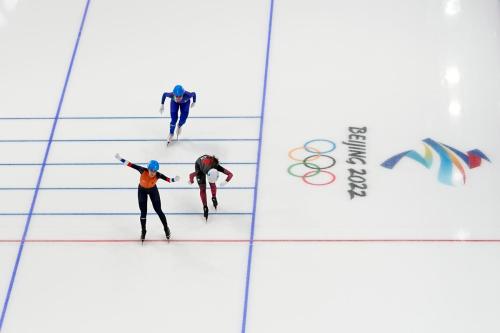
Here’s what you missed overnight at Day 15 of the 2022 Beijing Olympics.

Read
Saturday, Feb. 19, 2022

The trick to attracting wee, treat-seeking ghosts and goblins on Halloween is to go all-in

Jen Zoratti 5 minute read Preview

The trick to attracting wee, treat-seeking ghosts and goblins on Halloween is to go all-in

Jen Zoratti 5 minute read Wednesday, Oct. 31, 2018

When I was a kid in the 1990s, I lived for Halloween.

My mom, a gifted seamstress, made all of my costumes. Deciding what I’d dress up as involved imagination and a trip to the fabric or craft store.

I loved flipping through the McCall’s patterns, and running my hands along the bolts of fabric that my mom would transform into Little Bo Peep, or Dorothy from the Wizard of Oz, or, one year, a Christmas tree — complete with the star on top. Old things were repurposed into new things.

Trick-or-treating was my... I don’t know, some sort of sports reference. The goal? Amass as much candy as possible. We’d troll the neighbourhood for hours, dragging snow-sodden pillow cases full of it. We’d target specific streets, lured mostly by the promise of full-sized chocolate bars.

Read
Wednesday, Oct. 31, 2018

The new normal in Canadian politics

David McLaughlin 5 minute read Preview

The new normal in Canadian politics

David McLaughlin 5 minute read 2:01 AM CDT

“Nothing happening, all at once.”

Welcome to the new normal of Canadian politics, where normality is the new normal. Routine and stable are in; disruptive and excessive are out. Exhibits A and B are the Alberta referendum and the British Columbia election. Voters opted for stability over volatility.

The opposite of being normal is being different from the norm. In politics that means different from where we’ve been and what we’ve come to expect. Two competing trends have dominated our politics for the past decade and a half — progressivism and populism. Think Justin Trudeau and liberal, progressive identity politics in Canada, and Donald Trump and conservative, populist MAGA politics in America. We are now experiencing a swing away from both those trends.

Representing this “new normal” are Prime Minister Mark Carney, for one, and newly elected British Columbia premier, Lorne Doerksen, for another. Both are considered normal because they talk and act like adults in a childish political world. Their political flair is to not have any political flair. They stand out for not standing out.

Read
2:01 AM CDT