US reports first drug shortage tied to virus outbreak

Advertisement

Advertise with us

WASHINGTON - Health officials reported the first U.S. drug shortage tied to the viral outbreak that is disrupting production in China, but they declined to identify the manufacturer or the product.

Read this article for free:


or

Already have an account? Log in here »

To continue reading, please subscribe:

Subscribe and receive a limited-edition Free Press branded hat or tote.

Digital Subscription

One year of digital access for only $205*

  • Enjoy unlimited reading on winnipegfreepress.com
  • Read the E-Edition, our digital replica newspaper
  • Access News Break, our award-winning app
  • Play interactive puzzles

*First annual payment billed as $205.00 + GST for one year. This annual subscription will automatically renew at $233.00 + GST every 52 weeks (10% off the regular annual price of $259.35). Offer available to new and qualified returning subscribers only. Cancel any time.

To continue reading, please subscribe:

Add Free Press access to your Brandon Sun subscription for only an additional

$1 for the first 4 weeks*

  • Enjoy unlimited reading on winnipegfreepress.com
  • Read the E-Edition, our digital replica newspaper
  • Access News Break, our award-winning app
  • Play interactive puzzles
Start now

*Your next Brandon Sun subscription payment will increase by $1.00 and you will be charged $17.95 plus GST for four weeks. After four weeks, your payment will increase to $24.95 plus GST every four weeks.

Hey there, time traveller!
This article was published 28/02/2020 (2383 days ago), so information in it may no longer be current.

WASHINGTON – Health officials reported the first U.S. drug shortage tied to the viral outbreak that is disrupting production in China, but they declined to identify the manufacturer or the product.

The Food and Drug Administration said late Thursday that the drug’s maker recently contacted officials about the shortage, which it blamed on a manufacturing issue with the medicine’s key ingredient. Regulators stressed that alternative medicines are available to treat patients.

Health Canada says it’s following up with the FDA for more information on the drug and the manufacturer.
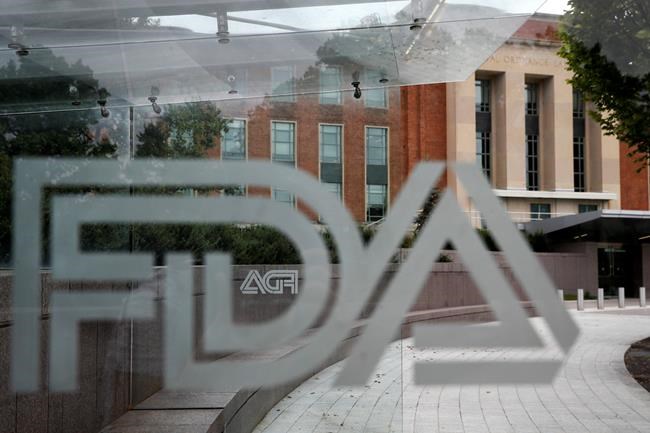
FILE - This Aug. 2, 2018, file photo shows the U.S. Food and Drug Administration building behind FDA logos at a bus stop on the agency's campus in Silver Spring, Md. Health officials reported the first U.S. drug shortage tied to the viral outbreak that is disrupting production in China, but they declined to identify the manufacturer or the product. The Food and Drug Administration said late Thursday, Feb. 28, 2020, that the drug's maker contacted health officials recently about the shortage, which it blamed on a manufacturing issue with the medicine's key ingredient. (AP Photo/Jacquelyn Martin, File)

“At this time, Health Canada is not aware of any impact of COVID-19 in China on Canada’s pharmaceutical supply,” the agency said in a statement, adding drug licence holders are required to report any anticipated or actual drug shortages, and it’s engaged with the pharmaceutical industry monitoring the situation.

The FDA previously said it had reached out to 180 drug manufacturers and asked them to check their supply chain and report any potential disruptions. The agency also said it had identified 20 drugs produced or sourced exclusively from China, but it declined to name them.

The FDA has good reason to not release the names of drugs facing potential shortages, said Rosemary Gibson, who wrote the book “China Rx” on that nation’s role in American health care.

“People might rush to buy it and that would create a worse situation,” said Gibson, a senior adviser at bioethics research group The Hastings Center. “In the context of shortages globally, you have to be very, very careful.”

More than 83,000 COVID-19 cases have been reported worldwide, nearly 79,000 of them in mainland China. Government officials there have severely restricted travel and imposed strict quarantine measures to try and stop the virus from spreading.

Restrictions on movements of people and goods have been imposed by at least 90 countries, and that’s disrupting flow of drugs and raw materials, said Nicolette Louissaint, executive director of Healthcare Ready, a non-profit group funded by drug distributors, government and foundations that tracks the impact of epidemics and natural disasters.

For decades, the pharmaceutical industry has shifted manufacturing to China, India and other countries to take advantage of cheaper labour and materials. Today, roughly 80 per cent of the ingredients used in U.S. medicines are made abroad, according to federal figures. India and other Asian nations rely on Chinese drug ingredients to make finished generic pills.

China ranks second among countries that send drugs and biotech medicines to the U.S., according to the FDA. It is also the top exporter of medical devices and equipment to the U.S.

The country is a major producer of antibiotics for the U.S. market, as well ingredients and medicines for common chronic conditions such as heart disease, said Louissaint.

The virus, which led to strict travel restrictions in Chinese cities home to more than 60 million people, has affected a range of industries. Some factories have tried to restart and run into problems getting the raw materials and components they need.

Chinese factories making pharmaceutical ingredients and drugs are still operating, with some trying to produce far more than usual and others still trying to get workers back, Louissaint said Friday. Cargo carriers are still transporting those products from China to other countries, she said.

“It is challenging,” but fortunately Chinese ports have remained open, Louissaint said.
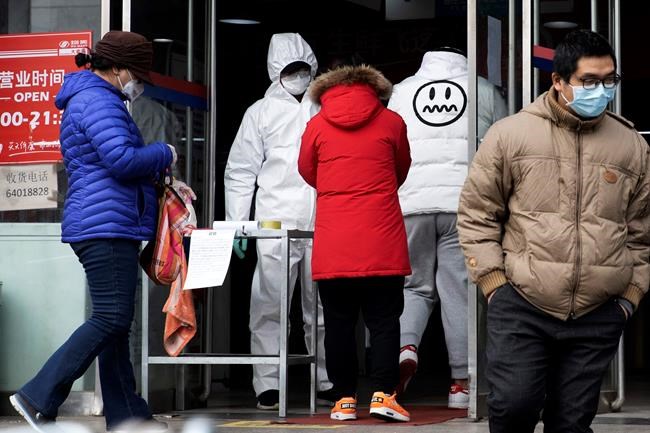
FILE - In this Thursday, Feb. 27, 2020, file photo, a worker in overalls screen for fever at the entrance to a supermarket in Beijing. Health officials reported the first U.S. drug shortage tied to the viral outbreak that is disrupting production in China, but they declined to identify the manufacturer or the product. The Food and Drug Administration said late Thursday, that the drug's maker contacted health officials recently about the shortage, which it blamed on a manufacturing issue with the medicine's key ingredient. (AP Photo/Ng Han Guan, File)

She added that the FDA’s announcement of the shortage indicates the FDA’s tracking efforts are working and drugmakers are communicating with the agency.

The FDA said Thursday there are no reported medical device shortages related to the coronavirus. However, the agency said several Chinese device manufacturing facilities are being “adversely affected” by the outbreak due to staffing problems, including workers who have been quarantined.

The FDA said it is in touch with 63 device manufacturers with Chinese facilities that produce “essential” medical devices. While noting increased orders for masks, respirators, gloves and other protective gear, regulators said there are no reported shortages of those items in the U.S.

Under a 2012 law, drugmakers are required to notify the FDA of production or sourcing issues that could create medication shortages. The agency noted this week that medical device manufacturers are not bound by that law and “are not required to respond when the FDA requests information about potential supply chain disruptions.”

___

Johnson reported from Trenton, New Jersey. AP Writer Bernard Condon contributed from New York. With files from The Canadian Press.

___

The Associated Press Health and Science Department receives support from the Howard Hughes Medical Institute’s Department of Science Education. The AP is solely responsible for all content.

Report Error Submit a Tip

More Stories

Brian Sinclair's legacy will be visible for years, but there was so much we failed to see as he neared death

Melissa Martin 8 minute read Preview

Brian Sinclair's legacy will be visible for years, but there was so much we failed to see as he neared death

Melissa Martin 8 minute read Thursday, Sep. 20, 2018

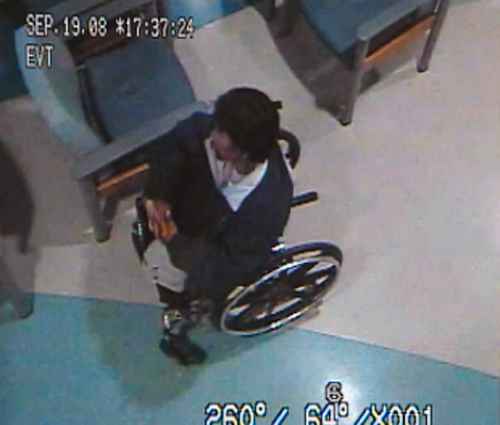
Ten years later, the ghost of Brian Sinclair still haunts the edges of Winnipeg's consciousness. It whispers, moves, seems to shimmer; a phantasmic video image reconstructed from hundreds of pages of documents.

In my mind's eye, veiled by the fog of imagination and time, this is how that ghostly video begins.

It's a perfect September afternoon in Winnipeg, moments before 3 p.m. The skies above the city are gentle. Outside the Health Sciences Centre's emergency room entrance, a white Handi-Transit taxi slows to a stop.

There is a man in a wheelchair. Hands resting on his thighs, clad in a dark jacket. The cab driver pushes his wheelchair to the triage desk, and then leaves. A man in scrubs, holding a notepad, walks over to greet him.

Read
Thursday, Sep. 20, 2018

Agriculture sector wary of ‘strong headwind’ from south

Laura Rance-Unger 5 minute read Saturday, Sep. 5, 2026

Industry analysts talked in circles on a recent webinar as they discussed the implications for agriculture of Canada’s deteriorating relationship with its largest trading partner.

On one hand, panellists for the hastily convened Canadian AgriFood Policy Institute event acknowledged the futility of negotiating on quicksand: a deal made today with the United States might be sucked into the muck tomorrow.

But on the other, webinar panellists speculated with varying degrees of optimism over what it will take to get negotiators back to bargaining.

This disconnect isn’t unique to this cluster of analysts. However, it underscores the difficulty of coming to terms with the seismic shift in America’s attitudes towards Canada.

Letters, Sept. 5

7 minute read Saturday, Sep. 5, 2026

Clearing the air

Re: QDoc patients in middle of billing dispute (Sept. 4)

QDoc has been fortunate to have a genuine partner in the Manitoba government over the past several years. Premier Wab Kinew and Health Minister Uzoma Asagwara have been consistently clear that no Manitoban should go without care because of where they live, and that commitment is exactly why virtual care exists as a permanent, publicly available option today. We built MediNav, the province’s online appointment booking system, together with Manitoba Health, and that same collaborative spirit has helped make more than 350,000 patient visits possible through our platform — many of them evenings, overnights and weekends, reaching rural and underserviced communities that need it most.

We want to be direct with the people who rely on us: QDoc is not going anywhere. We continue to see patients today, and we will keep doing so tomorrow. The issue reported this week is a technical billing matter, not a service disruption, and we are actively working with the province to resolve it quickly, so we can keep growing our capacity to serve Manitobans rather than limiting it.

Local high school, collegiate athletes trying to focus on future, not dwell on season past

Taylor Allen 15 minute read Preview

Local high school, collegiate athletes trying to focus on future, not dwell on season past

Taylor Allen 15 minute read Friday, Jul. 3, 2020

Nobody can relate to what today’s young athletes are going through.

Imagine entering your final year of high school and being told at the last minute that you can’t compete for a provincial championship. Or what it feels like to be the kid who made sacrifices their entire life to one day earn a scholarship and when that time comes, they’re informed the next season might not happen and their university experience will consist of them sitting behind a computer screen, taking online classes.

The realities in today’s pandemic world are unprecedented. No coach or parent can look at these athletes and say, ‘I know what you’re going through.’ Neither can Adrienne Leslie-Toogood, the director of sport psychology for the Canadian Sport Centre Manitoba. But the former University of Manitoba Bisons shooting guard said it’s important for athletes to not pretend that everything is fine during these challenging times.

“I think that bitter ends up resulting down the road if you don’t allow yourself to feel deeply. That’s the one thing we know in sport for sure, that we feel deeply. We celebrate, we work hard, we invest our heart and soul, so things can hurt pretty bad, too,” Leslie-Toogood says.

Read
Friday, Jul. 3, 2020

Senior cats have lots to offer… including mice

Melissa Martin 6 minute read Preview

Senior cats have lots to offer… including mice

Melissa Martin 6 minute read Saturday, Jan. 9, 2016

The first gift Princess gave us was a wee black mouse, not fur but threadbare felt, one that rattled when she grasped it in her tiny mouth.

She dropped it on the bed in front of us, stood up straight and waited. Fleckless yellow eyes fixated on our faces: she wanted a response.

OK, I'm only slightly embarrassed to admit this, but - we gushed. We fawned over the thumb-sized toy with the cloying fervour typically deployed after Christmas recitals by small children. We lifted its slightly slobbered body to our faces, admired it from every angle, and cooed a sticky approval.

"Oh, Princess!" we exclaimed, voices leaping an octave over normal range. "Thank you sooooooo much. Wow, what a great mouse."

Read
Saturday, Jan. 9, 2016

‘We belong… and we are giving back”: Sikh celebration enlivens downtown Winnipeg

Melissa Martin 3 minute read Preview

‘We belong… and we are giving back”: Sikh celebration enlivens downtown Winnipeg

Melissa Martin 3 minute read Yesterday at 4:34 PM CDT

Downtown Winnipeg came alive with vibrant sights, sounds, and scents on Sunday, as Manitoba’s Sikh community flocked to Memorial Park to celebrate its annual Nagar Kirtan procession and festival.

This year marked the 422nd anniversary of the completion of the Guru Granth Sahib, the holy scripture central to the Sikh faith. Shortly after 1 p.m., a palanquin bearing a copy of the scripture was led in parade through downtown Winnipeg, with musical accompaniment.

“This is a chance to tell the public and the whole community where we come from and who we are,” said volunteer Prabh Grewal shortly before the procession got underway. “In a community there are people from every race and every country, and our main objective is to have everybody live in peace and harmony together.”

Before, during, and after the procession, the park hummed with life. As many as 55,000 people converged on the site, with the majority dressed in festive traditional attire. Near the height of the day’s 30 C heat, families relaxed in patches of shade, enjoying plates of Punjabi cuisine dished out for free at dozens of tents sponsored by local businesses.

Read
Yesterday at 4:34 PM CDT