New food guide addresses ‘elephant’ in the room – the dangers of alcohol
Advertisement
Read this article for free:
or
Already have an account? Log in here »
To continue reading, please subscribe:
Digital Subscription
One year of digital access for only $1.44 a week*
- Enjoy unlimited reading on winnipegfreepress.com
- Read the E-Edition, our digital replica newspaper
- Access News Break, our award-winning app
- Play interactive puzzles
*Billed as $5.77 plus GST every four weeks. After 52 weeks, price increases to the regular rate of $19.95 plus GST every four weeks. Offer available to new and qualified returning subscribers only. Cancel any time.
To continue reading, please subscribe:
Add Free Press access to your Brandon Sun subscription for only an additional
$1 for the first 4 weeks*
- Enjoy unlimited reading on winnipegfreepress.com
- Read the E-Edition, our digital replica newspaper
- Access News Break, our award-winning app
- Play interactive puzzles
*Your next Brandon Sun subscription payment will increase by $1.00 and you will be charged $17.95 plus GST for four weeks. After four weeks, your payment will increase to $24.95 plus GST every four weeks.
Read unlimited articles for free today:
or
Already have an account? Log in here »
Hey there, time traveller!
This article was published 23/01/2019 (2840 days ago), so information in it may no longer be current.
TORONTO – A move by Ottawa to use Canada’s food guide to drill home the dangers of chronic alcohol use caught some nutrition and addiction experts by surprise, but they welcomed the tougher stance on an issue they say demands a co-ordinated strategy.
“It’s sort of been the elephant in the corner of the room,” says University of Guelph nutrition professor David Ma, university research leadership chair and director of the Guelph Family Health Study.
“(For) those working in the cancer field in nutrition, there is awareness of the growing concern for alcohol and its relationship to obesity and cancers of various types. But it wasn’t as big a priority as other areas…. Alcohol is starting to float up to the top.”
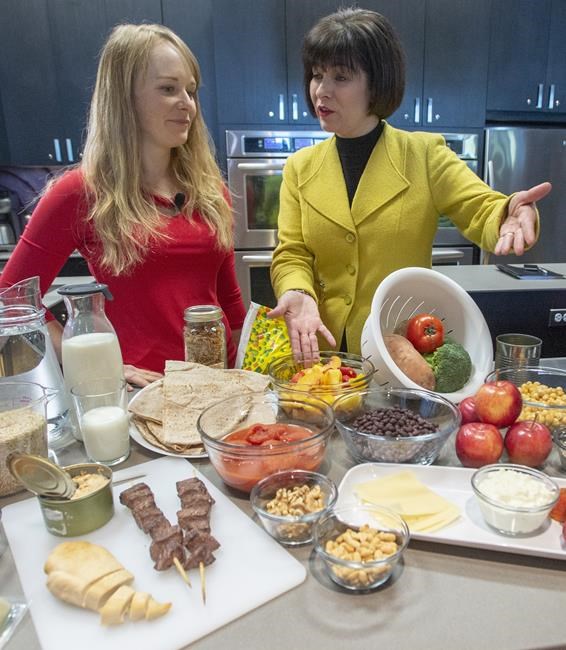
Along with encouraging a diet full of fruits and vegetables and non-meat proteins, Canada’s first new guide in 12 years takes pointed aim at alcohol with a dedicated section that characterizes it as “a leading global health concern.”
It notes long-term consumption is associated with increased risk of many types of cancer including — liver, mouth, colorectal and breast, as well as other serious health conditions including hypertension and liver disease. It also billboards social problems associated with drinking, and the 3,100 deaths and 77,000 hospitalizations related to alcohol in 2016.
It ends by advising those who don’t drink to never be encouraged to start, and urging those who do drink to limit themselves to Canada’s Low-Risk Alcohol Drinking Guidelines. (That separate guide caps weekly drinks at 10 for women and 15 for men. It also states women should have no more than two most days, while men should cap it at three most days.)
The new food guide’s focus on drinking is in contrast to the 2007 edition, which only mentioned the high calories and sugar content as reasons to limit alcohol, arguments the current guide repeats.
It’s also in line with a broader shift in the food guide’s objectives, which now not only suggest what one should eat, but how one should eat — ideally with others, in conjunction with high levels of physical activity for youth and children, and with the awareness that your food choices impact the environment and long-term food supply.
Hasan Hutchinson, director general of nutritional policy and programs at Health Canada, acknowledged the change in a conference call with reporters this week, noting, “there has been, over the last several years, the awareness that there’s a substantial disease burden attributed to alcohol intake.”
“This is something that is part of a pattern of eating and drinking so we think that it’s very important to have this in the food guide,” Hutchinson said.
For addictions specialist Dennis Long, the sharper tone addresses long-standing research that he says was readily available in 2007. While sugar and caloric intake is a concern, he says there are bigger reasons to avoid alcohol.
“What people should be more concerned about is the fact that alcohol is a dependency-producing substance,” says Long, executive director of Breakaway Addiction Services in Toronto.
But while he agreed that non-drinkers should never start, he wondered whether that advice was realistic.
“I find that, to be honest with you, a little bit flippant…. It’s not an easy road sometimes for people,” says Long, who urges moderation and says most individuals drink responsibly.
He noted consumption is driven by many things, including cultural and familial norms that can make it difficult not to drink. He recalled a trip to Italy in which alcohol seemed integrated into so much of society.
“If you went there for lunch and didn’t have wine everybody would be looking at you sideways saying, ‘What’s the matter with you?'”
Issues around alcohol are tricky to tackle without an overarching regulatory body that can address a myriad of issues, adds Catherine Paradis, the leading expert on alcohol at the Canadian Centre on Substance Use and Addiction.
Unlike tobacco, vaping and cannabis, Canada has no alcohol act, making it “very challenging” to launch a comprehensive strategy on things including health, pricing, advertising, and labelling, says Paradis, whose agency was set up by Parliament to counsel decision-makers.
“There’s a little bit of regulation within the Food and Drugs Act, there’s a little bit of regulation within the Excise Tax (Act) but we do not have an alcohol act. If we had one, in the future, it would be easier to address all alcohol-related issues at the same time, including the necessity for Canadians to be well-informed,” she says from Sherbrooke, Que.

“Within the general population alcohol literacy is extremely low — there is very little knowledge about Canada’s low-risk drinking guidelines and even less about the fact that alcohol causes several chronic diseases, including seven types of cancer.”
She adds that alcohol is the only food product that does not have nutrition information on its containers and the only legal psychoactive product that does not need to be labelled with mandatory health warnings.
She wondered if enlisting the food guide more aggressively suggests those gaps are next to be addressed. Paradis notes revisions are also underway on the Canadian Drugs and Substance Strategy, the results of which could guide policy on prevention, enforcement, treatment, and harm reduction.
“This is all new,” she says, perceiving an attempt afoot to unite disparate efforts.
“Alcohol being mentioned in this new food guide, to me, is an encouraging sign that moving forward our government might decide to address alcohol in a comprehensive manner that will have significant and long lasting impact on Canadians’ lives.”
Related Articles
New food guide unseasoned by lobbyists
Advertisement Advertise With Us
Advertisement Advertise With Us