Refugee recalls Syrian torture

Advertisement

Advertise with us

This isn’t a memoir for the faint of heart.

Read this article for free:


By clicking the button above, an account will be created and you will begin to receive some of our recommended newsletters. You may opt out of any newsletter by visiting your Email and Communication Preferences page or by clicking "unsubscribe" at the bottom of any email.

or

Already have an account? Log in here »

To continue reading, please subscribe:

Digital Subscription

One year of digital access for only $1.44 a week*

  • Enjoy unlimited reading on winnipegfreepress.com
  • Read the E-Edition, our digital replica newspaper
  • Access News Break, our award-winning app
  • Play interactive puzzles

*Billed as $5.77 plus GST every four weeks. After 52 weeks, price increases to the regular rate of $19.95 plus GST every four weeks. Offer available to new and qualified returning subscribers only. Cancel any time.

To continue reading, please subscribe:

Add Free Press access to your Brandon Sun subscription for only an additional

$1 for the first 4 weeks*

  • Enjoy unlimited reading on winnipegfreepress.com
  • Read the E-Edition, our digital replica newspaper
  • Access News Break, our award-winning app
  • Play interactive puzzles
Start now

*Your next Brandon Sun subscription payment will increase by $1.00 and you will be charged $17.95 plus GST for four weeks. After four weeks, your payment will increase to $24.95 plus GST every four weeks.

Hey there, time traveller!
This article was published 03/12/2022 (1426 days ago), so information in it may no longer be current.

This isn’t a memoir for the faint of heart.

Author Jamal Saeed arrived in Canada as a refugee in 2016, after spending 12 years as a political prisoner in Syria. He currently lives in Kingston, Ont., where he works as a writer and visual artist.

Saeed was a communist, opposed to the regime of dictator Hafez al-Assad, father of Syria’s current dictator president, Bashar al-Assad.
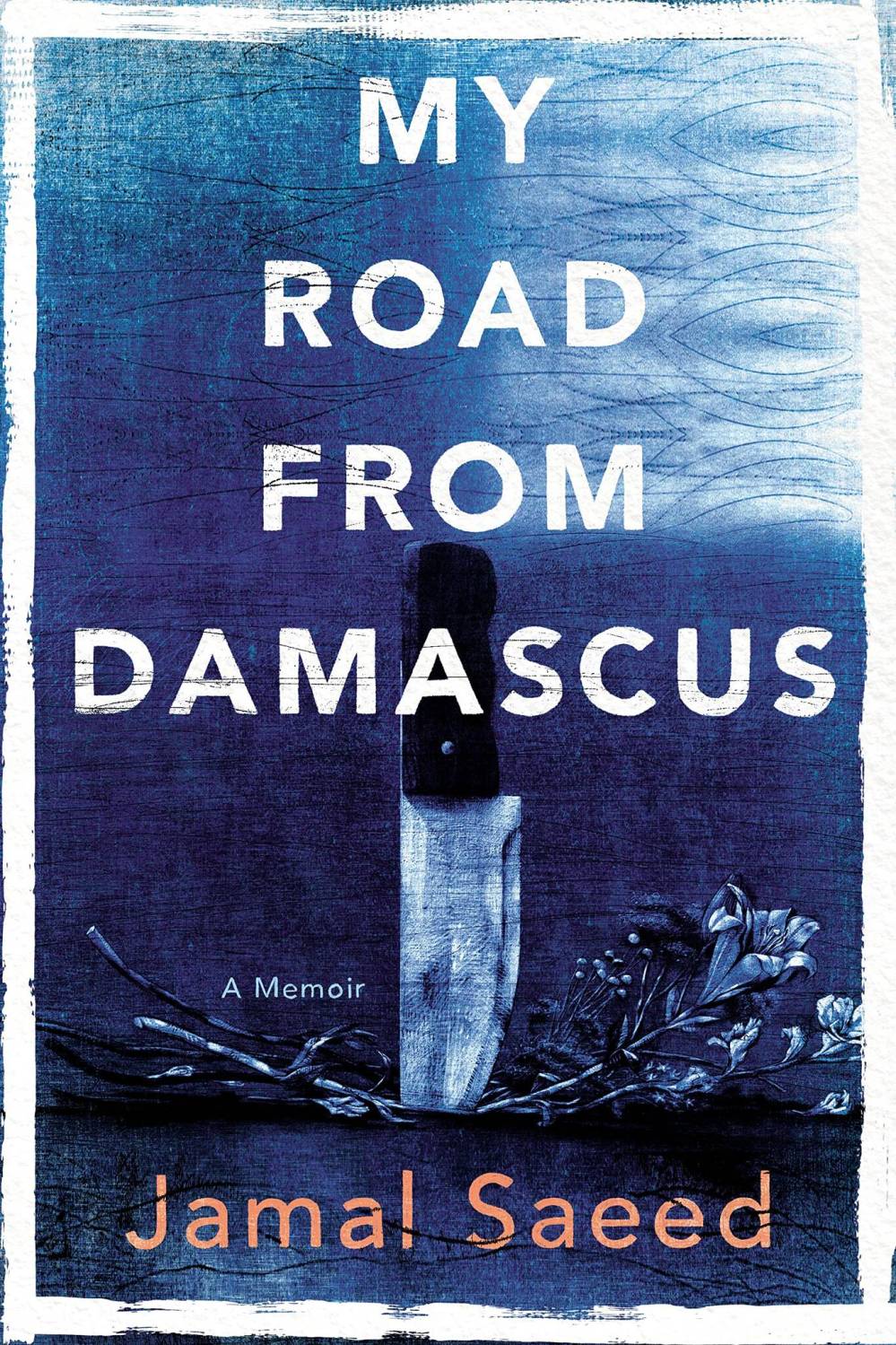
My Road From Damascus

My Road From Damascus

Imprisoned three different times, on each occasion he was neither formally charged with a crime nor ever brought before any judicial process.

Unspeakable tortures and deprivations were visited on him in Syria’s prisons. But what makes his prison experiences so supremely horrific is how casually daily and routine were his guards’ and interrogators’ cruelties.

At base, this is a story about the attempted breaking of a man, and the successful making of a writer.

The use of torture by the Syrian state is long-standing and pervasive. Thousands of people — most of them political opponents of the Bashar al-Assad regime, and before him that of his father — have died in custody in government detention centres over the last several decades.

In what amounts to a cruel joke, this year the Syrian government passed an anti-torture law. It’s widely seen as a transparent attempt to deflect efforts to hold the Syrian government accountable for its brutal treatment of prisoners, contrary to the United Nations Convention Against Torture.

Being an imprisoned communist in Syria put Saeed in double jeopardy. Not only did the Assad regime torture him, but he was jailed with members of the other principal opponent of the Assad regime, the Muslim Brotherhood, many of whom regarded him as an apostate or infidel, and wanted him dead.

The book’s title is an allusion to the biblical apostle Paul who, struck by a supernatural revelation, converted from Judaism to Christianity while travelling on the road to Damascus. More generally, a “road to Damascus” moment is a metaphor for any life-altering experience or epiphany.

Saeed’s moment occurred in 2014 when, despairing of the future of his country, he realized he, his wife and his two young children would never be safe in his homeland. That year they fled Syria, initially for Dubai.

Interspersed among his prison-diary stories are portraits of his family, school and schoolmates, and his village life as a child and adolescent.

There are even several romantic/erotic episodes from his years spent underground, hiding from state-security police goons. Saeed was by his own admission a bit of a rake, albeit a charming one. He seems to have equally worshipped Marx and the ladies.

This a graphic recounting of life as a “detainee” of the Syrian state.

But it’s also a confessional and candid one. Saeed doesn’t hesitate to portray himself, warts and all.

His memoir is the keenly rendered story of a life of astonishing courage and perseverance. And he does justice to that life with writing so fine it’s novelistic in its attention to description and mood.

Douglas J. Johnston is a Winnipeg lawyer and writer.

Report Error Submit a Tip

More Stories

Prairie opportunists are knocking and prime minister should answer the door

Dan Lett 6 minute read Preview

Prairie opportunists are knocking and prime minister should answer the door

Dan Lett 6 minute read Tuesday, Oct. 29, 2019

In preparation for Halloween, Alberta Premier Jason Kenney and Saskatchewan Premier Scott Moe have spent an inordinate amount of time rattling their chains and howling like indignant spirits about the raw deal they are getting from the rest of the country.

In the wake of a federal election in which the governing Liberals failed to elect a MP in either province, Kenney and Moe are summoning apocalyptic visions of secession. We've heard a lot of that before but Western separatists, inspired by the Alberta and Saskatchewan first ministers, are warning everyone that this time it's serious.

Now, before anyone gets too spooked, it's important to remember that a good politician is — first and foremost — an opportunist. These are the folks with the pure political instinct to recognize a moment in which they can gain the upper hand and then seize on it like a ravenous dog on a bone. Imagine that, and you'll have a pretty clear picture of what Kenney and Moe are up to.

In short, the two premiers want two big-ticket items from Ottawa.

Read
Tuesday, Oct. 29, 2019

Cab driver dies in suspected hit and run

Morgan Modjeski 2 minute read Preview

Cab driver dies in suspected hit and run

Morgan Modjeski 2 minute read Yesterday at 7:35 PM CDT

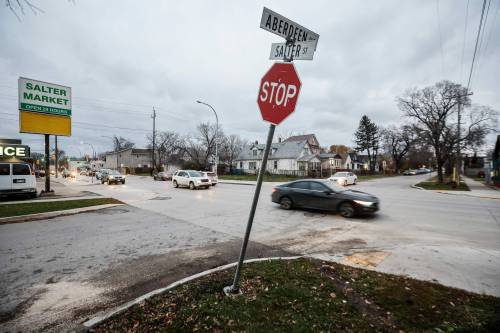
An official with a Winnipeg cab company said one of its drivers died in a collision on Salter Street Wednesday morning.

“It looks like it was a T-bone accident,” said Ram Valluru, general manager of Duffy’s Taxi, about the 6:30 a.m. collision between the cabbie and another vehicle. Traffic was redirected between Aberdeen and Redwood streets for several hours as police investigated.

He said his driver, a man in his late 40s, has a wife and two teenage children. His death has saddened his co-workers.

“I visited their house today to pass along my condolences,” Valluru said. “I know him very well, this driver.”

Read
Yesterday at 7:35 PM CDT

The landscape that taught us to see

Stephen Borys 6 minute read Preview

The landscape that taught us to see

Stephen Borys 6 minute read 2:01 AM CDT

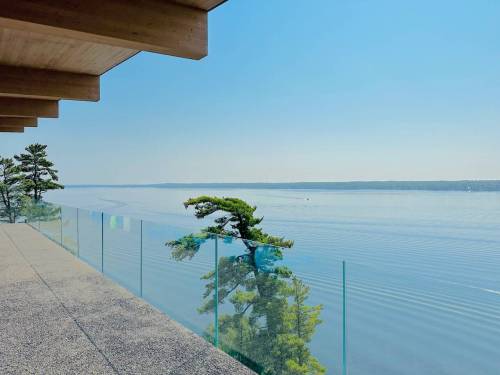
The white pine stood at the edge of the lake, leaning out over the water, its branches bent by years of wind and weather. Beyond it stretched an expanse of blue water beneath a clear sky, a distant tree line and other pines rising along the rocky shoreline. From the deck above, the landscape seemed both expansive and remarkably still.

I had been looking at it for only a few moments when Tom Thomson and the Group of Seven entered the picture. Not literally, of course. But once the association appeared, I could not unsee it. The pine became The Jack Pine and The West Wind. The surrounding rocks, water and sky called up A.Y. Jackson, Arthur Lismer, Franklin Carmichael and Lawren Harris. A landscape I had been looking at all weekend suddenly became part of a visual history Canadians have carried with them for more than a century.

Perhaps that is the Group of Seven’s greatest achievement. They did not simply paint the Canadian landscape. They changed the way we see it.

I was at the lake for a quiet weekend, reflecting on the cultural, community and development projects that occupy much of my work through Civic Muse. Increasingly, I see these pursuits as part of the same conversation — place and identity, how we understand it, care for it and decide what is worth carrying forward.

Read
2:01 AM CDT

Winnipeg Comiccon to feature Terminator 2 villain, Stargate cast

Conrad Sweatman 6 minute read Preview

Winnipeg Comiccon to feature Terminator 2 villain, Stargate cast

Conrad Sweatman 6 minute read 2:01 AM CDT

You gotta ask the question.

In Robert Patrick’s five-decade career, the 67-year-old actor — who’s in town for this weekend’s Winnipeg Comiccon — has played a gambling addict (The Sopranos), a racist (Peacemaker), a terrorist (Die Hard 2), a bereaved father (The X Files) and dozens of other memorable American TV and film parts.

Sometimes weak, though more often, bold and intimidating characters — but, in any case, real men, with emotional ranges well beyond the robot he’s most famous for playing, namely Terminator 2: Judgment Day’s T-1000, a visual paradox of blob and blades whose only mission is to kill a teenage John Connor.

Still, the people want to know: what does Hollywood’s most iconic machine villain make of today’s AI boom?

Read
2:01 AM CDT

2026 Winnipeg election results: Mayor and council

1 minute read Preview

2026 Winnipeg election results: Mayor and council

1 minute read Thursday, Oct. 22, 2026

Complete results for the 2022 election races for Winnipeg mayor and city councillors.

Read
Thursday, Oct. 22, 2026

NDP introduces last-minute rent-hike bill, Tories say it will cause administrative nightmare

Carol Sanders 4 minute read Preview

NDP introduces last-minute rent-hike bill, Tories say it will cause administrative nightmare

Carol Sanders 4 minute read Yesterday at 7:29 PM CDT

A day before the legislative session ends, the NDP government introduced a bill to ensure landlords can’t charge tenants backpay for approved above-guideline rent increases.

Bill 59, the Residential Tenancies Amendment Act (2), would prohibit a landlord who has applied for a rent increase above the maximum permitted by regulation from charging tenants the new rate until it is approved.

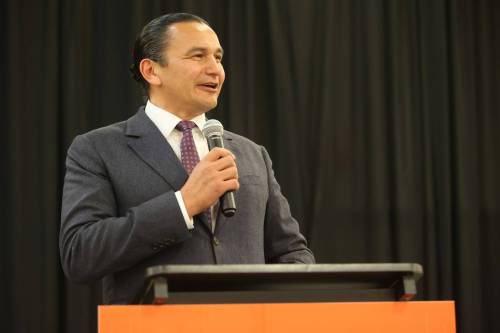
Premier Wab Kinew announced earlier this month that renters would not have to pay the increases until the provincial Residential Tenancies Branch hears landlords’ arguments and issues its decisions.

“We recently passed legislation in the house to make sure life will be more affordable,” Kinew said at a news conference on Oct. 20, referring to a new rent bill introduced in March and expected to become law before the session ends on Oct. 29. He was flanked by Winnipeg tenants facing rent increases of more than 50 per cent.

Read
Yesterday at 7:29 PM CDT