Press baron’s rise and fall a riveting read

Advertisement

Advertise with us

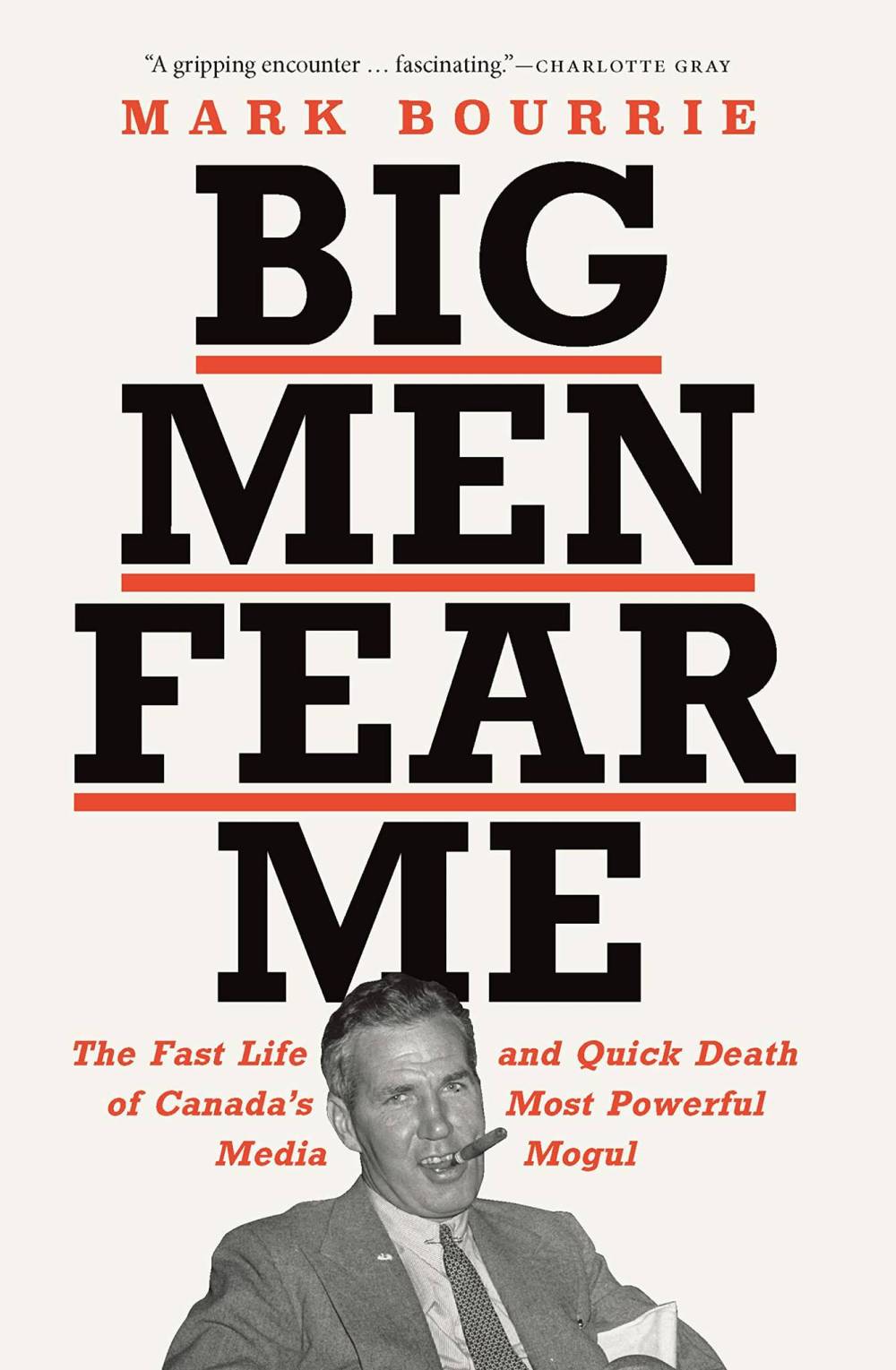
This fascinating biography of the Globe and Mail newspaper’s founding owner and publisher might just as aptly be subtitled The Man Who Would Be Prime Minister.

Read this article for free:


or

Already have an account? Log in here »

To continue reading, please subscribe:

Subscribe and receive a limited-edition Free Press branded hat or tote.

Digital Subscription

One year of digital access for only $205*

  • Enjoy unlimited reading on winnipegfreepress.com
  • Read the E-Edition, our digital replica newspaper
  • Access News Break, our award-winning app
  • Play interactive puzzles

*First annual payment billed as $205.00 + GST for one year. This annual subscription will automatically renew at $233.00 + GST every 52 weeks (10% off the regular annual price of $259.35). Offer available to new and qualified returning subscribers only. Cancel any time.

To continue reading, please subscribe:

Add Free Press access to your Brandon Sun subscription for only an additional

$1 for the first 4 weeks*

  • Enjoy unlimited reading on winnipegfreepress.com
  • Read the E-Edition, our digital replica newspaper
  • Access News Break, our award-winning app
  • Play interactive puzzles
Start now

*Your next Brandon Sun subscription payment will increase by $1.00 and you will be charged $17.95 plus GST for four weeks. After four weeks, your payment will increase to $24.95 plus GST every four weeks.

Hey there, time traveller!
This article was published 19/11/2022 (1413 days ago), so information in it may no longer be current.

This fascinating biography of the Globe and Mail newspaper’s founding owner and publisher might just as aptly be subtitled The Man Who Would Be Prime Minister.

In October 1936, Toronto high school dropout and self-made millionaire George McCullagh bought a city newspaper, the Globe (founded in 1844 by Father of Confederation George Brown). A month later he bought another Toronto newspaper, the Mail and Empire.

He promptly merged them and christened the hybrid the Globe and Mail.
The newspaper became his platform to espouse a host of public-policy positions and the springboard for his political ambitions.

As Ottawa author Mark Bourrie puts it, McCullagh believed “the country needed an unconventional, strong leader. He saw that man when he looked in the mirror.”

Bourrie has the credentials to write this bio. He has a law degree, a master’s degree in journalism and a PhD in history. His immediately prior book, Bush Runner: The Adventures of Pierre Radisson, won the 2020 RBC Charles Taylor prize for literary non-fiction.

McCullagh, in Bourrie’s telling, pretty much controlled two Ontario premiers, perennially drunk reprobate Liberal Mitchell Hepburn and Conservative ideologue George Drew. He also had the ear, and often the ire, of then Liberal prime minister Mackenzie King.

In 1952, at age 47, he was positioned to make a move into national politics. “The way was open for him to be leader of the federal Conservative party when his friend George Drew was finished taking his turn,” writes Bourrie.

Instead he died, suddenly, almost certainly by suicide, the result of decades of fighting a bipolar disorder for which he was treated and often mis-treated.

McCullagh is a forgotten titan of Canadian journalism and political history. Bourrie sees two reasons for this.

First, the Globe and Mail’s subsequent owners and publishers have ignored or downplayed his legacy.

Second, his self-aggrieved widow, Phyllis, burned his prodigious collection of papers — correspondence, speeches, reports, documents, receipts, accounts — making it difficult for historians and wannabe biographers to get the inside dope on McCullagh.

McCullagh’s surviving daughter, Ann, told Bourrie her mother burned the papers so they could never be used for a biography. Ann avows that his wife, and her mother, hated McCullagh because “intellectually she couldn’t keep up with him.”

Bourrie devotes a couple chapters to a somewhat bizarre, and ultimately abortive, populist movement called The Leadership League that McCullagh launched in 1939.

It was ostensibly a non-partisan organization that aimed to curtail government overreach. But its objectives were always murky. What it did, though, was create, albeit briefly, a national vehicle for McCullagh’s politics.

He cites media historian Douglas Fetherling’s epitaph on the movement, who described it as “at best anti-democratic and perhaps even fascistic in its sympathies.”

Bourrie’s research is meticulous, and his writing has great pace and bounce.

McCullagh’s rags-to-riches accession to press baron, and dark sudden demise, is a remarkable story.

Douglas J. Johnston is a Winnipeg lawyer and writer.

Report Error Submit a Tip

More Stories

Neighbours concerned shed used as home on city land

Malak Abas 6 minute read Preview

Neighbours concerned shed used as home on city land

Malak Abas 6 minute read Wednesday, Sep. 14, 2022

An unassuming tiny home suddenly appeared one day in August, tucked between a park and community garden in St. James.

Read
Wednesday, Sep. 14, 2022

Letters, Oct. 2

6 minute read 2:00 AM CDT

Are clinical psychologists next?

Re: Province hires 17 psychiatrists to work in Winnipeg, Selkirk (Sept. 25)

Manitoba’s government has shown that it knows how to solve a specialist staffing crisis in health care. Clinical psychologists are still left to wonder when it will be their turn.

The Manitoba Psychological Society (MPS) welcomes the recent announcement of 17 new psychiatrists in the public system. Any investment in mental health deserves to be celebrated, especially in light of the Canadian Alliance on Mental Illness and Mental Health’s report card that was released in August 2026. Manitoba received overall grades of F and D for mental health and substance use health, respectively. Although disappointing, this is not surprising given that Manitoba spends five to six per cent of its health budget on mental health and addictions, about half the recommended rate of 12 per cent.

Wellbrock romps to win in men's swimming marathon

Paul Newberry, The Associated Press 5 minute read Wednesday, Aug. 4, 2021

They Jays have been getting big-time performance from the man with the big-time contract, now that he’s healthy.

Who has been invited to the table?

Stephen Borys 6 minute read Preview

Who has been invited to the table?

Stephen Borys 6 minute read Yesterday at 2:01 AM CDT

Last Friday, I spoke at Booth University College’s inaugural Honour and Hope Harvest Dinner in support of Shelter U. I had been asked to speak about the power of art in the community, a subject I have spent much of my professional life thinking about — as a museum director, writer and teacher, and now through my consulting work with Civic Muse.

What continues to interest me is not simply what museums, universities and other public institutions do, but whether their work actually matters — whether they make a difference in the lives of the people and communities around them.

Preparing for the evening brought me back to an even more fundamental question: Who has been invited in?

One of my museum mentors used to remind me that institutions often begin the conversation about public engagement too late. Before engagement comes the welcome, and before the welcome comes the invitation. We can create extraordinary buildings, exhibitions and programs and say that everyone is welcome. But unless people believe that these places are also meant for them, many will never cross the threshold.

Read
Yesterday at 2:01 AM CDT

Small businesses outline election priorities

Robin Bezte 5 minute read 2:00 AM CDT

Since moving to Winnipeg earlier this year, I have come to know the city through its small businesses. As a new Exchange District resident, grabbing coffee at Little Sister, walking through The Forks Market and stopping at Pho Hoang for lunch have become part of my routine. These are the places that give Winnipeg’s neighbourhoods their character and have helped make a new city feel like home.

That is why an empty storefront never feels like just vacant real estate. It represents someone’s investment and hope. When a small business disappears, the community loses a piece of itself.

On Oct. 28, Manitobans in most municipalities will choose their next mayors, reeves and councillors. While city councils may not set interest rates or negotiate global trade agreements, they do have some control over many of the barriers entrepreneurs encounter day to day, from property tax bills and permit applications to public safety and construction disruptions.

Ahead of the upcoming elections, the Canadian Federation of Independent Business (CFIB) surveyed Manitoba small business owners to get a sense of their municipal priorities and concerns.

You’re a solid, loyal sister, so worry not

Maureen Scurfield 5 minute read 2:00 AM CDT

DEAR MISS LONELYHEARTS: I ran into my sister’s husband at the bar recently. He was drinking with a bunch of people from his work. I noticed he was sitting close to a young woman, with his arm around her.

I just nodded without a smile as I slowly passed them. I kept on going, but he knew I saw them together. A few minutes later he came over — obviously drunk — and said, “You’re a good girl! You won’t say anything to your sister, will you?” Ha! I looked at him and said, “Of course I’m going to say something!”

My loyalty will always be to my sister. I phoned my sis in my car and blabbed. She tried to laugh it off, but she’s gone silent since — not answering my calls or messages. So apparently now I’m the troublemaker? That’d be just her style! What should I do?

— Worried About Us, North Kildonan