‘The brains’ behind anti-strike movement

Former Winnipeg mayor played pivotal role in opposing labour movement

Advertisement

Advertise with us

Veteran Toronto Daily Star reporter William Plewman arrived in Winnipeg on May 22 and over the next five weeks wired more than 90 reports and 150,000 words to his paper. His coverage about the event proved to be the most accurate, objective and insightful provided by any newspaperman.

Read this article for free:


or

Already have an account? Log in here »

To continue reading, please subscribe:

Subscribe and receive a limited-edition Free Press branded hat or tote.

Digital Subscription

One year of digital access for only $205*

  • Enjoy unlimited reading on winnipegfreepress.com
  • Read the E-Edition, our digital replica newspaper
  • Access News Break, our award-winning app
  • Play interactive puzzles

*First annual payment billed as $205.00 + GST for one year. This annual subscription will automatically renew at $233.00 + GST every 52 weeks (10% off the regular annual price of $259.35). Offer available to new and qualified returning subscribers only. Cancel any time.

To continue reading, please subscribe:

Add Free Press access to your Brandon Sun subscription for only an additional

$1 for the first 4 weeks*

  • Enjoy unlimited reading on winnipegfreepress.com
  • Read the E-Edition, our digital replica newspaper
  • Access News Break, our award-winning app
  • Play interactive puzzles
Start now

*Your next Brandon Sun subscription payment will increase by $1.00 and you will be charged $17.95 plus GST for four weeks. After four weeks, your payment will increase to $24.95 plus GST every four weeks.

Hey there, time traveller!
This article was published 08/06/2019 (2651 days ago), so information in it may no longer be current.

Veteran Toronto Daily Star reporter William Plewman arrived in Winnipeg on May 22 and over the next five weeks wired more than 90 reports and 150,000 words to his paper. His coverage about the event proved to be the most accurate, objective and insightful provided by any newspaperman.

One of the best examples of Plewman’s reporting is his final dispatch, Andrews the Brains of Strike Opponents. In this account, Plewman astutely identified Citizens’ Committee of One Thousand executive member Alfred Andrews as the individual most responsible for defeating the strike.

Andrews, a corporate lawyer and former Winnipeg mayor, was appointed early in the walkout as special representative of the Justice Department to collaborate with the North-West Mounted Police and the Manitoba government to end the strike unconditionally.
Plewman began Andrews the Brains by comparing him with strike leader Bob Russell.

If R.B. (Bob) Russell, the Socialist machinist was the outstanding leader of the Winnipeg general strike, A.J. Andrews, K.C., was the principal factor in opposing the strike movement. Those two men were generals directing the strategy of opposing forces. Unlike in age, appearance, training and ideals, they were not unequal rivals. Andrews himself would be the first to admit that Russell is well-posted as to economics and labor organization and a man of rather more than ordinary native ability. The battle between these two clever tacticians provided a fascinating study apart from the magnitude of the national issue involved. Russell was not worsted until Andrews was given the opportunity to use the powers of the State to put Russell in custody and eliminate him as a factor in the strike. Andrews is old enough to be Russell’s father. His hair, long in the front and rather thin, is iron grey and often tousled. His face is clean shaven, with a pipe usually in the mouth. He is not at all finicky about his clothes and general appearance. Andrews often was seen during the strike, hatless, with a wilted collar dashing about the city.

Then Plewman focused solely on Andrews and how he singlehandedly ended the strike.

He (Andrews) was here, there and everywhere, directing the operations of the Citizens’ Committee of One Thousand, as a member of the executive, finding and assembling evidence against the strike leaders, as a representative of the Justice Department drawing up charges, directing raids, supervising arrests and holding innumerable conferences with the authorities, business and labor leaders. It is an open secret that the Citizens’ Committee dictated nearly every move made during the strike by the (City) Council. Council readily followed intimations that the police force should be dismissed, pledges against sympathetic strikes be exacted from all civic employees, various police utilities be operated by volunteers, a monster force of special police be recruited at six dollars a day, and ice, and milk be distributed from the schools. Probably no one person had more do to with these various moves than had Mr. Andrews. He is credited with having had a hand in framing the change in the Immigration Act rushed through Parliament in one hour, which would permit British-born agitators to be deported after summary trial, and he certainly was responsible for the sensational (June 17) round-up of the strike leaders and their imprisonment in a penitentiary twenty miles from the city. Enlistment of a large citizen army, use of North-West Mounted Police, forcing the railway company to operate the streetcars, are all moves supposed to have been made after Andrews had voiced his approval.

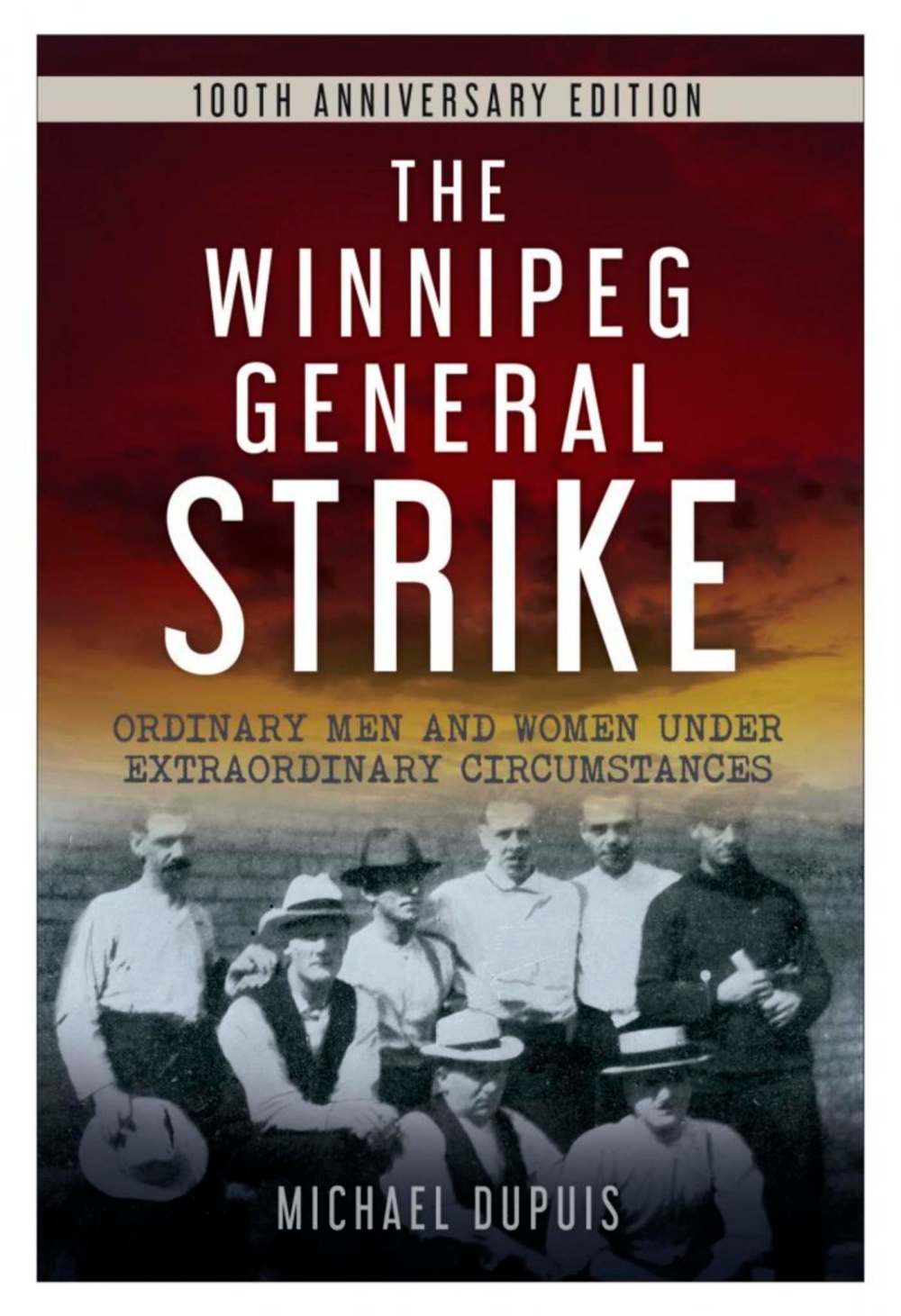
(Excerpt from Michael Dupuis’s The Winnipeg General Strike: Ordinary Men And Women Under Extraordinary Circumstances)

Report Error Submit a Tip

More Stories

Climate: ‘No good outcomes’

Gwynne Dyer 5 minute read 2:00 AM CDT

‘EL NIÑO is being supersized before our eyes,’ United Nations Secretary-General António Guterres said last week.

“The science leaves no room for doubt: the planet is in uncharted waters, and those waters are heating up. The world is in the danger zone of extreme weather.”

He’s right — we are in even deeper trouble than we thought on the climate front.

Zeke Hausfather, a leading American climate scientist, warns that 2027 is almost certain to be the hottest year. It will be, he said, “a climate time-machine, temporarily driving global average temperatures to levels not normally expected until the late 2030s.” (Note the “temporarily.” We’ll get back to that.)

St. Charles golfer takes opening round lead at national senior men’s championship

Joshua Frey-Sam 6 minute read Preview

St. Charles golfer takes opening round lead at national senior men’s championship

Joshua Frey-Sam 6 minute read Yesterday at 7:59 PM CDT

David White didn’t set any expectations entering this week.

The St. Charles golfer knew he had the game to keep up with a talented field across four days, but wouldn’t go so far as to say he’d be in the hunt for a title.

So the 59-year-old walked away in great spirits after an opening round three-under 69 has him leading the Canadian senior men’s championship at Niakwa on Tuesday.

It was a terrific display of resilience in blustery conditions for White, who was one shot clear of Scotland’s Ronnie Clark, the only other player to reach red figures.

Read
Yesterday at 7:59 PM CDT

DNA on beer can helps solve killing

Dean Pritchard 5 minute read Preview

DNA on beer can helps solve killing

Dean Pritchard 5 minute read 2:00 AM CDT

Two years after 74-year-old James Monaghan was stabbed in his Sherburn Street home, DNA found on a beer can led police to his killer.

Shara Harper, 29, pleaded guilty to manslaughter and on Tuesday was sentenced to six years in prison.

A neighbour found Monaghan dead in his home on July 29, 2022. He had been stabbed twice in the chest and back.

The investigation into Monaghan’s killing had stalled until June 2024, when DNA found on an empty beer can in Monaghan’s home was confirmed to be a match for Harper.

Read
2:00 AM CDT

There is a better way

Hersh Seth 4 minute read Saturday, Aug. 29, 2026

Hal Turner is correct about the challenges posed by winter and drought to our energy grid (The right plan for reliable energy, Think Tank, Aug. 11). But the ongoing debate is really about how we manage them.

Manitoba Hydro’s chief operating officer wants that debate to stay focused on facts, and his summary is fair. Demand is going up. The toughest times are still the coldest nights, and dry years put the most strain on the system. Wind power is unpredictable, solar is weakest when our days are shortest, and batteries alone cannot get Manitoba through a drought. The province also already buys wind power, is growing Indigenous-led supply and still has one of the cleanest and most affordable grids in North America. We’re not arguing with these points.

The real issue is not whether Manitoba needs reliable winter power. It is about whether building a $3-billion gas plant in Brandon is the only or best way to bridge the forecasted energy gap.

Almost all of our electricity, about 99.7 per cent, already comes from water, wind and biomass. We emit about 1.3 tonnes of carbon per gigawatt-hour. By comparison, the average Canadian utility emits approximately 121, and the American average is ~350.

South Winnipeg neighbourhood will be first to go geothermal

Chris Kitching 4 minute read Preview

South Winnipeg neighbourhood will be first to go geothermal

Chris Kitching 4 minute read Updated: 5:07 PM CDT

A new neighbourhood in south Winnipeg will be Manitoba’s first to use a shared, large-scale geothermal system to heat and cool hundreds of homes over coming decades.

The province is giving up to $4 million to the developers of Southwood Circle, just north of the University of Manitoba’s Fort Garry campus, for a district geothermal system as part of the NDP’s goal to reach net-zero greenhouse gas emissions by 2050.

“It means a whole neighbourhood can tap into geothermal, which means low-carbon heating and cooling for at least 1,000 homes,” Premier Wab Kinew said at a news conference Wednesday.

Geothermal systems, equipped with pumps and pipes, use underground temperatures to heat and cool one or more buildings. Proponents point to long-term energy and cost savings compared with conventional heating and cooling systems.

Read
Updated: 5:07 PM CDT

‘Dynacare sucks’: premier muses about bringing lab services back into public system

Carol Sanders 6 minute read Preview

‘Dynacare sucks’: premier muses about bringing lab services back into public system

Carol Sanders 6 minute read Updated: 6:48 PM CDT

Premier Wab Kinew says Manitoba may bring Dynacare’s diagnostic lab services back into the public system rather than continue to sign contracts with the for-profit company.

“Dynacare sucks. They’ve made an absolute mess of this situation,” the premier said Wednesday, the day the company’s 350 employees reported back to work after the labour board halted their strike after just one day.

Kinew first made the remark about Dynacare in a CBC radio interview Wednesday morning and added he is “not happy with them.”

Dynacare performs the majority of non-emergency blood and urine tests in the province.

Read
Updated: 6:48 PM CDT