Modernizer and protector of the Royal Family: Prince Philip, Duke of Edinburgh, dead at 99
Advertisement
Read this article for free:
or
Already have an account? Log in here »
To continue reading, please subscribe:
Digital Subscription
One year of digital access for only $1.44 a week*
- Enjoy unlimited reading on winnipegfreepress.com
- Read the E-Edition, our digital replica newspaper
- Access News Break, our award-winning app
- Play interactive puzzles
*Billed as $5.77 plus GST every four weeks. After 52 weeks, price increases to the regular rate of $19.95 plus GST every four weeks. Offer available to new and qualified returning subscribers only. Cancel any time.
To continue reading, please subscribe:
Add Free Press access to your Brandon Sun subscription for only an additional
$1 for the first 4 weeks*
- Enjoy unlimited reading on winnipegfreepress.com
- Read the E-Edition, our digital replica newspaper
- Access News Break, our award-winning app
- Play interactive puzzles
*Your next Brandon Sun subscription payment will increase by $1.00 and you will be charged $17.95 plus GST for four weeks. After four weeks, your payment will increase to $24.95 plus GST every four weeks.
Read unlimited articles for free today:
or
Already have an account? Log in here »
Hey there, time traveller!
This article was published 09/04/2021 (2031 days ago), so information in it may no longer be current.
LONDON – Prince Philip, Duke of Edinburgh, has died at age 99, Buckingham Palace said Friday.
The Queen’s husband was admitted to a London hospital on Feb. 17 after feeling unwell. He spent a month in hospital and was released on March 16, when he returned to Windsor Castle.
The Royal Family said he died at home.
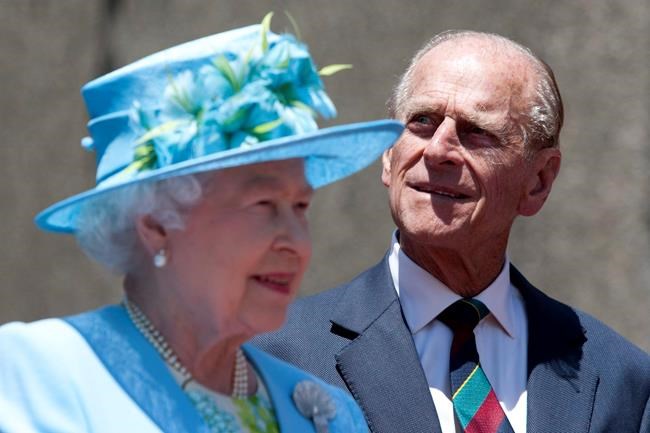
“It is with deep sorrow that Her Majesty The Queen has announced the death of her beloved husband, His Royal Highness The Prince Philip, Duke of Edinburgh,” The Royal Family said on Twitter.
His illness was said to not be related to COVID-19 — the Queen and Philip were vaccinated against the coronavirus in early January.
Philip will be laid to rest with all the honours due a prince of the United Kingdom and a consort to the Queen, but the pandemic means it will be a more low-key farewell than has marked many royal deaths.
Buckingham Palace said in a statement that details “will be confirmed in due course,” but modified funeral and ceremonial arrangements are being considered by the Queen “in light of current government advice and social distancing guidelines.”
Flags on government buildings and royal residences were lowered to half-mast and British television networks cancelled scheduled programs to allow for special coverage after Philip died.
His death will be marked with 41-gun salutes at noon on Saturday at locations across the U.K., including the Tower of London and Edinburgh Castle, as well as in Gibraltar and on Royal Navy ships at sea.
But the palace and the British government urged people not to gather or lay flowers outside the royal residences to honour him. The palace instead invited well-wishers to sign a book of condolences — but only online, to avoid crowds and queues.
Philip retired from public duties in 2017 and had rarely appeared in public since.
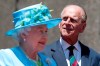
Philip married the then-Princess Elizabeth in 1947 and was the longest-serving royal consort in British history.
He and the Queen had four children, eight grandchildren and nine great-grandchildren.
A former naval officer and keen polo player, Philip enjoyed robust health well into old age but he had a number of health issues in recent years.
Prince Philip, Duke of Edinburgh — one of just a handful of men in history to be the husband of a reigning British queen— stamped his own personality on a job with no formal constitutional role. By doing so, he did much to keep the monarchy in tune with a changing world.
His informality and approachability, which remained unchanged through his years in Buckingham Palace, were a contrast to the more buttoned-down personality of his wife,Queen Elizabeth II.
The Queen’s royal training and ingrained conscientiousness has given her an air of constraint in public, but Philip carried his breezy private personality into the limelight, although always retaining a natural dignity.
He had a brisk, incisive mind. In an age of moon rockets, atomic power plants and Earth satellites, he kept a close eye on scientific developments and was immensely well informed on a vast range of subjects.
But Philip’s willingness to speak his mind also landed him in trouble throughout his life with a series of publicity gaffes. Typical of his public humour was his remark in 1981 when Britain was in the grip of a recession. ”Everybody was saying we must have more leisure time,” he said. ”Now they are complaining they are unemployed.”
Philip was an energetic man. He flew jet planes and piloted his own helicopters — a radical break with royal tradition. On a 1962 tour of Latin America he piloted his own jet aircraft much of the way.
His impromptu spirit was seen in Canada in 1958 when he interrupted a homeward journey from a visit to Ottawa for a tour of Springhill, N.S., which was in the throes of a mine disaster that had killed 74 men at the Cumberland No. 2 colliery. Mayor Ralph Gilroy introduced Philip to survivors by simply saying, ”Boys, here’s His Royal Highness, Prince Philip.”
The same informality and easy grace was evident in an unannounced visit to the wife of a miner who had lost her husband.
The list of organizations to which he lent his patronage ranged across British life, but youth were particularly close to his heart.
The prince often thrilled young Canadians by personally presenting them with the Duke of Edinburgh gold awards, first introduced in 1963 to encourage perseverance, initiative and community responsibility.
In a precedent-setting television program for children after his first round-the-world trip, Philip reminded his audience that all the places he had seen belonged to one family of nations, the Commonwealth.
“We stick together, not by force, but because we like each other,” he said.
The Commonwealth Study Conference, initiated in 1956, was a typical example of the projects into which he threw his energies and enthusiasm. It was concerned with the consequences of changing industrial development in the Commonwealth. A second meeting was held in Canada in 1962.
Early in his royal career, Philip expressed with the casual air of a commuter his plans to visit all parts of the Commonwealth. He was usually with the Queen on her tours of Canada but he came often on his own as well.
At home, Philip’s influence was felt in court circles.
He encouraged the Queen to bring time-and-motion study experts in to shake up the staid routine of the royal household. He persuaded her to send their eldest son and heir, Prince Charles, to Philip’s own rugged Scottish school, Gordonstoun, rather than to fashionable Eton.
Author Basil Boothroyd, in his book “Prince Philip, An Informal Biography,” wrote the prince wasn’t the stern father that some might imagine. Boothroyd said Philip checked school reports but didn’t care if academic excellence was achieved.
“I say, ‘Look, I’m only going to bother if you’re permanently on the bottom,'” Philip was quoted as saying. ”’I really couldn’t care less where you are. Just stay in the middle. That’s all I ask.'”
In his later years, Philip was hospitalized several times for infections, a coronary angioplasty and a hip replacement. He almost always reappeared with the Queen at public engagements until he retired from royal duties in 2017.
Philip of the Hellenes was born June 10, 1921, at Mon Repos, his father’s house on the isle of Corfu off Greece. He was the only son of Prince Andrew of Greece and Denmark, who died in 1944.
His mother, Princess Alice, eldest daughter of Prince Louis of Battenberg, later lived as a nun on Tinos, another Greek island. He had four sisters, one of whom, Cecilia, was killed in an air crash in 1937.
Life was eventful for the infant prince. At 12 months, he was taken from Corfu in a British battleship after internal troubles in Greece. He started school in the Paris suburb of St. Cloud, a lively lad with straw-coloured hair who wrote impish letters to friends signed Philip of Greece.
An all-around sportsman, he was also one of the best seamen at Gordonstoun and was 16th of 34 entrants to the Royal Naval College at Dartmouth, which he joined in March 1939. He won the King’s Dirk as best all-around cadet of the term.
It was there, too, in 1939 that the 18-year-old Philip met 13-year-old Princess Elizabeth, perhaps for the first time. They played croquet together on the captain’s lawn and, later, Philip impressed Elizabeth by his capacity to feast on shrimp and banana splits.
Six feet tall, with blond good looks and a dashing manner, he always ”cut a figure,” and the romance of the debonair sailor prince with the shy young English princess was one of the brightest events of Britain’s early postwar years.
First as Prince Philip of Greece, later as Lt. Philip Mountbatten, RN, he quickly impressed his personality on the British public.
Rumours of an impending engagement circulated in 1946. Philip’s red sports car was a common sight outside the palace and Elizabeth, it was whispered, hummed “People Will Say We’re In Love” and propped a picture of the handsome navy lieutenant on her dressing table.
Not everyone at court was sure about the young prince, who was seen as too foreign by some, too brash by others.
“They felt he was rough, ill-mannered, uneducated,” Tommy Lascelles, King George VI’s private secretary, was quoted as saying in Sarah Bradford’s biography “Elizabeth.”
Sixth in line to the throne of Greece, Philip renounced his right of succession and became a naturalized British subject in February 1947.
King George VI announced the betrothal of his daughter and Philip on July 9, 1947. The marriage, headline news around the world, took place in Westminster Abbey on Nov. 20.
Six kings and seven queens attended the ceremony.
The king conferred on his son-in-law the style and title of HRH Philip, Baron Greenwich, Earl of Merioneth and Duke of Edinburgh. With the heavy title came heavy responsibilities.
“Why do you think I’m getting married?” he said to a friend. “Do you know I’ve never really had a home? Since I was eight I’ve always been away at school — or in the navy.”
Philip and Elizabeth spent part of their honeymoon at the Hampshire home of Earl Mountbatten, the uncle who had largely looked after Philip’s upbringing.
They lived first at Buckingham Palace. Philip remained in the navy, taking time off to be with his wife at the birth of Charles on Nov. 14, 1948. Princess Anne arrived in 1950, followed by Prince Andrew in 1960 and Prince Edward in 1964.
Philip said farewell to his naval career in July 1951, describing his days as commander of the frigate Magpie as the “happiest days of my sailor life.”
The young couple’s roles changed dramatically on Feb. 6, 1952. They were on an official visit to Kenya, on their way to Australia, when word came of the King’s sudden death in England. The couple hurried back to London to begin their lifelong duties as Queen and consort.
It wasn’t always easy for Philip to accept his new role in the Royal Family. One flashpoint came in April 1952 when the Queen, on the advice of Prime Minister Winston Churchill’s cabinet, declared that her children would use her last name of Windsor instead of their father’s family name, Mountbatten.
“I am the only man in the country not allowed to give his name to his children,” he reportedly complained to friends.
Eight years later, the same year their second son was born, the Queen softened her stance. She decreed that while she and her children would be known as the House of Windsor, more minor royals — other descendants not directly in line for the throne — would be known as Mountbatten-Windsors.
In 1957 the Queen granted Philip the “style and titular dignity of a Prince of the United Kingdom” and announced he would henceforth be known as His Royal Highness Prince Philip, Duke of Edinburgh.
Philip was as distinctively of the 20th century as Prince Albert, last consort before him, was typical of the Victorian age. Albert was stiff, withdrawn and shy. Philip was direct and vigorous.
Some had doubted whether he would ever be much more than a matinee idol, a playboy prince with a penchant for Sunday polo and sailing yachts. He was said to drive his car too fast, he was thought light-headed and offhand. Some felt his manner could be too brusque, his patience too thin.
He certainly had a mind of his own. Sometimes he betrayed a dislike for photographers. Once in Gibraltar, he pelted several cameramen with peanuts. In a famous incident at London’s Chelsea Flower Show he turned a hose on one pursuing photographer.
A court official, commenting on criticisms of such actions, said it may have been true that the duke at one-time showed a touch of immaturity, but that he had quickly learned to accommodate himself to the sometimes trying round of royal duties.
Gradually, he became an accomplished after-dinner speaker. He talked taxes with accountants, mining with metallurgists and gently rebuked a gathering of newspapermen for excessive palace publicity.
He spoke his own terse, hard-hitting prose rather than the guarded syntax of officialdom. He always wrote his own speeches, drafting them in longhand. Often he spoke off the cuff from rough notes, unlike the Queen, who always required her speeches written down exactly as she would speak them.
At an Ottawa news conference in 1969, he suggested the Royal Family would not protest if the people wished to do away with the monarchy.
”It is completely a misconception to believe that the monarchy exists in the interests of the monarch,” he said. ”It exists solely in the interest of the people.
”We don’t come here for our health. We can think of other ways of enjoying ourselves.”
Some of his remarks were considered salty, others insensitive, including a joke he told during the Queen’s Golden Jubilee tour of Britain when he met a blind woman and her guide dog. ”Do you know they have eating dogs for the anorexic now?” he quipped.
Despite the occasional gaffe, London’s Evening News called him the Royal Family’s best speaker since the former Edward VIII was at his peak.
When Philip and the Queen celebrated their 50th wedding anniversary in 1997, praise was heaped upon the couple.

”It takes two to make a marriage,” The Times said in a lead editorial entitled “Golden Duke.” ”It can take a hero as well as a heroine to make a golden wedding. So in loyal celebrations, let us not forget the duke behind the throne.”
In a rare public show of affection, the Queen also paid tribute to her husband on their anniversary.
“He is someone who doesn’t take easily to compliments but he has, quite simply, been my strength and stay all these years and I, and his whole family, and this and many other countries, owe him a debt greater than he would ever claim or we shall ever know,” she said.
— With files from The Associated Press
This report by The Canadian Press was first published April 9, 2021.
Related Articles
Prince Philip brought 'intelligent, feisty, plainspoken' personality to Manitoba

Advertisement Advertise With Us
Advertisement Advertise With Us
History
Updated on Friday, April 9, 2021 7:12 AM CDT: Adds photo