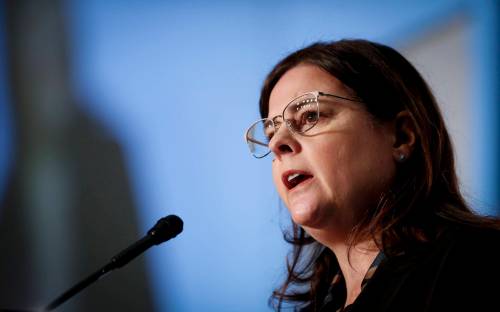
Lisa LaFlamme out at CTV News as Omar Sachedina named chief news anchor
Advertisement
Read this article for free:
or
Already have an account? Log in here »
To continue reading, please subscribe:
Digital Subscription
One year of digital access for only $1.44 a week*
- Enjoy unlimited reading on winnipegfreepress.com
- Read the E-Edition, our digital replica newspaper
- Access News Break, our award-winning app
- Play interactive puzzles
*Billed as $5.77 plus GST every four weeks. After 52 weeks, price increases to the regular rate of $19.95 plus GST every four weeks. Offer available to new and qualified returning subscribers only. Cancel any time.
To continue reading, please subscribe:
Add Free Press access to your Brandon Sun subscription for only an additional
$1 for the first 4 weeks*
- Enjoy unlimited reading on winnipegfreepress.com
- Read the E-Edition, our digital replica newspaper
- Access News Break, our award-winning app
- Play interactive puzzles
*Your next Brandon Sun subscription payment will increase by $1.00 and you will be charged $17.95 plus GST for four weeks. After four weeks, your payment will increase to $24.95 plus GST every four weeks.
Read unlimited articles for free today:
or
Already have an account? Log in here »
Hey there, time traveller!
This article was published 15/08/2022 (1522 days ago), so information in it may no longer be current.
TORONTO – Veteran journalist Lisa LaFlamme defied the odds as a silver-haired female anchor on the country’s most-watched national newscast, but observers say her time at CTV came to an unceremonious end Monday as the network announced her departure and replacement.
Without an official sign-off, leadership at Bell Media issued a press release on Monday saying that LaFlamme was out at CTV National News as part of a decision based on “changing viewer habits.”
What CTV didn’t explain is how it intends to evolve the broadcast with her newly announced replacement, Omar Sachedina, currently the CTV News national affairs correspondent, who assumes the role on Sept. 5.

Representatives declined to comment aside from saying, “We wish Lisa nothing but the best as she begins a new chapter.”
The lack of strategic clarity has only drawn more attention to LaFlamme saying she was “blindsided” by the company’s decision to end her contract. It’s also raised questions of whether she is another woman on the list of countless who’ve faced sexism and ageism in the broadcast news industry.
“This was a quick hit — and it was a hit,” said Jeffrey Dvorkin, former head of the University of Toronto’s journalism program.
“It makes the company look bad in the short-term, but in the long-term, they may come out of this looking better, like they’re all geniuses and have made the right decision.”
In the meantime, CTV faces questions about the intention behind sending their top news anchor packing. LaFlamme posted a video on social media saying she remains “shocked and saddened by Bell Media’s decision,” which cuts her ties to CTV after 35 years.
She said she was informed of their plans on June 29 but kept them under wraps as they worked out the specifics of her departure.
“At 58, I still thought I’d have a lot more time to tell more of the stories that impact our daily lives,” she said in the video.
“Instead, I leave CTV humbled by the people who put their faith in me to tell their story.”
LaFlamme’s exit was met with an immediate reaction on social media from friends, viewers and colleagues.
Ian Hanomansing, one of the anchors at CBC’s competing nightly news broadcast “The National,” said he was “at a loss for words.”
“Lisa is among the very best at what she does. I know surprisingly arbitrary decisions can be made in this business but Lisa, you deserve better than this. Way better,” he posted on Twitter.
LaFlamme took on CTV’s top news anchor role in 2011 when Lloyd Robertson retired at 77 following more than four decades as a national news anchor.
She immediately made an impression with her strong onscreen presence after each night of CTV’s top-rated network programs.
Over the years, she received numerous honours, including being named to the Order of Canada in 2019 and winning several Canadian Screen Awards.
During the pandemic, like many other women she decided to embrace her grey hair, which sparked opinion pieces that largely celebrated the move but also acknowledged she was pushing against a double standard.
“When Lisa made the choice, I think, to retain her beautiful white, grey hair, I thought, ‘Oh, this is going to mark her,'” said Angela Misri, assistant professor at Toronto Metropolitan University who is a former CBC reporter and journalist at the Walrus.
“This often marks women of a certain age and a certain look. And I worried for her in that case. But then I was encouraged also to see a woman expressing her actual age on the screen and still holding one of the highest positions.”
“At 58, I still thought I’d have a lot more time to tell more of the stories that impact our daily lives. Instead, I leave CTV humbled by the people who put their faith in me to tell their story.”–Lisa LaFlamme
“I think we need more people like her on the air,” Misri added.
The stakes are high at CTV’s nightly newscast, which consistently beats its competitors in the ratings, but has also struggled to become the definitive source on new media platforms. The traditional Canadian TV industry is in the midst of widespread experimentation and significant change that has elevated the importance of building audiences on digital platforms, including YouTube and TikTok.
In June, public broadcaster CBC announced plans to shake up its newscast “The National” by putting journalist Adrienne Arsenault in the top anchor job ahead of plans to launch a free 24-hour live streaming channel this fall.
CTV, owned by a telecommunications giant that for years fought against an inevitable move away from traditional TV, could be feeling similar pressures to appeal to digital audiences with news coverage.
In 2020, a business partnership with Quibi to produce bite-sized news segments fell apart when the billion-dollar U.S. streaming company folded.
Dvorkin said he imagines that executives might have been looking for a new face to lead the network in an increasingly digital media landscape.
“The demographics of journalism have changed so much in a short period of time,” Dvorkin said.
“And the quest for a new, more diverse, younger audience is constant.”

Dvorkin said he expects to see a drop-off in viewership following LaFlamme’s departure, but ratings should bounce back as Sachedina settles into his new role.
“Here’s the thing that media executives probably know: Change is hard, but change is possible,” he said.
“Eventually, an audience will get used to the change.”
— with files from Adina Bresge
This report by The Canadian Press was first published Aug. 15, 2022.
I have some news... pic.twitter.com/lTe3Rs0kOA
— Lisa LaFlamme (@LisaLaFlamme_) August 15, 2022
Related Articles
LaFlamme opted not to say on-air goodbye before ouster: CTV memo
Advertisement Advertise With Us
Advertisement Advertise With Us