Why did Durham’s school board remove this Indigenous children’s book from its libraries?
Advertisement
Read this article for free:
or
Already have an account? Log in here »
To continue reading, please subscribe:

Digital Subscription
One year of digital access for only $205*
- Enjoy unlimited reading on winnipegfreepress.com
- Read the E-Edition, our digital replica newspaper
- Access News Break, our award-winning app
- Play interactive puzzles
*First annual payment billed as $205.00 + GST for one year. This annual subscription will automatically renew at $233.00 + GST every 52 weeks (10% off the regular annual price of $259.35). Offer available to new and qualified returning subscribers only. Cancel any time.
To continue reading, please subscribe:
Add Free Press access to your Brandon Sun subscription for only an additional
$1 for the first 4 weeks*
- Enjoy unlimited reading on winnipegfreepress.com
- Read the E-Edition, our digital replica newspaper
- Access News Break, our award-winning app
- Play interactive puzzles
*Your next Brandon Sun subscription payment will increase by $1.00 and you will be charged $17.95 plus GST for four weeks. After four weeks, your payment will increase to $24.95 plus GST every four weeks.
Read unlimited articles for free today:
or
Already have an account? Log in here »
Hey there, time traveller!
This article was published 14/04/2022 (1622 days ago), so information in it may no longer be current.
In a curious decision that has shocked an award-winning Indigenous author and his publisher, the Durham District School Board has pulled several books from school libraries, saying they contain “content that could be harmful to Indigenous students and families.”
Among the books that have been removed is “The Great Bear” by David A. Robertson, a widely celebrated Cree writer and two-time winner of the Governor General’s Literary Award.
Robertson, who spoke to the Star from his home in Winnipeg, said he was stunned and confused by the Durham board’s decision, particularly the suggestion that his book could be harmful to Indigenous students.
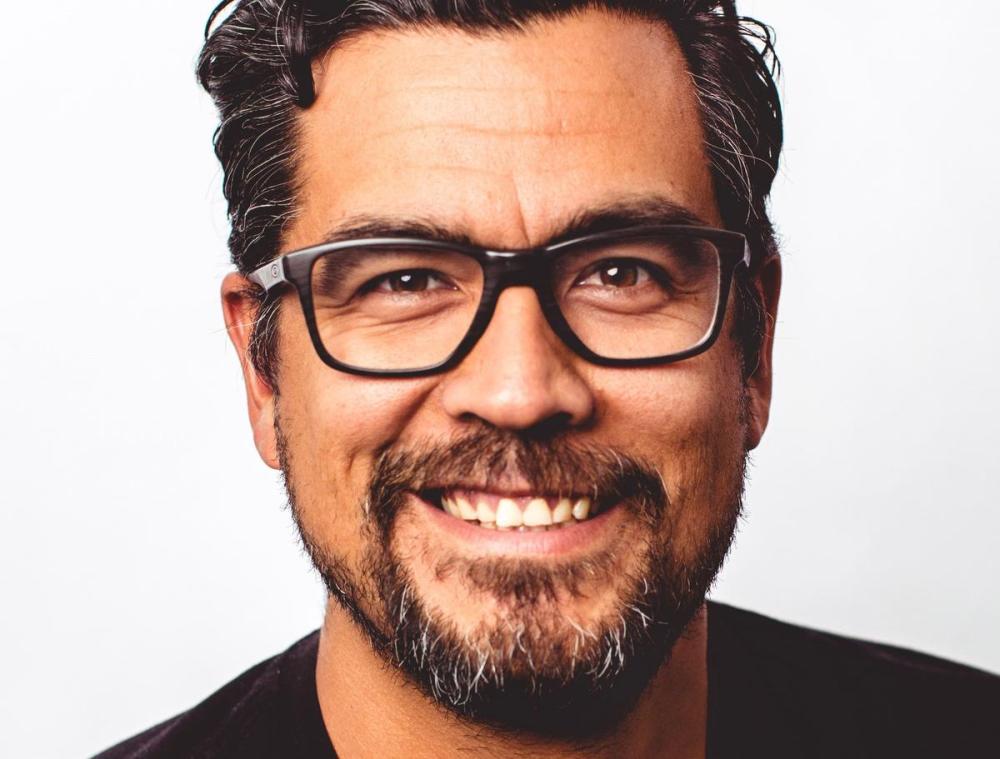
“I wrote it for Indigenous youth and families,” he said, adding he was “at a loss” to understand what about his book could be considered offensive.
An email, obtained by the Star, that was sent by the board to school principals says the books “do not align with the recently updated DDSB Indigenous Education policy and procedure.”
The email doesn’t specify what aspect of the books did not align with the new policy, which was put in place last September. The Star does not know the full list of books that were removed. They were not part of the curriculum, but were available to students for recreational reading.
“The Great Bear,” aimed at kids 10 and older, is the second book in Robertson’s Narnia-inspired “Misewa Saga,” which also includes “The Barren Grounds” and “The Stone Child.” It has been shortlisted for the Ontario Library Association’s Silver Birch Award, and last year was named one of the Canadian Children’s Book Centre’s favourite books of the year.
Robertson said the book, which features a portal to a fantasy world with talking animals, tackles bullying and the overrepresentation of Indigenous children in foster care.
He said he has never received anything but positive feedback about it from parents, teachers and students.
“I receive tons of mail from kids, through teachers, talking about how the book has empowered them, how the book has really helped them,” he said. “I’ve heard stories from librarians and teachers about how amazing it’s been for Indigenous children to read books with Indigenous” characters.
The email to principals — which is signed by Erin Elmhurst, the superintendent of Indigenous and global studies; Georgette Davis, the superintendent of system innovation; and Jim Markovski, the associate director of equitable education — instructs schools to remove the books from circulation and “refrain from using them.”
The email says the books should not be used until they undergo a “fulsome review.”
“Teacher-Librarians in all schools regularly review our collections for books that are no longer current, or which may contain content that perpetuates harmful narratives, racial slurs and discriminatory biases, assumptions and stereotypes,” the email reads. “This review is not different from that process.”
The school board would not make anyone available for an interview for this story, but a spokesperson sent a written response, which did not explain why the books were removed. The response, sent by communications specialist Stephanie Aylesworth, did not specify what exactly was offensive about the books, nor what aspect of the board’s policy the books breached.
“We will not be going into specifics about individual books as it is important that the review process take place before a final decision is made,” Aylesworth wrote.
Asked whether the books were removed in response to a specific complaint from a parent, teacher or student, Aylesworth wrote there were “multiple questions from community members” about the books. “It is our moral imperative to be responsive to Indigenous voices when questions of this nature are brought forward, which is why it is important that we conduct a thorough review.”
Robertson’s best guess on what from his book may be considered potentially harmful to Indigenous students is a scene in which one of the main characters, Eli, cuts off his braid after he is bullied by other students. Robertson said he wanted to show the impact on kids who are bullied because of their culture or how they look. As the story goes on, Eli builds his self-confidence and the regrowth of his hair is a symbol of his resilience and empowerment, Robertson said.
In a statement, a spokesperson for Penguin Random House, Robertson’s publisher, said they were “shocked and gravely concerned” when they learned “The Great Bear” had been removed from library shelves by the Durham school board, which did not respond to “multiple requests” from the publisher to explain the decision.
“The board’s refusal to engage in dialogue about this is deeply disturbing to us and to our author.”
Aylesworth said the board had no record of any communication from Penguin Random House, which subsequently shared with the Star two emails, dated April 1 and April 6, sent by their associate publisher to several school board executives asking for an explanation.
When pressed, Aylesworth insisted the board had not received any communication from the publisher.
After this article was published, a spokesperson for the Durham school board said the emails from Penguin Random House were “caught in our mail filter to protect against phishing attacks” and were therefore not received by their recipients.
The spokesperson, Robert Cerjanec, said Penguin’s assertion that the board has “refused to engage in dialogue” is not true.
“We look forward to responding to Penguin Random House once the appropriate staff have had a chance to review their e-mails. We are not aware of Penguin Random House using any other methods, such as phone, to contact the DDSB, which would have solved this communication problem.”
This is not the first time Robertson’s books have been flagged by a public school board.
In 2018, Edmonton Public Schools included “7 Generations,” his graphic novel series for high school students, on a list of “not recommended” books because it contained “sensitive subject matter and visual inferencing of abuse regarding residential schools.”

Robertson said the incidents suggest to him that school administrators are being overprotective because they believe students can’t handle sensitive subjects. “What I find is that the kids are ready, but the adults aren’t,” he said.
Robertson said he became a writer because he wanted to write stories for Indigenous kids so they could see themselves in the books they read. But he also sees his books, and others by Indigenous authors, as equally valuable for non-Indigenous children.
“I mean, that’s what reconciliation is to me,” he said. “It’s learning from stories about each other. So if we’re really in the business of reconciliation, we need to be putting more of these books on the shelves, not taking them out.”
Editor’s note – Apr. 15, 2022: This article was edited to add an explanation from the Durham school board that emails from Penguin Random House were blocked by an email filter and thus did not reach the intended recipients.
Brendan Kennedy is a Toronto-based social justice reporter for the Star. Follow him on Twitter: @BKennedyStar
Related Articles
‘Dumbfounded’: Winnipeg author challenges Ontario school division’s move to pull Indigenous fantasy novel
Advertisement Advertise With Us
Advertisement Advertise With Us