The axeman cometh
I'm not good, but I'm getting a little less bad every day. That's good, right?

Advertisement
Read this article for free:
or
Already have an account? Log in here »
To continue reading, please subscribe:
Digital Subscription
One year of digital access for only $1.44 a week*
- Enjoy unlimited reading on winnipegfreepress.com
- Read the E-Edition, our digital replica newspaper
- Access News Break, our award-winning app
- Play interactive puzzles
*Billed as $5.77 plus GST every four weeks. After 52 weeks, price increases to the regular rate of $19.95 plus GST every four weeks. Offer available to new and qualified returning subscribers only. Cancel any time.
To continue reading, please subscribe:
Add Free Press access to your Brandon Sun subscription for only an additional
$1 for the first 4 weeks*
- Enjoy unlimited reading on winnipegfreepress.com
- Read the E-Edition, our digital replica newspaper
- Access News Break, our award-winning app
- Play interactive puzzles
*Your next Brandon Sun subscription payment will increase by $1.00 and you will be charged $17.95 plus GST for four weeks. After four weeks, your payment will increase to $24.95 plus GST every four weeks.
Read unlimited articles for free today:
or
Already have an account? Log in here »
Hey there, time traveller!
This article was published 01/12/2020 (2145 days ago), so information in it may no longer be current.
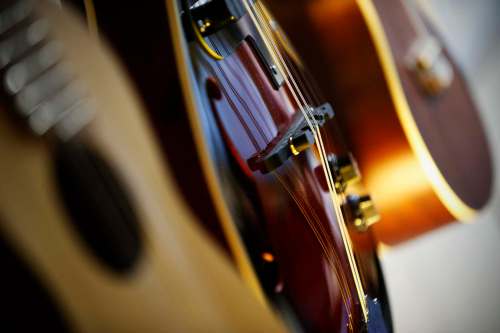
Learning to play guitar is a little like climbing a mountain with your shoelaces tied together while reading a book in a foreign language.
It’s arduous, but unlike with Everest, there’s no risk of freezing to death or plummeting into an icy crevasse. Instead, a misstep is just that — a missed step — and when you’re learning, that’s almost as important as the ones that bring you closer to the unreachable peak of acoustic glory.
And what a peak it is: to hear a song, deconstruct it, reconstruct it, reimagine it, translate it, and recreate it, taking an idea from your ear to your brain to your hands to your fingers, and putting it back into the air before it rings in your ear once again.
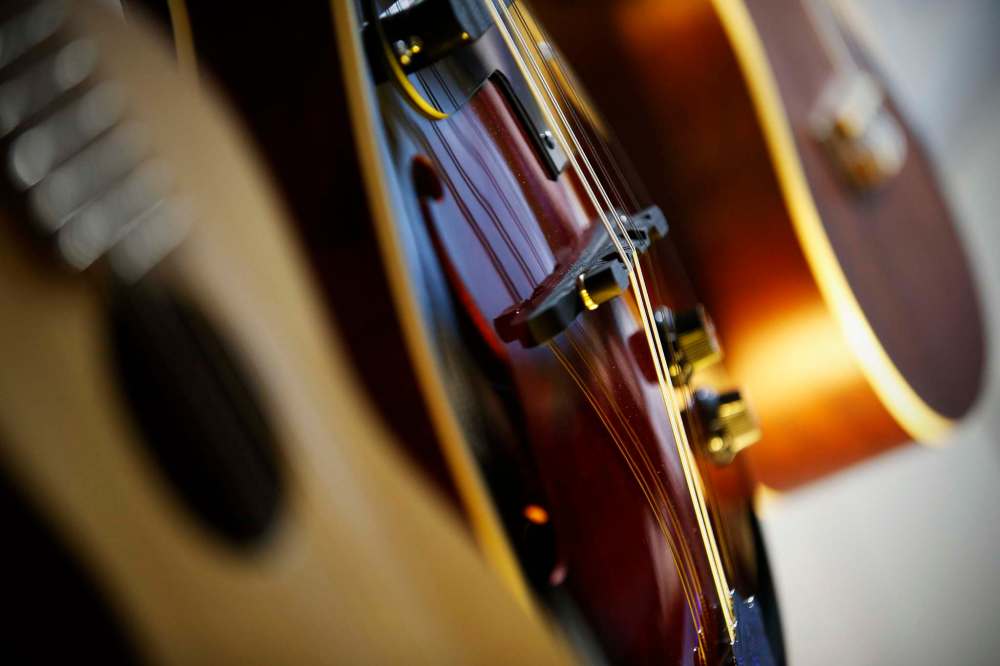
As the Free Press reported in October, music teachers anecdotally are reporting a surge in students looking to fret, pluck and tickle their way through the COVID-19 shutdown. That’s not entirely my motivation, but my interest was rekindled as a long, cold, lonely winter approached.
I’m nowhere near the peak. I’m probably not even at base camp. I’m sitting at home, laptop open to five tabs telling me which is the ice-axe best-suited for my lifestyle. So I enlisted a guide to help me climb the fretboard through the pandemic winter: his name is Dave.
The first time we meet, it’s September, and he scurries out of a small room at a Garden City music school, shepherding his previous student — a boy around 10 — to the door. The boy leaves, holding what looks like the same book Dave is about to give me.
“Ben?” Dave asks, introducing himself before he sanitizes the room, a part of the job that’s been added after decades of music instruction.
Earlier in the year, I took a few lessons with another teacher who didn’t give off the zen master vibe I needed. Then, the pandemic struck, and I decided to start fresh with Dave six months later.
He came on the recommendation of Josh, a family friend, who has a music degree and is among many reasons I’ve always wanted to play guitar. Josh made playing look joyful and logical. As Dave started talking, I began to get some understanding as to why.
Even from behind the glass separating us, his enthusiasm bubbled over. In 30 scattershot minutes, he told me what we’d be going over, and asked me what my goals were. I said something like, “I want to learn songs I can someday play for my kids,” who don’t yet exist. “I just want to be able to read music and play.”
He gave me my homework — notes on the first three strings, and to come up with some songs I’d like to learn for a side project. I made a list and brought it the next week: Cat Stevens, The Band, Bedouine, the Mamas & The Papas, Feist, Jenny Lewis, etc.
I decided on The Only Living Boy in New York by Simon and Garfunkel. I heard it for the first time when I was 14, standing in a circle at summer camp, when I felt more a part of something than ever before. Now, the Paul Simon-penned tune, about missing Art Garfunkel and feeling alone, felt appropriate.
Dave pulled out his iPad to listen, quickly figuring out the chords. “I want to do that,” I thought. He told me to listen for harmonic rhythm. I nodded, as if I was picking up what he had put down. “Does that make sense?” he asked. I shook my head. He explained that it was how long each chord lasts before the next one starts (I think).
Soon, I was learning through Zoom. “Adjust your camera,” he said. “I only really need to see your hands.” For the next three weeks, I apologized whenever I played wrong notes, making excuses: I had it earlier today, I swear … I’ve been practising so much.
Dave didn’t want the apologies, but not in the way I expected. “You can’t be so hard on yourself,” he said, putting on his psychoanalyst hat, digging at my self-critical core.
“How often have you heard someone play guitar after only four weeks?” he asked. Never, I answered. “Exactly.” He got me, but I still had a lot to learn.
So I practised hard, playing Jingle Bells way more than the average person who’s been Bar Mitzvahed. I counted out the music as I read it, and my fingers got red as I leafed through pages dealing with the fourth and fifth strings. OK, I thought, settling into my university-student mindset: I can do this.
The next Wednesday, Dave threw me for a loop. “Play Exercise 4 backwards,” he said. How? You’re joking, right? He wasn’t. He caught me: I was reading and memorizing, not understanding. It was basically the same notes, backwards and forwards.
“Do you speak another language, other than English?” he asked. I said yes, alluding to now weakened Hebrew skills. “Why?” he asked. “To make my parents happy,” I said. He laughed, but wasn’t satisfied: we speak languages to communicate through sound, and music was the same, he said. Letters in a foreign language, like notes in a music book, mean nothing unless we understand them. Sure, they make noise, but do they make sense?
“Does that make sense to you?” he asked.
Then he asked whether I was working on my non-course material, the Simon and Garfunkel song and a tune called Random Rules by Silver Jews. “Not really. I was studying make sure I didn’t screw up again,” I said. Dave wasn’t impressed.
He asked me, where does a student learn more — the classroom, or the sandbox? With leading questions like that, I know the second answer is usually the one a teacher is after, so I gave it. “Why?” he asked. “I don’t know,” I said, waiting for his wisdom to strike.
It goes back to what we just discussed, he said. We may learn the facts or ideas in the classroom, but it’s in the sandbox where we put them into action; without the sandbox, what use is the classroom?
“The sandbox is where the classroom comes into focus,” he said. So I told him while fiddling around, I realized the first three chords of the first verse in Lola by The Kinks: E, A and D.
“Play it for me,” Dave said. “Well now I’m scared,” I replied.

“I’ve found fear to be a good motivator.” So I did it, singing along.
“Excellent,” Dave said.
“This is the thing,” he added. “The reason we come to guitar lessons is not to learn how to read music. The reason we come to guitar lessons is so we can figure out what we’re talking about.”
What we’re talking about is climbing a mountain.
ben.waldman@freepress.mb.ca
Ben Waldman covers a little bit of everything for the Free Press.
Our newsroom depends on a growing audience of readers to power our journalism. If you are not a paid reader, please consider becoming a subscriber.
Our newsroom depends on its audience of readers to power our journalism. Thank you for your support.
Ben Waldman covers a little bit of everything for the Free Press.
Our newsroom depends on a growing audience of readers to power our journalism. If you are not a paid reader, please consider becoming a subscriber.
Our newsroom depends on its audience of readers to power our journalism. Thank you for your support.
Advertisement Advertise With Us
Advertisement Advertise With Us