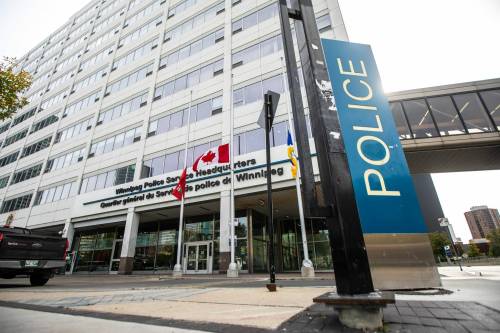
Homegrown horrors
Manitoba has played host to a scary number of frightening films

Advertisement
Read this article for free:
or
Already have an account? Log in here »
To continue reading, please subscribe:
Digital Subscription
One year of digital access for only $1.44 a week*
- Enjoy unlimited reading on winnipegfreepress.com
- Read the E-Edition, our digital replica newspaper
- Access News Break, our award-winning app
- Play interactive puzzles
*Billed as $5.77 plus GST every four weeks. After 52 weeks, price increases to the regular rate of $19.95 plus GST every four weeks. Offer available to new and qualified returning subscribers only. Cancel any time.
To continue reading, please subscribe:
Add Free Press access to your Brandon Sun subscription for only an additional
$1 for the first 4 weeks*
- Enjoy unlimited reading on winnipegfreepress.com
- Read the E-Edition, our digital replica newspaper
- Access News Break, our award-winning app
- Play interactive puzzles
*Your next Brandon Sun subscription payment will increase by $1.00 and you will be charged $17.95 plus GST for four weeks. After four weeks, your payment will increase to $24.95 plus GST every four weeks.
Read unlimited articles for free today:
or
Already have an account? Log in here »
Hey there, time traveller!
This article was published 13/04/2020 (2378 days ago), so information in it may no longer be current.
The recent VOD release of the Manitoba-lensed satanic-panic film We Summon the Darkness proves horror movies don’t necessarily need big movie stars or big budgets to succeed. They can work just fine with a combination of good (if somewhat obscure) actors, halfway convincing visual effects and a decent script.
But it’s the low-cost factor that has doubtless attracted a lot of horror productions to Manitoba, a province that happens to be generous with tax breaks that can whittle production costs considerably. The downside to that is that quite a few crummy movies get made here — Clown at Midnight (1998), Silent Night (2012), Faces in the Crowd (2010), and a handful of direct-to-video franchise sequels, including a pair of Wishmaster movies, Joy Ride 3, Wrong Turn 4 …
While the local scene hasn’t produced the genre equivalent of, say, Oscar-winning drama Capote, a few movies do shine through, not necessarily as horror gems, but at least as solid, interesting thrillers. Among them:
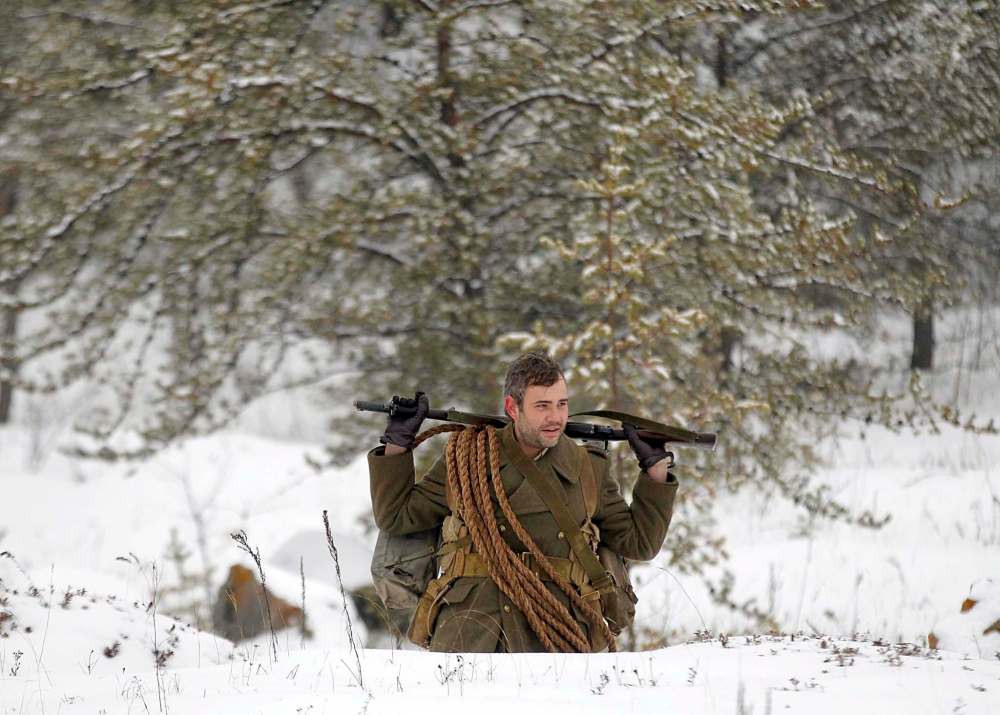
5. Trench 11 (2018) follows in the footsteps of movies about people fighting their way out of top-secret, locked-tight experimental facilities (Resident Evil, Day of the Dead), except director Leo Scherman puts that premise in a primitive context. In the waning days of the First World War, a small force of American soldiers and a traumatized Canadian tunneller named Berton (Rossif Sutherland) head out to a massive German underground bunker to figure out why the facility was built and then mysteriously abandoned.
The answer: a bioweapon — a creepy parasite that inflicts non-stop murderous rage — has wiped out the German soldiers in the facility, and is about to do the same to the fresh-meat interlopers.
The film punches the horror-movie buttons with some efficiency, including a few memorably gruesome killings. Since the bulk of the film is set inside the multi-levelled bunker, Scherman progressively imbues the proceedings with claustrophobic dread.
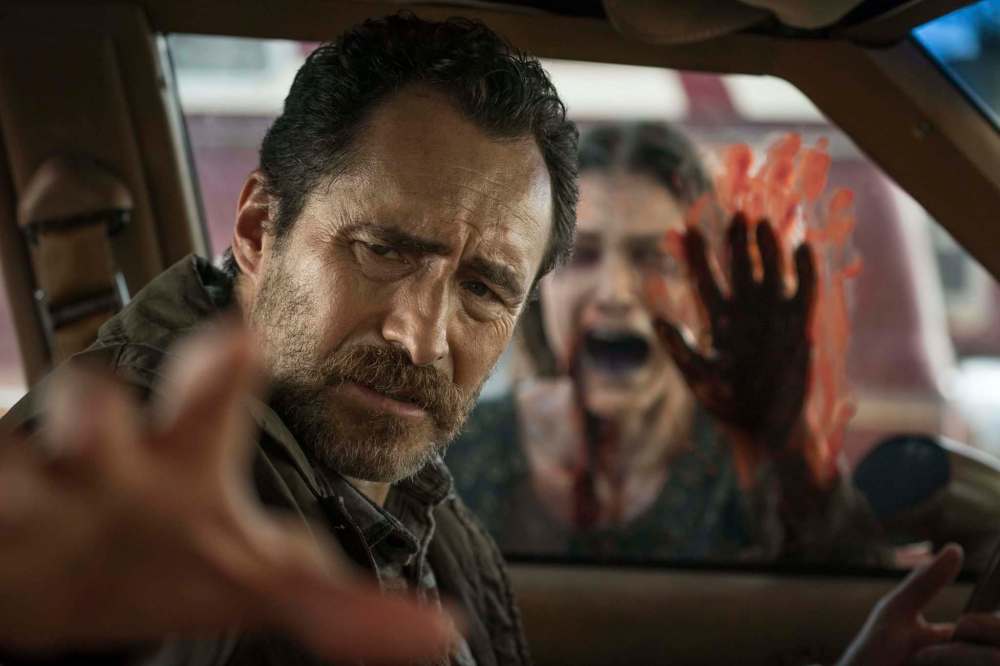
4. The Grudge (2020) was written and directed by Nicolas Pesce, who helmed the impressive serious horror film The Eyes of My Mother (2016) and fashions this franchise reboot as a kind of anthology, with each story carrying its own dramatic kick.
The grim fun kicks off when Fiona Landers (Tara Westwood) returns to North America after a visit to Japan, where she had the misfortune of entering the cursed abode in Suginami, the locus of the horror in the 2004 American version of The Grudge. Fiona becomes a supernatural Typhoid Mary in the Pennsylvania town of Cross River, afflicting anyone who comes into her house with a brand-new curse.
Each of the subsequent stories has a foundation for solid melodrama, which is how Pesce gets the audience invested in the tormented characters.
3. Fractured (2019) is a Netflix film from director Brad Anderson, here working in roughly the same model as his 2004 Christian Bale film The Machinist. In that movie, Bale played an insomniac who starts to doubt his own sanity when he interacts with someone no one else ever seems to see. Fractured’s troubled hero Ray (Sam Worthington) has suffered a head injury, and he finds himself at a hospital where no one seems to remember admitting his injured daughter. Hence, we’re never quite sure if his quest to find her is legitimate or an invention of his damaged imagination.
It’s bleak as hell, but very competently made, and it’s an undeniable kick to see a host of local actors — Chris Sigurdson, Dorothy Carroll, Marina Stephenson Kerr and Erik Athavale — add to the maddening ambiguity with performances that walk the line between innocent and sinister.
2. Curse of Chucky (2013), Cult of Chucky (2017) are a matched set of franchise killer-thrillers sustaining the career of killer doll Chucky, long ago possessed by the spirit of crazed serial killer Charles Lee Ray (Brad Dourif), as first seen in the 1988 Tom Holland film Child’s Play.
Stepping back from the self-parody of Bride of Chucky and Seed of Chucky, writer-director Don Mancini returns to the more gothic set pieces, with Curse set in a rambling old house and Cult set in an ultra-modern insane asylum. In both films, Chucky is tormenting Fiona Dourif’s paraplegic heroine even as he sets her up to take the fall for the movies’ abundant murders.
Mancini’s ambitions are as modest as his budget ($5 million apiece). But he has enough skin in the game (albeit rubber-doll skin) that he fashions tight and tidy thrillers punctuated with equally rationed shocks and laughs. (Both films, by the way, are more fun than the recent Child’s Play remake.)
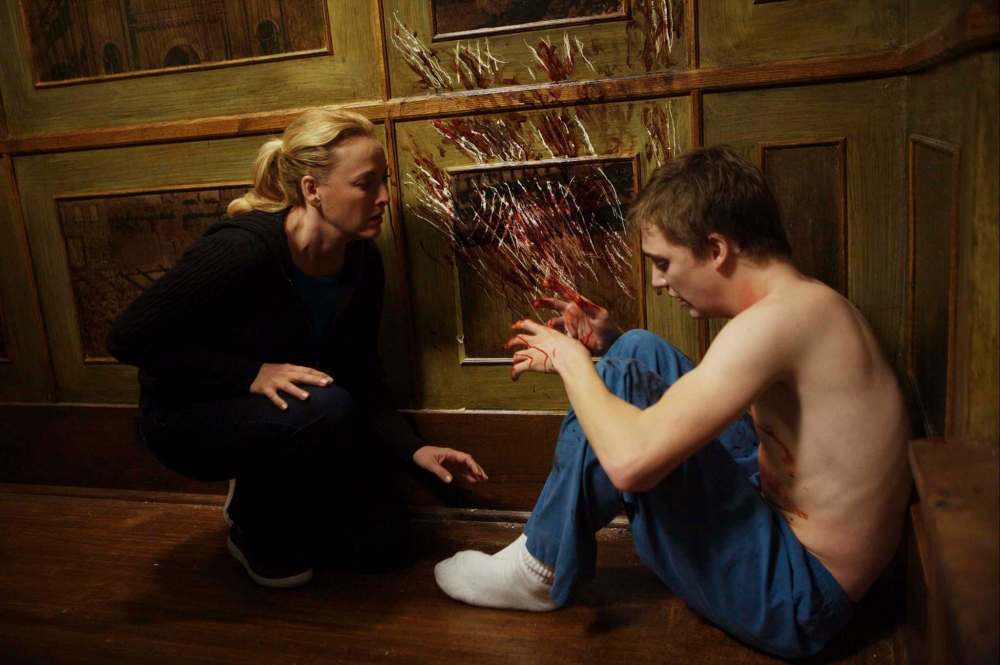
1. The Haunting in Connecticut (2009). The principal location of this haunted house thriller is a big old house in Teulon. It is there the Campbell clan, headed by unshakable matriarch Sara (Virginia Madsen), encounters increasingly unnerving evidence of ghostly apparitions making unwelcome forays into the land of the living.
Given that the haunted-house movie has been done to death, director Peter Cornwell and screenwriters Adam Simon and Tim Metcalfe discover novelty in the century-old backstory, including spirit photography (incorporating ectoplasm that would emanate from the orifices of mediums), and the bizarre old tradition of photographing the dead posed alongside their still-living family.
Along more conventional horror-movie lines, the movie also features walking corpses with no eyelids.
Movies like this live or die depending on the quality of the acting, and in this case, the cast — including Elias Koteas and Kyle Gallner — is sufficiently skilled and committed that they sell the film’s more outlandish elements.
randall.king@freepress.mb.ca
Twitter: @FreepKing
In a way, Randall King was born into the entertainment beat.
Our newsroom depends on a growing audience of readers to power our journalism. If you are not a paid reader, please consider becoming a subscriber.
Our newsroom depends on its audience of readers to power our journalism. Thank you for your support.
In a way, Randall King was born into the entertainment beat.
Our newsroom depends on a growing audience of readers to power our journalism. If you are not a paid reader, please consider becoming a subscriber.
Our newsroom depends on its audience of readers to power our journalism. Thank you for your support.
Related Articles
Ideal settings across the city for your al fresco eats
Advertisement Advertise With Us
Advertisement Advertise With Us