Staying in touch… without touching

Advertisement

Advertise with us

If social distancing is making you feel socially disconnected, technology may be the answer. Here are five ways to stay in touch when face-to-face conversations aren’t possible:

Read this article for free:


By clicking the button above, an account will be created and you will begin to receive some of our recommended newsletters. You may opt out of any newsletter by visiting your Email and Communication Preferences page or by clicking "unsubscribe" at the bottom of any email.

or

Already have an account? Log in here »

To continue reading, please subscribe:

Digital Subscription

One year of digital access for only $1.44 a week*

  • Enjoy unlimited reading on winnipegfreepress.com
  • Read the E-Edition, our digital replica newspaper
  • Access News Break, our award-winning app
  • Play interactive puzzles

*Billed as $5.77 plus GST every four weeks. After 52 weeks, price increases to the regular rate of $19.95 plus GST every four weeks. Offer available to new and qualified returning subscribers only. Cancel any time.

To continue reading, please subscribe:

Add Free Press access to your Brandon Sun subscription for only an additional

$1 for the first 4 weeks*

  • Enjoy unlimited reading on winnipegfreepress.com
  • Read the E-Edition, our digital replica newspaper
  • Access News Break, our award-winning app
  • Play interactive puzzles
Start now

*Your next Brandon Sun subscription payment will increase by $1.00 and you will be charged $17.95 plus GST for four weeks. After four weeks, your payment will increase to $24.95 plus GST every four weeks.

Hey there, time traveller!
This article was published 26/03/2020 (2395 days ago), so information in it may no longer be current.

If social distancing is making you feel socially disconnected, technology may be the answer. Here are five ways to stay in touch when face-to-face conversations aren’t possible:

For straightforward video chatting: Zoom

Available on desktop, tablet and mobile devices; free to sign up

Zoom is a pretty serious video-conferencing system that allows users to host meetings, conduct webinars and collaborate on projects. While the higher-level paid plans are ideal for businesses and educators, the basic free plan is a solid option for video chatting with family and friends.

Once you sign up and download the desktop software or mobile app, you can invite 100 of your closest friends via email to join a meeting. Seriously, according to Zoom’s website the free plan allows for 100 participants per meeting — virtual family reunion, anyone?

Participants don’t need an account to join a meeting, but meetings of more than three people have a 40-minute time limit on the free plan. Another downside is that the interface is slightly more complicated than other video-conferencing platforms, but there are literally hundreds of YouTube tutorials on how to use Zoom if you get stuck.


For fun and games: Houseparty

Available on desktop, tablet and mobile devices; free to download

Currently the top-rated social-networking app on the App Store, Houseparty is one part video chat and one part virtual gaming. You can chat with up to eight people at a time and play trivia, drawing and word-association games with each other in the app. It’s a nice substitute for those missing out on real-life board-game nights (which should be everyone right now).

After downloading the app or desktop version you’ll be asked to sync your contacts via your phonebook or Snapchat account. Alternatively, you can send an invite link directly to your contacts.

Whenever you open Houseparty, your contacts will get a notification that you’re online (or “in the house”) and can strike up a video chat with you. Users can also send recorded video and text messages to each other.


For call-and-response videos: Marco Polo

Available on tablets and mobile devices; free to download

Marco Polo is a private communication app that allows you to record and send videos to friends and loved ones. There’s no live-chat option, so your contacts can watch and respond to your videos at their leisure. It’s a lot like texting, but with video messages, which makes it feel more personal.

The app is only available on mobile and you can only add contacts that are already in your phone or by sharing an invite link. Users can chat one-on-one or create groups with multiple contacts.

Unlike other social media platforms, Marco Polo videos don’t disappear after 24-hours. As with to other platforms, you can apply filters to your videos and respond to messages with a (very) limited number of emojis.


For international conversations: WhatsApp

Available on desktop, tablet and mobile devices; free to download
Petr David Josek / The Associated Press Files
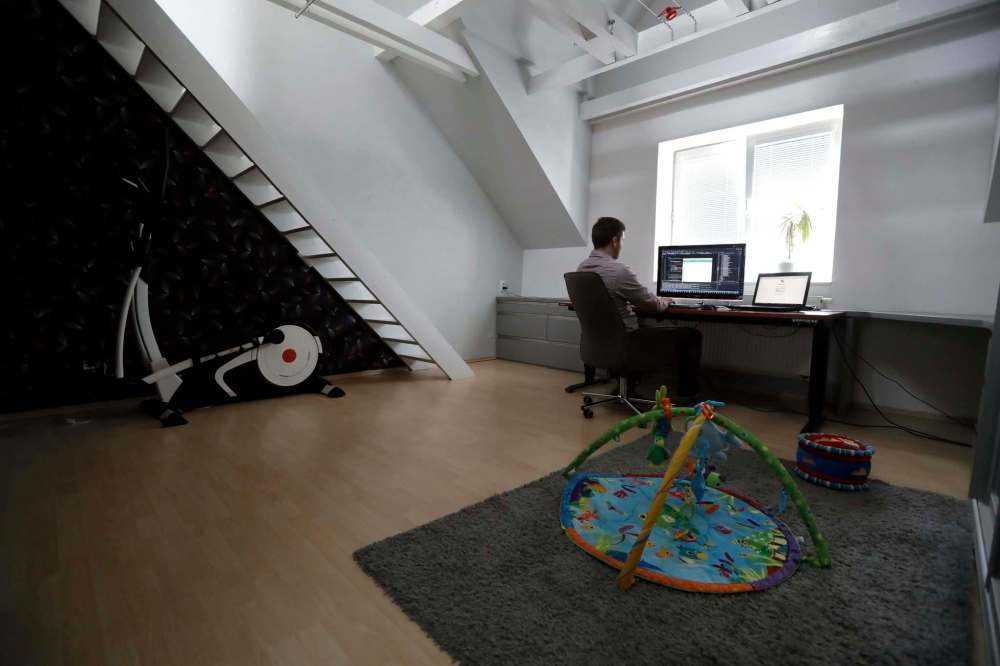
If you’re self-isolating or quarantined at home, you can still get virtual face time with family, friends and co-workers.
Petr David Josek / The Associated Press Files If you’re self-isolating or quarantined at home, you can still get virtual face time with family, friends and co-workers.

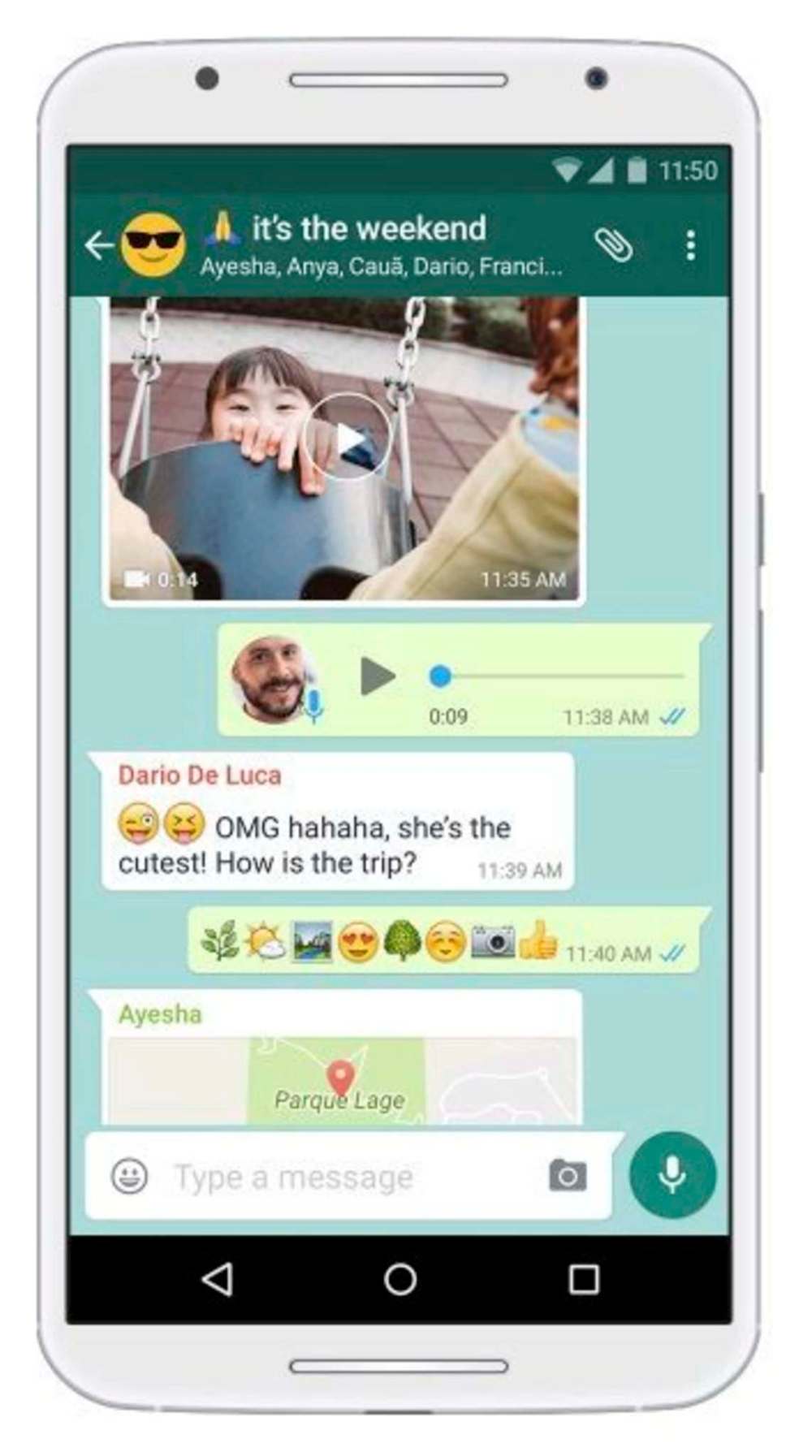
WhatsApp has more than two billion users worldwide, making it the most popular messaging app on the market.

The Facebook-owned platform has text, phone and video message features that work through your internet connection, instead of your data plan. This means you connect with family and friends abroad free, as long as both of you are connected to Wi-Fi.

You can make video calls with anyone in your phone contacts within the app, but group calls are limited to just three people on mobile. The desktop version unfortunately doesn’t support video or voice calls at the moment.


For chatting while watching: Netflix Party

Available on desktop; free download
What'sApp
What'sApp is the world's most popular messaging app; it's free and it works via Wi-Fi.
What'sApp What'sApp is the world's most popular messaging app; it's free and it works via Wi-Fi.

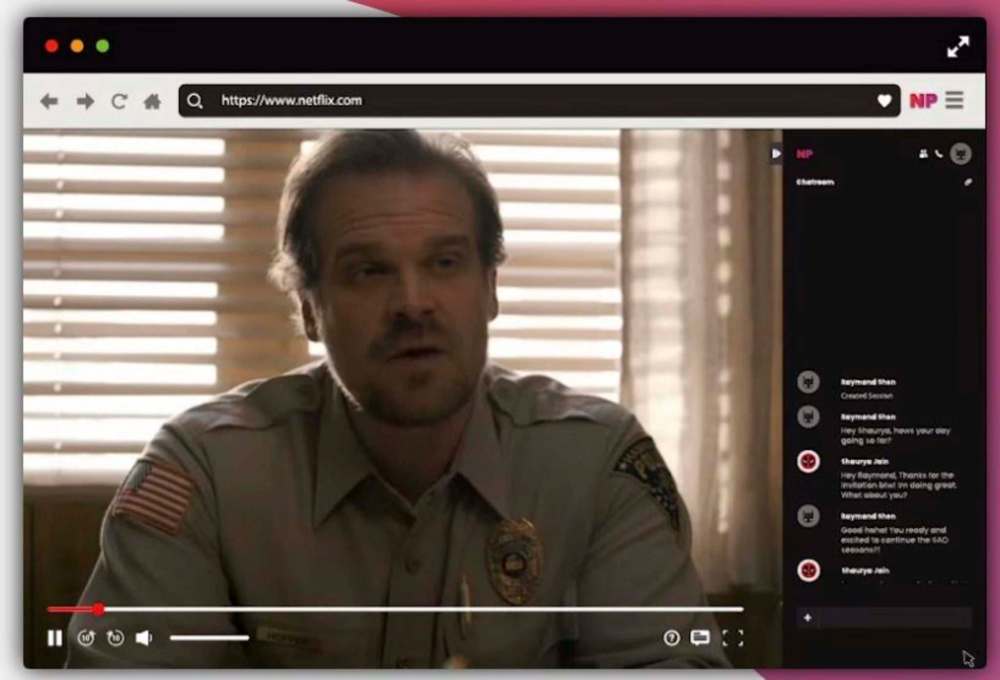
If you’re a fan of talking during movies or chatting with friends while watching your favourite TV show, you might enjoy Netflix Party. It’s a free Chrome extension that allows users to participate in remote Netflix viewing parties.

To use, you need to install the extension, start watching something on Netflix and create a party by clicking on the red NP icon on your browser. A chat window will pop up within the window you’re watching on and you can ask others to join by sharing the party’s web address.

Netflix Party is more of a novelty than an effective communication tool, as you need to be a Chrome user to access it and you need to be watching on a device that allows you to type, like a laptop.

eva.wasney@freepress.mb.ca

Twitter: @evawasney
Netflix Party
Netflix Party allows viewers to chat with friends who are watching the same show or movie.
Netflix Party Netflix Party allows viewers to chat with friends who are watching the same show or movie.
Eva Wasney

Eva Wasney
Arts Reporter

Eva Wasney is a reporter for the Winnipeg Free Press.

Our newsroom depends on a growing audience of readers to power our journalism. If you are not a paid reader, please consider becoming a subscriber.

Our newsroom depends on its audience of readers to power our journalism. Thank you for your support.

Report Error Submit a Tip

More Stories

Play ponders realities of interfaith marriages

Ben Waldman 6 minute read Preview

Play ponders realities of interfaith marriages

Ben Waldman 6 minute read 2:00 AM CDT

Jordi Mand isn’t scared to talk about circumcision — she doesn’t bristle at the mention of a bris.

But the playwright born Jordan Mandlowitz understands that the importance of the rite of passage — a foundational covenant between God and the Jewish people — isn’t so cut and dry to the uninitiated.

And in interfaith marriages such as her own, the concept of brit mila isn’t as easily welcomed as lighting the Friday night candles to greet Shabbat.

“It was something that I knew growing up, that if you were Jewish, and if you were a boy, then you were circumcised,” says Mand, who was raised in a tight-knit Jewish community in Richmond Hill, Ont.

Read
2:00 AM CDT

Capital punishment as macabre theatre

Editorial 4 minute read Preview

Capital punishment as macabre theatre

Editorial 4 minute read 2:00 AM CDT

There was already enough to write about the question of capital punishment when the State of Tennessee attempted to execute Christa Pike.

Pike would have been the first woman executed in Tennessee in more than 200 years, but her execution on Sept. 30 did not go as planned — she survived, despite two lethal injections of pentobarbital, and was taken to hospital in critical condition.

Pike was released from hospital and sent back to the same prison where she has been incarcerated for the last 30 years, ever since she was convicted — as an 18-year-old — of the murder of 19-year-old Colleen Slemmer in 1995.

Pike faces a long recovery, and an uncertain one. Tennessee assistant attorney general Will Ayers has not said if the state will attempt to execute Pike again, but Gov. Bill Lee has halted all executions this year and ordered an independent review of what went wrong.

Read
2:00 AM CDT

Resumé fib creates unnecessary distraction

Editorial 4 minute read Preview

Resumé fib creates unnecessary distraction

Editorial 4 minute read Wednesday, Oct. 2, 2019

Here’s the thing about closets: if they’re of the literal variety — in other words, those tiny rooms in your home in which clothing, linens and assorted household items are stored — they can usually be securely locked so the contents therein are protected.

But if they’re the figurative sort of “closet” in which the embarrassing secrets from your past are concealed, there is very little chance in the current era of cyber-snoop scrutiny that those skeletons will remain behind closed doors.

The discomfiting truth of this 21st-century reality was brought into focus — again — when it was revealed that Conservative party Leader Andrew Scheer was less than truthful in his career resumé’s description of private-sector work experience he accumulated before entering politics.

The profile posted on his party’s official website stated that “Before entering public life, Andrew worked in the private sector as an insurance broker.” The trouble is, he did not. When confronted with fact-checked inconsistencies between the resumé and reality, Mr. Scheer was forced to admit he was never actually a credentialed broker in Saskatchewan, but instead worked in a support role in an insurance office while “the licensed brokers finalized all the transactions.”

Read
Wednesday, Oct. 2, 2019

St. Boniface University wrestles with appalling Indigenous history

Niigaan Sinclair 6 minute read Preview

St. Boniface University wrestles with appalling Indigenous history

Niigaan Sinclair 6 minute read Friday, Nov. 1, 2019

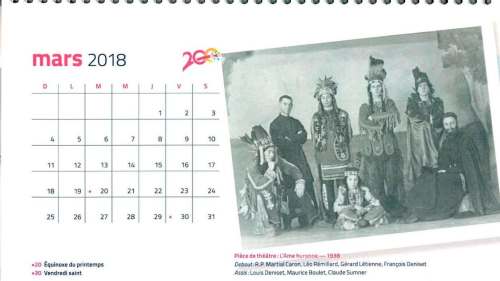
To mark its 200th anniversary in 2018, the l'Université de Saint-Boniface produced a calendar that honours its history. The month of March featured a large photograph from 1938 of a priest and student actors, who were dressed as “Indians,” from a play called L'âme huronne (The Huron Soul).

The play tells of the “good” Christians struggling with witches, the devil, and Indians. It has nothing to do with actual Indigenous peoples but the fantasies and desires non-Indigenous peoples invent about Indigenous peoples. None of the actors was “Indian” – although some are named Boulet, Caron and Sumner, which are names Indigenous peoples have today.

In fact, I know none of these actors was “Indian” because in 1938 it was illegal to wear traditional clothing in public (it wasn't legal until 1951, for the anniversary of the Calgary Stampede).

In the calendar, there is no context, no explanation about how things have “changed,” or much else; and no real reason to “honour” this history at all.

Read
Friday, Nov. 1, 2019

Reversing Manitoba’s moose decline

Hank Hristienko 4 minute read Preview

Reversing Manitoba’s moose decline

Hank Hristienko 4 minute read 2:00 AM CDT

As Manitoba’s retired provincial moose manager, I have watched our moose population plummet from historic highs to a state of systemic vulnerability. Reversing this decline, which has seen numbers drop from 45,000 during the 1960s to fewer than 20,000 today, will require balancing the conservation needs of moose, Section 35 constitutional treaty rights, licensed hunter expectations and economic development.

To avert further attrition, all stakeholders, including Manitoba Natural Resources, must accept responsibility for their part in this decline, with industrial and recreational development acting as the primary drivers.

This long-overdue discussion must not devolve into a debate over competing hunting rights; instead, it must focus entirely on building long-term population resilience. Wildlife management must evolve alongside the changing landscapes and dynamics that development brings. We can no longer practise the same methods and hope for a better result. Immediate action is required.

As long as moose are legally managed as a “natural resource,” they will inevitably be viewed through the lens of a commodity rather than a vulnerable species in need of protection. For any population to remain stable or grow, total mortality cannot exceed recruitment — the survival of calves to breeding age. If mortality outpaces recruitment, decline is inevitable.

Read
2:00 AM CDT

More than a meal: Feeding others or donating food is deeply rooted in Hindu faith

Romona Goomansingh 5 minute read Preview

More than a meal: Feeding others or donating food is deeply rooted in Hindu faith

Romona Goomansingh 5 minute read Saturday, Jan. 31, 2026

“Food is not just nourishment — it is something that makes your life. We need to treat it with utmost love and reverence” — Sadhguru

When food is served in Hindu temples, it is indeed more than a meal. Deeply rooted in Hindu faith, culture and traditions, feeding others or donating food is a highly virtuous act.

Following Sunday services, festival celebrations and other religious activities, food is available, free-of-charge, to everyone at both local temples of the Hindu Society of Manitoba.

Before food is served to the congregation, small portions of each item, distributed in a thali, or sectioned platter, are placed in front of the deities at the temple altar. Rituals are performed and mantras are recited in honour of the food offering to God.

Read
Saturday, Jan. 31, 2026