Literary lockdown
Dystopian fiction reminds us we may not have it so bad after all

Advertisement
Read this article for free:
or
Already have an account? Log in here »
To continue reading, please subscribe:
Digital Subscription
One year of digital access for only $1.44 a week*
- Enjoy unlimited reading on winnipegfreepress.com
- Read the E-Edition, our digital replica newspaper
- Access News Break, our award-winning app
- Play interactive puzzles
*Billed as $5.77 plus GST every four weeks. After 52 weeks, price increases to the regular rate of $19.95 plus GST every four weeks. Offer available to new and qualified returning subscribers only. Cancel any time.
To continue reading, please subscribe:
Add Free Press access to your Brandon Sun subscription for only an additional
$1 for the first 4 weeks*
- Enjoy unlimited reading on winnipegfreepress.com
- Read the E-Edition, our digital replica newspaper
- Access News Break, our award-winning app
- Play interactive puzzles
*Your next Brandon Sun subscription payment will increase by $1.00 and you will be charged $17.95 plus GST for four weeks. After four weeks, your payment will increase to $24.95 plus GST every four weeks.
Read unlimited articles for free today:
or
Already have an account? Log in here »
Hey there, time traveller!
This article was published 20/03/2020 (2402 days ago), so information in it may no longer be current.
The COVID-19 pandemic has many of us stuck in our homes, wringing our hands as our minds plunge deep into an ever-changing news cycle, and contemplating which part of society might be the next to falter — or crumble.
Thankfully, our social isolation has also provided many of us with the time to get delve into the ultimate distraction: reading.
And while it may seem counterintuitive, delving into dystopian fiction — into worlds where society has collapsed and individuals have taken matters into their own hands — can provide a much-needed escape from the daily grind of our real-life present. Maybe we don’t (yet) have it quite so bad after all.
Here are five stellar books that thrust us into an alternate state of affairs — and that can provide solace from our uncertain present…
Station Eleven
By Emily St. John Mandel, 2014
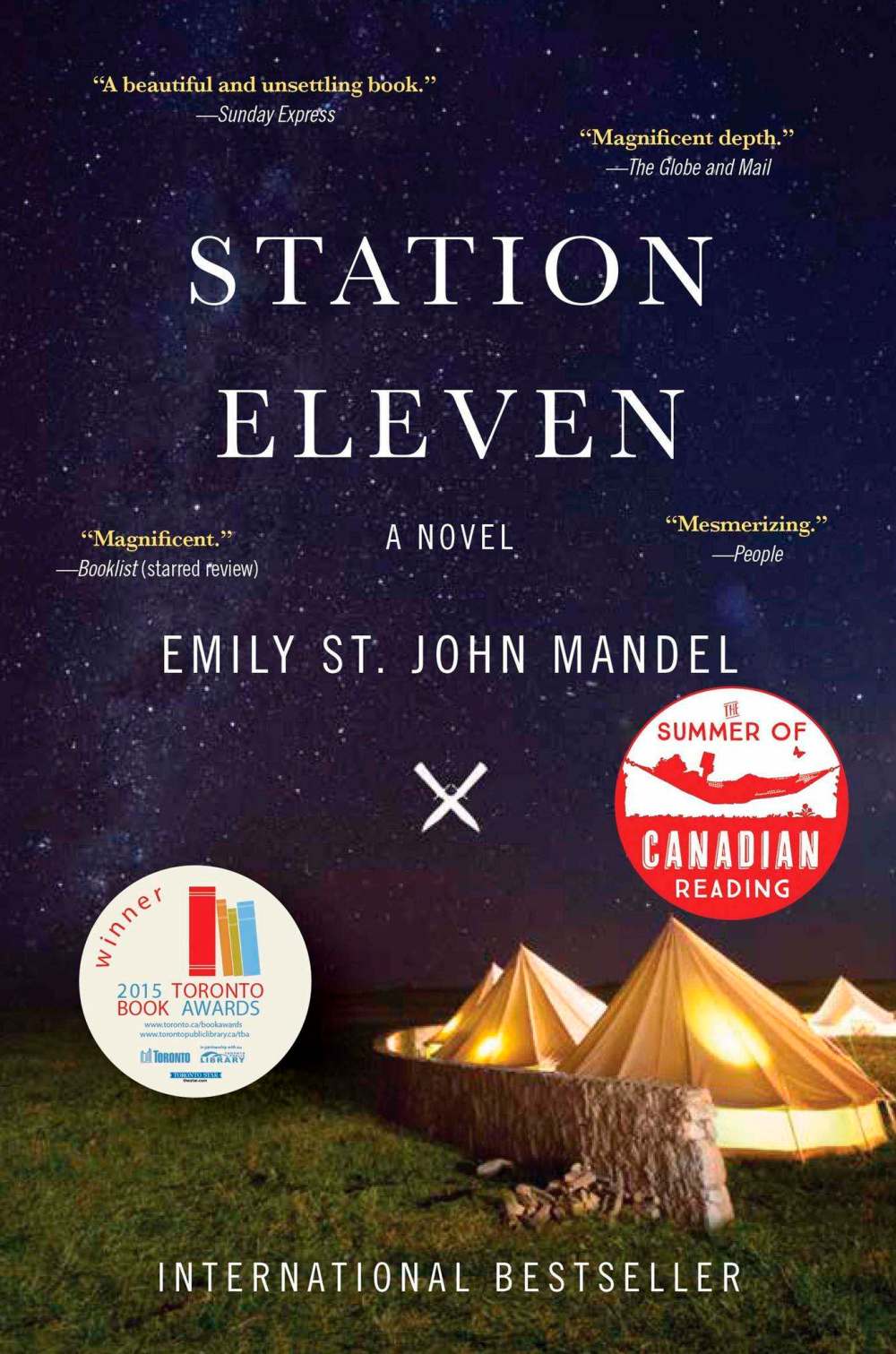
British Columbia-born, New York-based author Emily St. John Mandel’s fourth book, Station Eleven, elevated her from one-to-watch status to bonafide literary superstar. And if the book’s literary merits brought her critical acclaim, Station Eleven’s dystopic storyline could see it re-enter the bestseller charts based on its subject matter — life after a crippling global pandemic.
The plot: Arthur Leander, a Hollywood actor, has a heart attack during a production of Shakespeare’s King Lear in Toronto. Jeevan, the man who tried to resuscitate him, receives a call from a doctor friend indicating he should leave the city immediately, as a mysterious flu is quickly spreading.
Fast forward two decades and we meet Kirsten, an actor in a roaming theatre troupe post-outbreak (which killed off much of humanity) who has a childhood connection to Arthur. The troupe sets out for the Museum of Civilization, located in a former airport, where it is believed their missing friends are being held. Her connection to Arthur, Jeevan and others — including the Prophet, Arthur’s son — ties the cast of characters together across numerous time periods.
Station Eleven is being made into an HBO Max series, written by Patrick Somerville and directed by Hiro Murai, which began filming in January. Mandel’s new book, The Glass Hotel, is slated to be published on March 24.
The Road
By Cormac McCarthy, 2006
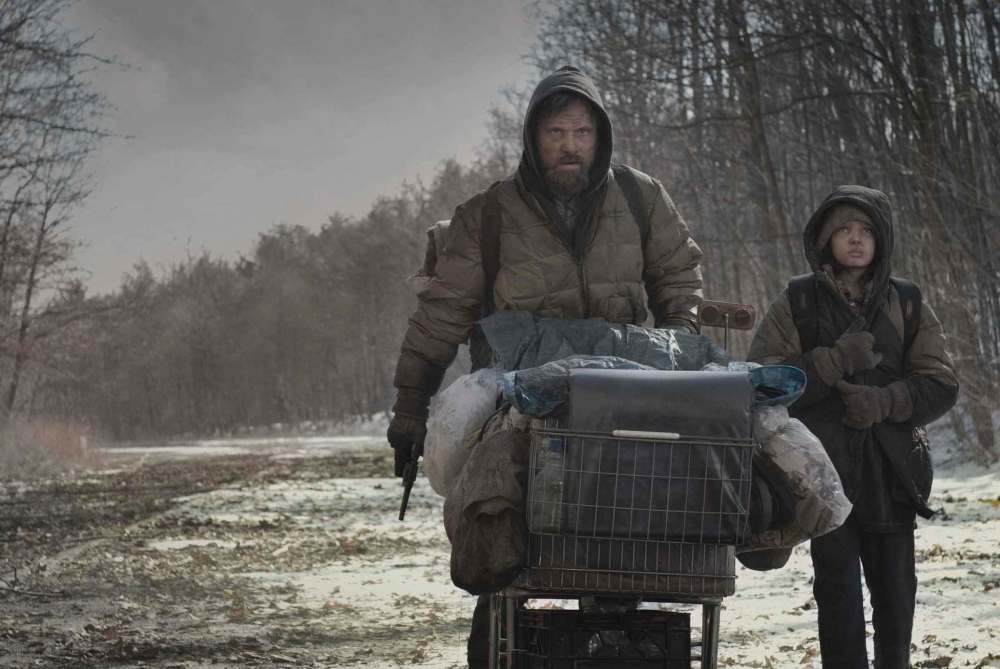
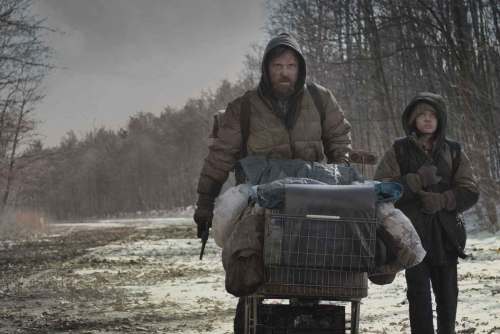
The Pulitzer Prize-winning novel The Road, by American author Cormac McCarthy, is a grim story of a father and son setting off across a decimated landscape following an unnamed apocalyptic event that destroyed most life on Earth. Part fable and part horror, McCarthy’s fictional odyssey quickly became one of the most critically acclaimed books of the 21st century.
The unnamed pair of protagonists in The Road travel by foot, heading south with their few possessions to escape the harsh winter that is to come. Along the way they are beset by illness, injury and danger, encountering a number of other survivors, good and bad, who alternately aim to help and harm the pair — including cannibals hell-bent on surviving however they can. By the book’s end the journey has come to a harrowing and ultimately heartbreaking conclusion.
McCarthy has described conversations between him and his own son, John Francis, as inspiration for the dialogue between “the man” and “the boy” throughout The Road; in an interview with Oprah Winfrey, who chose The Road as one of her book club selections, he even described his son as a co-author of the book.
The Road was made into a 2009 film directed by John Hillcoat and starring Viggo Mortensen and Kodi Smit-McPhee as the man and the boy, respectively.
The Andromeda Strain
By Michael Crichton, 1969
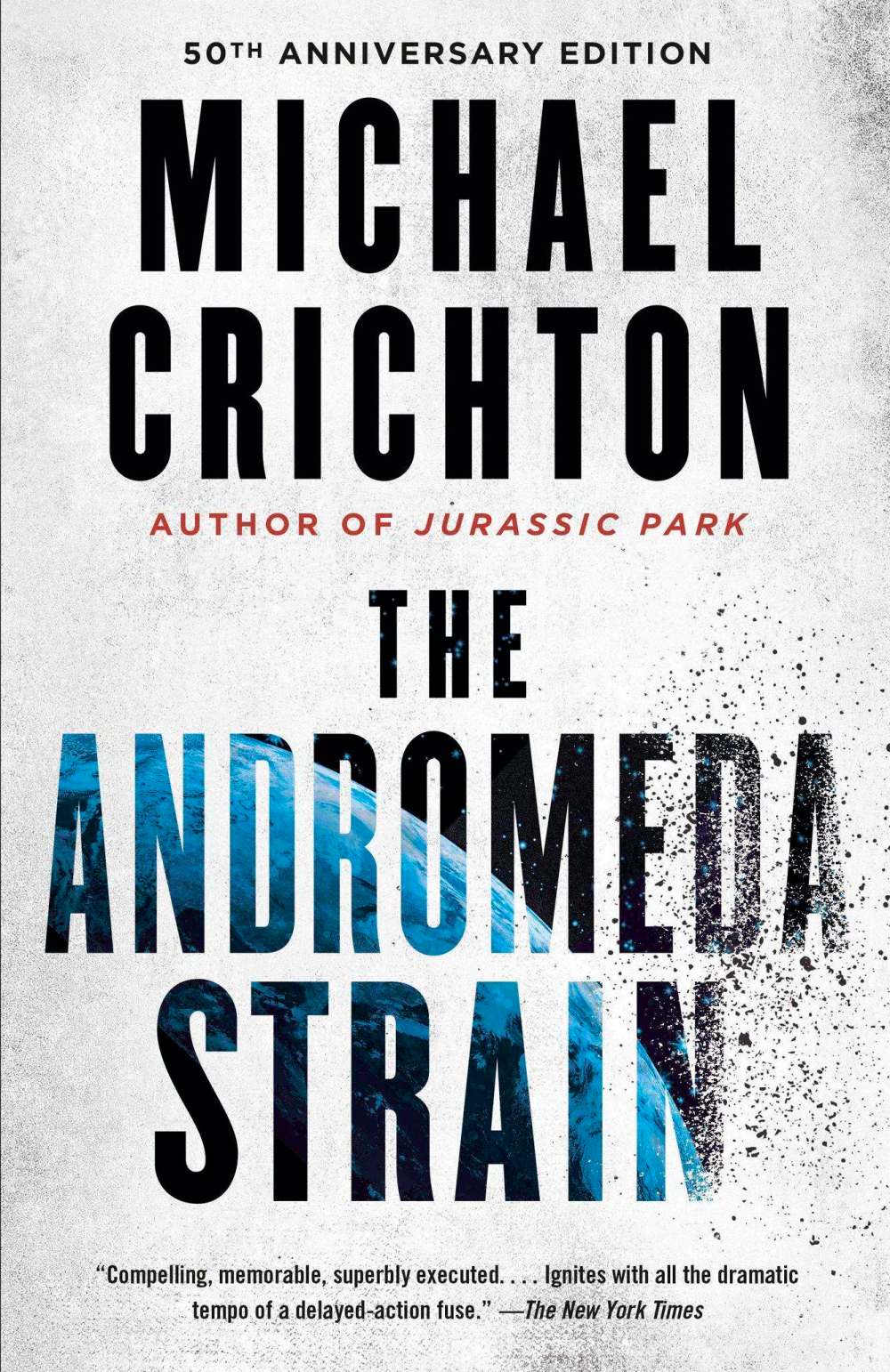
Before he started writing about the dinosaurs of Jurassic Park, the late American author Michael Crichton penned 1969’s The Andromeda Strain, the first book published under his own name (he wrote early works under the pen name John Lange) and one which would pave the road to becoming a multimillion-selling author.
A military satellite returns to Earth, landing near a small town in Arizona. When the team sent to recover the satellite arrive in the town, they find everyone has died either by suicide or from near-instant blood clotting — everyone, that is, except an infant and an old man who are curiously immune. In an underground military lab, researchers learn the satellite made contact with a meteor, which transmitted an interstellar microbe on contact, causing the satellite to crash and killing nearby humans.
The microbe, named Andromeda, begins to mutate, penetrating all manner of sealed hatches and doors meant to keep it in. When it appears Andromeda will reach the surface and begin contaminating wider civilization, the scientists must decide whether to use a nuclear option to destroy the lab and the microbe.
The book was made into a film in 1971, with Robert Wise directing and starring Arthur Hill, James Olson, David Wayne and Kate Reid.
Annihilation
By Jeff VanderMeer, 2014
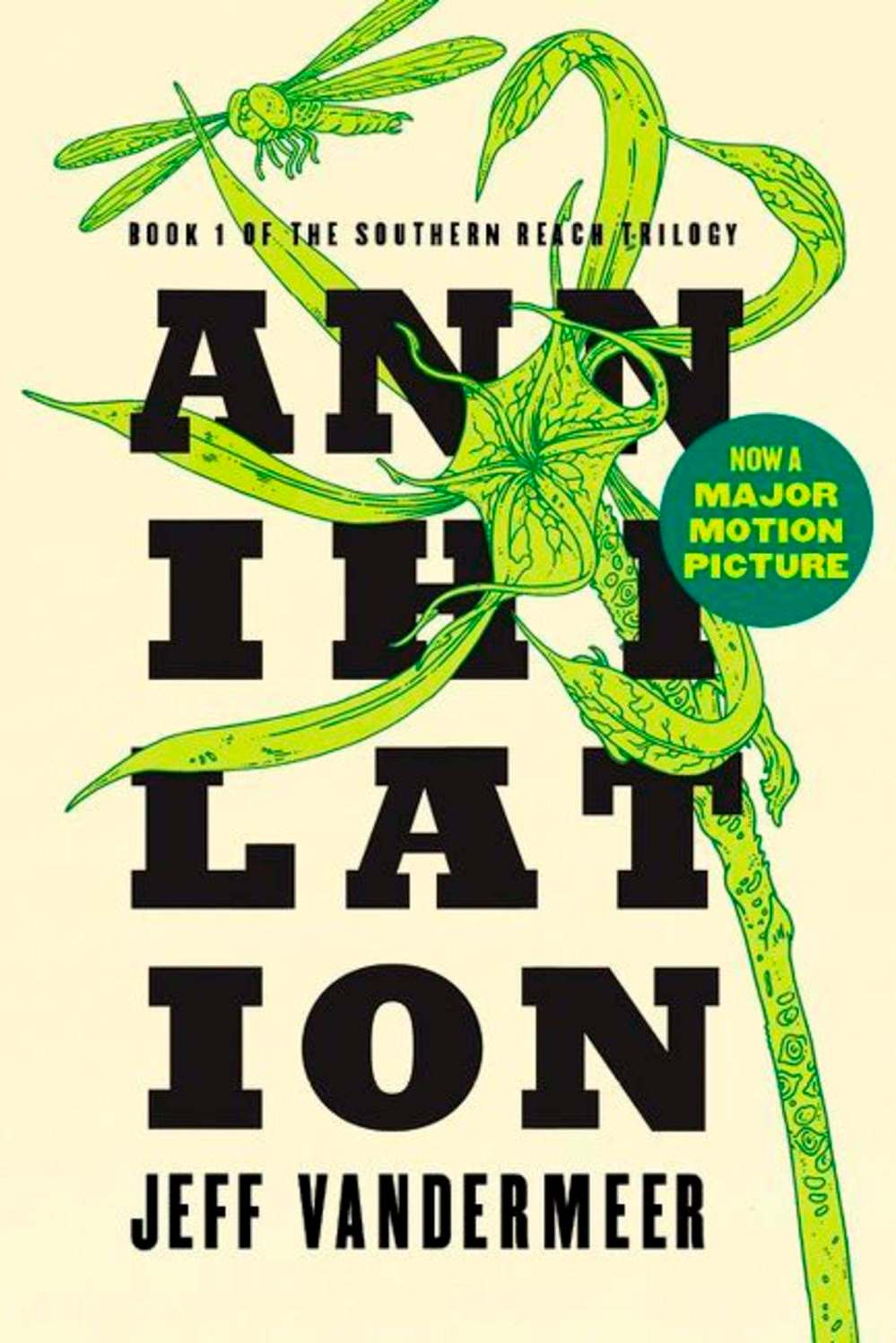
American author Jeff VanderMeer has been a critically acclaimed author in the weird/dystopian/environmental catastrophe/science fiction fields for some time. But it was his 2014 novel, Annihilation, the first of his Southern Reach trilogy, that lifted him to a more widespread recognition.
Annihilation follows a team of four women — a biologist, a psychologist, a surveyor and an anthropologist —who venture into a now-uninhabited coastal area known as Area X. The group, known as the 12th Expedition, set out to explore the abandoned area, which is overrun by strange alien growth and has led almost every previous expedition member to madness, or suicide, or aggressive sickness and death.
The biologist serves as the book’s narrator, her story told as a journal from her expedition into Area X. The region features lush but deadly vegetation and strangely mutated fauna, which she chronicles in some detail. In addition to trying to figure out why the area exists and what potential harm it holds for humanity, she is also trying to find answers for why her husband, a member of the 11th Expedition, suddenly turned up at their home one day unexpectedly — with no knowledge of how he got there.
The 2018 film adaptation of Annihilation veers from the book’s plot, but still works well on its own. Directed by Alex Garland, it stars Natalie Portman, Jennifer Jason Leigh, Gina Rodriguez and Oscar Isaac. Both book and film offer a portrait of Area X as a place filled with beauty, danger and underlying dread. The second and third books of the trilogy, Authority and Acceptance, were both released in 2014 and flesh out the mysteries of Area X.
The Stand
By Stephen King, 1978
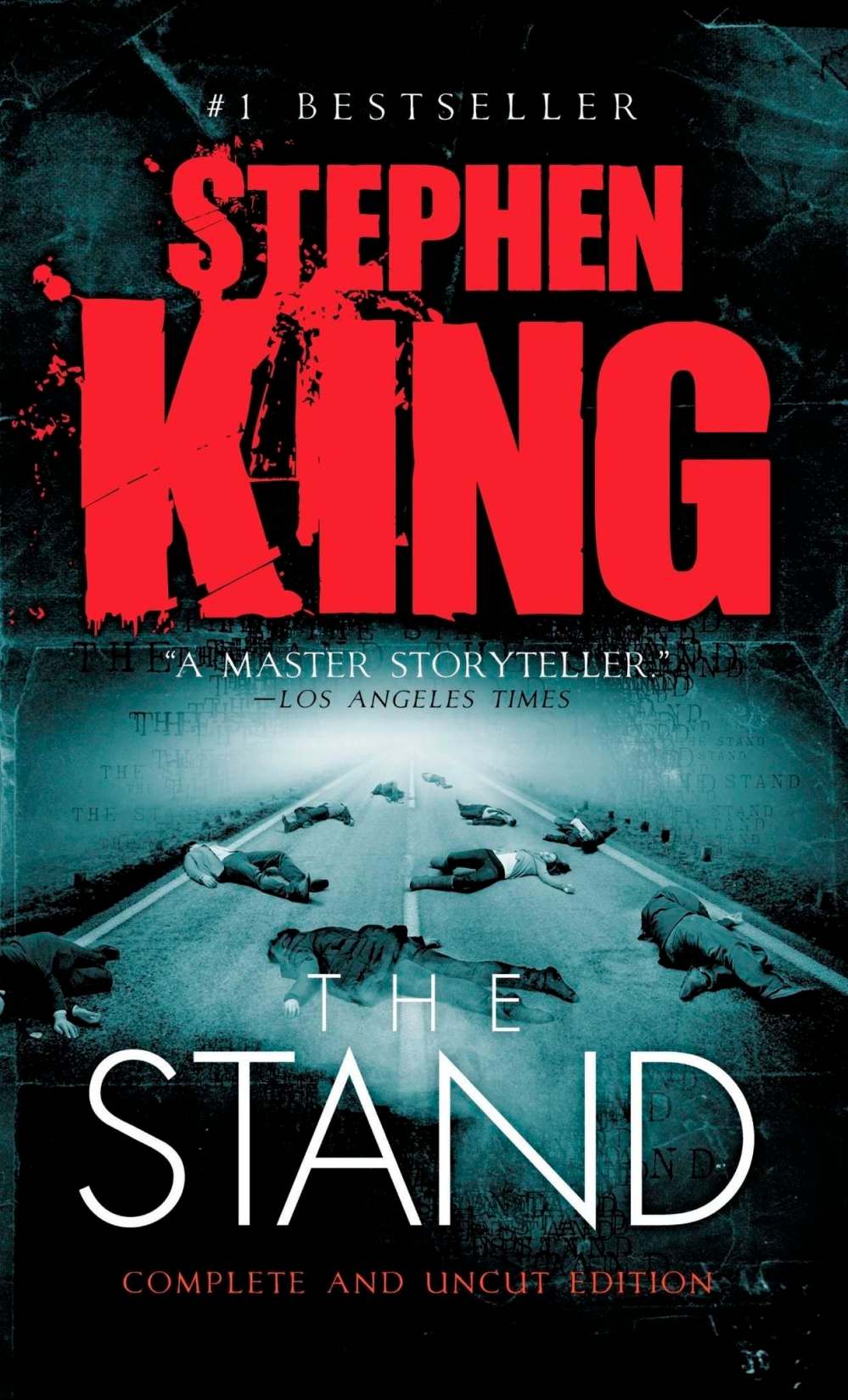
Leave it to the master of horror to weigh in on post-apocalyptic global pandemic in epic fashion — in an 800-plus-page epic.
In The Stand, King penned an epic tale of a post-influenza pandemic (caused by a man-made biological weapon) that killed nearly everyone, with those remaining retooling humanity’s collapsed social systems and establishing ragtag groups of survivors.
One of the book’s two main groups is a collection of stragglers who come together in order to try and survive — all of whom share the same dream about a 108-year-old woman in Nebraska, who directs the group to Boulder, Colo. Another collection of survivors is drawn together by a man in Las Vegas possessing inexplicable supernatural abilities who prepares to go to war with the Boulder survivors. An eventual nuclear explosion rattles the chain of events, maiming many of the characters in the process.
An uncut version of The Stand was published in 1990, pushing the page count to over 1,150. It was adapted into a TV miniseries in 1994 starring Gary Sinise, Miguel Ferrer, Molly Ringwald and Ed Harris. A new miniseries of The Stand began filming last year; it’s slated to be released by CBS All Access at some point in 2020; it features a cast that includes Whoopi Goldberg, James Marsden, Greg Kinnear and Amber Heard.
books@freepress.mb.ca
Our newsroom depends on a growing audience of readers to power our journalism. If you are not a paid reader, please consider becoming a subscriber.
Our newsroom depends on its audience of readers to power our journalism. Thank you for your support.
Watch and read
Station Eleven
The Road
The Andromeda Strain
Annihilation
The Stand
Our newsroom depends on a growing audience of readers to power our journalism. If you are not a paid reader, please consider becoming a subscriber.
Our newsroom depends on its audience of readers to power our journalism. Thank you for your support.
Related Articles
Manitoba has played host to a scary number of frightening films


Advertisement Advertise With Us
Advertisement Advertise With Us