Bright lights,Big city
Exploring race, crime, virtue and more, Whitehead’s Harlem Trilogy ends on a high note
Advertisement
Read this article for free:
or
Already have an account? Log in here »
To continue reading, please subscribe:

Digital Subscription
One year of digital access for only $205*
- Enjoy unlimited reading on winnipegfreepress.com
- Read the E-Edition, our digital replica newspaper
- Access News Break, our award-winning app
- Play interactive puzzles
*First annual payment billed as $205.00 + GST for one year. This annual subscription will automatically renew at $233.00 + GST every 52 weeks (10% off the regular annual price of $259.35). Offer available to new and qualified returning subscribers only. Cancel any time.
To continue reading, please subscribe:
Add Free Press access to your Brandon Sun subscription for only an additional
$1 for the first 4 weeks*
- Enjoy unlimited reading on winnipegfreepress.com
- Read the E-Edition, our digital replica newspaper
- Access News Break, our award-winning app
- Play interactive puzzles
*Your next Brandon Sun subscription payment will increase by $1.00 and you will be charged $17.95 plus GST for four weeks. After four weeks, your payment will increase to $24.95 plus GST every four weeks.
Read unlimited articles for free today:
or
Already have an account? Log in here »
Cool Machine, the third and last book in Colson Whitehead’s Harlem Trilogy — following Harlem Shuffle and Crook Manifesto — is perhaps the most captivating of the three.
Whitehead has written 12 works of fiction and non-fiction, many of them bestsellers. Two of his previous novels, The Nickel Boys and The Underground Railroad, each won the Pulitzer Prize, with the latter also winning a National Book Award. Whitehead, who lives in New York City, has also received MacArthur and Guggenheim fellowships.
Each of the books in the Harlem Trilogy chronicles a different time period — Harlem Shuffle spans 1959-1964, Crook Manifesto 1971-76 and Cool Machine 1981-1986. The latest follows the same structure as the other two books: three self-contained novellas featuring Ray Carney, a furniture salesman from Harlem who is perpetually caught between the desire to live an upstanding life as a business and family man, and the pull of the underground world of crime, in which his father was embroiled. Many of the characters from the two previous Harlem Trilogy books reappear, such as Carney’s criminal associate, Pepper, but it’s not necessary to have read them to enjoy Cool Machine.
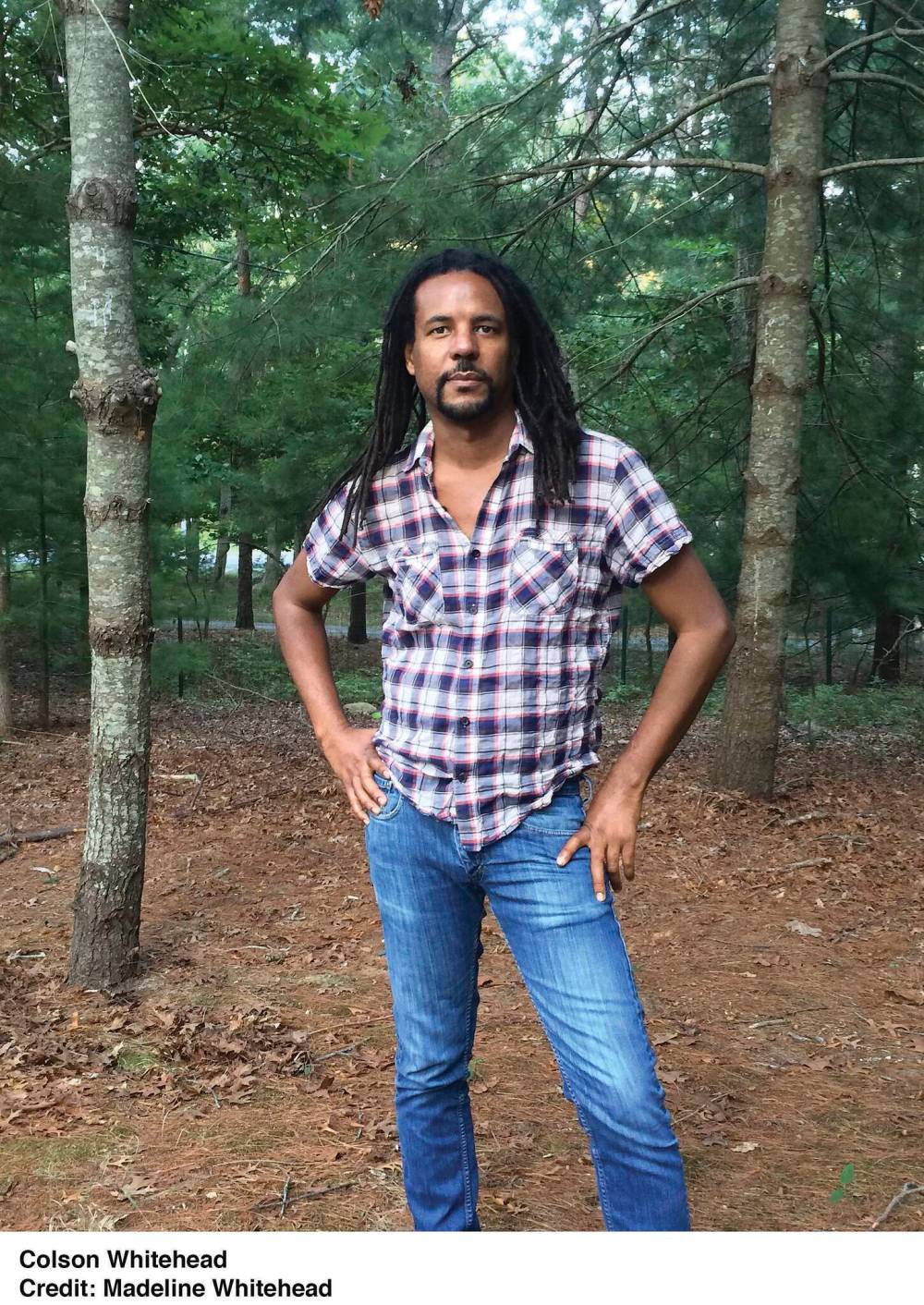
Madeleine Whitehead photo
The New York of Colson Whitehead’s Harlem Trilogy is as central a character in the books as the people living there.
New York City is a central character throughout the trilogy, with its own personality and character arc. By the 1980s, the racial tension of the ’60s that led to warfare with police and the burning of buildings, depicted in earlier novels, has subsided to something less overt, simmering under the surface. The flight of white New Yorkers from Harlem is almost complete. Downtown, buildings are demolished to make way for the twin towers of the World Trade Center; businesspeople walk the streets in bold pin-striped suits.
Some of Whitehead’s best prose describes the city: it’s a place where “the giant shiv of the Empire State Building stab(s) the sky” and home to “the underlying melody of death and rebirth in blocks and avenues.” The human characters in the novel have a love-hate relationship with the city, deploring the profusion of graffiti, the rats and the ever-present construction and traffic, but also recognizing its unique energy and the dreams it offers its residents.
As with the previous books in the trilogy, Whitehead draws a compelling portrait of the evolution of African-American life. In the 1980s, there has been progress. Carney’s wife, Elizabeth, now owns her own business. Carney’s children are grown and gone, and his daughter is in an interracial relationship. At the opening of the novel, Carney’s business success has led to him being awarded regional dealer of the month.
However, white cabbies are still reluctant to pick up a Black man, relationships with law enforcement are still strained and, as Whitehead conveys, Carney was “…a Black man in America. When was he not being tested?”
It’s the constant gap between Carney’s aspirations and his reality that embroil him in illegal schemes. In Cool Machine, they are, in turn, his ill-fated decision to fence one more stolen jewel to get his wife the funds she needs for her agency after a business loan application is denied by her bank; his referral of his former associate Pepper to perform security for a crooked art dealer; and Carney’s desire to help the son of his cousin Freddie, who died tragically in Harlem Shuffle, after Robert witnesses a Mafia killing.

Though all three are strong, Cool Machine’s second novella, Here Comes Sue Simmons, is particularly compelling, continuing the theme that runs throughout the trilogy as to which acts and people are labelled “criminal.” Whitehead’s characters murder each other, often in gruesome ways, steal valuable objects and commit horrific acts of violence to get people to give up information. They often employ questionable morality to justify their actions, such as Carney claiming he has involved himself in grand larceny to help Elizabeth; later he admits to himself that “Deep down he loved the chaos as much as the next soul.”
The art dealer responds to a new public demand for artifacts from Africa by selling stolen Ngil masks from the Fang people of Gabon. Pepper becomes embroiled in a scheme to recover the masks so they can be repatriated to the Fang. The novella explores the idea that white dealers and collectors are engaged in cultural theft without consequences, which has arisen from the greater crimes of the colonization of Africa and the widespread pillaging and destruction that came with it. This echoes Carney’s reflection in the first novella, City at Night, that New York City is built on land stolen from the Lenape people. The mission to recover the masks is therefore a righteous one, although it would be regarded as illegal by the justice system.
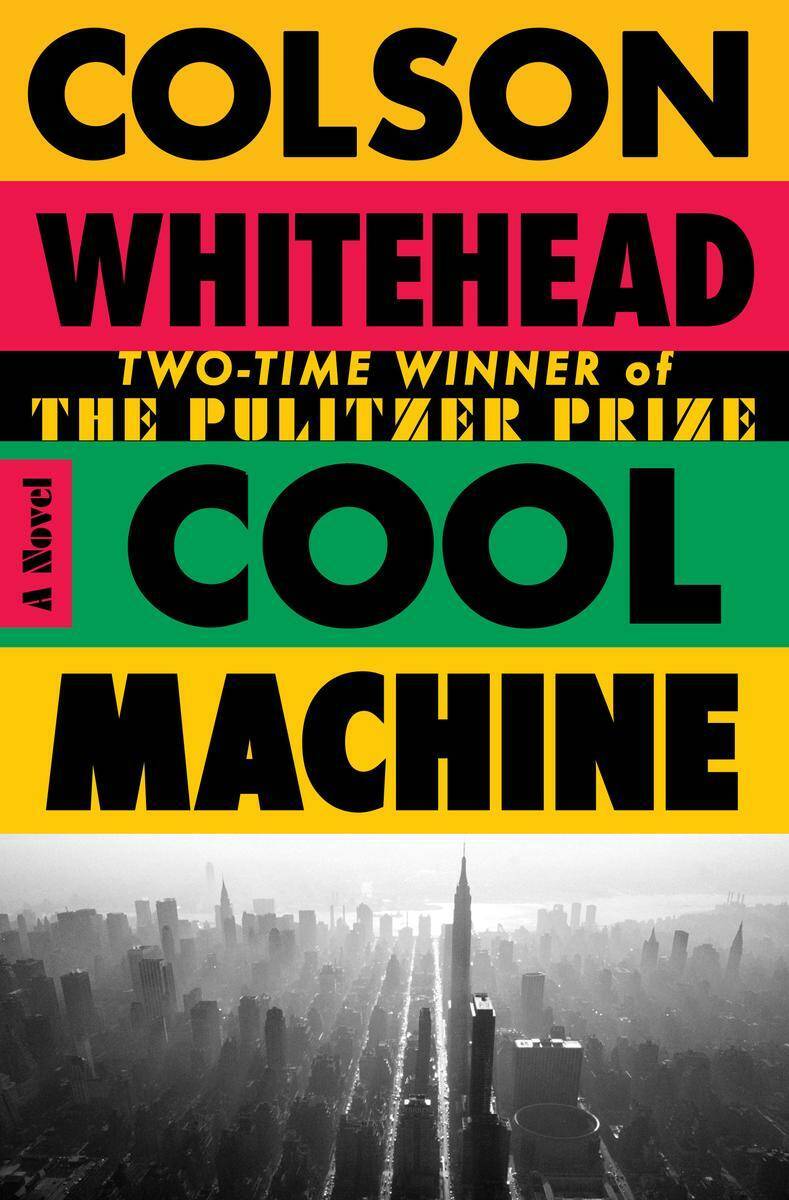
Cool Machine
It’s this dichotomy that leads the reader to root for Carney and Pepper, despite the unlawful nature of their actions. In the third novella, No Radio, Robert is a witness to a crime and is sought by police, but Carney’s decision to relocate and hide his cousin is understandable — the police can’t be trusted to keep him safe. The complexity of what is legal versus what is just is brilliantly portrayed by Whitehead with both humour and keen insight, in dazzling layers of nuance and meaning. It left this reviewer both longing to turn the page and wanting to pause and savour each new revelation.
The reader is also left with a sense of abiding love for New York City, described by Whitehead as a giant prison no one can escape from — yet no one wants to because “there was no place else.” In tribute to the madness and wonder of New York, Cool Machine’s prose glitters as brightly as the lights of the city that never sleeps, bringing the trilogy to a satisfying and redemptive end.
Zilla Jones is a Winnipeg-based writer of short and long fiction. Her debut novel The World So Wide was published in 2025.