States trashing troves of masks and pandemic gear as huge, costly stockpiles linger and expire

Advertisement

Advertise with us

When the coronavirus pandemic took hold in an unprepared U.S., states scrambled for masks and other protective gear.

Read this article for free:


By clicking the button above, an account will be created and you will begin to receive some of our recommended newsletters. You may opt out of any newsletter by visiting your Email and Communication Preferences page or by clicking "unsubscribe" at the bottom of any email.

or

Already have an account? Log in here »

To continue reading, please subscribe:

Digital Subscription

One year of digital access for only $1.44 a week*

  • Enjoy unlimited reading on winnipegfreepress.com
  • Read the E-Edition, our digital replica newspaper
  • Access News Break, our award-winning app
  • Play interactive puzzles

*Billed as $5.77 plus GST every four weeks. After 52 weeks, price increases to the regular rate of $19.95 plus GST every four weeks. Offer available to new and qualified returning subscribers only. Cancel any time.

To continue reading, please subscribe:

Add Free Press access to your Brandon Sun subscription for only an additional

$1 for the first 4 weeks*

  • Enjoy unlimited reading on winnipegfreepress.com
  • Read the E-Edition, our digital replica newspaper
  • Access News Break, our award-winning app
  • Play interactive puzzles
Start now

*Your next Brandon Sun subscription payment will increase by $1.00 and you will be charged $17.95 plus GST for four weeks. After four weeks, your payment will increase to $24.95 plus GST every four weeks.

Hey there, time traveller!
This article was published 20/12/2023 (1047 days ago), so information in it may no longer be current.

When the coronavirus pandemic took hold in an unprepared U.S., states scrambled for masks and other protective gear.

Three years later, as the grips of the pandemic have loosened, many states are now trying to deal with an excess of protective gear, ditching their supplies in droves.

With expiration dates passing and few requests to tap into its stockpile, Ohio auctioned off 393,000 gowns for just $2,451 and ended up throwing away another 7.2 million, along with expired masks, gloves and other materials. The now expiring supplies had cost about $29 million in federal money.
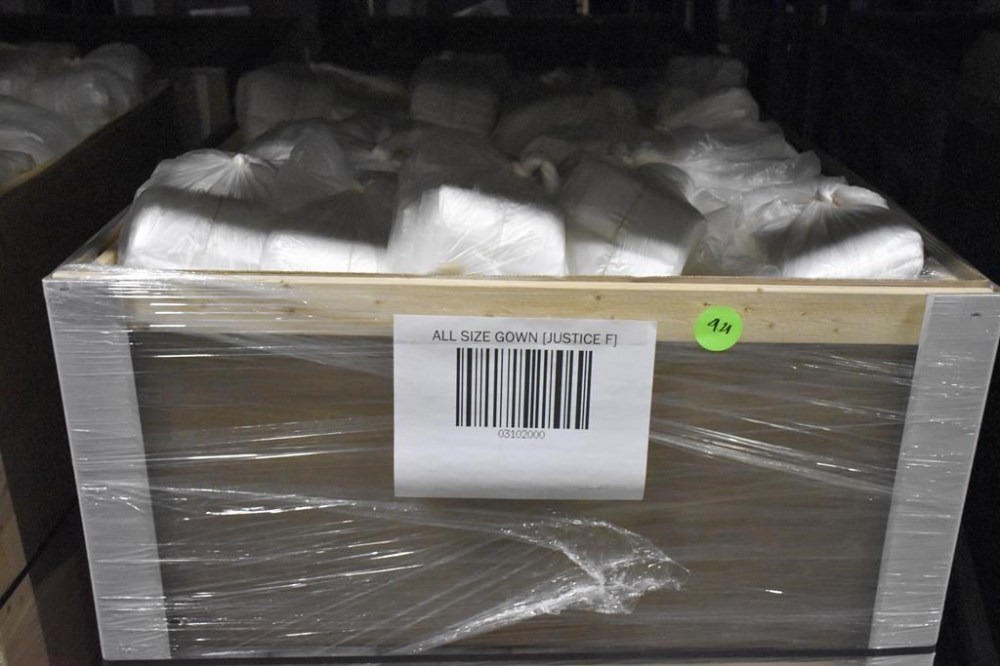
Boxes of personal protection equipment maintained by the Missouri Department of Health and Senior Services are shown stacked in a warehouse in Jefferson City, Mo., on Dec. 1, 2023. (Brad Bashore/Missouri Department of Health and Senior Services via AP)

A similar reckoning is happening around the country. Items are aging, and as a deadline to allocate federal COVID-19 cash approaches next year, states must decide how much to invest in maintaining warehouses and supply stockpiles.

An Associated Press investigation found that at least 15 states, from Alaska to Vermont, have tossed some of their trove of PPE because of expiration, surpluses and a lack of willing takers.

Into the trash went more than 18 million masks, 22 million gowns, 500,000 gloves, and more. That’s not counting states that didn’t give the AP exact figures or responded in cases or other measures. Rhode Island said it got rid of 829 tons of PPE; Maryland disposed of over $93 million in supplies.

“What a real waste. That’s what happens when you don’t prepare, when you have a bust-and-boom public health system,” where a lack of planning leads to panicked over-purchasing in emergencies, said Dr. Georges Benjamin, executive director of the American Public Health Association. “It shows that we really have to do a better job of managing our stockpiles.”

The AP sent inquiries about PPE stockpiles to all 50 states over the past several months. About half responded.

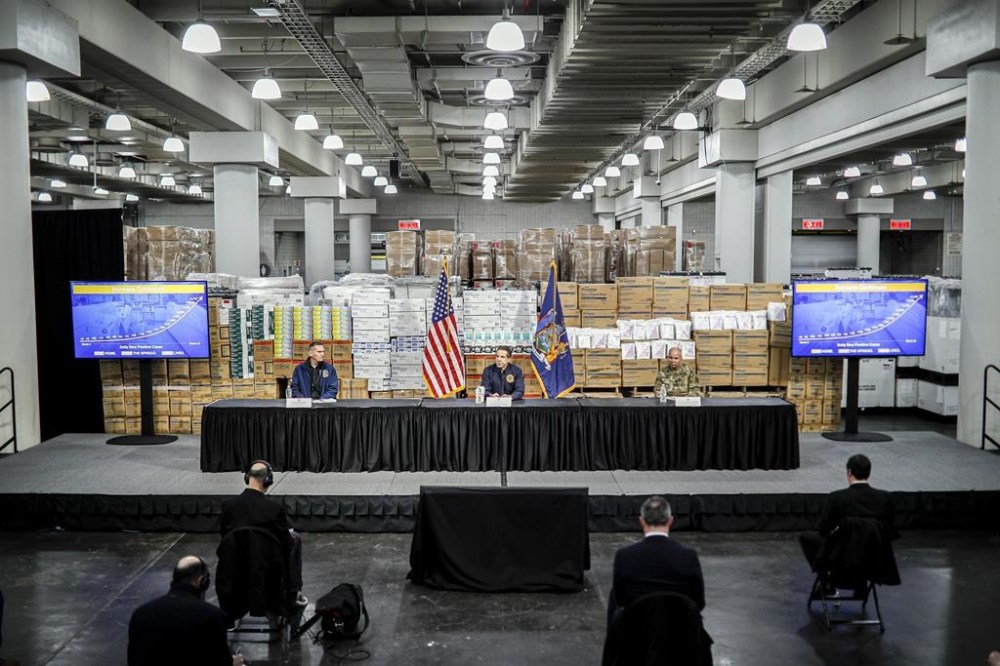
FILE - New York Gov. Andrew Cuomo, center, speaks while practicing social distancing against a backdrop of medical supplies during a news conference at the Jacob Javits Center that will house a temporary hospital in response to the COVID-19 outbreak, Tuesday, March 24, 2020, in New York. Some states that stockpiled millions of masks and other personal protective equipment during the coronavirus pandemic are now throwing the items away. (AP Photo/John Minchillo, File)

States emphasize that they distributed far more gear than they discarded and have gone to great lengths to donate the leftovers. Washington state sent hundreds of thousands of supplies to the Marshall Islands last year, yet ended up throwing out millions more items after they expired.

Many states are keeping at least a portion, and sometimes all, of their remaining protective gear. Some even plan to update their stockpiles.

But others say the vagaries of the pandemic and the PPE supply left no choice but to acquire the items, and now to throw them out, however reluctantly. Expiration dates are set because materials can degrade and might not work as intended. The Federal Emergency Management Agency has set the fair market value of expired supplies at zero dollars.

“Anytime you’re involved in a situation where you’re recalling how difficult it was to get something in the first place, and then having to watch that go or not be used in the way it was intended to be used, certainly, there’s some frustration in that,” said Louis Eubank, who runs the South Carolina health department’s COVID-19 coordination office. The state has discarded over 650,000 expired masks.

When the virus struck, demand skyrocketed for N95 masks, gloves and gowns. The U.S government’s Strategic National Stockpile was underequipped, and states plunged into global bidding wars.
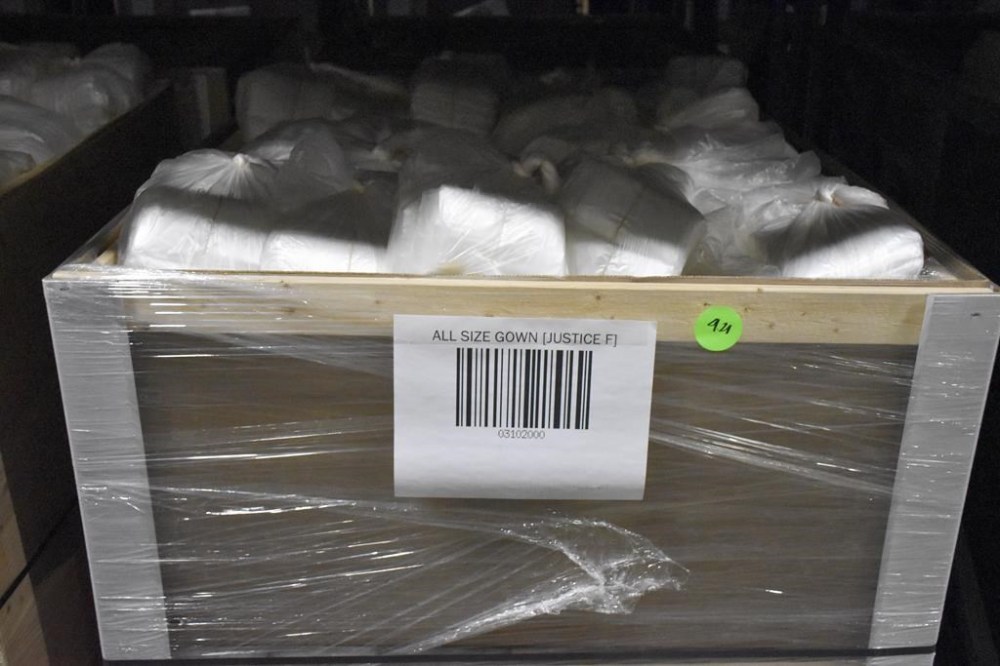
Boxes of personal protection equipment maintained by the Missouri Department of Health and Senior Services are shown stacked in a warehouse in Jefferson City, Mo., on Dec. 1, 2023. (Brad Bashore/Missouri Department of Health and Senior Services via AP)

The AP found in 2020 that states spent over $7 billion in a few months on PPE, ventilators and some other high-demand medical devices in a seller’s market. Ultimately, the federal government paid for many of the supplies.

“There was no way to know, at the time of purchase, how long the supply deficit would last or what quantities would be needed,” Ohio Department of Health spokesperson Ken Gordon said.

Ohio distributed more than 227 million pieces of protective equipment during the pandemic. But as the supply crunch and the health crisis eased, demand faded, especially for gowns.

Now, “states, hospitals, manufacturers – everybody in the whole system — has extra product,” said Linda Rouse O’Neill of the Health Industry Distributors Association.

Given the glut, stockpiled items are selling for bargain prices, if at all. Vermont got $82.50 for 105,000 boot covers and 29 cents apiece for thousands of safety goggles.

FILE - New York Gov. Andrew Cuomo, center, speaks while practicing social distancing against a backdrop of medical supplies during a news conference at the Jacob Javits Center that will house a temporary hospital in response to the COVID-19 outbreak, Tuesday, March 24, 2020, in New York. Some states that stockpiled millions of masks and other personal protective equipment during the coronavirus pandemic are now throwing the items away. (AP Photo/John Minchillo, File)

Striking a balance between preparedness and surpluses is “a major dilemma” for governments, said Scott Amey of the Project on Government Oversight, a Washington, D.C.-based watchdog group. And while politicians vowed in 2020 never to be caught off guard again, “memories are short, budgets are tight,” Amey noted.

In Wisconsin, a legislative committee axed from the budget $17.2 million that would have funded a warehouse with an ongoing 60-day supply of PPE for two years.

The state Department of Health Services said it is now “demobilizing the warehouse” and trying to donate the supplies. Already, Wisconsin has tossed nearly 1.7 million masks and almost 1 million gowns.

Minnesota’s Department of Health was allocated some money this year for retaining and restocking PPE and is strategizing. For now, emergency response official Deb Radi says the agency expects to dispose of a few expiring gowns.

The Health Industry Distributors Association recommends that product distributors maintain a 60-to-90-day supply to guard against demand spikes. But the group says it’s probably unnecessary for everyone in the system — from manufacturers to doctors’ offices — to have such a large cushion.
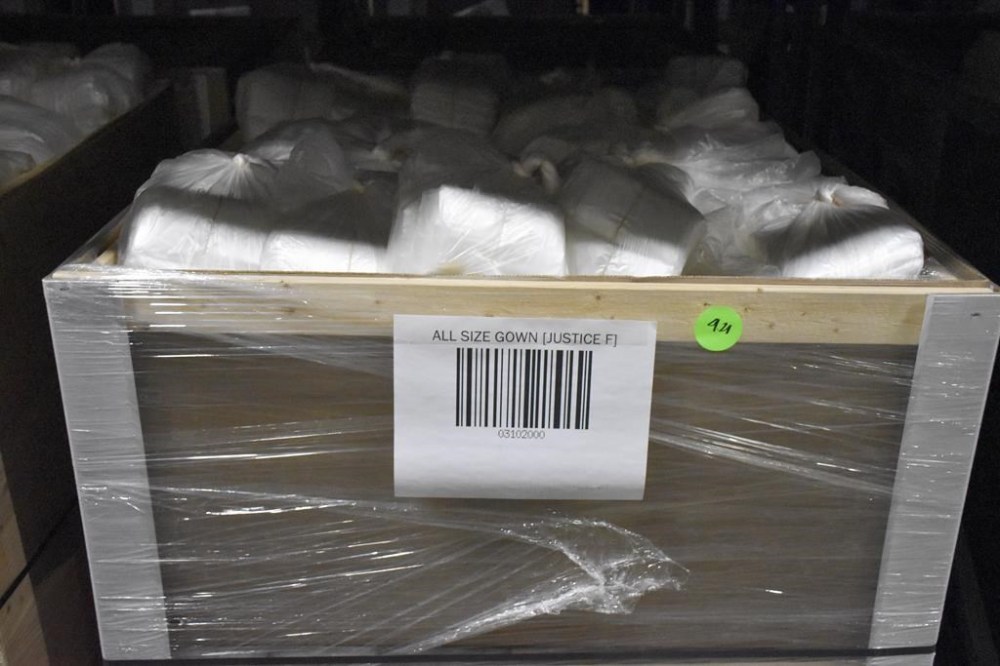
Boxes of personal protection equipment maintained by the Missouri Department of Health and Senior Services are shown stacked in a warehouse in Jefferson City, Mo., on Dec. 1, 2023. (Brad Bashore/Missouri Department of Health and Senior Services via AP)

Missouri’s health department has maintained a 90-day supply, keeping even expired materials on the presumption that the federal government will OK their use in an emergency. That happened during COVID-19.

“If you don’t make the investment – and perhaps the investment that is never used – then you may not be prepared to assist the public when it’s needed,” Missouri health director Paula Nickelson said.

Pennsylvania officials, by contrast, are aiming for a 15-day stockpile after frank conversations about what they can afford not only to keep, but to keep replacing as items expire, said Andy Pickett, the Health Department’s emergency preparedness and response director.

And Nevada can’t give its aging PPE away fast enough.

Department of Administration Director Jack Robb said the state is endeavoring to shed the supplies safely and without wasting money but already has discarded some.
FILE - New York Gov. Andrew Cuomo, center, speaks while practicing social distancing against a backdrop of medical supplies during a news conference at the Jacob Javits Center that will house a temporary hospital in response to the COVID-19 outbreak, Tuesday, March 24, 2020, in New York. Some states that stockpiled millions of masks and other personal protective equipment during the coronavirus pandemic are now throwing the items away. (AP Photo/John Minchillo, File)

But Robb said officials “made the best decisions that they could” when confronted with a disease that has killed nearly 7 million people worldwide, including some of his close friends.

“And I hope we never see anything like that again in our lifetime,” he said.

Report Error Submit a Tip

More Stories

Court ruling concludes Canadian Wheat Board saga

Laura Rance-Unger 4 minute read Preview

Court ruling concludes Canadian Wheat Board saga

Laura Rance-Unger 4 minute read 2:01 AM CDT

It remains to be seen whether the recent court ruling in a lawsuit filed after Canadian Wheat Board’s dissolution in 2012 puts the whole debate to rest, as some no doubt hope.

But either way, the dust has settled on the post-CWB world. The sun still rises and a new generation of farmers on the land only knows by name an institution that for generations influenced every aspect of Prairie grain farming.

The first Rural Revival column I wrote for this newspaper more than 30 years ago was about a thousand farmers from Western Canada demonstrating in support of the Wheat Board. It was in the aftermath of the Western Grain Marketing Panel report, one of several efforts that eventually included a plebiscite to help the federal government decide what to do about a vocal minority of farmers who wanted marketing “freedom.”

The polls at the time suggested about two-thirds of farmers were comfortable enough with the single-desk system for food wheat and barley to keep it around. It served as a counterbalance to canola, which they sold on the open market. They essentially had a dual market.

Read
2:01 AM CDT

SNC planned U.S. move if no deal: documents

Jordan Press and Christopher Reynolds, The Canadian Press 5 minute read Preview

SNC planned U.S. move if no deal: documents

Jordan Press and Christopher Reynolds, The Canadian Press 5 minute read Thursday, Mar. 28, 2019

OTTAWA - SNC-Lavalin warned federal prosecutors last fall about a possible plan to split the company in two, move its offices to the United States and eliminate its Canadian workforce if it didn't get a deal to avoid criminal prosecution, newly obtained documents show.

The documents, part of a PowerPoint presentation obtained by The Canadian Press, describe something called "Plan B" — what Montreal-based SNC might have to do if it can't convince the government to grant a so-called remediation agreement to avoid criminal proceedings in a fraud and corruption case related to projects in Libya.

Under that plan, SNC would move its Montreal headquarters and corporate offices in Ontario and Quebec to the U.S. within a year, cutting its workforce to just 3,500 from 8,717, before eventually winding up its Canadian operations.

“The government of Canada needs to weigh the public interest impact of the prosecution of SNC-Lavalin," the presentation reads.

Read
Thursday, Mar. 28, 2019

A little toponder, a lot to celebrate

Erna Buffie 5 minute read 2:01 AM CDT

Well, another civic election season has come and gone, and I have to say it was a doozy. The most surprising event was the steady climb in support for young mayoral candidate Noah Redden, who started out with just four per cent public support in September but had reached a solid 14 per cent support in October.

On election day, Redden nearly came in second, less than one percentage point behind Kevin Klein, an experienced politician.

Indeed, the 27-year-old’s accomplishment was nothing short of astonishing. Particularly given that his shoestring campaign was given very little coverage — largely, according to one pundit, because he didn’t send out any press releases.

This when Redden’s unwritten press releases were there for everyone to see on Instagram, as he popped up in locations across the city, posting videos about what he hoped to achieve as mayor.

Ottawa announces $500 million for North End sewage plant upgrade

Joyanne Pursaga 5 minute read Preview

Ottawa announces $500 million for North End sewage plant upgrade

Joyanne Pursaga 5 minute read Yesterday at 5:03 PM CDT

The federal government will provide $500 million to help complete the major upgrade to Winnipeg’s North End sewage treatment plant.

Winnipeg South MP Terry Duguid confirmed the total funding at a news conference at the plant Friday, calling the work critical to Winnipeg’s future.

“The stakes could not be higher. Without expanded wastewater treatment, Winnipeg would run out of capacity to build new homes and accommodate new industries within six years,” said Duguid.

The commitment offers the final funding needed to cover the $1.57-billion third and final phase of the upgrade. The city and province will also pay $500 million each for the work.

Read
Yesterday at 5:03 PM CDT

Letters, Oct. 31

6 minute read 2:01 AM CDT

Civic election a missed opportunity

The outcome of the latest municipal election in Winnipeg is nothing short of baffling. The decline of what was once a proud, beautiful prairie hub is impossible to ignore.

Winnipeg is rapidly sliding into a state of structural and social dilapidation, yet voters have inexplicably chosen to hand incumbent Mayor Scott Gillingham a second term. The decision smells of complacency, and sadly, it represents a massive missed opportunity for real urban renewal.

Walking through downtown Winnipeg today is an exercise in heartbreak. A city centre that should be a bustling economic and cultural core has instead transformed into an absolute eyesore. Encampments and tents are permitted to dot the heart of the city. Streets that used to thrive are now dominated by the tragic, visible reality of severe addiction, with individuals wandering and staggering through public spaces without adequate intervention or care.

Olympics Overnight: Speedskater Blondin wins silver in the mass start, Bowman narrowly misses podium in halfpipe skiing, Jamaica returns to bobsled track

Richie Assaly - Toronto Star, Toronto Star 6 minute read Preview

Olympics Overnight: Speedskater Blondin wins silver in the mass start, Bowman narrowly misses podium in halfpipe skiing, Jamaica returns to bobsled track

Richie Assaly - Toronto Star, Toronto Star 6 minute read Saturday, Feb. 19, 2022

Here’s what you missed overnight at Day 15 of the 2022 Beijing Olympics.

Read
Saturday, Feb. 19, 2022