WHO chief: U.S. abortion ruling ‘a setback,’ will cost lives

Advertisement

Advertise with us

GENEVA (AP) — The head of the World Health Organization on Wednesday criticized the U.S. Supreme Court ruling overturning Roe v. Wade, saying the decision to no longer recognize a constitutional right to abortion was “a setback” that would ultimately cost lives.

Read this article for free:


or

Already have an account? Log in here »

To continue reading, please subscribe:

Subscribe and receive a limited-edition Free Press branded hat or tote.

Digital Subscription

One year of digital access for only $205*

  • Enjoy unlimited reading on winnipegfreepress.com
  • Read the E-Edition, our digital replica newspaper
  • Access News Break, our award-winning app
  • Play interactive puzzles

*First annual payment billed as $205.00 + GST for one year. This annual subscription will automatically renew at $233.00 + GST every 52 weeks (10% off the regular annual price of $259.35). Offer available to new and qualified returning subscribers only. Cancel any time.

To continue reading, please subscribe:

Add Free Press access to your Brandon Sun subscription for only an additional

$1 for the first 4 weeks*

  • Enjoy unlimited reading on winnipegfreepress.com
  • Read the E-Edition, our digital replica newspaper
  • Access News Break, our award-winning app
  • Play interactive puzzles
Start now

*Your next Brandon Sun subscription payment will increase by $1.00 and you will be charged $17.95 plus GST for four weeks. After four weeks, your payment will increase to $24.95 plus GST every four weeks.

Hey there, time traveller!
This article was published 29/06/2022 (1549 days ago), so information in it may no longer be current.

GENEVA (AP) — The head of the World Health Organization on Wednesday criticized the U.S. Supreme Court ruling overturning Roe v. Wade, saying the decision to no longer recognize a constitutional right to abortion was “a setback” that would ultimately cost lives.

WHO Director-General Tedros Adhanom Ghebreyesus said during a media briefing that decades of scientific data prove that access to safe and legal abortion saves lives.

“The evidence is irrefutable,” Tedros said. “Restricting (abortion) drives women and girls toward unsafe abortions resulting in complications, even death.” He said safe abortion should be understood as health care and warned that limiting its access would disproportionately hit women from the poorest and most marginalized communities.
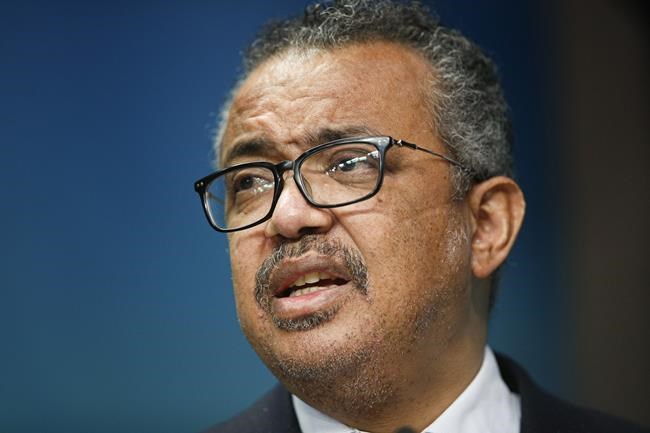
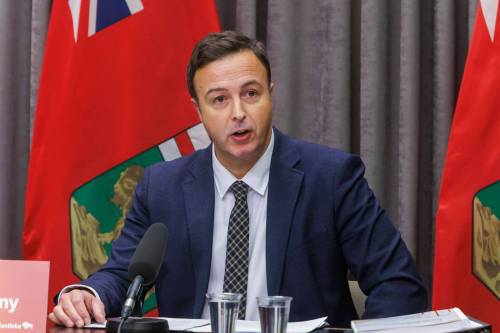
FILE - The head of the World Health Organization, Tedros Adhanom Ghebreyesus speaks during a media conference at an EU Africa summit in Brussels on Feb. 18, 2022 .The head of the World Health Organization criticized the decision of the U.S. Supreme Court to overturn the Roe v. Wade ruling that guaranteed women a constitutional right to abortion, calling it “a setback” that would ultimately cost women's lives.(Johanna Geron/Pool Photo via AP, File)

“We hadn’t really expected this from the U.S.,” Tedros said, adding that he was concerned the Supreme Court’s decision was a move “backwards.” In recent years, the U.S. has supported numerous maternal health care programs in developing countries, including access to reproductive health care.

“We had really hoped the U.S. would lead on this issue,” Tedros said.

The WHO’s chief scientist, Dr. Soumya Swaminathan, said the U.N. health agency’s position on abortion was based on decades of data from numerous countries.

“I know from own experience, working in India, that having access to safe abortion is a life-saving measure,” Swaminathan said. She said denying a woman access to abortion was “like denying someone a life-saving drug.”

She said bans on abortion would do little to reduce the number of procedures while people who undergo unsafe abortions are at risk of developing fatal blood infections.

“What these bans do … is it drives women into the hands of people who are there to exploit the situation, performing unsafe abortion and very often resulting in a huge amount of damage to their health and sometimes death,” Swaminathan said.

In recent years, the trend among countries has been to increase access to abortion, including regions where there was staunch opposition, like Latin America, she said.

“It’s unfortunate to see some countries going backward,” Swaminathan said, citing the U.S. decision.

WHO chief Tedros said he feared many other countries might not understand the implications of the U.S. Supreme Court ruling and could take similar measures to restrict abortions.

“The global impact is also a concern,” he said. “This is about the life of mother,” he said. “If safe abortion is illegal, then women will definitely resort to unsafe ways of doing it. And that means it could cost them their lives.”

___

Follow AP’s coverage of Roe v. Wade at https://apnews.com/hub/abortion

Report Error Submit a Tip

More Stories

Students and rising tuition

Jonathan Szo and Joy Chikezie 4 minute read Yesterday at 2:01 AM CDT

Students in Manitoba are facing additional costs at a time when many are already struggling with the rising cost of living, despite repeated promises from the provincial government to make life more affordable.

In the March 2026 Manitoba Budget, the provincial government permitted post-secondary institutions to increase domestic tuition by up to the legislated maximum of four per cent for the 2026-2027 academic year, despite students already facing rising housing costs, food insecurity, growing debt and an increasingly difficult labour market.

However, all hope was not lost — the decision on how much to raise tuition still rested with the institutions themselves. Much like a speed limit, the four per cent increase was the maximum, not necessarily the target.

Like with speed limits, however, the maximum became the target, as boards of the University of Winnipeg, Brandon University and the University of Manitoba decided to raise tuition by the maximum allowable four per cent. Meanwhile, provincial operating funding to post-secondary institutions increased by only two per cent.

Manitoba budget reveals province underspent on crucial departments related to justice, public safety

Carol Sanders 5 minute read Preview

Manitoba budget reveals province underspent on crucial departments related to justice, public safety

Carol Sanders 5 minute read Yesterday at 2:01 AM CDT

While concerns about homelessness and public safety continue to make headlines in Manitoba, the two government departments mainly responsible for addressing them came in under budget last year.

The 2025-26 public accounts, released Monday, show Housing, Addictions and Homelessness underspent its budget of $869 million by $18 million. Manitoba Justice underspent its budget of $994 million by $34 million.

The 247-page public accounts report attributes the underspending in justice mainly to “reduced impacts of contingency liabilities,” such as a court ruling or legal settlement.

The report did not explain how and why Housing, Addictions and Homelessness underspent its budget last year as the province addresses those critical issues.

Read
Yesterday at 2:01 AM CDT

Flyers, Monarchs look to bounce back after dropping opening-season bids

Cassidy Dankochik 6 minute read Preview

Flyers, Monarchs look to bounce back after dropping opening-season bids

Cassidy Dankochik 6 minute read 1:27 PM CDT

The Flyers are hoping to improve after an unusual down season by their standards in the Manitoba Junior Hockey League.

Winkler finished fourth in the East Division and were swept in the first round of the playoffs by Niverville.

Head coach and general manager Matt Melo is in his third season with the Flyers and anticipates his team growing throughout the year.

“We’re a young group, I think we’re a strong group, but certainly there’s lots to clean up,” Melo said following a pair of defeats to Steinbach this past weekend to open their season.

Read
1:27 PM CDT

East St. Paul product’s next wheelchair basketball chapter in Spain’s best men’s division

Joshua Frey-Sam 5 minute read Preview

East St. Paul product’s next wheelchair basketball chapter in Spain’s best men’s division

Joshua Frey-Sam 5 minute read 4:48 PM CDT

Every time Joshua Brown takes the court, the line between dreams and reality blurs.

You see, Brown, born and raised in East St. Paul, was diagnosed with cerebral palsy early in life. Understanding his condition, he came to terms with the challenge it would be to play stand-up sports competitively.

That didn’t stop him from dreaming, though.

Brown remembers watching Canada’s best in wheelchair basketball at the Paralympic Games on television as a youngster, and vividly recalls what went through his mind at the time.

Read
4:48 PM CDT

Province’s Indigenous tourism industry growing

Gabrielle Piché 5 minute read Preview

Province’s Indigenous tourism industry growing

Gabrielle Piché 5 minute read Tuesday, Feb. 10, 2026

Melanie Gamache has been taking her beading and jigging sessions on the road lately.

Schools, immigrant services agencies and private companies had asked whether she would take Borealis Beading to them.

“With the exception of last year (with wildfires), there has been a growing demand,” Gamache said. “There’s just an increase in people wanting to know more — like people want to know the history.”

Gamache registered her company, Borealis Beading, in 2018 and started by hosting Métis beading workshops.

Read
Tuesday, Feb. 10, 2026

More than 60,000 Manitobans rely on food bank each month, Harvest Manitoba report says

Scott Billeck 4 minute read Preview

More than 60,000 Manitobans rely on food bank each month, Harvest Manitoba report says

Scott Billeck 4 minute read 4:28 PM CDT

Linda Smith first turned to Harvest Manitoba in the early 1990s when her husband became permanently disabled. Now, on a fixed income, she continues to access the food bank to make ends meet.

Smith is one of more than 60,000 Manitobans now relying on food banks each month as demand continues to grow, a new report by Harvest Manitoba reveals.

The organization said in its 2025-26 impact report, released Thursday, that 61,188 people accessed a food bank in the province in March. Nearly half of them were children. The number of people accessing food banks in the province since 2020 has ballooned by more than 150 per cent, including more seniors, like Smith, than ever before.

Smith, a mother of five now in her 70s, first went to Harvest Manitoba in 1991 when he husband was disabled, and then again in the mid 2000s following a major car accident that led to a brain stem injury that forced her out of the workforce.

Read
4:28 PM CDT