Craft breweries tap into $1M in federal funds for expansion

Advertisement

Advertise with us

A pair of downtown breweries have tapped into nearly $1 million in federal funds in order to expand production capacity, explore new markets and streamline operations.

Read this article for free:


or

Already have an account? Log in here »

To continue reading, please subscribe:

Subscribe and receive a limited-edition Free Press branded hat or tote.

Digital Subscription

One year of digital access for only $205*

  • Enjoy unlimited reading on winnipegfreepress.com
  • Read the E-Edition, our digital replica newspaper
  • Access News Break, our award-winning app
  • Play interactive puzzles

*First annual payment billed as $205.00 + GST for one year. This annual subscription will automatically renew at $233.00 + GST every 52 weeks (10% off the regular annual price of $259.35). Offer available to new and qualified returning subscribers only. Cancel any time.

To continue reading, please subscribe:

Add Free Press access to your Brandon Sun subscription for only an additional

$1 for the first 4 weeks*

  • Enjoy unlimited reading on winnipegfreepress.com
  • Read the E-Edition, our digital replica newspaper
  • Access News Break, our award-winning app
  • Play interactive puzzles
Start now

*Your next Brandon Sun subscription payment will increase by $1.00 and you will be charged $17.95 plus GST for four weeks. After four weeks, your payment will increase to $24.95 plus GST every four weeks.

Hey there, time traveller!
This article was published 11/03/2022 (1665 days ago), so information in it may no longer be current.

A pair of downtown breweries have tapped into nearly $1 million in federal funds in order to expand production capacity, explore new markets and streamline operations.

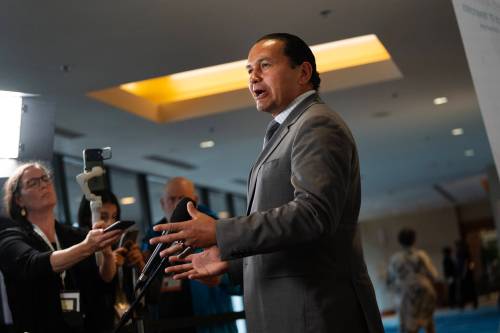
On Thursday, Dan Vandal, the minister responsible for Prairies Economic Development Canada (PrairiesCan), announced Little Brown Jug Brewing Co. and Nonsuch Brewing Co. received funds from the government’s Business Scale-Up and Productivity Fund, which offers assistance to businesses looking to scale up and potentially break into other markets. After approved projects are completed, businesses are given a one-year grace period before paying back the funds interest free.

“PrairiesCan is all about investing in industries that are growing, that are going to create new jobs, local jobs,” Vandal said while on a tour of Little Brown Jug’s William Avenue brewery and taproom. “The craft beer industry in Winnipeg and Manitoba has shown a lot of life.”

Ben Sigurdson / Winnipeg Free Press 
Little Brown Jug founder Kevin Selch (right) gives a brewery tour to Dan Vandal (left), the minister responsible for Prairies Economic Development Canada, and assistant deputyminister Sean Barr.
Ben Sigurdson / Winnipeg Free Press Little Brown Jug founder Kevin Selch (right) gives a brewery tour to Dan Vandal (left), the minister responsible for Prairies Economic Development Canada, and assistant deputyminister Sean Barr.

Little Brown Jug received $400,000 from the fund, which helped fast track the addition of four 80-hectolitre tanks, ramping up their production capacity significantly. They also expanded their on-site lab capacity for product testing, and will be pursuing market development initiatives beyond Manitoba.

Nonsuch Brewing Co., located at 125 Pacific Ave. in the east end of the Exchange District, received $562,600 from the fund; they’ve earmarked to increase production, including their canning process, and to expand strategically.

“We’ve made a lot of investments in the core equipment — this has really allowed us to scale up,” said Kevin Selch, founder of Little Brown Jug. “Whether you’re scaling up in capacity or market development or anything else, it takes cash. The funding is an accelerant to growth — it allows you to do things faster than you would have otherwise.”

Beyond the province’s borders, Little Brown Jug’s flagship 1919 Belgian Pale Ale is already available in Saskatchewan, although Selch noted they’d not yet been able to give the beer the needed support in the market, something the PrairiesCan funding will allow. “We got in there just before the pandemic, so it’s been a bit touch and go because of restrictions. I think we would have thought about going in there with a bit more of a boots on the ground strategy.”

Vandal sees the funding as a means to help business emerge from the COVID-19 pandemic with some hope and stability. “We know the last couple of years have been difficult for everybody, including local businesses, downtown businesses. Winnipeg has suffered a lot downtown — our entire city has — and this, I hope, is part of the solution, part of the recovery.”

Beyond the funding announcement, Vandal indicated more help could be on the way for some industries in the Prairies, including tourism.

“That’s something that’s been hit the hardest during the pandemic. We’re working to help tourism-related industries all over the Prairies — there’s going to be more coming out on that very soon.”

ben.sigurdson@freepress.mb.ca

Ben Sigurdson

Ben Sigurdson
Literary editor, drinks writer

Ben Sigurdson edits the Free Press books section, and also writes about wine, beer and spirits.

Our newsroom depends on a growing audience of readers to power our journalism. If you are not a paid reader, please consider becoming a subscriber.

Our newsroom depends on its audience of readers to power our journalism. Thank you for your support.

Report Error Submit a Tip

More Stories

Billions of dollars spent on health, but scattershot financial reporting leaves decision-makers, Manitobans in the dark, auditor general says

Nicole Buffie 3 minute read Preview

Billions of dollars spent on health, but scattershot financial reporting leaves decision-makers, Manitobans in the dark, auditor general says

Nicole Buffie 3 minute read Yesterday at 5:20 PM CDT

Manitoba’s auditor general says significant gaps in health-sector financial reporting make it difficult to understand how billions of dollars in public funds are spent.

Auditor General Tyson Shtykalo is calling for clearer, more transparent reporting in his latest report, titled Observations on Health Sector Financial Reporting and Accountability in Manitoba.

“Manitoba spends nearly $10 billion annually on health care, but current financial reporting does not provide a clear picture of how that money is spent, what services cost, or the financial pressures facing the system,” Shtykalo said in a news release.

While some financial information is available, the reports do not provide a “complete, consistent, or easily understood” picture of how health-care funds are spent, the report said.

Read
Yesterday at 5:20 PM CDT

City considers first-come, first-served Transit Plus

Kevin Rollason 5 minute read Preview

City considers first-come, first-served Transit Plus

Kevin Rollason 5 minute read Friday, Sep. 11, 2020

The city's much-maligned Transit Plus, which is for people with disabilities, could soon do away with a system that prioritizes jobs and medical trips over recreation and visits with friends, in favour of first-come, first-served bookings.

While the city says the changes could mean Transit Plus users would no longer be guaranteed to get to work or medical appointments, several disability advocates are in favour of the move. They don't believe any trip should take priority over another.

Natalie Pirson has used Transit Plus, and the former Handi Transit system, for more than 20 years. She is pleased with the proposed changes, which will be discussed by the city's public works committee next week. Pirson was quick to point out the city will have to do more than change the booking system.

"I rely on Transit Plus for every aspect of my life," Pirson said on Thursday.

Read
Friday, Sep. 11, 2020

Roughing it (less)

AV Kitching 6 minute read Preview

Roughing it (less)

AV Kitching 6 minute read Monday, Jul. 6, 2026

I hate camping.

I loathe the very idea of leaving the comfort and safety of home to sleep in a random field, where not only will I be exposed to the elements, but will also be at the mercy of all manner of creatures, from ursine to canine to insectan.

I do not want to hike up a hill just to share one outdoor tap with 12 others, standing alongside them as I brush my teeth.

I do not want to queue for 15 minutes, then part with a $2 coin to wedge myself into a shower stall just to stand under a piddly stream of lukewarm water while trying my best to swiftly soap up and sponge off lest I irk the rapidly growing line of campers outside.

Read
Monday, Jul. 6, 2026

Use it twice: a data centre we could support

Hersh Seth 5 minute read Preview

Use it twice: a data centre we could support

Hersh Seth 5 minute read Thursday, Jul. 30, 2026

In June, Premier Wab Kinew rejected a massive AI data centre planned near Île-des-Chênes. The project would have used 500 megawatts of power, which is about the same as the Grand Rapids generating station, and would have run on six natural gas turbines. Kinew said the environmental cost was too high and the long-term benefit for Manitobans was too low.

He made the right call. But simply saying no to data centres is not enough.

Winnipeg is a cold city. Data centres are basically huge electric heaters with computers inside. Almost every watt they use turns into heat, and most facilities pay to release it into the air. In a city that spends half the year paying to stay warm, that’s not just waste; it’s an opportunity. The idea is simple: use the energy twice. First for computing, then for heating our buildings.

The stakes are real. Manitoba Hydro’s new resource plan says peak demand will exceed our capacity as early as 2029 or 2030, and that the province will need about 1,760 additional megawatts of dependable capacity by 2035.

Read
Thursday, Jul. 30, 2026

‘In Normandy, we remember’

Aaron Epp 4 minute read Preview

‘In Normandy, we remember’

Aaron Epp 4 minute read Saturday, Sep. 26, 2026

Travelling nearly 7,000 km from his home in France to Winnipeg gave Gabriel Zaranski a new perspective on warfare.

“It’s very different to speak about war in school (than) to speak with real people who (have fought) in a war,” he said. “We can feel the emotion when they speak … The testimony has more impact when it’s real soldiers.”

Zaranski is one of 14 Grade 12 students from Bayeux, a town in France’s Normandy region, in Winnipeg this week for a learning tour.

The students, who attend Lycée Arcisse de Caumont high school, met on Saturday with veterans from the Queen’s Own Cameron Highlanders of Canada, a local military regiment, to discuss their studies and the regiment’s role in the Second World War.

Read
Saturday, Sep. 26, 2026

Alarm sounded over school divisions’ silence

Katrina Clarke 6 minute read Preview

Alarm sounded over school divisions’ silence

Katrina Clarke 6 minute read Monday, Sep. 26, 2022

A near-blanket refusal by Manitoba school divisions to provide information about teacher misconduct is “insulting” and “nonsensical,” privacy experts say.

Read
Monday, Sep. 26, 2022