Indigenous inmates face high rates of COVID-19 in federal prisons

Advertisement

Advertise with us

OTTAWA - Indigenous federal inmates are infected with COVID-19 at disproportionately high rates.

Read this article for free:


By clicking the button above, an account will be created and you will begin to receive some of our recommended newsletters. You may opt out of any newsletter by visiting your Email and Communication Preferences page or by clicking "unsubscribe" at the bottom of any email.

or

Already have an account? Log in here »

To continue reading, please subscribe:

Digital Subscription

One year of digital access for only $1.44 a week*

  • Enjoy unlimited reading on winnipegfreepress.com
  • Read the E-Edition, our digital replica newspaper
  • Access News Break, our award-winning app
  • Play interactive puzzles

*Billed as $5.77 plus GST every four weeks. After 52 weeks, price increases to the regular rate of $19.95 plus GST every four weeks. Offer available to new and qualified returning subscribers only. Cancel any time.

To continue reading, please subscribe:

Add Free Press access to your Brandon Sun subscription for only an additional

$1 for the first 4 weeks*

  • Enjoy unlimited reading on winnipegfreepress.com
  • Read the E-Edition, our digital replica newspaper
  • Access News Break, our award-winning app
  • Play interactive puzzles
Start now

*Your next Brandon Sun subscription payment will increase by $1.00 and you will be charged $17.95 plus GST for four weeks. After four weeks, your payment will increase to $24.95 plus GST every four weeks.

Hey there, time traveller!
This article was published 13/01/2022 (1752 days ago), so information in it may no longer be current.

OTTAWA – Indigenous federal inmates are infected with COVID-19 at disproportionately high rates.

Correctional Service Canada said Wednesday that as of Jan. 10, there are 207 active COVID-19 cases among inmates in federal penitentiaries.

Of those cases, 39 are among inmates who identify as Indigenous, which makes up almost 19 per cent of the overall caseload.

Minister of Public Safety Marco Mendicino arrives along with fellow federal ministers to make an announcement regarding border measures and COVID-19 during a press conference in Ottawa on Friday, Nov. 19, 2021. THE CANADIAN PRESS/Sean Kilpatrick

Indigenous Peoples make up five per cent of Canada’s population but accounted for just under one-third of the country’s federal prison population as of January 2020, which Canada’s correctional investigator said at the time had reached a historic high.

That trend represents “disturbing and entrenched imbalances,” and a deepening “Indigenization” of Canada’s correctional system, Ivan Zinger, the correctional investigator, said at the time.

Justin Piché, associate professor of criminology at the University of Ottawa, said although the rate of positive cases among federal Indigenous inmates is lower than the number of Indigenous people in the federal prison system, it’s still markedly higher than their share of Canada’s overall population.

This discrepancy shows that Indigenous Peoples are disproportionately impacted by institutions that produce these kinds of health outcomes, said Piché, who is also a researcher for the Prison Pandemic Partnership, an academic research group that tracks the effect of COVID-19 on the lives of Canada’s inmates.

He said he thinks this dynamic can be partially explained by historical patterns of genocidal violence and state neglect that Indigenous Peoples have endured by institutions in Canada.

“That to my mind is evidence of structural racism,” said Piché.

Earlier this week, the Congress of Aboriginal Peoples called on Public Safety Minister Marco Mendicino to speed up the release of low-risk offenders and those on remand to limit the spread of the highly transmissible Omicron variant in federal prisons.

During the first wave of the pandemic in Canada, Bill Blair, who was then the public safety minister, announced the release of hundreds of federal inmates amid several COVID-19 outbreaks in correctional institutions.

Alex Cohen, a spokesperson for Mendicino, said in a statement that Correctional Services has put in place initiatives to stop the spread of COVID-19 in federal institutions.

Cohen said they are making significant efforts to reduce systemic racism in the justice system and addressthe overrepresentation of Indigenous Peoples in prisons. These include culturally appropriate approaches to Indigenous corrections, and funding to support the reintegration of previously incarcerated Indigenous Peoples.

Correctional Services and the Parole Board of Canada continue to process eligible inmates for release in accordance with the law and with public safety being the “paramount consideration,” he said.

Kim Beaudin, national vice-chair of the Congress of Aboriginal Peoples, said the high rate of COVID-19 cases among Indigenous inmates is one of the reasons the organization is calling for an accelerated release.

Beaudin said he speaks regularly with people on the inside about how they are doing and whether they can access health care.

“What I find, though, is that the majority of them are stressed out. They don’t want to be dragged out of there in a body bag,” he said.

Beaudin said given the prolonged nature of the pandemic, the risk of being infected with the virus will likely continue along with the potential of new COVID-19 variants emerging.

“It just doesn’t seem to end. At least if they can go home, that’s where they should go. Be with their families instead of being inside there. It’s like a petri dish.”

This report by The Canadian Press was first published Jan. 13, 2022.

—

This story was produced with the financial assistance of the Facebook and Canadian Press News Fellowship.

Report Error Submit a Tip

More Stories

A little toponder, a lot to celebrate

Erna Buffie 5 minute read 2:01 AM CDT

Well, another civic election season has come and gone, and I have to say it was a doozy. The most surprising event was the steady climb in support for young mayoral candidate Noah Redden, who started out with just four per cent public support in September but had reached a solid 14 per cent support in October.

On election day, Redden nearly came in second, less than one percentage point behind Kevin Klein, an experienced politician.

Indeed, the 27-year-old’s accomplishment was nothing short of astonishing. Particularly given that his shoestring campaign was given very little coverage — largely, according to one pundit, because he didn’t send out any press releases.

This when Redden’s unwritten press releases were there for everyone to see on Instagram, as he popped up in locations across the city, posting videos about what he hoped to achieve as mayor.

Walkout creates chaos at St. James Smitty’s

Morgan Modjeski 3 minute read Preview

Walkout creates chaos at St. James Smitty’s

Morgan Modjeski 3 minute read 2:01 AM CDT

Gordon Sharpe wanted to eat a meal at the St. James Smitty’s Wednesday, but he got a helping of bad news instead.

He saw several workers walk out of the restaurant, at 1017 St. James St.

“(The waiter) came back about 10 minutes later and stood over the table, looking a little distraught and said, ‘I’m quitting right now and so is everybody else,’” Sharpe said. “He said, ‘This is my last time serving you,’ and he was quite choked up.”

“I’ve never seen anything like it,” he said, adding that the managers scrambled to serve patrons.

Read
2:01 AM CDT

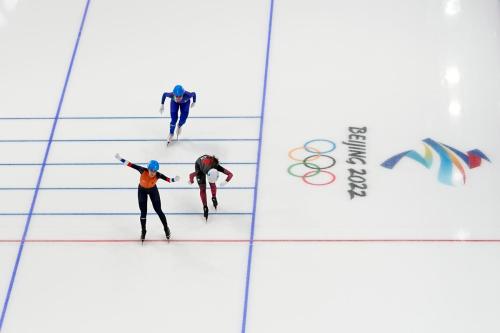
Olympics Overnight: Speedskater Blondin wins silver in the mass start, Bowman narrowly misses podium in halfpipe skiing, Jamaica returns to bobsled track

Richie Assaly - Toronto Star, Toronto Star 6 minute read Preview

Olympics Overnight: Speedskater Blondin wins silver in the mass start, Bowman narrowly misses podium in halfpipe skiing, Jamaica returns to bobsled track

Richie Assaly - Toronto Star, Toronto Star 6 minute read Saturday, Feb. 19, 2022

Here’s what you missed overnight at Day 15 of the 2022 Beijing Olympics.

Read
Saturday, Feb. 19, 2022

SNC planned U.S. move if no deal: documents

Jordan Press and Christopher Reynolds, The Canadian Press 5 minute read Preview

SNC planned U.S. move if no deal: documents

Jordan Press and Christopher Reynolds, The Canadian Press 5 minute read Thursday, Mar. 28, 2019

OTTAWA - SNC-Lavalin warned federal prosecutors last fall about a possible plan to split the company in two, move its offices to the United States and eliminate its Canadian workforce if it didn't get a deal to avoid criminal prosecution, newly obtained documents show.

The documents, part of a PowerPoint presentation obtained by The Canadian Press, describe something called "Plan B" — what Montreal-based SNC might have to do if it can't convince the government to grant a so-called remediation agreement to avoid criminal proceedings in a fraud and corruption case related to projects in Libya.

Under that plan, SNC would move its Montreal headquarters and corporate offices in Ontario and Quebec to the U.S. within a year, cutting its workforce to just 3,500 from 8,717, before eventually winding up its Canadian operations.

“The government of Canada needs to weigh the public interest impact of the prosecution of SNC-Lavalin," the presentation reads.

Read
Thursday, Mar. 28, 2019

Brandon manufacturer says Canadian steel in demand, but high costs, long delivery times hit hard

Gabrielle Piché 6 minute read Preview

Brandon manufacturer says Canadian steel in demand, but high costs, long delivery times hit hard

Gabrielle Piché 6 minute read 2:01 AM CDT

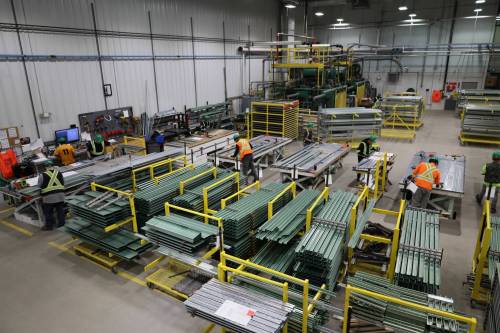
Something’s different in a Brandon plant.

Building envelope panels — or shells for homes and commercial buildings — keep being produced at Greenstone Building Products.

But the galvanized steel used by workers has been arriving later and the price is constantly increasing, according to company leadership.

“It’s just a little bit nerve-wracking for us to hear the opposite narrative,” said Tilda Fortier, Greenstone Building Products’ business manager.

Read
2:01 AM CDT

The long and winding road

Editorial 4 minute read Preview

The long and winding road

Editorial 4 minute read 2:01 AM CDT

As theatre goes, it sent a strong message.

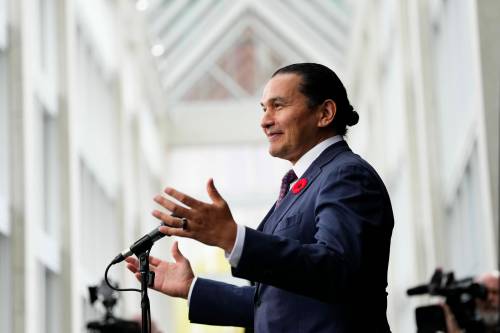
Manitoba Premier Wab Kinew, standing in front of microphones and television cameras, holding up his Indigenous status card and saying that he didn’t feel Canada should have “a race-based form of identification in this country, but that is a reality,” adding that it was time to abolish the Indian Act.

“I think it’s time to abolish the Indian Act, get rid of the Indian Act, move past the Indian Act, and it needs to be done with First Nations people and First Nations governments, of course. I think it’s long overdue that we have a relationship with Indigenous Peoples in Canada that reflects who we are as Canadians today,” he said.

The Indian Act — the name alone suggests how out-dated and out of place the law has become. Originally dating from 1876, the law was put in place to “amend and consolidate the laws respecting Indians” and gave the Minister of the Interior the responsibility to “control and management of the reserves, lands, moneys and property of Indians in Canada.”

Read
2:01 AM CDT