Feds moving to ban plastic straws, bags by end of 2022: Guilbeault

Advertisement

Advertise with us

OTTAWA - It's the end of days for plastic grocery bags and Styrofoam takeout containers in Canada.

Read this article for free:


By clicking the button above, an account will be created and you will begin to receive some of our recommended newsletters. You may opt out of any newsletter by visiting your Email and Communication Preferences page or by clicking "unsubscribe" at the bottom of any email.

or

Already have an account? Log in here »

To continue reading, please subscribe:

Digital Subscription

One year of digital access for only $1.44 a week*

  • Enjoy unlimited reading on winnipegfreepress.com
  • Read the E-Edition, our digital replica newspaper
  • Access News Break, our award-winning app
  • Play interactive puzzles

*Billed as $5.77 plus GST every four weeks. After 52 weeks, price increases to the regular rate of $19.95 plus GST every four weeks. Offer available to new and qualified returning subscribers only. Cancel any time.

To continue reading, please subscribe:

Add Free Press access to your Brandon Sun subscription for only an additional

$1 for the first 4 weeks*

  • Enjoy unlimited reading on winnipegfreepress.com
  • Read the E-Edition, our digital replica newspaper
  • Access News Break, our award-winning app
  • Play interactive puzzles
Start now

*Your next Brandon Sun subscription payment will increase by $1.00 and you will be charged $17.95 plus GST for four weeks. After four weeks, your payment will increase to $24.95 plus GST every four weeks.

Hey there, time traveller!
This article was published 21/12/2021 (1762 days ago), so information in it may no longer be current.

OTTAWA – It’s the end of days for plastic grocery bags and Styrofoam takeout containers in Canada.

Environment Minister Steven Guilbeault published draft regulations Tuesday outlining how Canada will ban the manufacture, sale and import of these items, along with plastic cutlery, stir sticks, straws and six-pack rings, by the end of next year.

The regulations outline how each of the products is to be defined — plastics bags for example are those made of plastic film which will break or tear if used to carry 10 kilograms back and forth 53 times.
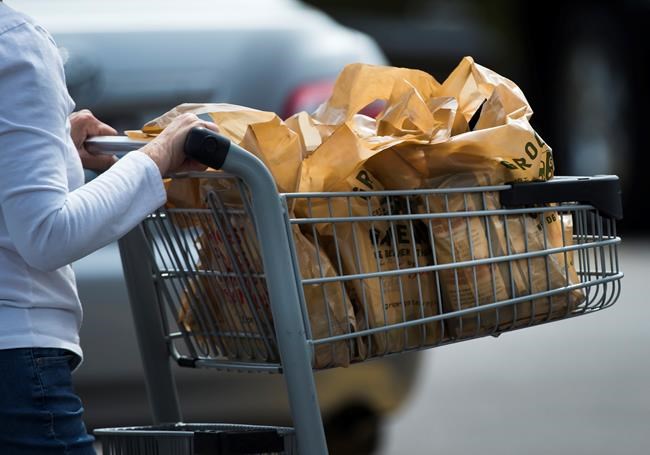
A woman leaves a grocery store using plastic bags in Mississauga, Ont., on Thursday, August 15, 2019. It's the end of days for plastic grocery bags and Styrofoam take-out containers in Canada.THE CANADIAN PRESS/Nathan Denette

Cutlery includes forks, knives, spoons, sporks and chopsticks that will start to melt if immersed in hot but not boiling water.

There are some exceptions for single-use plastic flexible straws to accommodate people with disabilities and those needing them for medical purposes.

The public can provide written comment on the draft regulations until March 5, and the timing of the final regulations will depend on how much feedback is received. World Trade Organization rules mean Canada has to allow a six-month phase-in period once the final regulations are published, but Guilbeault said he expects them to take effect by the end of 2022.

He said the ban is only part of the story because what isn’t being banned has got to be recycled.

“I mean, rightly so a lot of people are focusing on the ban and that’s important,” he said. “But one of the bigger challenges we have is to get our house in order when it comes to recycling.”

A 2019 Deloitte report commissioned by Environment and Climate Change Canada said 3.3 million tonnes of plastic waste was tossed in 2016 and less than one-tenth of it was recycled.

There were then only 12 recycling companies nationwide. Canada set a target to recycle 90 per cent of plastic waste by 2030 and Guilbeault said there is work underway to standardize and co-ordinate recycling across provinces. Standards for plastics to make them easier to recycle, as well as a requirement that half of all plastic packaging must be made of recycled material, are also coming, he said.

In 2016, almost 30,000 tonnes of waste ended up in the environment, polluting rivers, beaches and forests with discarded coffee cups, water bottles, grocery bags and food wrappers.

“People are tired of seeing this litter in our streets and I think some of the powerful images we’ve seen around the world of plastic waste affecting our ecosystem has really gotten to people,” Guilbeault added. “So they want us to move and we’re moving.”

Sarah King, head of Greenpeace Canada’s oceans and plastics campaign, said the government is moving too slowly and isn’t going far enough. King wanted to see all single-use plastics banned, including plastic bottles, cigarette filters, coffee cups and food wrappers.

“Canadians have been waiting a long time for the federal government to take strong and urgent action to tackle plastic waste and pollution and these regulations definitely don’t reflect that call to action,” she said.

King said the government also needs to focus its energy and money on transitioning from single use and recycling to reuse and refill strategies.

Prime Minister Justin Trudeau said in June 2019 that a ban on single-use plastics would be in place as early as this year, but the pandemic delayed the scientific assessment that ultimately declared plastics as “toxic” and work on which ones to target.

In May, companies came together under the banner Responsible Plastic Use Coalition, which has now sued the government over the designation of plastics as toxic.

The coalition argues the designation is defamatory and harmful to its industry, which produces many crucial products that are not harmful. A spokesman for the coalition said Tuesday the government should have waited until that case has concluded before moving on the ban.

Guilbeault said the lawsuit has no effect on the regulatory progress, “just like the lawsuit on carbon pricing didn’t interfere with us implementing carbon pricing in Canada.”

This report by The Canadian Press was first published Dec. 21, 2021.

Report Error Submit a Tip

More Stories

Health ministers meeting ends without long-term funding commitment from Ottawa

Carol Sanders 4 minute read Preview

Health ministers meeting ends without long-term funding commitment from Ottawa

Carol Sanders 4 minute read 2:01 AM CDT

Canada’s health minister failed to deliver the promises of long-term funding increases that her provincial and territorial counterparts, who were gathered in Winnipeg this week, had been seeking.

Instead, Marjorie Michel reiterated the federal government’s commitment to working collaboratively towards renewing bilateral funding agreements and to meet again before the end of the year to discuss long-term funding.

“The decision we all agreed on is to have our public service… start the work on what will be the next step for the next negotiation on Canada Health Transfer and other agreements,” Michel said Friday at a news conference after meeting with the other health ministers.

When asked why the federal government couldn’t commit to maintaining funding levels geared, at a minimum, to the rate of inflation over the long term, Michel said that it’s time to update agreements signed a decade ago.

Read
2:01 AM CDT

Carney’s ‘counterweight’ summit strategy

David McLaughlin 5 minute read Preview

Carney’s ‘counterweight’ summit strategy

David McLaughlin 5 minute read 2:01 AM CDT

Modern summit diplomacy had very inauspicious beginnings. Winston Churchill is widely credited with coining the phrase “summit” in 1950 to describe a conference of global leaders. But it was another British prime minister, Neville Chamberlain, who initiated the first actual summit meeting 12 years earlier — with Adolf Hitler, no less.

It didn’t go well.

Over a one-month period, the two leaders met three times over the fate of Czechoslovakia. Hitler threatened war. Chamberlain threatened appeasement. Guess who won?

Chamberlain was so desperate for a peace deal and so convinced he alone could convince Hitler, that he swallowed his inhibitions and flew in an airplane for the very first time in his life. “If at first you don’t succeed, try, try again” he told reporters, explaining his tenacious summit activity. Skeptical of the spectacle, British Foreign Office wags quietly amended it to, “If at first you don’t concede, fly, fly again.”

Read
2:01 AM CDT

Alberta’s immigrants feeling xenophobic chill from some questions in Monday’s referendum

Melissa Martin 10 minute read Preview

Alberta’s immigrants feeling xenophobic chill from some questions in Monday’s referendum

Melissa Martin 10 minute read Thursday, Oct. 15, 2026

EDMONTON — When Gurnam Singh Dodd came to Canada in 1976, he landed first in southern Ontario, where his brother lived. At the time, the province was mired in the era of stagflation, and it was difficult to find work; but he had some friends living in Edmonton, and asked for their advice.

“Come to Alberta,” they told him. It was a land of opportunity. The economy was booming, bolstered by soaring oil and gas prices; Dodd could surely find multiple jobs within days. With that, the young Sikh newcomer packed up and headed west, looking to put down roots on the edge of the Canadian Prairies.

Nearly 50 years later, that proved to be a wise decision. Dodd worked hard to succeed in his new home, moving up from his first minimum-wage jobs to a successful career with Edmonton Transit, and then as a driver’s licence examiner. He raised a thriving family, gave back to his community and became, in all ways, a very proud Albertan.

Around the turn of the millennium, eager to do his part in the province’s public life, he joined what was then Alberta’s Progressive Conservative party, under the leadership of premier Ralph Klein. (Klein’s father, Dodd says proudly, was a friend, and helped get him into politics.)

Read
Thursday, Oct. 15, 2026

Chronic kidney disease must be recognized

Carrie Thibodeau 5 minute read Yesterday at 2:00 AM CDT

Canada needs a strong plan of action to tackle chronic kidney disease.

Canada is facing a looming health crisis that remains largely unaddressed and invisible at the policy and health system level. More than four million Canadians live with chronic kidney disease (CKD) and 50,000 currently receive dialysis or are living with a transplant, both life-sustaining but burdensome treatments.

With no cure, CKD profoundly impacts quality of life, contributing to lost income, overall poor health, and uncertainty about the future. The implications of CKD extend far beyond patients and families. CKD is now the 11th leading cause of death in Canada and one of our most expensive chronic diseases. Health-care costs exceed $11.7 billion annually, with most expenses incurred in the later stages of the disease, particularly dialysis and transplantation.

By 2050, the total cost burden of CKD is projected to rise to $17.6 billion and an estimated 6.2 million Canadians will be affected, driven by an aging population and rising rates of diabetes and high blood pressure.

Days numbered for plastic straws in Canada

Mia Rabson, The Canadian Press 4 minute read Preview

Days numbered for plastic straws in Canada

Mia Rabson, The Canadian Press 4 minute read Tuesday, Dec. 21, 2021

OTTAWA - It's the end of days for plastic grocery bags and Styrofoam takeout containers in Canada.

Environment Minister Steven Guilbeault published draft regulations Tuesday outlining how Canada will ban the manufacture, sale and import of these items, along with plastic cutlery, stir sticks, straws and six-pack rings, by the end of next year.

The regulations outline how each of the products is to be defined — plastics bags for example are those made of plastic film which will break or tear if used to carry 10 kilograms back and forth 53 times.

Cutlery includes forks, knives, spoons, sporks and chopsticks that will start to melt if immersed in hot but not boiling water.

Read
Tuesday, Dec. 21, 2021

Endling wins Amazon’s $60K first novel prize

Ben Sigurdson 4 minute read Preview

Endling wins Amazon’s $60K first novel prize

Ben Sigurdson 4 minute read Saturday, Jun. 13, 2026

Ukraine-born, Vancouver-based author Maria Reva has landed another prize for her debut novel Endling, which follows a snail scientist in Ukraine who teams up with a pair of sisters to break up a mail-order bride operation in the country before Russia’s invasion throws them all for a loop.

Reva’s novel, which was published in June 2025 and released in paperback in May 2026, won the $60,000 Amazon Canada First Novel Award at a June 4 ceremony in Toronto which revealed the winner. Endling also won Reva the $60,000 Writers’ Trust Atwood Gibson Fiction Prize, was a finalist for the Governor General’s Literary Award for fiction and was long-listed for the Booker Prize.

● ● ●

On Thursday at 6:30 p.m., retired Concordia University film and sexuality scholar Thomas Waugh will be at the Cornish Library (20 West Gate) to read from his memoir Writing in the Flesh: Essays on My Lives, My Bodies, My Families, My Place, My Movies, published in December 2025 by McGill-Queen’s University Press.

Read
Saturday, Jun. 13, 2026