Feds moving to ban plastic straws, bags by end of 2022: Guilbeault

Advertisement

Advertise with us

OTTAWA - It's the end of days for plastic grocery bags and Styrofoam takeout containers in Canada.

Read this article for free:


By clicking the button above, an account will be created and you will begin to receive some of our recommended newsletters. You may opt out of any newsletter by visiting your Email and Communication Preferences page or by clicking "unsubscribe" at the bottom of any email.

or

Already have an account? Log in here »

To continue reading, please subscribe:

Digital Subscription

One year of digital access for only $1.44 a week*

  • Enjoy unlimited reading on winnipegfreepress.com
  • Read the E-Edition, our digital replica newspaper
  • Access News Break, our award-winning app
  • Play interactive puzzles

*Billed as $5.77 plus GST every four weeks. After 52 weeks, price increases to the regular rate of $19.95 plus GST every four weeks. Offer available to new and qualified returning subscribers only. Cancel any time.

To continue reading, please subscribe:

Add Free Press access to your Brandon Sun subscription for only an additional

$1 for the first 4 weeks*

  • Enjoy unlimited reading on winnipegfreepress.com
  • Read the E-Edition, our digital replica newspaper
  • Access News Break, our award-winning app
  • Play interactive puzzles
Start now

*Your next Brandon Sun subscription payment will increase by $1.00 and you will be charged $17.95 plus GST for four weeks. After four weeks, your payment will increase to $24.95 plus GST every four weeks.

Hey there, time traveller!
This article was published 21/12/2021 (1759 days ago), so information in it may no longer be current.

OTTAWA – It’s the end of days for plastic grocery bags and Styrofoam takeout containers in Canada.

Environment Minister Steven Guilbeault published draft regulations Tuesday outlining how Canada will ban the manufacture, sale and import of these items, along with plastic cutlery, stir sticks, straws and six-pack rings, by the end of next year.

The regulations outline how each of the products is to be defined — plastics bags for example are those made of plastic film which will break or tear if used to carry 10 kilograms back and forth 53 times.
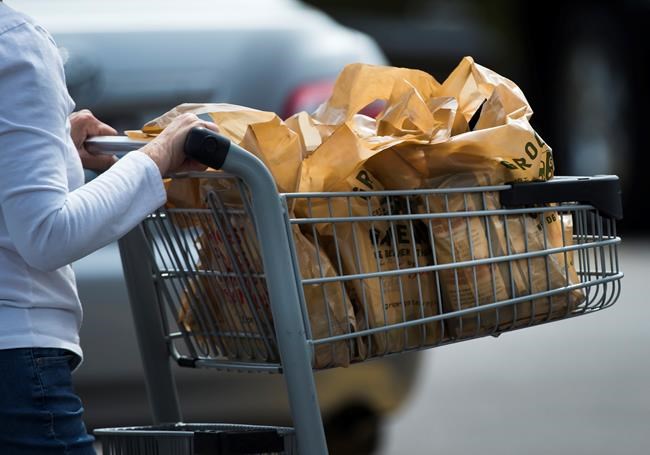
A woman leaves a grocery store using plastic bags in Mississauga, Ont., on Thursday, August 15, 2019. It's the end of days for plastic grocery bags and Styrofoam take-out containers in Canada.THE CANADIAN PRESS/Nathan Denette

Cutlery includes forks, knives, spoons, sporks and chopsticks that will start to melt if immersed in hot but not boiling water.

There are some exceptions for single-use plastic flexible straws to accommodate people with disabilities and those needing them for medical purposes.

The public can provide written comment on the draft regulations until March 5, and the timing of the final regulations will depend on how much feedback is received. World Trade Organization rules mean Canada has to allow a six-month phase-in period once the final regulations are published, but Guilbeault said he expects them to take effect by the end of 2022.

He said the ban is only part of the story because what isn’t being banned has got to be recycled.

“I mean, rightly so a lot of people are focusing on the ban and that’s important,” he said. “But one of the bigger challenges we have is to get our house in order when it comes to recycling.”

A 2019 Deloitte report commissioned by Environment and Climate Change Canada said 3.3 million tonnes of plastic waste was tossed in 2016 and less than one-tenth of it was recycled.

There were then only 12 recycling companies nationwide. Canada set a target to recycle 90 per cent of plastic waste by 2030 and Guilbeault said there is work underway to standardize and co-ordinate recycling across provinces. Standards for plastics to make them easier to recycle, as well as a requirement that half of all plastic packaging must be made of recycled material, are also coming, he said.

In 2016, almost 30,000 tonnes of waste ended up in the environment, polluting rivers, beaches and forests with discarded coffee cups, water bottles, grocery bags and food wrappers.

“People are tired of seeing this litter in our streets and I think some of the powerful images we’ve seen around the world of plastic waste affecting our ecosystem has really gotten to people,” Guilbeault added. “So they want us to move and we’re moving.”

Sarah King, head of Greenpeace Canada’s oceans and plastics campaign, said the government is moving too slowly and isn’t going far enough. King wanted to see all single-use plastics banned, including plastic bottles, cigarette filters, coffee cups and food wrappers.

“Canadians have been waiting a long time for the federal government to take strong and urgent action to tackle plastic waste and pollution and these regulations definitely don’t reflect that call to action,” she said.

King said the government also needs to focus its energy and money on transitioning from single use and recycling to reuse and refill strategies.

Prime Minister Justin Trudeau said in June 2019 that a ban on single-use plastics would be in place as early as this year, but the pandemic delayed the scientific assessment that ultimately declared plastics as “toxic” and work on which ones to target.

In May, companies came together under the banner Responsible Plastic Use Coalition, which has now sued the government over the designation of plastics as toxic.

The coalition argues the designation is defamatory and harmful to its industry, which produces many crucial products that are not harmful. A spokesman for the coalition said Tuesday the government should have waited until that case has concluded before moving on the ban.

Guilbeault said the lawsuit has no effect on the regulatory progress, “just like the lawsuit on carbon pricing didn’t interfere with us implementing carbon pricing in Canada.”

This report by The Canadian Press was first published Dec. 21, 2021.

Report Error Submit a Tip

More Stories

Serial arsonist gets more jail time, community ban

Tessa Adamski 4 minute read 2:01 AM CDT

BRANDON — A serial arsonist who believes controlled burning is his “calling” was sentenced to nine months in jail and barred for two years from a southwestern Manitoba community after he deliberately set multiple grass fires during a fire ban in May.

Phillip Andrew Unrau, 72, created a dangerous situation for residents of Margaret and a nearby Hutterite colony on the evening of May 21 when he set fire to several patches of grass along a railway bed, provincial court Judge Shauna Hewitt-Michta said on Wednesday.

People in the community, located 45 kilometres southeast of Brandon, called the fire department. While no residents saw Unrau light the fires, he made incriminating comments to witnesses and was found alone near the burning land that stretched for 274 metres, the judge said.

“The damage to property here was minimal, but the emotional and psychological harm that Mr. Unrau causes to his neighbours is significant,” she said.

Law will curb e-scooter enthusiasts

Editorial 4 minute read Preview

Law will curb e-scooter enthusiasts

Editorial 4 minute read 2:00 AM CDT

For people concerned about safety on Manitoba’s sidewalks and roadways, the province’s announcement that new rules will be introduced next year regarding the use of e-scooters and other personal electric vehicles (PEVs) was no doubt met with an enthusiastic “It’s about time.”

As their popularity and their presence among pedestrians on sidewalks and/or motor vehicles on the road has increased steadily, so have reports of close calls or, even worse, collisions involving e-scooters or other PEVs — including electric skateboards, hoverboards and unicycles — being operated imprudently and at unsafe speeds.

Traffic laws urgently need to be updated to govern the use of these conveyances, which up until now have remained in a regulatory grey area that has allowed PEVs to operate largely without guidelines and outside conventional avenues of traffic-safety enforcement. Accordingly, updates regarding PEV use will be included in the Highway Traffic Act in 2027.

The new legislation will govern such areas as mandatory helmet use, age restrictions, where PEVs can lawfully operate and the maximum speed at which they can travel (25 km/h). The aim of the new law, according to the province’s website, is “to help keep Manitobans safe when sharing roads, paths, and other public spaces.”

Read
2:00 AM CDT

Liberal MLA’s autism strategy bill gains all-party backing

Carol Sanders 3 minute read 2:00 AM CDT

Manitoba could soon have an autism strategy for the first time, thanks to a private member’s bill that’s garnered rare all-party support in the legislature.

Liberal MLA Cindy Lamoureux’s Bill 232, the Autism Strategy Act introduced in March, would require the government to establish a policy designed to improve the screening and diagnosis of autism spectrum disorder and support research.

It would identify ongoing supports and services needed by people with autism and their families and caregivers. It calls for annual reports tracking the implementation of the measures identified in the strategy, with a mandatory review and updates of the legislation every five years.

The bill goes before the legislature’s standing committee on social and economic development committee Friday. As of Wednesday, 87 private citizens and organizations registered to weigh in on the proposed legislation.

MPI adding summer Driver Z capacity across the province

Kevin Rollason 2 minute read Preview

MPI adding summer Driver Z capacity across the province

Kevin Rollason 2 minute read Monday, Apr. 27, 2026

Manitoba Public Insurance has announced it is doubling the number of Driver Z student spots available across the province this summer from 600 to 1,200.

As well, MPI will be offering Class 5 road tests, which are needed to drive a passenger vehicle, at its Main Street Service Centre in Winnipeg on the last Saturday of each month, starting June 27.

The Driver Z (sounds like driver’s-ed) course is $50 for high school students; MPI covers the rest of the cost, estimated at more than $600.

The course is normally 12 weeks in length, but during summer it is condensed to 2 1/2 weeks, which include both in-car lessons and virtual classroom sessions. Both day and evening classes will be offered starting in July.

Read
Monday, Apr. 27, 2026

short head Ottawa expands student loan

Kevin Rollason 4 minute read Preview

short head Ottawa expands student loan

Kevin Rollason 4 minute read Thursday, Mar. 30, 2023

The federal government is hoping forgiving part of their student loans will encourage more doctors and nurses to work and practice in rural communities.

Read
Thursday, Mar. 30, 2023

Letters, Oct. 15

7 minute read 2:00 AM CDT

Support for combined approach

Re: Balanced drug blitz pays off (Oct. 14)

Your news and reporting on the positive results of co-ordinated outreach coupled with enforcement combining social, medical and police services is important progress towards a safer and healthier Winnipeg.

As is often stated and conclusively researched, the poverty, mental health, addictions and desperation of too many of our brothers and sisters on the streets is a very complex dilemma. Let’s really get behind and support these new initiatives with vigour and sustained support through this combined co-operation with front-line engagement coalition partners.