Bishops “unequivocally” apologize for church’s role in residential schools

Advertisement
Read this article for free:
or
Already have an account? Log in here »
To continue reading, please subscribe:

Digital Subscription
One year of digital access for only $205*
- Enjoy unlimited reading on winnipegfreepress.com
- Read the E-Edition, our digital replica newspaper
- Access News Break, our award-winning app
- Play interactive puzzles
*First annual payment billed as $205.00 + GST for one year. This annual subscription will automatically renew at $233.00 + GST every 52 weeks (10% off the regular annual price of $259.35). Offer available to new and qualified returning subscribers only. Cancel any time.
To continue reading, please subscribe:
Add Free Press access to your Brandon Sun subscription for only an additional
$1 for the first 4 weeks*
- Enjoy unlimited reading on winnipegfreepress.com
- Read the E-Edition, our digital replica newspaper
- Access News Break, our award-winning app
- Play interactive puzzles
*Your next Brandon Sun subscription payment will increase by $1.00 and you will be charged $17.95 plus GST for four weeks. After four weeks, your payment will increase to $24.95 plus GST every four weeks.
Read unlimited articles for free today:
or
Already have an account? Log in here »
Hey there, time traveller!
This article was published 26/09/2021 (1827 days ago), so information in it may no longer be current.
Canada’s Roman Catholic bishops’ apology to Indigenous people — days before the first National Day for Truth and Reconciliation — was a unanimous bid to atone for the atrocities of the Indian Residential Schools and a commitment to forge a new relationship between the church and First Nations.
That’s the way Bishop William McGrattan of the Archdiocese of Calgary describes how the Canadian Conference of Catholic Bishops (CCCB) agreed to say sorry for the role that church played in the residential school system. A First Nations representative said she’s grateful but is taking a wait-and-see approach.
Assembly of First Nations National Chief RoseAnne Archibald said she welcomed the bishops’ full-throated apology, but noted that their promises fall short of the actions the Indigenous community has called for.
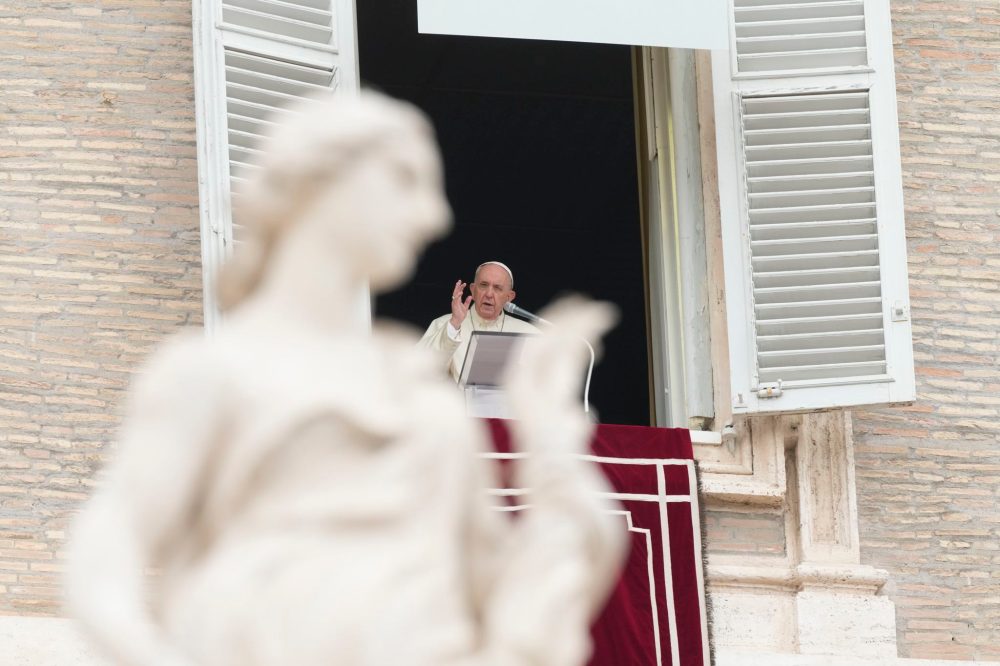
“The words of the apology speak to a commitment by the (Catholic) church to the healing path forward with First Nations and Indigenous peoples,” Archibald said in a statement Friday. “Only time will tell if concrete actions will follow the words of contrition by the bishops.”
McGrattan invoked divine intervention in the assembly’s decision to apologize.
“I believe God intervened in us coming together, with such a strong, committed message of this apology,” said McGrattan, the newly elected vice-president of the CCCB.
It was, he added, “an opportunity for us to speak with one voice, a moment not only for the Roman Catholic Church, but for all Canadians.”
The decision to apologize came at the annual CCCB plenary meeting of Canada’s 90 bishops from Sept. 20-24.
Canadians commemorate the National Day for Truth and Reconciliation on Thursday, Sept. 30.
Calls for an apology from the Catholic church have grown stronger since revelations about unmarked graves on the grounds of former residential schools earlier this year — which began in May when 215 graves were identifed at the site of a former Catholic-run residential school in Kamloops, B.C.
The meeting, conducted online and presided over by the now-former CCCB president Richard Gagnon, Archbishop of Winnipeg, was a “unique moment to give a strong message with one voice,” McGrattan said.
In making the apology, the bishops acknowledged the suffering Indigenous people experienced in Canada’s residential schools, and apologized for the roles many Catholic religious communities and dioceses played in suppressing Indigenous languages, culture and spirituality.
At the same time, they acknowledged “the grave abuses that were committed by some members of our Catholic community; physical, psychological, emotional, spiritual, cultural, and sexual.”
For these things, the bishops expressed “unequivocally” apologized and expressed their “profound remorse.”
When asked what it meant to “unequivocally” apologize, McGrattan said that meant “no qualifications, no excuses, no rationalizations for this legacy and history of the church’s participation in the residential school system.”
The bishops also pledged to work with Indigenous people towards arranging a Papal visit.
“We heard loud and clear this is important to Indigenous people, and we want to convey to them we see the importance of this, too,” he said.
Although such a visit could be expensive, McGrattan said cost did not come up in the discussion and that it is “not the most important factor.”
McGrattan realizes not all Indigenous people will be satisfied with the apology.
“All we can do is offer it in humility and hope it is accepted and brings peace and healing,” he said, adding any future reconciliation efforts will be done together with Indigenous people, “not us telling them or directing them but listening to them.”
The bishops have pledged to provide records that could help “memorialize” the students believed to be buried in unmarked graves, raise money for initiatives endorsed by Indigenous leaders, and work on getting the Pope to visit Canada.
While the apology came from the bishops, McGrattan hopes Canadian Catholics will “see this as an opportunity to also pursue reconciliation and commit themselves to tangible ways of pursuing it.”
This includes donating to a new fundraising campaign that will be co-ordinated nationally, with all the funds raised directed to local projects in dioceses.
“It’s going to be a national effort with a national goal, but the distribution to be done locally with local accountability with Indigenous people,” he said, adding details would be released this week.
“I hope it will resonate with the Catholic faithful,” he added, noting other Canadians are welcome to participate.

Reflecting on the plenary discussion about the apology, McGrattan said it showed how “faith can unite us, can direct us doing what is right and just, even though sometimes we’ve failed in the past… I honestly felt the presence of the Holy Spirit.”
In a statement after the plenary, Archbishop Albert LeGatt of St. Boniface said “Reconciliation must come from the hearts of the faithful and of our priests, and from myself. We seek to give ourselves to reconciliation. That’s why our archdiocese is actively working to encourage all the faithful to educate themselves on the history of Indigenous-Non-Indigenous relations, and then live reconciliation by continuing to dialogue with Native people.”
In addition to other business at the plenary, the bishops elected a new president, Bishop Raymond Poisson of the diocese of Saint-Jérôme, Québec.
— with files from the Canadian Press
faith@freepress.mb.ca
The Free Press is committed to covering faith in Manitoba through our Religion in the News project. This reporting continues because readers like you step forward to fund it.
Donate now to support our reporting on religion.
Your donation is eligible for a charitable tax receipt.
BECOME A FAITH JOURNALISM SUPPORTER
John Longhurst has been writing for Winnipeg's faith pages since 2003. He also writes for Religion News Service in the U.S., and blogs about the media, marketing and communications at Making the News.
Our newsroom depends on a growing audience of readers to power our journalism. If you are not a paid reader, please consider becoming a subscriber.
Our newsroom depends on its audience of readers to power our journalism. Thank you for your support.
The Free Press is committed to covering faith in Manitoba through our Religion in the News project. This reporting continues because readers like you step forward to fund it.
Donate now to support our reporting on religion.
Your donation is eligible for a charitable tax receipt.
BECOME A FAITH JOURNALISM SUPPORTER
John Longhurst has been writing for Winnipeg's faith pages since 2003. He also writes for Religion News Service in the U.S., and blogs about the media, marketing and communications at Making the News.
Our newsroom depends on a growing audience of readers to power our journalism. If you are not a paid reader, please consider becoming a subscriber.
Our newsroom depends on its audience of readers to power our journalism. Thank you for your support.
Related Articles
Bright orange safety shirts now beacon of hope, thanks to young designer

Advertisement Advertise With Us
Advertisement Advertise With Us
The Free Press acknowledges the financial support it receives from members of the city’s faith community, which makes our coverage of religion possible.