A calm and compassionate spirit
Carol Wood lived a life committed to supporting and caring for her community

Advertisement
Read this article for free:
or
Already have an account? Log in here »
To continue reading, please subscribe:

Digital Subscription
One year of digital access for only $205*
- Enjoy unlimited reading on winnipegfreepress.com
- Read the E-Edition, our digital replica newspaper
- Access News Break, our award-winning app
- Play interactive puzzles
*First annual payment billed as $205.00 + GST for one year. This annual subscription will automatically renew at $233.00 + GST every 52 weeks (10% off the regular annual price of $259.35). Offer available to new and qualified returning subscribers only. Cancel any time.
To continue reading, please subscribe:
Add Free Press access to your Brandon Sun subscription for only an additional
$1 for the first 4 weeks*
- Enjoy unlimited reading on winnipegfreepress.com
- Read the E-Edition, our digital replica newspaper
- Access News Break, our award-winning app
- Play interactive puzzles
*Your next Brandon Sun subscription payment will increase by $1.00 and you will be charged $17.95 plus GST for four weeks. After four weeks, your payment will increase to $24.95 plus GST every four weeks.
Read unlimited articles for free today:
or
Already have an account? Log in here »
There’s a teaching Carol Wood once shared that Cheryl Montgomery will always remember.
It was the summer of 2025. Wildfires were ripping through northern Manitoba, closing in on their community of O-Pipon-Na-Piwin Cree Nation, about 750 kilometres north of Winnipeg on the shore of South Indian Lake. In the midst of the crisis, the First Nation was forced to evacuate, sending most of its 1,200 residents out.
Wood and Montgomery were among those who stayed behind. Both served on the community’s emergency response team, and threw themselves into making sure their community members were safe. The days were long; the stress was immense. Most nights, Montgomery recalls, she’d still be awake and working well past 2 a.m.
SUPPLIED
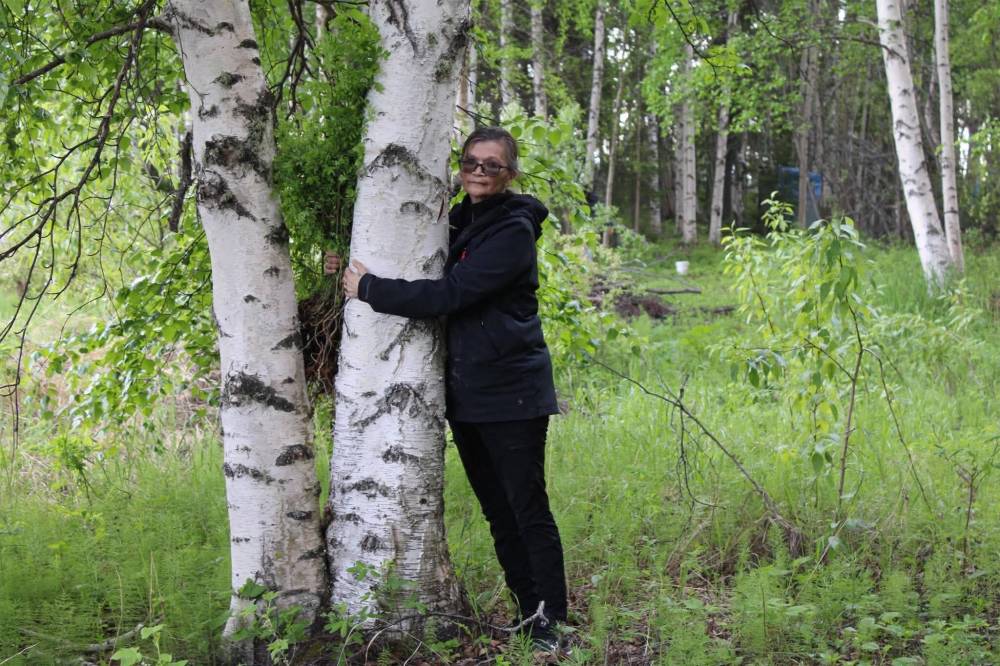
Along with her love of family, Carol Wood grew up in love with the land.
One day, Wood and her brother, Burnell Anderson, took Montgomery aside. They worried about their longtime friend, who is also the principal of the community’s Thunderbird School. They wanted to make sure she was taking care of herself. They reminded her of a teaching they carried, handed down from their own parents.
Go to the water, Wood advised Montgomery. That’s one way to come back to your centre. Go to the lake, find a rock, and lie on it. Let the water around you carry the negative energy away, replace it with something fresh and positive, and then you can be peaceful in your own heart again.
It was just like Wood to share that kind of message. She had devoted her life to helping her community and taking care of its people; countless residents can recall a time she checked in on them, a time she cared, a time she did whatever she could to ensure they had what they needed.
“That’s how she was,” Montgomery said. “She was a good reader of people. And if she saw somebody who was struggling, she was always there to lend a hand. She was always there to say, ‘You can do it.’ She was a very positive person.”
So when Wood died on July 9, at age 59, following a tragic ATV accident while assisting this year’s wildfire evacuation, it sent the community reeling. She had done so much, for so long, to help keep the First Nation going, from her work at the band office to welcoming anyone who needed a safe place into her own home.
“She was very a compassionate, caring, loving individual,” Chief Shirley Ducharme said in a phone interview earlier this week. “She was very supportive even to the staff here. She’d come and hop into my office and ask how I was doing. When things got a little tough, she’d be here with open arms, just to chat with me.”

SUPPLIED
Carol Wood with her husband, Brian Wood.
The roots of that compassionate spirit, those who knew Wood say, came from her own family. Her parents, Bill and Minnie Anderson, raised a family of six sons, followed by five daughters. Wood was born in 1966, their eighth child and second girl. The siblings were close, though naturally — especially as they got to be teenagers — there could be squabbles.
Even then, Wood had a way of bringing everyone back together.
“She had this great sense of calm,” her sister Lianna Anderson said. “When Carol was there, everybody seemed to get along. She could walk in and talk sense into people … You could just see this aura of kindness around her, and the love she gave everybody.”
When she was just five years old, she was taken to residential school where she was made to learn English. But the school closed after her third year there, and when she and her siblings returned home, her father was adamant they would speak only Cree. Because of this determination, Wood was able to keep her language.
Along with her love of family, Wood grew up in love with the land. In those days, before the 1976 Churchill River Diversion flooded South Indian Lake and damaged its waters, the lake teemed with fish. Wood’s father was a fisher and trapper; each summer, he took the entire clan to the fish camps to help in the harvest.
For Wood and her siblings, life at the fish camps rolled out in a familiar pattern of hard work and togetherness. Each day, their father would head out to the water before dawn, while they set about their chores: stacking wood, scrubbing clothes, and stoking fires to smoke the fish that Bill would soon bring back to shore.

SUPPLIED
Carol Wood is remembered for her kindness and compassion.
Sometimes, Wood’s father would take her onto the boats with the men, where she became adept at gutting fish. He made sure to teach her how to do it right: in Cree, he’d teach his kids that nothing could be done mamasis, or carelessly. On the land, that was a matter of life and death. You had to do things mindfully, and you had to lean on each other.
“We were raised in a family where we were shown that we can do anything,” Anderson says. “But to be able to do anything, we always had to work together. We always had to think of each other.”
The lessons of the land stayed with Wood. As an adult, she was “a master” of preparing traditional foods, Anderson says. She knew how to smoke and cure every kind of fish that swam in their waters. Elders often came to her asking for help gathering traditional medicine; she knew which berries and herbs could help soothe their ailments.
Above all, she was always eager to share that knowledge, and took jobs that put her in a prime spot to do so.
Before O-Pipon-Na-Piwin Cree Nation was established in late 2005, Wood worked for the community of South Indian Lake; afterward, she served the band as a finance manager, then transferred to its health department, and had most recently begun a new role as health director at the Tommy Thomas Memorial Health Complex.
Wood’s contributions to her community spread far beyond her official roles. She volunteered at countless events, including taking youth on fishing trips, to pass on the skills she’d learned from her parents. During O-Pipon-Na-Piwin’s first wildfire evacuation in 2025, with power out in the community, Wood ensured all the elders received three meals a day.
SUPPLIED
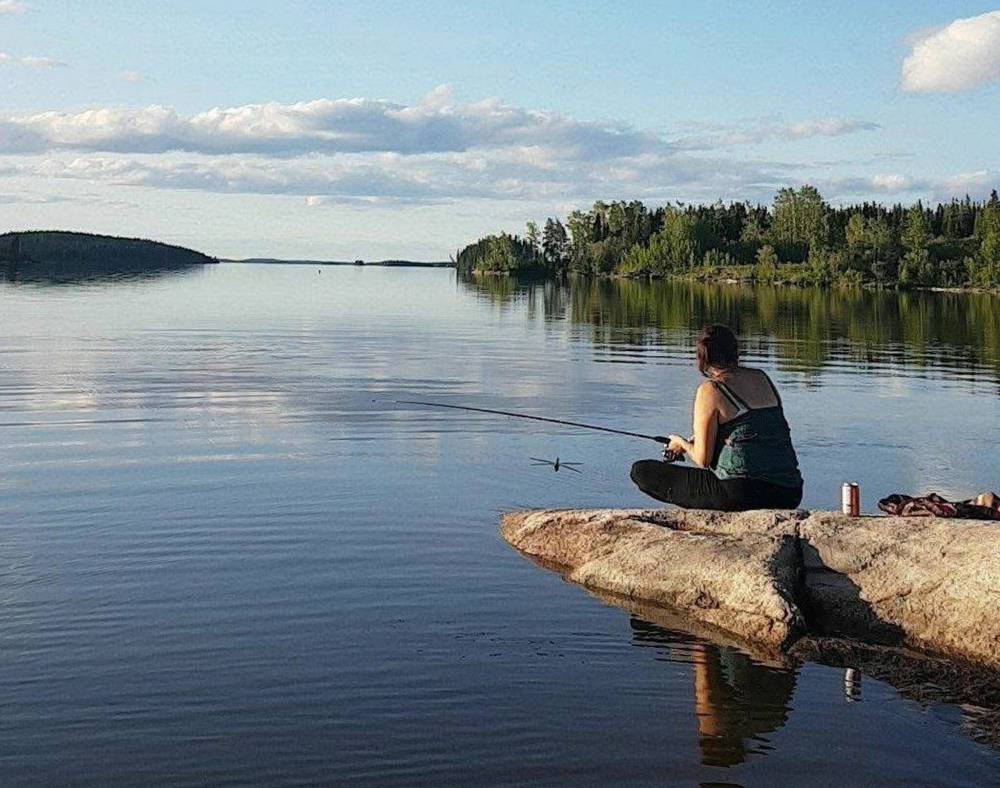
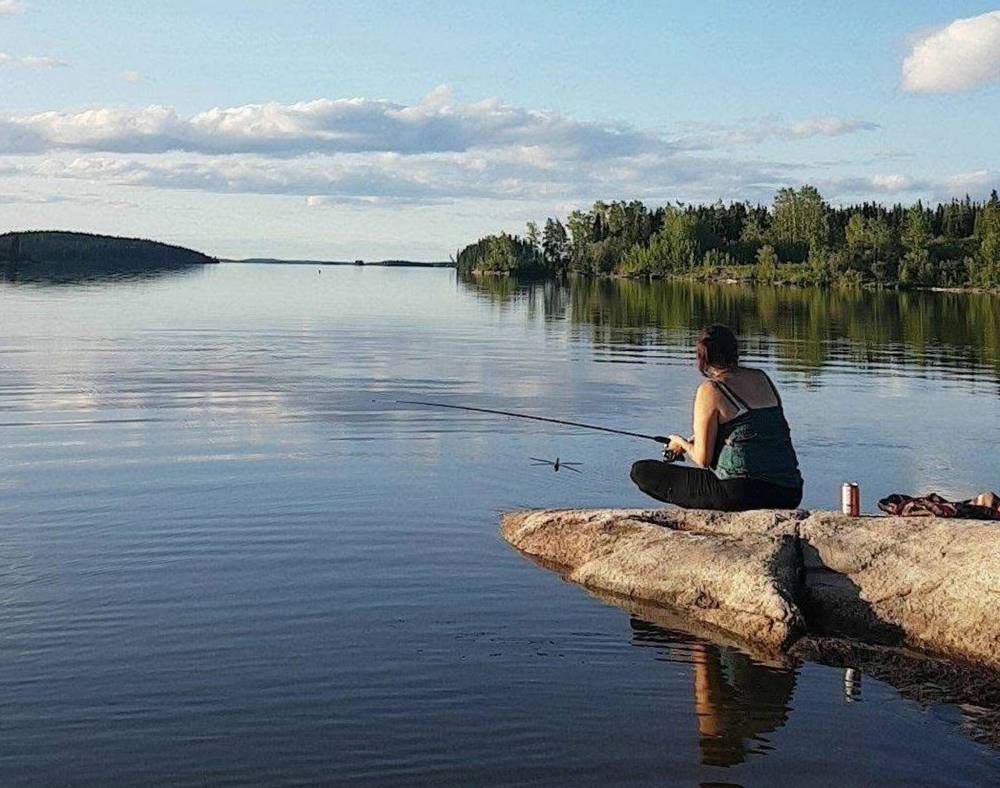
Carol Wood casting off from the shore of the South Indian Lake.
By then, Wood had built a loving family of her own. She’d married her high school sweetheart, Brian Wood, who is also a fisher and trapper; they spent much of their time on the land. The couple raised six kids, and later delighted in caring for their 13 grandkids; just days before her death, Wood was overjoyed by the birth of her first great-grandchild.
With that joy, there was also deep sorrow. In 2015, the couple lost their daughter, Devin Wood, at just 28 years old. In 2024, their son James Wood died after Winnipeg police beat him during an altercation; this March, the Independent Investigation Unit of Manitoba announced it would not recommend charges.
Despite that setback, Wood and her husband kept fighting to see accountability. In October, they filed a lawsuit against the city and six police officers involved in the incident. Earlier this summer, the Chief Medical Examiner’s office announced an inquest into Wood’s death.
“That was something that really consumed her prior to her death, making sure that there was awareness, and that people knew the truth of what happened,” Anderson says. “That really broke her heart.”

In addition to her own children and grandchildren, her house was always filled with young people from the community who would stop by for guidance, or a meal, or just to be somewhere they felt safe and loved. Wood welcomed all who came by and always had food at the ready, including her famous cranberry cake.
For Wood’s family, this year has brought immense grief. Her brother Burnell died in February; just five days after Wood’s accident, their mother, Minnie Anderson, also died. It was devastating, her sister says, especially as many people couldn’t attend the double funeral for Wood and her mother amid the wildfire evacuation.
Yet the support from the community has been “amazing,” Anderson says, a reflection of the love Wood had long given.
“Carol really was different,” Anderson says. “She was that brighter light that shone so much more in your darkest moments, because you knew that she was there.”
melissa.martin@freepress.mb.ca
Our newsroom depends on a growing audience of readers to power our journalism. If you are not a paid reader, please consider becoming a subscriber.
Our newsroom depends on its audience of readers to power our journalism. Thank you for your support.
Our newsroom depends on a growing audience of readers to power our journalism. If you are not a paid reader, please consider becoming a subscriber.
Our newsroom depends on its audience of readers to power our journalism. Thank you for your support.
Advertisement Advertise With Us
Advertisement Advertise With Us