‘WeThe15’ stresses rights of 1.2 billion with disabilities

Advertisement

Advertise with us

TOKYO (AP) — The opening next week of the Paralympic Games in Tokyo is being used as a stage to launch a human-rights movement aimed at the world’s 1.2 billion people with disabilities.

Read this article for free:


or

Already have an account? Log in here »

To continue reading, please subscribe:

Subscribe and receive a limited-edition Free Press branded hat or tote.

Digital Subscription

One year of digital access for only $205*

  • Enjoy unlimited reading on winnipegfreepress.com
  • Read the E-Edition, our digital replica newspaper
  • Access News Break, our award-winning app
  • Play interactive puzzles

*First annual payment billed as $205.00 + GST for one year. This annual subscription will automatically renew at $233.00 + GST every 52 weeks (10% off the regular annual price of $259.35). Offer available to new and qualified returning subscribers only. Cancel any time.

To continue reading, please subscribe:

Add Free Press access to your Brandon Sun subscription for only an additional

$1 for the first 4 weeks*

  • Enjoy unlimited reading on winnipegfreepress.com
  • Read the E-Edition, our digital replica newspaper
  • Access News Break, our award-winning app
  • Play interactive puzzles
Start now

*Your next Brandon Sun subscription payment will increase by $1.00 and you will be charged $17.95 plus GST for four weeks. After four weeks, your payment will increase to $24.95 plus GST every four weeks.

Hey there, time traveller!
This article was published 18/08/2021 (1869 days ago), so information in it may no longer be current.

TOKYO (AP) — The opening next week of the Paralympic Games in Tokyo is being used as a stage to launch a human-rights movement aimed at the world’s 1.2 billion people with disabilities.

The campaign is called “WeThe15”and gets its name from World Health Organization estimates that persons with disabilities represent 15% of the global population. The campaign is being spearheaded by the International Paralympic Committee, UN Human Rights, the International Disability Alliance, and others.

The IPC is also hooking up in the campaign with other sports bodies including the Special Olympics, the Invictus Games Foundation, and the International Committee of Sports for the Deaf.
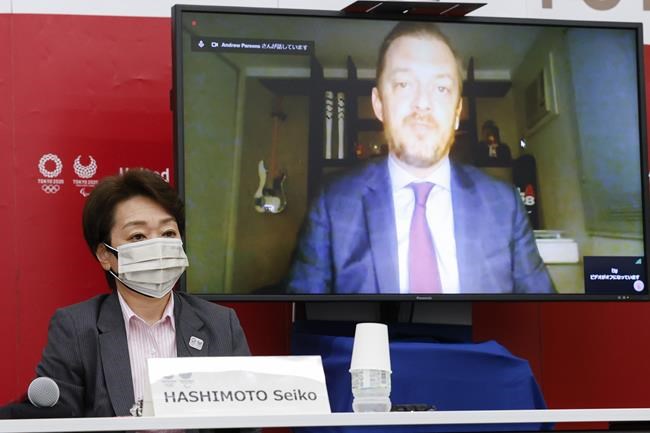
FILE - In this June 21, 2021, file photo, Tokyo 2020 President Seiko Hashimoto listens to International Paralympic Committee (IPC) President Andrew Parson, on a screen, during a five-party online meeting at Harumi Island Triton Square Tower Y in Tokyo. The opening next week of the Paralympic Games in Tokyo is being used as a stage to launch a human rights movement aimed at the world’s 1.2 billion people with disabilities.(Rodrigo Reyes Marin/Pool Photo via AP, File)

Andrew Parsons, president of the IPC, told The Associated Press that “WeThe15” aims to put persons with disabilities on the inclusion agenda along with “ethnicity, gender, and sexual orientation.”

“We have seen other movements like LBGTQ, Black Lives Matter, the Me Too movement, and we need a similar movement for persons with a disability,” Parsons said.

“These movements have organized themselves in a way that they could advance their agenda, and we believe that so far — even though the Paralympics has brought some change — we need to bring together these other international organizations to make this change more effective. Not only every four years.”

The launch Thursday features a 90-second campaign film that organizers say will be shown on television channels in 60 countries.

“It’s understanding that 1.2 billion people — 15% of the global population — cannot be ignored,” Parsons said. “They must be included in the society. That’s the message we want to bring and highlight to the world.”

The WHO estimates that of the 15% of the world’s population living with some form of disability, between 110 million and 190 million adults have significant difficulties in functioning.

Organizers will accent the launch by lighting up more than 125 worldwide landmarks in the color purple. Advocates say purple is long associated with the disability community. Included in the lighting will be New York’s Empire State Building, Tokyo’s Skytree and Rainbow Bridge, Rome’s Colosseum, the London Eye, and Niagara Falls spanning Canada and the United States.

“With WeThe15, I hope we unite people through creating understanding,” said Heinrich Popow, a two-time Paralympic gold-medal winner at 100 meters and the long jump. Heinrich piled up seven medals overall in four Paralympics — from 2004 in Athens through 2016 in Rio de Janeiro.

“We want to motivate through WeThe15 with stories,” Popow added. “And create the understanding that we also love life.”

The launch of WeThe15 comes a year after a documentary film on Paralympic athletes was released in almost 200 countries.

The film “Rising Phoenix” weaves the history of the Paralympic Games around athletes’ lives and the financial ups and downs of the movement. It also includes segments about Dr. Ludwig Guttmann, a refugee from Nazi Germany who put together an athletic competition for the disabled in Britain in 1948 as way to help treat World War II veterans with spinal cord injuries.

The Tokyo Paralympics open on Aug. 24 in a ceremony at Tokyo’s National Stadium. They will feature about 4,400 athletes, a much smaller contingent that the just-completed Olympics, which featured 11,000 athletes.

The Paralympics close on Sept. 5.

The Paralympics will be held without any fans, even fewer than the Olympics, which allowed some fans in outlying venues. The Paralympics come as new infections have accelerated in Tokyo, which may expose an athlete population that is more vulnerable to COVID-19.

New infections in Tokyo tripled during the 17 days of the Olympics, although medical experts said the surge was not directly linked the Tokyo Games. Rather, experts suggested an indirect effect as the public was distracted and lulled into a false sense of security that staging the Games offered.

___

More AP Olympics: https://apnews.com/hub/2020-tokyo-olympics and https://twitter.com/AP_Sports

Report Error Submit a Tip

More Stories

Bombers look to lock in to post-season chase after dropping game to Argos

Taylor Allen 6 minute read Preview

Bombers look to lock in to post-season chase after dropping game to Argos

Taylor Allen 6 minute read Monday, Sep. 28, 2026

The Winnipeg Blue Bombers let a major opportunity slip through their fingers, and they know it.

“F—- yeah. That game was ours,” said defensive end Willie Jefferson on Friday’s 30-28 loss at home to the Toronto Argonauts.

It was — and then they gave it away in the final five minutes.

The Bombers came out firing, jumping out to a 21-7 lead. They had a chance to close out the contest while leading 28-27 with two minutes remaining, but couldn’t do it. Quarterback Dru Brown was sacked by linebacker Adarius Pickett, forcing the Bombers to punt, and the Argos took full advantage.

Read
Monday, Sep. 28, 2026

Use it twice: a data centre we could support

Hersh Seth 5 minute read Preview

Use it twice: a data centre we could support

Hersh Seth 5 minute read Thursday, Jul. 30, 2026

In June, Premier Wab Kinew rejected a massive AI data centre planned near Île-des-Chênes. The project would have used 500 megawatts of power, which is about the same as the Grand Rapids generating station, and would have run on six natural gas turbines. Kinew said the environmental cost was too high and the long-term benefit for Manitobans was too low.

He made the right call. But simply saying no to data centres is not enough.

Winnipeg is a cold city. Data centres are basically huge electric heaters with computers inside. Almost every watt they use turns into heat, and most facilities pay to release it into the air. In a city that spends half the year paying to stay warm, that’s not just waste; it’s an opportunity. The idea is simple: use the energy twice. First for computing, then for heating our buildings.

The stakes are real. Manitoba Hydro’s new resource plan says peak demand will exceed our capacity as early as 2029 or 2030, and that the province will need about 1,760 additional megawatts of dependable capacity by 2035.

Read
Thursday, Jul. 30, 2026

Hydro reports $446-M loss in 2025-26, points to fourth drought year in past five

Scott Billeck 3 minute read Preview

Hydro reports $446-M loss in 2025-26, points to fourth drought year in past five

Scott Billeck 3 minute read Yesterday at 6:38 PM CDT

Manitoba Hydro posted a $446-million loss in 2025-26, as drought conditions slashed hydroelectric generation, forcing the Crown corporation to buy more power while leaving it with less electricity to sell outside the province.

The loss was $666 million worse than the $220-million profit Hydro had budgeted. The utility posted a $63-million loss the previous year, according to the utility’s annual report released Tuesday.

Hydro said the 2025-26 fiscal year, which ended on March 31, marked its fourth low-water year in the past five years, among the worst stretches of water-flow conditions in its recorded history.

Hydroelectric generation fell 23 per cent to 24 billion kilowatt-hours from 31 billion the previous year, leaving Hydro a net importer of electricity.

Read
Yesterday at 6:38 PM CDT

Pallister’s ego behind carbon tax flip-flop

Dan Lett 7 minute read Preview

Pallister’s ego behind carbon tax flip-flop

Dan Lett 7 minute read Thursday, Oct. 4, 2018

It doesn't make any sense.

Earlier this week, Manitoba Premier Brian Pallister stunned onlookers inside and outside the province with a decision to abandon his own $25-per-tonne carbon tax — the core lever in a complex, provincewide plan to curb carbon emissions.

The premier told reporters Wednesday he was throwing out nearly two years of work on a homegrown climate change plan because Ottawa did not "respect" Manitoba's desire to hold carbon taxes at about half the level demanded by the federal government.

It was not clear what Pallister meant by respect; the two levels of government disagree about the level at which carbon taxes should be set. Up until this week, the two levels of government disagreed over policy and methodology.

Read
Thursday, Oct. 4, 2018

Expert urges food, drink makers to look to foreign markets

Gabrielle Piché 5 minute read Preview

Expert urges food, drink makers to look to foreign markets

Gabrielle Piché 5 minute read Yesterday at 5:04 PM CDT

Canada’s slowing population growth could restrict business expansion, a top economist for Farm Credit Canada warned Manitoba manufacturers.

Craig Johnston, the federal Crown corporation’s chief economist, addressed Prairie businesses at Farm Credit Canada’s Food and Beverage Summit Tuesday.

“There could be some modest growth in Canadian consumption of food and beverage,” Johnston said, relaying population numbers inside a Victoria Inn Hotel conference room.

Still, per-person spending on food is “stagnant, if not somewhat rising,” Johnson later told reporters.

Read
Yesterday at 5:04 PM CDT

Plenty of losses all around

Gwynne Dyer 4 minute read Wednesday, Jul. 15, 2026

The last time oil-tankers were being shot up in the Persian Gulf, back in the 1980s, it was Saddam Hussein’s brutal tyranny in Iraq versus Ayatollah Khomeini’s revolutionary Islamist regime in Iran.

The United States backed Saddam because he was just another murderous thug, whereas the new regime in Tehran was an actual threat to American interests. It had overthrown Iran’s American-backed puppet king and wanted to spread its Islamist ideology across the region.

So, of course, Ronald Reagan’s administration chose Saddam’s side. It sent Iraq arms by clandestine means (because Congress wouldn’t authorize it) and even provided targeting information for Iraqi poison gas attacks on Iran. The Americans chose the “lesser evil,” but at least they knew it was evil.

Once in a while they would even say it out loud, quoting U.S. diplomat Henry Kissinger: “It’s a shame that both sides can’t lose.” But they never did anything about it, and after eight years of slaughter, the war ended in a no-score draw.