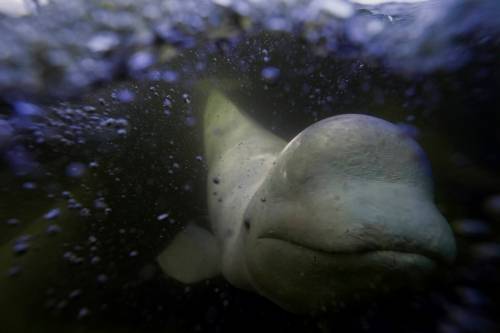
Lack of fans in Tokyo adds another unknown element to delayed 2020 Olympic spectacle
Advertisement
Read this article for free:
or
Already have an account? Log in here »
To continue reading, please subscribe:

Digital Subscription
One year of digital access for only $205*
- Enjoy unlimited reading on winnipegfreepress.com
- Read the E-Edition, our digital replica newspaper
- Access News Break, our award-winning app
- Play interactive puzzles
*First annual payment billed as $205.00 + GST for one year. This annual subscription will automatically renew at $233.00 + GST every 52 weeks (10% off the regular annual price of $259.35). Offer available to new and qualified returning subscribers only. Cancel any time.
To continue reading, please subscribe:
Add Free Press access to your Brandon Sun subscription for only an additional
$1 for the first 4 weeks*
- Enjoy unlimited reading on winnipegfreepress.com
- Read the E-Edition, our digital replica newspaper
- Access News Break, our award-winning app
- Play interactive puzzles
*Your next Brandon Sun subscription payment will increase by $1.00 and you will be charged $17.95 plus GST for four weeks. After four weeks, your payment will increase to $24.95 plus GST every four weeks.
Read unlimited articles for free today:
or
Already have an account? Log in here »
Hey there, time traveller!
This article was published 13/07/2021 (1889 days ago), so information in it may no longer be current.
WASHINGTON – Host broadcaster NBC may be wondering whether Americans will tune in the Tokyo Olympics, but at least they don’t have to worry about Kurt Mosdell.
The San Diego systems analyst, born in Alaska to Canadian parents, has every intention of binge-watching one of his favourite sporting spectacles — something he didn’t get to do last year thanks to the COVID-19 pandemic.
“I’ll watch all of it, absolutely,” said Mosdell, resplendent in his Montreal Canadiens jersey outside the T-Mobile Arena in Las Vegas, where his beloved Habs were taking on the Vegas Golden Knights.
“I just like watching athletes train their whole lives for a lot of these sports that are not mainstream, right? You see them every four years, but you can tell the passion they have and what it means to them. That’s what I like to see on TV.”
How many of the self-described sporting superfan’s fellow U.S. citizens will be joining him remains an open question, especially now that a pandemic state of emergency in Japan has forced organizers to ban spectators from most of the events.
“The fans make the sport; I think that’s obvious,” said Mosdell — a reference to the capacity crowds that turned out for last month’s boisterous Stanley Cup semifinal games in Vegas. By contrast, COVID-19 restrictions allowed only 3,500 supporters to watch the Montreal games in person.
“You see what’s going on here, and then we see in Montreal, only 3,500 fans. Hey, 3,500 fans there, hats off to you, well done. But it’s still only 3,500.”
The atmosphere in Japan is likely to be sombre.
Athletes will be largely confined to their quarters in the village when they’re not competing, and their respective venues when they are. Others in the Olympic entourage will be shuttled between their hotels and the venues, and sign an undertaking promising to abide by the rules.
No public viewing areas will be set up in Tokyo; even the iconic Olympic torch relay has been cancelled.
“Many people were looking forward to watching the Games at the venues, but I would like everyone to fully enjoy watching the Games on TV at home,” Tokyo Gov. Yuriko Koike said in announcing the ban on spectators.
One prominent American who will witness the opening ceremonies in person is Jill Biden, the wife of U.S. President Joe Biden. The White House announced Tuesday that Biden will attend the July 23 ceremony in her first solo trip abroad as first lady.
White House press secretary Jen Psaki told a briefing last week that a team had been sent to Tokyo to assess the feasibility of Biden’s visit.
“The President supports the Tokyo Olympic Games and the public health measures necessary to protect athletes, staff, and spectators. He has pride in the U.S. athletes who have trained for the Tokyo Games and will be competing in the best traditions of the Olympic spirit,” Psaki said.
“We’re well aware of the careful preparations, including the public health measures necessary to protect athletes, staff, and spectators that the government and international committee has undertaken, which is why, as we’ve said, we support the Games moving forward.”
The U.S. has the utmost faith in Japan’s efforts to protect athletes, said Dr. Anthony Fauci, Biden’s chief medical adviser and the head of the National Institute of Allergy and Infectious Diseases.
“The protocols that are in place to protect them are really quite strict and stringent,” Fauci told a COVID-19 briefing Thursday.
“Many of them — maybe the majority of them, I think — are going to be vaccinated. But the care that’s being taken to avoid the spread there is really something that I think is really quite impressive.”
Between NBC’s main network, cable channels and new Peacock streaming service, which was supposed to make a star-spangled debut last summer around the original date for the Olympics, more than 7,000 hours of programming are reportedly in the works.
No less a sportscasting luminary than Bob Costas has expressed concern that a lack of fans could put a dent in viewership.
“It’s a hell of a challenge that they face,” Costas, who was a fixture of Olympic coverage in the U.S. and around the world from 1992 until his retirement in 2017, told CNN.
“Does this mean people won’t watch? Of course they’ll watch. But will they watch in the same kind of numbers than if this had the usual texture? Probably not.”

Fans aren’t the only ones who won’t be there.
Australian tennis star Nick Kyrgios cited their absence as part of the reason he’s decided to give up his spot on his country’s national team.
“It’s been my dream to represent Australia at the Olympics and I know I may never get that opportunity again,” he said on social media.
“But I also know myself. The thought of playing in front of empty stadiums just doesn’t sit right with me. It never has.”
This report by The Canadian Press was first published July 13, 2021.
Related Articles
Canada captain Sinclair on penalty kicks: 'The worst things ever, unless you win'





Advertisement Advertise With Us
Advertisement Advertise With Us