Health Canada says vaccine boosters will be approved more easily

Advertisement

Advertise with us

OTTAWA - Health Canada says it won't require new clinical trial data from vaccine makers on booster shots being developed to target new variants of COVID-19.

Read this article for free:


By clicking the button above, an account will be created and you will begin to receive some of our recommended newsletters. You may opt out of any newsletter by visiting your Email and Communication Preferences page or by clicking "unsubscribe" at the bottom of any email.

or

Already have an account? Log in here »

To continue reading, please subscribe:

Digital Subscription

One year of digital access for only $1.44 a week*

  • Enjoy unlimited reading on winnipegfreepress.com
  • Read the E-Edition, our digital replica newspaper
  • Access News Break, our award-winning app
  • Play interactive puzzles

*Billed as $5.77 plus GST every four weeks. After 52 weeks, price increases to the regular rate of $19.95 plus GST every four weeks. Offer available to new and qualified returning subscribers only. Cancel any time.

To continue reading, please subscribe:

Add Free Press access to your Brandon Sun subscription for only an additional

$1 for the first 4 weeks*

  • Enjoy unlimited reading on winnipegfreepress.com
  • Read the E-Edition, our digital replica newspaper
  • Access News Break, our award-winning app
  • Play interactive puzzles
Start now

*Your next Brandon Sun subscription payment will increase by $1.00 and you will be charged $17.95 plus GST for four weeks. After four weeks, your payment will increase to $24.95 plus GST every four weeks.

Hey there, time traveller!
This article was published 04/03/2021 (2068 days ago), so information in it may no longer be current.

OTTAWA – Health Canada says it won’t require new clinical trial data from vaccine makers on booster shots being developed to target new variants of COVID-19.

Instead, the regulator will rely more heavily on lab tests on blood samples, which can show how many antibodies develop following vaccination. Those antibodies are a good indicator of how well the human body will fight off an infection.

The decision should help the regulator authorize the boosters for use in Canada much quicker and is in line with the process used to approve new flu vaccines each year.

Dr. Supriya Sharma, chief medical adviser at Health Canada, holds a press conference in Ottawa on Friday, Feb. 26, 2021. Canada's chief medical adviser says her department is constantly receiving and reviewing any data on vaccines and COVID-19 variants and will be quickly ready to authorize needed boosters when they're ready. THE CANADIAN PRESS/Sean Kilpatrick

At least three variants of the virus that causes COVID-19 are circulating in Canada and are believed to spread more easily and possibly cause more serious illness. Having vaccines adjusted to target those new strains is a critical part of managing the COVID-19 pandemic.

But Health Canada’s chief medical adviser, Dr. Supriya Sharma, said there won’t be corners cut on safety in evaluating new boosters.

“They still need to demonstrate that the vaccine that comes out is still safe, effective and high quality,” she said in an interview with The Canadian Press earlier this week.

Canada has authorized three vaccines, from Pfizer-BioNTech, Moderna and Oxford-AstraZeneca, and all are working on various boosters against variants.

The documents supporting Thursday’s decision note that demanding full clinical trials, as was the case for authorizing the original vaccines, would create a serious delay.

“This may also be problematic from a public health perspective since delay in updating a vaccine, where needed, bears the risk that the virus is evolving even further, potentially making a new vaccine version outdated at the time of approval again,” the document says.

Coronaviruses don’t mutate as quickly as flu viruses, but do change as they spread among people and the more they spread, the more they change.

“So a virus is not going to mutate as much when it can’t replicate,” Sharma said.

The existing vaccines have shown reduced effectiveness against the variants of concern, though Sharma cautions the vaccines are still useful even against the variants.

The vaccines Canada has authorized are performing well in countries like the United Kingdom and Israel, where the B.1.1.7 variant is now dominant. That variant is thus far the most common of the three variants of concern in Canada, accounting for more than 90 per cent of about 1,430 variant cases confirmed so far.

Many provinces are now screening all confirmed cases of COVID-19 for the variants of concern, and as many as 10 per cent of all confirmed cases are fully sequenced to look for any mutations to the original virus.

The B.1.351 variant that first arose in South Africa is the most concerning to date in its potential to evade existing vaccines. As of Wednesday, there were 103 confirmed cases of it in Canada.

South Africa stopped using AstraZeneca’s vaccine altogether after lab tests suggested it wouldn’t be very effective against mild illness for B.1.351, which is dominant in that country.

That decision has contributed to growing concerns that AstraZeneca’s vaccine is less desirable but Sharma said the details aren’t that simple.

“Now, if you look at severe disease, or more severe cases, it actually looked like it was still quite protective,” she said.

“But in a country where that is your dominant circulating stream, and in a country where they had potentially had access to another vaccine shortly, they made the decision that maybe they weren’t going to go ahead with that,” she said.

If B.1.351 becomes a dominant strain here, and current vaccines don’t show effectiveness against it, they’ll be pulled, Sharma said.

“We wouldn’t leave a vaccine on the market if we think that it wouldn’t be effective for the overall population.”

This report by The Canadian Press was first published March 4, 2021.

Report Error Submit a Tip

More Stories

Province’s first female dentist took skill, insight wherever needed

David Sanderson    25 minute read Preview

Province’s first female dentist took skill, insight wherever needed

David Sanderson    25 minute read Saturday, Apr. 3, 2021

Some stories take longer to get around to than others.

In the fall of 2011 I hooked up with Fiona Odlum at an Academy Road Starbucks for a lighthearted feature about people who report on traffic for a living. Odlum, currently a contributor at CBC Saskatchewan, was working for 680 CJOB at the time, clueing rush-hour commuters in on stalls, lane closures and fender-benders they’d be wise to avoid.

Odlum turned the tables at one point by asking a few questions of her own including, “So, what’s your main beat?”

I don’t really have one, I told her, but if pressed, I would probably go with human-interest pieces.

Read
Saturday, Apr. 3, 2021

B.C. declares state of emergency over wildfires

Amy Smart, The Canadian Press 5 minute read Preview

B.C. declares state of emergency over wildfires

Amy Smart, The Canadian Press 5 minute read Wednesday, Jul. 21, 2021

VANCOUVER - British Columbia's public safety minister has declared a provincial state of emergency over the growing wildfire threat to prepare for potential mass evacuations and help secure accommodation that might be needed by evacuees.

Mike Farnworth said he made the decision based on information from officials that weather conditions will lead to more severe fire behaviour and the potential for more evacuations.

"In a briefing last night, I received word that we'll be facing a few days of very difficult weather in the Interior," Farnworth said in a statement.

The state of emergency goes into effect on Wednesday and gives government agencies, the fire commissioner and the RCMP the authority to take whatever action they deem is necessary to fight the wildfires and protect people and communities.

Read
Wednesday, Jul. 21, 2021

Brandon manufacturer says Canadian steel in demand, but high costs, long delivery times hit hard

Gabrielle Piché 6 minute read Preview

Brandon manufacturer says Canadian steel in demand, but high costs, long delivery times hit hard

Gabrielle Piché 6 minute read Yesterday at 2:01 AM CDT

Something’s different in a Brandon plant.

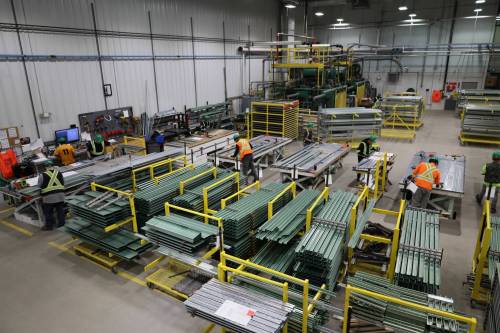
Building envelope panels — or shells for homes and commercial buildings — keep being produced at Greenstone Building Products.

But the galvanized steel used by workers has been arriving later and the price is constantly increasing, according to company leadership.

“It’s just a little bit nerve-wracking for us to hear the opposite narrative,” said Tilda Fortier, Greenstone Building Products’ business manager.

Read
Yesterday at 2:01 AM CDT

Court ruling concludes Canadian Wheat Board saga

Laura Rance-Unger 4 minute read Preview

Court ruling concludes Canadian Wheat Board saga

Laura Rance-Unger 4 minute read Yesterday at 2:01 AM CDT

It remains to be seen whether the recent court ruling in a lawsuit filed after Canadian Wheat Board’s dissolution in 2012 puts the whole debate to rest, as some no doubt hope.

But either way, the dust has settled on the post-CWB world. The sun still rises and a new generation of farmers on the land only knows by name an institution that for generations influenced every aspect of Prairie grain farming.

The first Rural Revival column I wrote for this newspaper more than 30 years ago was about a thousand farmers from Western Canada demonstrating in support of the Wheat Board. It was in the aftermath of the Western Grain Marketing Panel report, one of several efforts that eventually included a plebiscite to help the federal government decide what to do about a vocal minority of farmers who wanted marketing “freedom.”

The polls at the time suggested about two-thirds of farmers were comfortable enough with the single-desk system for food wheat and barley to keep it around. It served as a counterbalance to canola, which they sold on the open market. They essentially had a dual market.

Read
Yesterday at 2:01 AM CDT

Say What?! Sports guys travel to new destination

Steve Lyons and Paul Wiecek 16 minute read Preview

Say What?! Sports guys travel to new destination

Steve Lyons and Paul Wiecek 16 minute read Thursday, Jan. 30, 2020

Say What?! is an email conversation between sports editor Steve Lyons and sports columnist Paul Wiecek. Look for us regularly but intermittently on the Free Press website.


Steve Lyons: Heya. How you doing? How’s 2020 treating you so far?

Few things to get us started:

Read
Thursday, Jan. 30, 2020

Canada tops Dominican Republic in pre-qualifier

Jason Hills, The Canadian Press 4 minute read Preview

Canada tops Dominican Republic in pre-qualifier

Jason Hills, The Canadian Press 4 minute read Sunday, Nov. 17, 2019

EDMONTON - Canada's women's basketball team put its depth on display Sunday in a dominant 110-60 victory over the Dominican Republic in the final game of the FIBA Olympic pre-qualifying tournament.

All 12 players hit the scoresheet, including six in double digits, to help the Canadians finish 3-0 at the tournament and advance to the next Olympic qualifier in February.

Sami Hill led the way with 16 points, three rebounds, two assists and three steals, while 20-year-old Shaina Pellington recorded 14 points. Bridget Carleton and Jamie Scott had 13 points each and Ruth Hamblin had 11 points and five rebounds.

"We got to roll our whole lineups through, and it was fun when we got going," said Canada's coach Lisa Thomaidis. "It was nice to see different lineup contributing and building chemistry.

Read
Sunday, Nov. 17, 2019