Feds add $204M for anti-pandemic measures in Indigenous communities and institutions

Advertisement

Advertise with us

Ottawa will spend an additional $204 million targeted at child care, education and infrastructure to help Indigenous communities fight the COVID-19 pandemic, Prime Minister Justin Trudeau announced Friday.

Read this article for free:


By clicking the button above, an account will be created and you will begin to receive some of our recommended newsletters. You may opt out of any newsletter by visiting your Email and Communication Preferences page or by clicking "unsubscribe" at the bottom of any email.

or

Already have an account? Log in here »

To continue reading, please subscribe:

Digital Subscription

One year of digital access for only $1.44 a week*

  • Enjoy unlimited reading on winnipegfreepress.com
  • Read the E-Edition, our digital replica newspaper
  • Access News Break, our award-winning app
  • Play interactive puzzles

*Billed as $5.77 plus GST every four weeks. After 52 weeks, price increases to the regular rate of $19.95 plus GST every four weeks. Offer available to new and qualified returning subscribers only. Cancel any time.

To continue reading, please subscribe:

Add Free Press access to your Brandon Sun subscription for only an additional

$1 for the first 4 weeks*

  • Enjoy unlimited reading on winnipegfreepress.com
  • Read the E-Edition, our digital replica newspaper
  • Access News Break, our award-winning app
  • Play interactive puzzles
Start now

*Your next Brandon Sun subscription payment will increase by $1.00 and you will be charged $17.95 plus GST for four weeks. After four weeks, your payment will increase to $24.95 plus GST every four weeks.

Hey there, time traveller!
This article was published 30/10/2020 (2192 days ago), so information in it may no longer be current.

Ottawa will spend an additional $204 million targeted at child care, education and infrastructure to help Indigenous communities fight the COVID-19 pandemic, Prime Minister Justin Trudeau announced Friday.

Trudeau said the government is spending $120 million to support early learning and child-care facilities in First Nations, Inuit and Métis communities during the pandemic.

“Access to safe and culturally relevant early learning and child care is essential to the recovery of Indigenous communities from COVID-19,” Trudeau said.

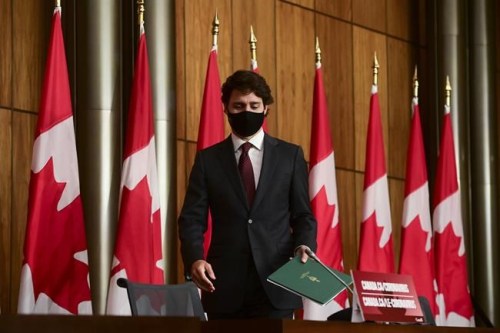
Prime Minister Justin Trudeau arrives to a press conference during the COVID pandemic in Ottawa on Tuesday, Oct. 13, 2020. More federal financial support is on its way to help Indigenous people and communities cope with the ongoing impact of the COVID-19 pandemic. THE CANADIAN PRESS/Sean Kilpatrick

The new funding will support facilities in Indigenous communities in hiring additional staff and offering training for their teams.

The government is also spending $25 million to help Indigenous post-secondary institutions with increased costs related to the pandemic.

“This will help retain staff, adapt courses for online learning and implement public health and safety measures like additional handwashing stations and safe space barriers,” Trudeau said.

He also announced $59 million in funding to improve infrastructure on First Nations to meet COVID-19 health and safety standards.

The new money is on top of more than $2.2 billion the federal government has already allocated to help Indigenous and northern communities get through the health crisis.

Indigenous Services Minister Marc Miller said the announcement brings the government funding for Indigenous communities and organizations during COVID-19 to almost $2.5 billion.

He said the pandemic’s impact has been particularly hard on children and young people.

“We must ensure that they get the necessary support to be able to learn and to thrive in a safe environment,” he said.

Miller said there were 348 active COVID-19 cases among First Nations people living on reserves as of Thursday, adding that the total number of COVID-19 cases has reached 1,360.

Among other things, the government has committed $685 million for the Indigenous Communities Support Fund, which includes funding to address food insecurity, education and other support for children.

It is spending another $650 million to help Indigenous communities respond to the pandemic and for income support.

And it has devoted $122 million to help ensure a safe return to schools on reserves.

This report by The Canadian Press was first published Oct. 30, 2020.

———

This story was produced with the financial assistance of the Facebook and Canadian Press News Fellowship.

Report Error Submit a Tip

More Stories

More pandemic funding for Indigenous communities

Maan Alhmidi, The Canadian Press 3 minute read Preview

More pandemic funding for Indigenous communities

Maan Alhmidi, The Canadian Press 3 minute read Friday, Oct. 30, 2020

Ottawa will spend an additional $204 million targeted at child care, education and infrastructure to help Indigenous communities fight the COVID-19 pandemic, Prime Minister Justin Trudeau announced Friday.

Trudeau said the government is spending $120 million to support early learning and child-care facilities in First Nations, Inuit and Métis communities during the pandemic.

"Access to safe and culturally relevant early learning and child care is essential to the recovery of Indigenous communities from COVID-19," Trudeau said.

The new funding will support facilities in Indigenous communities in hiring additional staff and offering training for their teams.

Read
Friday, Oct. 30, 2020

The trick to attracting wee, treat-seeking ghosts and goblins on Halloween is to go all-in

Jen Zoratti 5 minute read Preview

The trick to attracting wee, treat-seeking ghosts and goblins on Halloween is to go all-in

Jen Zoratti 5 minute read Wednesday, Oct. 31, 2018

When I was a kid in the 1990s, I lived for Halloween.

My mom, a gifted seamstress, made all of my costumes. Deciding what I’d dress up as involved imagination and a trip to the fabric or craft store.

I loved flipping through the McCall’s patterns, and running my hands along the bolts of fabric that my mom would transform into Little Bo Peep, or Dorothy from the Wizard of Oz, or, one year, a Christmas tree — complete with the star on top. Old things were repurposed into new things.

Trick-or-treating was my... I don’t know, some sort of sports reference. The goal? Amass as much candy as possible. We’d troll the neighbourhood for hours, dragging snow-sodden pillow cases full of it. We’d target specific streets, lured mostly by the promise of full-sized chocolate bars.

Read
Wednesday, Oct. 31, 2018

Provincial budget fails to chart new course

Editorial 4 minute read Preview

Provincial budget fails to chart new course

Editorial 4 minute read Wednesday, Apr. 13, 2022

If the 2022 Manitoba budget was intended to provide a lifeline for the Progressive Conservative government, it must surely be considered a failure.

Prior to the budget’s release, Premier Heather Stefanson and her government were teetering on the edge of the political abyss. Manitobans are profoundly unhappy with the government’s performance on most issues, including pandemic management. National polls show Ms. Stefanson is Canada’s least popular premier.

That political context made this budget a high-priority project for the Tories. It was, simply put, their best chance to shed the lingering burden left by former premier Brian Pallister, and rebuild the party brand under a new leader.

Unfortunately, Ms. Stefanson’s first budget remains shackled to the deeply flawed fiscal and political logic that defined the Pallister years. And no single budgetary measure embodies that failure more than the premier’s decision to continue cutting education property taxes.

Read
Wednesday, Apr. 13, 2022

Doctor’s departure stressful for teen

Kevin Rollason 6 minute read Preview

Doctor’s departure stressful for teen

Kevin Rollason 6 minute read Sunday, Oct. 24, 2021

Morgan Walker is a typical teen — but only because a piece of his brain the size of a deck of cards was removed four years ago.

Walker, who had seizures multiple times a day before his surgery, fears other people might not be so lucky.

That’s because his surgeon, Dr. Demitre Serletis, is leaving the province and Health Sciences Centre. Serletis will start practising at the Cleveland Clinic in the new year.

“I was kind of shocked, but I understood why,” Walker said from his home in Brandon. “The government really hasn’t been respecting doctors.”

Read
Sunday, Oct. 24, 2021

The long and winding road

Editorial 4 minute read Preview

The long and winding road

Editorial 4 minute read 2:01 AM CDT

As theatre goes, it sent a strong message.

Manitoba Premier Wab Kinew, standing in front of microphones and television cameras, holding up his Indigenous status card and saying that he didn’t feel Canada should have “a race-based form of identification in this country, but that is a reality,” adding that it was time to abolish the Indian Act.

“I think it’s time to abolish the Indian Act, get rid of the Indian Act, move past the Indian Act, and it needs to be done with First Nations people and First Nations governments, of course. I think it’s long overdue that we have a relationship with Indigenous Peoples in Canada that reflects who we are as Canadians today,” he said.

The Indian Act — the name alone suggests how out-dated and out of place the law has become. Originally dating from 1876, the law was put in place to “amend and consolidate the laws respecting Indians” and gave the Minister of the Interior the responsibility to “control and management of the reserves, lands, moneys and property of Indians in Canada.”

Read
2:01 AM CDT

Fact Check

1 minute read Thursday, Nov. 30, 2023

Fact Check

Having problems with the form?Contact Us Directly |