Federal election during the pandemic would be challenging but feasible: PHAC official

Advertisement

Advertise with us

OTTAWA - A senior official at the Public Health Agency of Canada says holding a federal election during the COVID-19 pandemic would be feasible, despite the logistical challenges that Elections Canada would face.

Read this article for free:


By clicking the button above, an account will be created and you will begin to receive some of our recommended newsletters. You may opt out of any newsletter by visiting your Email and Communication Preferences page or by clicking "unsubscribe" at the bottom of any email.

or

Already have an account? Log in here »

To continue reading, please subscribe:

Digital Subscription

One year of digital access for only $1.44 a week*

  • Enjoy unlimited reading on winnipegfreepress.com
  • Read the E-Edition, our digital replica newspaper
  • Access News Break, our award-winning app
  • Play interactive puzzles

*Billed as $5.77 plus GST every four weeks. After 52 weeks, price increases to the regular rate of $19.95 plus GST every four weeks. Offer available to new and qualified returning subscribers only. Cancel any time.

To continue reading, please subscribe:

Add Free Press access to your Brandon Sun subscription for only an additional

$1 for the first 4 weeks*

  • Enjoy unlimited reading on winnipegfreepress.com
  • Read the E-Edition, our digital replica newspaper
  • Access News Break, our award-winning app
  • Play interactive puzzles
Start now

*Your next Brandon Sun subscription payment will increase by $1.00 and you will be charged $17.95 plus GST for four weeks. After four weeks, your payment will increase to $24.95 plus GST every four weeks.

Hey there, time traveller!
This article was published 29/10/2020 (2192 days ago), so information in it may no longer be current.

OTTAWA – A senior official at the Public Health Agency of Canada says holding a federal election during the COVID-19 pandemic would be feasible, despite the logistical challenges that Elections Canada would face.

Dr. Barbara Raymond, an executive medical adviser at the federal public health agency, told MPs Thursday that two federal byelections in Toronto and recent provincial elections provided valuable experience that would help Elections Canada overcome challenges.

“I believe it is possible (to hold a federal election),” she said.

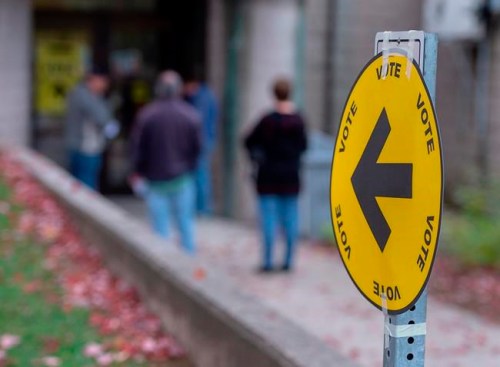
Voters head to cast their ballot in Canada's federal election at the Fairbanks Interpretation Centre in Dartmouth, N.S., on October 21, 2019. THE CANADIAN PRESS/Andrew Vaughan

“We have examples of that happening in several jurisdictions across the country.”

She said Canadians should not lose hope as the pandemic continues to disrupt their lives.

“I don’t envision a scenario where Canadians would be deprived of their right to vote,” she said. “I think every possible contingency and plan is being put into place to enable that to happen.”

The House of Commons committee on procedure and House affairs is exploring how Canadians could safely head to the polls during the COVID-19 pandemic.

Raymond said the public health agency has been engaging with Elections Canada to support its planning efforts for an election during a pandemic.

“The protection of Canadian voters, communities, as well as Elections Canada staff and volunteers are key concerns,” she said.

The public health agency provided Elections Canada with advice based on the best current scientific evidence and expert opinion to assist it in determining risks and mitigation strategies at election offices and polling stations, Raymond said.

She said the use of rapid testing for election purposes is not feasible now, but it could be an option in the future.

“Important considerations are the availability and access to rapid testing, and whether that is, in fact, the best use of a scarce resource.”

B.C. provincial health officer Dr. Bonnie Henry told the committee the recent election in that province is not responsible for a surge in COVID-19 cases, since there were no reports of anyone exposed to the novel coronavirus at an election-related event.

“With the measures that we had in place, we could safely have an election at any time during this pandemic,” she said.

She says early planning, wearing masks and practising physical distancing inside polling stations. and voting by mail and, in some cases, by telephone helped prevent any outbreaks.

“For many people, including students and people with disabilities, it was the mail-in ballots that were incredibly helpful.”

Voting by telephone was reserved for those who were not able to leave their homes, she said. “We also had telephone voting available for people who were sick with COVID.”

Henry said she and her team helped political parties in B.C. develop guidance about how to campaign safely.

“We talked about things like going door-to-door and what would that look like, and how to have smaller gatherings,” she said.

Raymond says her agency helped Elections Canada connect with provincial health authorities to ensure the federal election planning takes into account local health rules.

“There is no one-size-fits-all approach given the variability of COVID-19 epidemiology across the country,” she said.

“The recommendations that are in place in St. John’s, N.L., are quite different than those that are in place in Toronto.”

This report by The Canadian Press was first published Oct. 29, 2020.

—-

This story was produced with the financial assistance of the Facebook and Canadian Press News Fellowship.

Report Error Submit a Tip

More Stories

Shooting, stand off net nine year prison sentence

Dean Pritchard 4 minute read Preview

Shooting, stand off net nine year prison sentence

Dean Pritchard 4 minute read 2:00 AM CDT

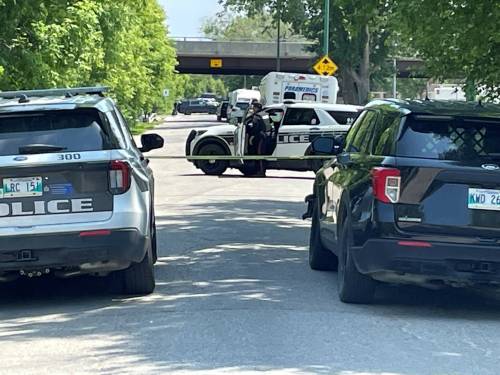
Daniel Larsen had been out of prison just five days when he shot up a Point Douglas house and sparked a 10-hour armed standoff with police that shut down a portion of the Disraeli Freeway.

Larsen, sentenced last week to nine years in prison, believed residents of the Grove Street home had sold fentanyl to his son, court heard.

“The speed with which Mr. Larsen was able to obtain a firearm, formulate a plan and become criminally involved is… horrifying from a public safety standpoint,” Crown attorney Amy Wood told provincial court Judge Malcolm McDonald.

Larsen, 37, pleaded guilty to reckless discharge of a firearm for the June 14, 2025, incident and two related weapons offences.

Read
2:00 AM CDT

Science-art collaboration injects dose of emotion into cold, hard truths

Sarah Lawrynuik 5 minute read Preview

Science-art collaboration injects dose of emotion into cold, hard truths

Sarah Lawrynuik 5 minute read Wednesday, Apr. 28, 2021

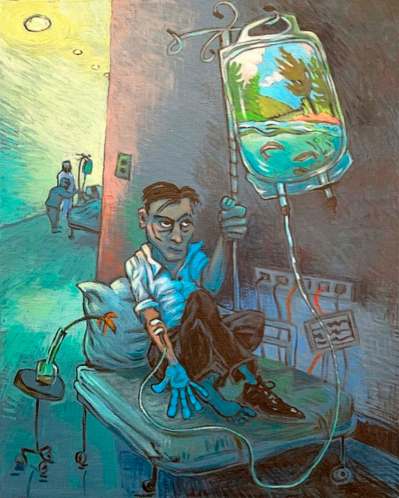
Looking at spreadsheets and map plots of trees is far beyond Rhian Brynjolson’s typical day as a visual artist, but she became entranced and inspired by data collected by Canadian scientists for a new art project.

Her hope is to try and bring the numbers, map dots and statistics to life in a new way to help the public better connect to climate science.

Falcon Lake’s Brynjolson is one of 12 Canadian artists who participated in an art-science collaboration exhibit, co-ordinated by the Global Water Futures program out of the University of Saskatchewan. The project saw the artists paired with researchers and scientists across the country who then engaged in conversations to try to inspire a new angle to their art.

“The whole idea behind it is: water is life,” says Louise Arnal, the project lead, and a post-doctoral fellow at the Centre for Hydrology and Coldwater Laboratory.

Read
Wednesday, Apr. 28, 2021

Is Canada headed for time chaos this weekend?

Michelle Bastian 5 minute read 2:00 AM CDT

When Manitoba Premier Wab Kinew declared Sept. 17 that the province would remain on permanent daylight time, he suggested it was a historical moment people would share with their “great-great-grandkids.” But, while Sunday, Nov. 1 has been heralded as the date many Canadians will stop changing their clocks, there are rumblings behind the scenes suggesting this will actually cause more trouble than ever before.

There are, of course, the warnings from chrono-biologists and sleep scientists about the damage permanent daylight time will do. The lighter evenings will mean many more dark mornings. But there is another set of problems in the offing in the critical infrastructure that underpins our digital lives.

While it used to be common to spend the Sunday morning after a time change going around our homes updating the clocks, we now wake up to devices that have already adjusted to the new time. These automatic updates occur regularly for daylight time, as well as when we travel to new time zones.

Our clocks are able to change by themselves owing to the hard work of a group of volunteers who were recently named in a list of the people who hold up the internet. This group, led by Paul Eggert, a computer scientist at UCLA, maintains a little-known tool called the Time Zone Database. Since the 1980s, it has kept track of regional, national and international debates about clock time and provided an up-to-date table of what time it should be on our walls.

Must-see Folk Fest workshops

16 minute read Preview

Must-see Folk Fest workshops

16 minute read Thursday, Jul. 5, 2018

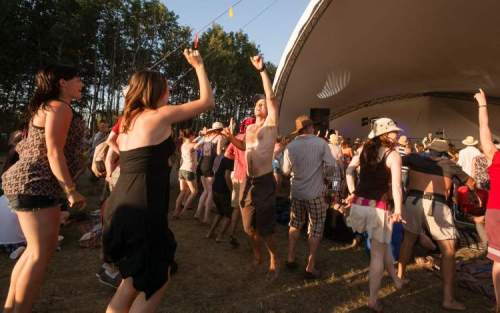
Workshops have always been an integral part of the Winnipeg Folk Festival.

They are magic-moment makers; a curated group of musicians — sometimes friends, sometimes strangers — on one stage playing together, supporting each other, creating something that will only exist for an hour or two. No one knows what will come out of the collaboration, but usually it’s something special.

When the Free Press spoke to Winnipeg Folk Festival artistic director Chris Frayer ahead of the lineup release in early March, he noted he would be paying some extra attention to workshops this year, as some of the special projects occurring during the past couple of festivals had pulled some of his attention away.

And with 37 workshops on the books, it would seem he followed through on his promise.

Read
Thursday, Jul. 5, 2018

Heg

Rylee Gerrard 5 minute read Preview

Heg

Rylee Gerrard 5 minute read 2:01 AM CDT

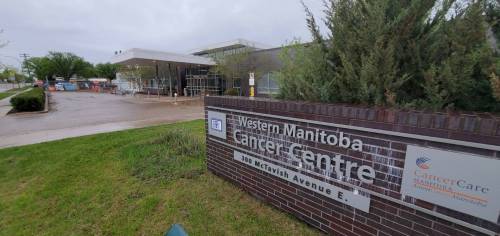
BRANDON — Western Manitoba is about to lose its only medical oncologist, leaving just 22 in the province — all of whom are in Winnipeg.

Brandon West MLA Wayne Balcaen raised the issue during question period Thursday, saying the departure of Dr. Brady Anderson will be a “major loss” for the region.

After four years working out of the Western Manitoba Cancer Centre in Brandon, Anderson’s last day will be Nov. 13.

“He literally sees hundreds of patients within the Westman area, and now those individuals will have to travel to Winnipeg to get that personal service,” Balcaen said, calling Anderson’s impending departure “catastrophic.”

Read
2:01 AM CDT

Federal election during the pandemic would be challenging but feasible: PHAC official

Maan Alhmidi, The Canadian Press 4 minute read Preview

Federal election during the pandemic would be challenging but feasible: PHAC official

Maan Alhmidi, The Canadian Press 4 minute read Friday, Oct. 30, 2020

OTTAWA - A senior official at the Public Health Agency of Canada says holding a federal election during the COVID-19 pandemic would be feasible, despite the logistical challenges that Elections Canada would face.

Dr. Barbara Raymond, an executive medical adviser at the federal public health agency, told MPs Thursday that two federal byelections in Toronto and recent provincial elections provided valuable experience that would help Elections Canada overcome challenges.

"I believe it is possible (to hold a federal election)," she said.

"We have examples of that happening in several jurisdictions across the country."

Read
Friday, Oct. 30, 2020