COVID-19 in schools inevitable, reducing class sizes unrealistic: Kenney

Advertisement

Advertise with us

COVID-19 cases disrupted the reopening of two Alberta schools on Tuesday, but Premier Jason Kenney said his government has accepted that such infections are inevitable and don't warrant closing down all classrooms.

Read this article for free:


By clicking the button above, an account will be created and you will begin to receive some of our recommended newsletters. You may opt out of any newsletter by visiting your Email and Communication Preferences page or by clicking "unsubscribe" at the bottom of any email.

or

Already have an account? Log in here »

To continue reading, please subscribe:

Digital Subscription

One year of digital access for only $1.44 a week*

  • Enjoy unlimited reading on winnipegfreepress.com
  • Read the E-Edition, our digital replica newspaper
  • Access News Break, our award-winning app
  • Play interactive puzzles

*Billed as $5.77 plus GST every four weeks. After 52 weeks, price increases to the regular rate of $19.95 plus GST every four weeks. Offer available to new and qualified returning subscribers only. Cancel any time.

To continue reading, please subscribe:

Add Free Press access to your Brandon Sun subscription for only an additional

$1 for the first 4 weeks*

  • Enjoy unlimited reading on winnipegfreepress.com
  • Read the E-Edition, our digital replica newspaper
  • Access News Break, our award-winning app
  • Play interactive puzzles
Start now

*Your next Brandon Sun subscription payment will increase by $1.00 and you will be charged $17.95 plus GST for four weeks. After four weeks, your payment will increase to $24.95 plus GST every four weeks.

Hey there, time traveller!
This article was published 01/09/2020 (2238 days ago), so information in it may no longer be current.

COVID-19 cases disrupted the reopening of two Alberta schools on Tuesday, but Premier Jason Kenney said his government has accepted that such infections are inevitable and don’t warrant closing down all classrooms.

“We’ve always said that there will be infections in the schools … that’s why we’ve put in place a number of protocols based on the scientific advice of our chief medical officer of health in consultation with superintendents and school boards,” he said.

“We believe it’s a strong plan and we’ll make future adjustments as necessary. We’re all learning through this as we go.”

Personal protection equipment is seen on the teacher's desk in classroom in preparation for the new school year at the Willingdon Elementary School in Montreal, on Wednesday, August 26, 2020. THE CANADIAN PRESS/Paul Chiasson

Meadows Ridge School in Okotoks, south of Calgary, did not open as planned after a staff member was diagnosed with COVID-19.

Principal Rebecca Forchuk and Foothills School Division Supt. Chris Fuzessy wrote in a letter Monday that the staff member was last in the school at noon on Friday and that symptoms began that evening. Officials learned of the positive test result at 6 p.m. Monday.

“While Alberta Health Services has indicated the school is safe to remain open, due to the late hour and to allow public health time to complete their contact tracing, we are delaying the start of school for some Meadow Ridge families,” they wrote.

Contact tracing was complete by 10:30 p.m., said school division spokeswoman Candace Denison.

The school said it would inform parents whose children were to start classes Tuesday of new staggered entry dates.

At another school in Okotoks, children burst out of the doors Tuesday afternoon and many immediately tore off their masks.

Dora Helli was picking up her daughter, who’s in Grade 4, and her son, who just started kindergarten, at Westmount School.

She heard about the closure at Meadow Ridge, she said, but it didn’t make her hesitate about sending her kids back to class.

“My kids were really excited. It was a long break but they were ready to come back and see their friends,” she said.

“It’s time to go back to some kind of normal.”

Canyon Meadows School in Calgary opened as planned, but the principal, assistant principal and administrative secretary were forced into a 14-day quarantine after someone at the school tested positive for the novel coronavirus.

In a letter to parents, principal Bobbie Schmidt said it’s believed exposure happened a week ago and that a retired, experienced principal would be on site while the others isolate.

Alberta chief medical officer Dr. Deena Hinshaw said Monday that she was notified over the weekend of a “small number” of schools with COVID-19 cases or exposures in staff, but she did not elaborate.

The Peace River School Division, northwest of Edmonton, posted a notice on its website saying it was delaying the start of its school year until after Labour Day to give teachers more time to get used to safety protocols, plan for at-home learning and to ensure there are enough caretakers and supplies in schools.

The Alberta government cancelled kindergarten-to-Grade-12 classes in mid-March as COVID-19 began to spread in the community.

The province had 1,398 active cases as of Tuesday with 164 new infections. Both Kenney and Hinshaw have said the risk of spread in schools has to be balanced against the significant harms of keeping kids home indefinitely.

Under Alberta’s school reopening plan, staff and students in grades 4 to 12 must cover their faces when they’re in common and shared indoor areas where physical distancing cannot be maintained, like hallways and buses.

The rules are eased for classrooms so that masks don’t get in the way of learning and communication.

Education Minister Adriana LaGrange is to announce Wednesday how $260 million in federal money for schools is to be spent.

Kenney said suggestions that the money should go toward cutting class sizes to allow for more physical distancing are unrealistic. He estimated such a proposal would cost $4 billion.

“The proposals to reduce class sizes in half are actually proposals to keep the schools shut,” he said.

“We appreciate the additional federal funding, but there is no world in which you could reduce class sizes in half and reopen the schools for the current school year … It’s simply fictitious. It has nothing to do with reality.”

Jason Schilling, president of the Alberta Teachers’ Association, said Kenney’s cost estimate is inflated, and the group is not advocating for reducing class sizes by half.

“What we would like to see are more resources and supports provided to school divisions and principals so they have more opportunities to reduce the size of our largest classes, especially at the upper grades,” he said in a statement.

“Too many teachers are already reporting class size assignments in the mid-to-high 30s.”

— With files from Bill Graveland

This report by The Canadian Press was first published Sept. 1, 2020

Report Error Submit a Tip

More Stories

New chapter for Yellowquill University College

Tory McNally 7 minute read Preview

New chapter for Yellowquill University College

Tory McNally 7 minute read Yesterday at 2:01 AM CDT

Sometimes, a milestone is about much more than a degree. It is about opportunity, recognition and the doors that open for the people who come next.

Yellowquill University College reached a historic milestone on Oct. 1, when new Manitoba legislation came into effect formally recognizing the institution within the province’s post-secondary education system and granting it authority to award degrees.

Established in 1984, Yellowquill is now Manitoba’s first fully recognized First Nations-owned and operated post-secondary institution with degree-granting authority.

It is an achievement worth celebrating, not only for Yellowquill and the communities it serves, but also for what it represents about education, career development and the future of Manitoba’s workforce.

Read
Yesterday at 2:01 AM CDT

The threat from outside Canada

Dan Lett 4 minute read Preview

The threat from outside Canada

Dan Lett 4 minute read Yesterday at 2:01 AM CDT

The 10-question referendum being held in Alberta on Monday, Oct. 19, is not the first time the unity of Canada has been threatened by a vote within one province. It is, however, the first referendum of this type to take place in an age of unfettered social media misinformation and deliberate foreign interference.

From mischievous comments by U.S. President Donald Trump about making Canada the 51st state to technology trillionaire Elon Musk’s urgings to Quebec and Alberta to separate, there are clear signs foreign interests are trying to influence Monday’s vote. But there are also less-obvious efforts at work to influence the referendum and destabilize Canada.

The Canadian Security Intelligence Service (CSIS) and independent think-tanks such as the Centre for Artificial Intelligence, Data and Conflict at the University of Regina have documented incidents involving Russian-linked automated content farms posting thousands of misleading articles about the referendum campaign on social media platforms. The content, CSIS has said, focuses on erroneous claims about the benefits of separation and the liabilities of remaining in Canada.

In the face of all that activity, Prime Minister Mark Carney has been alarmingly unconcerned. Campaigning in Alberta this week, Carney said Ottawa is closely monitoring disinformation campaigns. He added that, in his conversations with foreign governments, all have agreed to stand down from any activities that might be perceived as threats to democracy.

Read
Yesterday at 2:01 AM CDT

No shame in family’s help with young one

Maureen Scurfield 4 minute read Yesterday at 2:01 AM CDT

DEAR MISS LONELYHEARTS: My husband hates it that I didn’t want to go back to work right after having our child. I still don’t want to farm out our sweet breastfeeding baby girl to a babysitter!

I’ve been staying home to be with her, but I just found two hidden unpaid utility bills in my husband’s truck, that could get us in very big trouble. No wonder my guy doesn’t like me going into his truck alone these days.

Now I don’t know what to do. Should I talk to my parents about borrowing money from them before we get our utilities cut off? My husband says that will make him “look bad,” like he couldn’t take care of me and our child. Well, he can’t!

— Desperate Mom, St. Boniface

Team president locked out, day after speaking out on arena’s closure

Morgan Modjeski 5 minute read Preview

Team president locked out, day after speaking out on arena’s closure

Morgan Modjeski 5 minute read Friday, Oct. 16, 2026

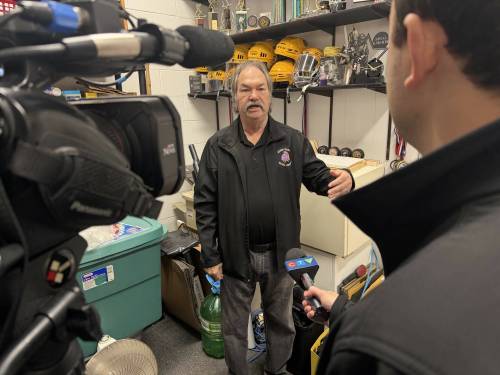
A longtime team official in Manitoba’s hockey community says he’s being punished by the City of Winnipeg for speaking out about the poor condition of one of its rinks.

Barry Bonni, president of the River East Royal Knights, has occupied an office at Terry Sawchuk Memorial Arena for more than four decades.

On Friday, he was locked out.

“They’re on the war path,” Bonni said.

Read
Friday, Oct. 16, 2026

Exiro Nickel takes ownership of Thompson Mine Complex

Gabrielle Piché 4 minute read Friday, Oct. 16, 2026

Exiro Nickel Company is officially the majority owner of nickel mining operations in Thompson.

The new firm announced its intent to buy Vale Base Metals’ mining complex in February. Ink dried on the deal Thursday evening, Exiro chief executive Shastri Ramnath said.

Leadership aims to double mining production — to two million tonnes from one million annually — over the next five years.

Such output used to be seen in Thompson, Ramnath said.

Biden chooses veteran diplomat Burns as CIA director

Matthew Lee, The Associated Press 5 minute read Preview

Biden chooses veteran diplomat Burns as CIA director

Matthew Lee, The Associated Press 5 minute read Monday, Jan. 11, 2021

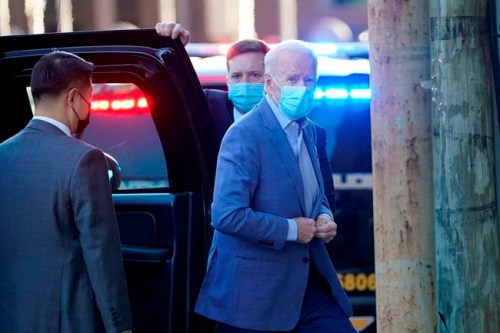
WASHINGTON - William Burns, a well-known figure in diplomatic circles around the world, is President-elect Joe Biden’s choice to lead the CIA, a selection likely to be embraced by the rank and file at the nation’s premier spy agency.

A former ambassador to Russia and Jordan, Burns, 64, had a 33-year career at the State Department under both Republican and Democratic presidents. He rose through the ranks of the diplomatic corps to become deputy secretary of state before retiring in 2014 to run the Carnegie Endowment of International Peace.

If confirmed, he would succeed Gina Haspel, the first female CIA director, who guided the agency under President Donald Trump. Trump expressed skepticism about intelligence and frequently disparaged the assessments of U.S. spy agencies, especially about Russia’s interference in the 2016 election to help his campaign.

Trump also fired several career intelligence professionals in favour of loyalists, including some with little to no experience in the field.

Read
Monday, Jan. 11, 2021