From masks to cohorting, a guide to back-to-school rules across the country
Advertisement
Read this article for free:
or
Already have an account? Log in here »
To continue reading, please subscribe:

Digital Subscription
One year of digital access for only $205*
- Enjoy unlimited reading on winnipegfreepress.com
- Read the E-Edition, our digital replica newspaper
- Access News Break, our award-winning app
- Play interactive puzzles
*First annual payment billed as $205.00 + GST for one year. This annual subscription will automatically renew at $233.00 + GST every 52 weeks (10% off the regular annual price of $259.35). Offer available to new and qualified returning subscribers only. Cancel any time.
To continue reading, please subscribe:
Add Free Press access to your Brandon Sun subscription for only an additional
$1 for the first 4 weeks*
- Enjoy unlimited reading on winnipegfreepress.com
- Read the E-Edition, our digital replica newspaper
- Access News Break, our award-winning app
- Play interactive puzzles
*Your next Brandon Sun subscription payment will increase by $1.00 and you will be charged $17.95 plus GST for four weeks. After four weeks, your payment will increase to $24.95 plus GST every four weeks.
Read unlimited articles for free today:
or
Already have an account? Log in here »
Hey there, time traveller!
This article was published 31/08/2020 (2229 days ago), so information in it may no longer be current.
Plans are being made across the country for how to safely send students back to school in the fall as the COVID-19 pandemic continues.
Here is a look at what the various provinces have said about getting kids back to classes.
—
BRITISH COLUMBIA
British Columbia has laid out its plan for studies to resume in “learning groups” this fall. School districts are to post final back-to-school details online by Aug. 26.
Back to class: Schools were initially scheduled to welcome students back full time on Sept. 8, but the province announced it is pushing back the restart date by two days to Sept. 10.
Groups: Students will be sorted into learning groups to reduce the number of people they come in contact with. For elementary and middle school students, groups will be no larger than 60 people. Secondary school groups will be capped at 120.
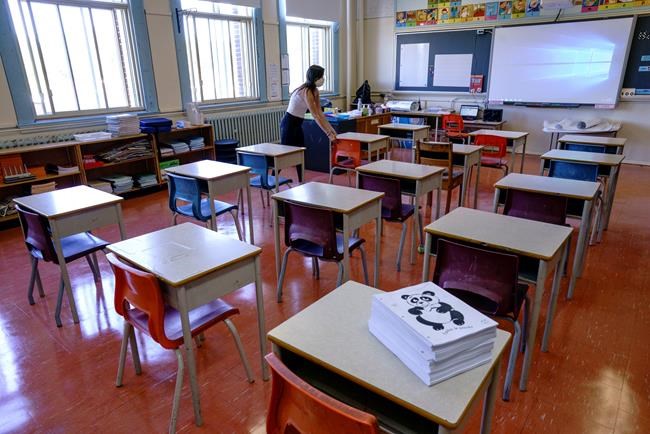
Physical distancing: Students and staff don’t need to maintain physical distancing within their learning group, but contact should be minimized. Outside the group, physical distancing is required. Students should be more spaced out in classrooms.
Masks: Students and staff will not be required to wear masks in schools, but the province says it’s a “personal choice that will always be respected.” It says provincial health officer Dr. Bonnie Henry recommends non-medical masks be worn by adults and older students when they are unable to physically distance like in hallways and on buses.
New routines: The province is urging schools to stagger recess, lunch and class transition times and take students outside whenever possible.
Transportation: Middle and high school students are asked to wear masks on buses. Students should be assigned seats, and a transparent barrier may be used to separate the driver.
—
ALBERTA
The province is planning to fully reopen schools from kindergarten to Grade 12 this fall. Measures will be tightened if an outbreak occurs and class sizes could be reduced to 20.
Back to class: School will be back in session with extra safety measures, but the province says there are programs to support remote and alternative learning.
Groups: Schools should sort students into cohorts by class when possible to minimize contact with others.
Physical distancing: Physical distancing is recommended when possible. Rooms should be rearranged to increase space between desks.
Masks: Masks will be mandatory for staff and many students in some school settings. Students in Grades 4 to 12 must wear masks in all common areas, such as hallways and on buses. Staff are required to wear masks whenever physical distancing cannot be maintained. Mask use will be optional for kids in kindergarten through Grade 3. The government says all students and staff will receive two reusable masks as part of the policy.
Transportation: Parents are asked to bring their children to school if they can. Students who take the bus will sit in the same seat every day.
New routines: Schools are advised to consider a “no sharing policy,” with each student bringing their own supplies. Class, lunch and recess schedules will be staggered.
—
SASKATCHEWAN
Saskatchewan first unveiled a set of back-to-school guidelines in June, but released more details and made some changes in August.
Back to class: Students will return to class on Sept. 8 after the province pushed the date back from as early as Sept. 1
Groups: Groups of students and staff members assigned to them should stick together throughout the day and try not to mingle with other groups. Schools should aim to minimize the number of different instructors who interact with students throughout the day.
Physical distancing: Officials say maintaining physical distance is “less practical” for younger children, and the focus should be on limiting physical contact. Officials suggest limiting hugs and hand holding and suggest using alternative greetings such as air high fives. Schools are also to have dedicated quarantine areas where symptomatic students can go before they are picked up by parents.
Masks: The province says it’s up to school boards to decide whether to make masks mandatory for students and staff. The chief medical health officer advises Grade 4 to 12 students should wear them in busy areas such as hallways and on buses.
Transportation: Parents should take their kids to school when possible, and pickup and drop-offs should happen outside. Students using school transportation should be assigned seats, and a partition may be used to separate the driver.
New routines: Start times, recess, lunch and class transitions may be staggered to allow for more space for physical distancing. Schools should rearrange their classrooms to space out students. Students and staff are asked to bring hand sanitizer. In school public health visits for routine vaccinations will include COVID-19 testing, with parental consent.
—
MANITOBA
The Manitoba government says students are going back to the classroom on Sept. 8 with new guidelines.
Back to class: All students from kindergarten to Grade 8 are to have in-class instruction five days a week. High school students will also be in class full time, however, there may be some days of remote learning.
Groups: When physical distancing isn’t possible, students will have to be organized into cohorts of no more than 75, and minimize contact with others. In these cases, there must be at least one metre between their desks.
Physical distancing: The province says students are required to maintain a two-metre distance to “the greatest extent possible.” When it isn’t possible, physical barriers may be an option. Spaces should be arranged to encourage separation.
Masks: Masks are strongly recommended for students in Grades 5 to 12. They are required when taking the bus.
Transportation: Masks are required for students Grade 5 and up, as well as drivers, on buses. Parents are encouraged to transport their children to school if they can.
New routines: Lunch and recess are to be staggered to minimize congestion, and in many cases teachers will change classrooms instead of students.
—
ONTARIO
Ontario students will be back in class September, but their schedules and class sizes may vary depending on where they live.
Back to class: Elementary students and many high schoolers will be in school five days a week in standard class sizes. However, secondary students at two dozen boards that are higher risk will only attend class half the time, and will spend the rest of the week working on “curriculum-linked independent work.” Parents will also have the option to keep their kids out of class, and boards must provide options for remote learning.
Groups: For high schoolers in high-risk districts, class sizes will be capped at 15. Meanwhile, elementary students won’t be broken up into smaller groups, but will be grouped into cohorts and their exposure to different teachers will be limited.
Physical distancing: While Education Minister Stephen Lecce said the aim is to keep students one metre apart from each other, a guidance document says only that schools should promote “as much distancing as possible” rather than being strictly enforced.
Masks: Masks will be mandatory for students in Grades 4 through 12, and will be strongly encouraged for younger kids when they’re in indoor common areas. Staff will be expected to wear masks.
Transportation: Some school boards may have more than one student assigned to a seat. When physical distancing isn’t possible, masks will be mandatory for students in Grades 4 to 12, and younger students will be encouraged but not required to do the same.
New routines: Students in some districts will have to pre-register for in-person schooling. Some schools may limit or even ban visitors, including parents. Breaks will be scheduled to allow students to wash their hands.
—
QUEBEC
All elementary and high school students in Quebec will be required to attend class in September unless they have a doctor’s note indicating they’re at high risk of COVID-19 complications or they live with someone at risk. Those students will be allowed to study remotely.
Back to class: Class attendance is mandatory for elementary and high school students. For Grades 10 and 11, schools have the option of alternating schedules where students attend one day out of every two — as long as schools cannot maintain stable classroom bubbles. Grade 10 and 11 students are encouraged to attend classes as much as possible.
Groups: Each classroom will be its own bubble and students will not be required to maintain a two-metre distance between classmates.
Physical distancing: Students will need to keep a two-metre distance from all school staff, as well as all other students outside their classroom bubble. There are no physical distancing requirements for children or teachers in pre-school.
Masks: All students in Grade 5 and up — as well as all school staff — must wear a mask inside all common areas of the school except the classroom. Masks can also be removed when students are eating.
Transportation: No more than 48 students will be allowed on a school bus, with no more than two students sitting on the same bench. Preschool and elementary school students are strongly encouraged to wear masks, while older students are required to wear them.
New routines: When schools return in the fall, teachers will move from classroom to classroom, but students will stay put.
Backup plans: In the event of an outbreak in one class, the entire classroom bubble will be sent home to continue studies remotely. Authorities are also putting together an emergency protocol in the event of a second wave to ensure instruction continues online if entire schools are again forced to close. Ideas include quickly distributing tablets or laptops to students needing them and establishing a digital platform to continue courses and maintain communication.
—
NEW BRUNSWICK
The province has outlined a set of requirements schools must follow in developing their plans for the fall.
Back to class: Students in kindergarten to Grade 8 are to attend school full time, while those in Grades 9 to 12 are to be taught using a combination of in-class and remote instruction. At-home course work can include online learning, guided projects and experiential education.
Groups: For kindergarten through Grade 2, group sizes will be reduced to about 15, wherever possible. Group sizes should also be shrunk for Grades 3 to 5. Grades 6 to 8 will resume at regular class sizes. Students in Grades 9 to 12 will not be grouped because of their schedules and course options.
Physical distance: Grade 9 to 12 classrooms are required to maintain a one-metre distance, while a two-metre distance is recommended in common areas at all grade levels.
Masks: All students will be required to bring a mask to school, but masks will not be mandatory inside the classroom. Students in Grade 6-12 must wear masks on the school bus and in common areas of school buildings, while children in kindergarten to Grade 5 are encouraged to do so. Teachers for kindergarten to Grade 8 can choose whether they want to wear a mask or shield in the classroom while teachers for Grades 9-12 will be required to wear one when they cannot physically distance from students.
Transportation: Curtains will be installed inside school buses to separate drivers from students. If physical distancing is not possible, drivers will be required to wear a mask or face shield. Students must sit in the same seat every day. Students in kindergarten to Grade 5 will sit alone or with a member of their household. Students in Grades 6-12 wearing masks will sit two to a seat, and if they are sitting alone or with a member of their household, they do not have to wear a mask.
New routines: Arrivals, breaks and lunches are to be staggered. Public access to school buildings will be limited, and students, staff and visitors may also be subject to screening. High school students will be expected to have their own laptop or similar device, and some subsidies will be available. Drinking fountains will be replaced with water bottle-filling stations.
—
PRINCE EDWARD ISLAND
Schools on the Island are preparing to welcome all students back to class, while drafting backup plans for remote studies if required.
Back to class: Schools are to reopen for teachers and staff on Sept. 1 and for students on Sept. 8.
Groups: Students will be organized into cohorts when possible and limit their exposure to others.
Physical distancing: Students will be taught about the importance of physical distancing, and extra teaching and cleaning staff may be hired. Schools are also asked to reduce class sizes as much as possible, reconfigure classrooms and make use of spaces such as libraries and multipurpose rooms.
Masks: The province says all staff and students in Grades 7-12 are “strongly recommended” to wear masks when physical distancing cannot be maintained. Students from kindergarten through Grade 6 may wear masks when physical distancing is impossible. Staff interacting with children who have complex medical needs are strongly recommended to wear face shields and gloves.
Transportation: Parents are asked to take their kids to school whenever possible. To reduce the number of riders on buses, schools may add vehicles and routes or implement walk-to-school programs. It is strongly recommended that all students and drivers wear masks on the bus.
New routines: P.E.I. education authorities are revising curricula for this school year to make up for learning gaps caused by lockdown constraints. Schools will stagger schedules to minimize congestion. The provincial school food program will be expanded next year in keeping with public health precautions. Elementary school students will stay in their classrooms for lunch.
—
NOVA SCOTIA
Education Minister Zach Churchill says the province’s objective is for schools to return to 100 per cent capacity in the fall, but its plan includes measures to address the possible onset of a second wave of COVID-19.
Back to class: The province aims to have all elementary and high school students in classrooms by Sept. 8.
Groups: Students will be asked to keep to cohorts.
Physical distancing: Students and staff will be encouraged to maintain a two-metre distance whenever possible. Lecture rooms will be reorganized to increase space between desks.
Masks: Masks are not required in classrooms, but students and staff may choose to wear them. While it’s recommended that they bring their own, masks will be provided to those who don’t have one. Staff and students in Grades 10 to 12 must wear masks when physical distancing is difficult.
Transportation: Students who take the school bus will be required to wear non-medical masks.
New routines: Only students and staff will be permitted to enter school buildings. When possible, teachers will be asked to move their classes outdoors. Students will be asked to bring their own computers to school, and the province says it has acquired an additional 14,000 devices for those with limited access to technology.
Backup plans: If a COVID-19 outbreak occurs during the academic year, schools will move to a blended learning model with smaller class sizes and home learning for older students.
—
NEWFOUNDLAND AND LABRADOR
The province’s back-to-school plan aims to maximize in-class attendance with the option of a return to remote learning if the COVID-19 risk increases.
Back to class: The province’s plan outlines three scenarios — in-class instruction, remote learning or a combination of both, depending on the COVID-19 risk in a particular community.
Groups: Cohorting by class is recommended when it’s feasible, but students’ schedules shouldn’t be disrupted to support smaller groupings.
Physical distancing: Schools should aim to create a two-metre distance between desks, or as much distance as possible. However, provincial authorities say these precautions should not interfere with the daily school routine, and strict physical distancing should not be “over-emphasized” to children, because it is not practical and can cause psychological harm.
Masks: The province does not recommend masks for children, but says their use should not be “stigmatized” for those that choose to wear them. Staff will not be required to wear masks if physical distancing is possible.
Transportation: It will be up to school districts to determine their transportation operations, considering precautions such as assigning seats and separating the driver with a physical divider.
New routines: All students must bring their own supplies in keeping with a “no sharing” policy. Parents will be allowed to accompany kindergarteners for their first day. It says suggestions will be provided to school administrators to accommodate parents.
Backup plans: In the event of moderate-to-widespread transmission of COVID-19, school districts will move to online learning. Classroom attendance should be limited to about 50 per cent when the COVID-19 risk in a community is considered low to moderate. Newfoundland and Labrador says it will spend $20 million to purchase laptops for teachers and students in Grades 7 through 12 to support remote learning.
—
YUKON
The territorial government says it’s making plans for the next school year that include flexibility around the number of students in classes if there’s a second wave of COVID-19 or increased risk of transmission. It says each school will determine how it will adjust its operations to meet those guidelines, and school principals and staff are expected to share that information prior to September.
Back to class: Preliminary plans indicate that in rural communities, all students will return to school full time. In Whitehorse, however, kids in kindergarten through Grade 9 will return to full-day in-school instruction, while Grades 10 to 12 will spend half their day in the classroom, and the rest learning remotely.
Groups: Class sizes may be smaller to meet safety restrictions.
Masks: Wearing masks is a personal choice.
Transportation: Bus school and schedules will be posted to the territory’s website.
New routines: Schedule shakeups may mean that some students won’t have their regular teacher or the same classmates. School meal programs may be adapted with new safety measures and pickup options.
Backup plans: The territory has outlined a spectrum of school options if the risk to the community increases, ranging from rotating schedules to suspension of face-to-face learning.
—
NORTHWEST TERRITORIES
All N.W.T. schools have submitted plans to reopen their doors this fall. The territory says education authorities are taking a flexible approach in their planning to account for a potential second wave of COVID-19 in the fall.
Back to class: While plans will vary from school to school, the territory will offer in-person instruction whenever possible, while ensuring alternative options are available.
Groups: Students in kindergarten through Grade 6 will be in classroom “bubbles,” and won’t have to practise physical distancing within these groups.
Physical distancing: For Grades 7 to 9, students are asked to maintain a one-metre distance from each other, and two-metre distance from staff. Grade 10 to 12 students are asked to allow for two metres of distance from their peers and instructors.
Masks: Students of all ages may be required to wear masks in situations where physical distance cannot be practised, such as moving through the hallways.
Transportation: There may be changes to bus schedules, and all riders will be required to wear masks.
New routines: More time will be spent learning outside. School hours and schedules may also look different. Students are asked to label personal items and not share.
Backup plans: The territory says schools are preparing to shift between in-person, distance and blended learning at short notice should there become active COVID-19 cases.
—
NUNAVUT
The territory has released a four-stage plan for reopening schools based on the risk of the novel coronavirus in a community.
Back to class: There are no reported COVID-19 cases in Nunavut, so all schools are set to reopen this fall with enhanced cleaning and safety precautions.
Groups: It is recommended that schools cohort students by class and limit mixing as much as possible.
Physical distancing: Distance requirements will depend on what stage a community is in, and will primarily be achieved by limiting school attendance.

Masks: In most cases, the use of masks is not recommended for children. If there are exceptions, parents will be notified, and masks will be provided.
Transportation: As it stands, bus schedules are set to resume. Students older than 13 may be required to wear masks.
New routines: Group activities will be limited. Students won’t be allowed to share food in lunchrooms.
Backup plans: The territory says schools could go part-time if contact tracing were to identify a possible source of COVID-19. All schools would be closed if community transmission were to take place.
This report was first published by The Canadian Press on Aug. 31, 2020.
Related Articles
Canada contracts for up to four COVID-19 vaccines
Advertisement Advertise With Us
Advertisement Advertise With Us