Ontario government reveals back-to-school plan

Advertisement

Advertise with us

TORONTO - Most of Ontario's students will return to traditional classrooms full time in September, the province announced Thursday as it released a back-to-school plan critics argue prioritizes cost-savings over kids' health.

Read this article for free:


By clicking the button above, an account will be created and you will begin to receive some of our recommended newsletters. You may opt out of any newsletter by visiting your Email and Communication Preferences page or by clicking "unsubscribe" at the bottom of any email.

or

Already have an account? Log in here »

To continue reading, please subscribe:

Digital Subscription

One year of digital access for only $1.44 a week*

  • Enjoy unlimited reading on winnipegfreepress.com
  • Read the E-Edition, our digital replica newspaper
  • Access News Break, our award-winning app
  • Play interactive puzzles

*Billed as $5.77 plus GST every four weeks. After 52 weeks, price increases to the regular rate of $19.95 plus GST every four weeks. Offer available to new and qualified returning subscribers only. Cancel any time.

To continue reading, please subscribe:

Add Free Press access to your Brandon Sun subscription for only an additional

$1 for the first 4 weeks*

  • Enjoy unlimited reading on winnipegfreepress.com
  • Read the E-Edition, our digital replica newspaper
  • Access News Break, our award-winning app
  • Play interactive puzzles
Start now

*Your next Brandon Sun subscription payment will increase by $1.00 and you will be charged $17.95 plus GST for four weeks. After four weeks, your payment will increase to $24.95 plus GST every four weeks.

Hey there, time traveller!
This article was published 30/07/2020 (2284 days ago), so information in it may no longer be current.

TORONTO – Most of Ontario’s students will return to traditional classrooms full time in September, the province announced Thursday as it released a back-to-school plan critics argue prioritizes cost-savings over kids’ health.

Elementary students and many high schoolers will be in school five days a week in standard class sizes, while secondary students at two dozen boards that are higher risk will only attend class half the time in an effort to curb the spread of COVID-19.

Those high schoolers will have a maximum class size of 15, and will receive “curriculum-linked independent work” on days when they are not in school.

Ontario Premier Doug Ford takes a question from the media during an announcement in Ajax, Ont., on Tuesday, July 28, 2020. THE CANADIAN PRESS/Chris Young

“We’re taking every step and every precaution to be ready for September,” Premier Doug Ford said. “While we’re facing an unprecedented situation, we’re prepared for anything, armed with the best medical advice available to protect your child at school.”

Opposition parties staunchly disagreed with that characterization.

Marit Stiles, education critic for the Opposition NDP, said the Tories were cutting corners in order to save money and argued that failing to reduce cohort-size for elementary students was a dangerous oversight.

“Many, many classrooms are packed to the rafters,” she said. “We hear stories all the time about teachers not being able to fit enough desks into the classroom to manage the existing cohort, so how can we possibly expect students to be at a distance and to remain at that distance?”

Liberal Leader Steven Del Duca agreed, pointing to a SickKids report released Wednesday, which recommended that the province prioritize smaller class sizes.

It also recommended that elementary-aged kids be kept one metre apart from each other, and high schoolers be kept two metres apart.

While Education Minister Stephen Lecce said the aim is to keep students one metre apart from each other, a guidance document says only that schools should promote “as much distancing as possible.”

Instead of strictly enforcing physical distancing, the document says schools will be leaning more heavily on other public health measures, including keeping students separated into designated groups — or “cohorts” — and encouraging hand hygiene.

The plan gives parents the option to keep their kids out of class, and says boards must make it possible for students to learn remotely.

It says students in grades 4 through 12 must wear masks in class, while younger kids are encouraged to do so in indoor common areas.

Lecce said that’s because the latest science suggests older kids are more likely to spread the virus than their younger counterparts.

That’s also why some boards can only have high schoolers in class part time, he said.

The goal is also to keep everyone out of school when they’re sick, Lecce said.

“We will also be supporting public health efforts by continuing to promote our screening protocols so that students and staff do not show up to school if they have any symptoms of COVID-19, even if they are mild,” he said.

Should a student or staff member develop symptoms while in school, they are to be immediately separated from others until they can get home — and not on student or public transit.

Ontario Premier Doug Ford makes an announcement regarding the governments plan for a safe reopening of schools in the fall due to the COVID-19 pandemic at Father Leo J Austin Catholic Secondary School in Whitby, Ont., on Thursday, July 30, 2020. THE CANADIAN PRESS/Nathan Denette

Anyone with symptoms is to be tested. If they test positive, they can only return to class once they’re given the go-ahead by public health officials, the document says. Those who test negative after an initial positive test can only return once they’ve been symptom-free for 24 hours.

Lecce added that teachers who are immunocompromised or feel unsafe returning to class for other reasons can focus their efforts on teaching students who are opting for remote learning.

The government also announced $309 million in funding to make the plan work, including $60 million for personal protective equipment and $80 million for extra staffing.

In a joint statement, the province’s four major teachers’ unions said that simply isn’t enough money to ensure a safe return to class for staff and students.

“The premier promised Ontarians he ‘will spare no expense’ to keep people safe, yet he and … Lecce are betraying that promise to students, educators, parents and communities with this ill-prepared plan,” said Sam Hammond, president of the Elementary Teachers’ Federation of Ontario.

The highly anticipated announcement came just six weeks before back-to-school season and a week before the province’s 72 school boards were initially asked to submit their plans for the academic year.

The government further announced Thursday that day-care centres across the province will be allowed to return to their full capacity on September 1, in time for back-to-school.

The announcements came as Ontario logged fewer than 100 new cases of COVID-19 for a second day in a row, with 89 new cases reported on Thursday.

Health Minister Christine Elliott said 28 of the province’s 34 public health units are reporting five or fewer cases, with 17 reporting no new ones.

She said the number of people in hospital, in intensive care and on a ventilator all went down, and the province was able to complete more than 27,600 tests the previous day.

This report by The Canadian Press was first published July 30, 2020.

Report Error Submit a Tip

More Stories

Err on the side of lung health

Mitch Calvert 6 minute read Saturday, Aug. 16, 2025

This summer, Manitobans aren’t just sweating under the August sun — we’re coughing, wheezing and blinking through a haze so thick you could mistake Portage Avenue for a foggy morning in San Francisco.

Recent air-quality readings put Winnipeg at the worst in Canada, with PM2.5 levels soaring well past the “very unhealthy” threshold. Health experts aren’t mincing words: prolonged exposure to this kind of pollution can increase risks of heart attacks, worsen asthma and even impact brain function and mental health. It’s not just your lungs feeling the burn, it’s your energy, recovery and overall resilience.

And while the headlines are everywhere, the lesson isn’t: you can’t out-train bad air. The basics of health — movement, nutrition, recovery — don’t change, but how you approach them needs to adjust when the environment throws you a curveball.

Here’s how to stay fit despite the forest-fire smoke.

Trump touts USMCA win in state of the union

James McCarten, The Canadian Press 6 minute read Preview

Trump touts USMCA win in state of the union

James McCarten, The Canadian Press 6 minute read Tuesday, Feb. 4, 2020

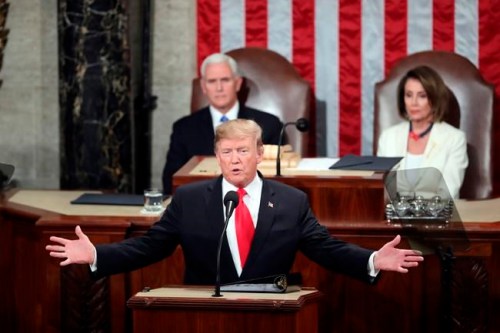
WASHINGTON - President Donald Trump declared his scorched-earth political style an unmitigated success Tuesday in a fiercely partisan, made-for-TV state of the union speech that made it clear he expects to be back in the White House next year on the strength of the U.S. economy and his trade deals with Canada, Mexico and China.

Trump, addressing a joint session of Congress in the very chamber where House Democrats voted to impeach him less than two months ago, became only the second president in American history — Bill Clinton was the first — to deliver a state of the union while standing trial in the Senate.

Unrepentant, he pointedly refused to shake the offered hand of House Speaker Nancy Pelosi on the dais before singing the praises of what he billed as "the great American comeback," pointing to strong job growth, a soaring stock market and low unemployment as evidence of his leadership. And when he was done, Pelosi ripped up the speech in full view of the television cameras.

"America's enemies are on the run, America's fortunes are on the rise, and America's future is blazing bright. The years of economic decay are over," Trump declared, taking full credit for the country's "roaring economy," including what he billed as seven million new jobs and the lowest jobless rate in half a century — a "blue-collar boom" that he's counting on to help his re-election chances in November.

Read
Tuesday, Feb. 4, 2020

Actor-director Cooper takes new approach to familiar tale

Randall King 4 minute read Preview

Actor-director Cooper takes new approach to familiar tale

Randall King 4 minute read Thursday, Oct. 4, 2018

TORONTO — In his self-directed version of A Star Is Born, Bradley Cooper plays a rock star named Jackson Maine.

Note the name: it marks the character as a member of a cinematic lineage that descends all the way to 1937.

That year, the first A Star Is Born was made, with Frederick March in the role of alcoholic actor Norman Maine. The name stayed in 1954, when James Mason took over the role of an actor who first nurtures the career of Judy Garland’s up-and-coming star Vicki Lester before his drunken shenanigans threaten to derail it. By 1976, Kris Kristofferson played the role of musician John Norman Howard, a rock singer with a musical stake in the ascent of Barbra Streisand’s Esther Hoffman.

Cooper, 43, remembered the Maine name, but also brought his own vision as a first-time feature filmmaker to the new version, which opens Thursday, Oct. 4, opposite Lady Gaga after the originally designated director, Clint Eastwood, dropped out. While actors might not want to see different interpretations of a role, Cooper embraced the opportunity to see all the past iterations.

Read
Thursday, Oct. 4, 2018

Fact Check

1 minute read Thursday, Nov. 30, 2023

Fact Check

Having problems with the form?Contact Us Directly |

Opera singer David Daniels no longer in singers’ union following sexual assault guilty plea

The Associated Press 2 minute read Preview

Opera singer David Daniels no longer in singers’ union following sexual assault guilty plea

The Associated Press 2 minute read Thursday, Dec. 21, 2023

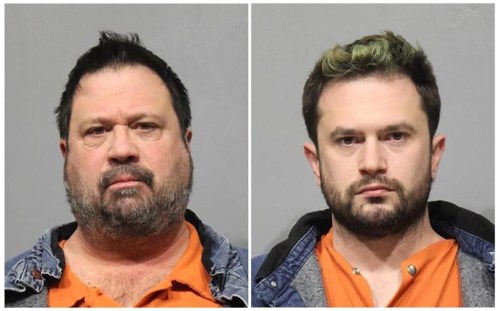
NEW YORK (AP) — Countertenor David Daniels is no longer a member of the union for singers following his guilty plea to a charge of sexual assault.

The 57-year-old and his husband, Scott Walters, pleaded guilty to sexual assault of an adult, a second-degree felony, in Houston's Harris County District Court on Aug. 4. Their accuser was aspiring opera singer Sam Schultz.

They both were sentenced to eight years’ probation and required to register as sex offenders.

American Guild of Musical Artists spokesperson Alicia Cook said Wednesday that Daniels is no longer a member of the union.

Read
Thursday, Dec. 21, 2023

Just say no (to deficits during good economic times)

Tom Brodbeck 5 minute read Preview

Just say no (to deficits during good economic times)

Tom Brodbeck 5 minute read Wednesday, Oct. 2, 2019

When a political party pledges to run small, “manageable” deficits if elected, it almost always means it will go deeper into the red if it wins government.

It’s human nature.

After all, as a government, if you get the blessing of the public to spend beyond your means, what’s a few billion more a year in overspending?

The problem is, it doesn’t usually end there. When those same politicians seek re-election, they often want permission to post even larger deficits. In some cases, they’ve abandoned the idea of balancing the books altogether, arguing perpetual deficit financing is acceptable, as long as the debt doesn’t exceed a certain percentage of the economy.

Read
Wednesday, Oct. 2, 2019