New Canadian modelling shows COVID-19 waning but relaxing restrictions still risky

Advertisement

Advertise with us

OTTAWA - Canada's top doctor says the country has been successful at slowing the spread of COVID-19 but warns that relaxing public health restrictions too quickly or too soon could lead to a rampant resurgence of the disease.

Read this article for free:


By clicking the button above, an account will be created and you will begin to receive some of our recommended newsletters. You may opt out of any newsletter by visiting your Email and Communication Preferences page or by clicking "unsubscribe" at the bottom of any email.

or

Already have an account? Log in here »

To continue reading, please subscribe:

Digital Subscription

One year of digital access for only $1.44 a week*

  • Enjoy unlimited reading on winnipegfreepress.com
  • Read the E-Edition, our digital replica newspaper
  • Access News Break, our award-winning app
  • Play interactive puzzles

*Billed as $5.77 plus GST every four weeks. After 52 weeks, price increases to the regular rate of $19.95 plus GST every four weeks. Offer available to new and qualified returning subscribers only. Cancel any time.

To continue reading, please subscribe:

Add Free Press access to your Brandon Sun subscription for only an additional

$1 for the first 4 weeks*

  • Enjoy unlimited reading on winnipegfreepress.com
  • Read the E-Edition, our digital replica newspaper
  • Access News Break, our award-winning app
  • Play interactive puzzles
Start now

*Your next Brandon Sun subscription payment will increase by $1.00 and you will be charged $17.95 plus GST for four weeks. After four weeks, your payment will increase to $24.95 plus GST every four weeks.

Hey there, time traveller!
This article was published 04/06/2020 (2341 days ago), so information in it may no longer be current.

OTTAWA – Canada’s top doctor says the country has been successful at slowing the spread of COVID-19 but warns that relaxing public health restrictions too quickly or too soon could lead to a rampant resurgence of the disease.

Dr. Theresa Tam presented a new report on the novel coronavirus in Canada Thursday, including new short-term projections that say between 157 and 1,857 more Canadians could die of COVID-19 in the next 11 days.

The projections, based on recent trends, estimate in the best-case scenario at least another 4,459 people will be diagnosed with COVID-19 by June 15, and in the worst-case scenario there will be more than 14,000 new cases by then. What happens depends almost entirely on how well Canadians practise proper public health behaviours, and how good health systems are at testing, contact tracing and isolating positive cases.

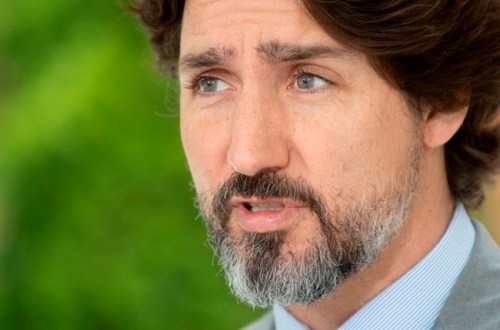
Prime Minister Justin Trudeau speaks during a news conference outside Rideau cottage in Ottawa, Thursday June 4, 2020. THE CANADIAN PRESS/Adrian Wyld

“Without a vaccine or treatment, public health measures remain essential to control the epidemic,” said Tam.

Canada has been averaging just under 800 new cases a day for the last week, down from an average of 1,050 new cases the week before that.

Tam said most of the country has seen spread of the disease diminish substantially but there remain hot spots of community transmission in Toronto and Montreal that are concerning. In the last two weeks, Ontario and Quebec accounted for 90 per cent of new cases, and most of those were in those two cities.

Tam said the efforts Canada has made, including physical distancing and closures of businesses and public spaces, have allowed us to flatten the curve, but we can’t get cocky and think the worst is over so we can get back to normal now.

“Resurgence can actually occur at any time over the course of the outbreak depending on what we’re doing on the ground,” she said. “We mustn’t forget that.”

As of Thursday, Tam said, Canada has had 93,441 positive cases and 7,543 deaths. She said about 16 per cent of patients required hospitalization and three per cent needed to be admitted to intensive care.

The eight per cent death rate reflects the number of outbreaks in long-term-care homes — more than 80 per cent of patients who died are connected to long term care homes or seniors’ residences. But Tam said the rate must be viewed knowing the overall number of people who have had COVID-19 is not yet known, because lab-confirmed cases are “just the tip of the iceberg.”

Plans to test Canadians for antibodies to detect whether they have had the novel coronavirus will give a better sense of the true number of cases, Tam said.

The modelling also shows Canada has successfully reduced the reproductive rate — the number of additional people infected by a single person with COVID-19. This virus is highly infectious and in some parts of the world the rate was as high as five, meaning every person getting COVID-19 was passing it on to five more people.

In Canada, the rate peaked at just more than two, but the numbers show that began to decline sharply in the last week of March when the country went into strict lockdown in almost every province. Tam said the rate needs to be consistently below one for more than three weeks to be sure public health measures are working.

It has been below one most of the time since the beginning of May but the hotspots of community transmission in Toronto and Montreal are exceptions, said Tam.

Overall, the report says, with a high degree of physical distancing and case testing and tracing, Canadians can expect that the number of new cases will stay very low, including no real second wave in the fall.

With weaker controls, a surge of cases could see half of Canadians infected, with a rising number of cases throughout the summer and into next winter.

With no controls at all, as many as 80 per cent of Canadians will get infected by the end of the summer.

“It doesn’t take very long for an outbreak to really gain some steam,” said Health Minister Patty Hajdu.

Prime Minister Justin Trudeau said earlier Wednesday he is encouraged by the overall trends in Canada but warned the country is not out of the woods.

Clusters of cases of COVID-19 have disproportionately affected institutional settings including long-term care homes, hospitals, prisons and meat plants. Canada’s largest single outbreak is linked to the Cargill meat-processing plant in Alberta, with 1,560 cases including workers, their family members and others in their communities.

This report by The Canadian Press was first published June 4, 2020.

Report Error Submit a Tip

More Stories

Second COVID-19 wave can be avoided: new models

Mia Rabson, The Canadian Press 5 minute read Preview

Second COVID-19 wave can be avoided: new models

Mia Rabson, The Canadian Press 5 minute read Thursday, Jun. 4, 2020

OTTAWA - Canada's top doctor says the country has been successful at slowing the spread of COVID-19 but warns that relaxing public health restrictions too quickly or too soon could lead to a rampant resurgence of the disease.

Dr. Theresa Tam presented a new report on the novel coronavirus in Canada Thursday, including new short-term projections that say between 157 and 1,857 more Canadians could die of COVID-19 in the next 11 days.

The projections, based on recent trends, estimate in the best-case scenario at least another 4,459 people will be diagnosed with COVID-19 by June 15, and in the worst-case scenario there will be more than 14,000 new cases by then. What happens depends almost entirely on how well Canadians practise proper public health behaviours, and how good health systems are at testing, contact tracing and isolating positive cases.

"Without a vaccine or treatment, public health measures remain essential to control the epidemic," said Tam.

Read
Thursday, Jun. 4, 2020

RRC Polytech program cuts take bite out of hospitality, tourism sector

Maggie Macintosh 4 minute read Preview

RRC Polytech program cuts take bite out of hospitality, tourism sector

Maggie Macintosh 4 minute read Saturday, May. 2, 2026

Manitoba’s tourism industry is bracing for the disappearance of hospitality training programs — once-popular courses among international students.

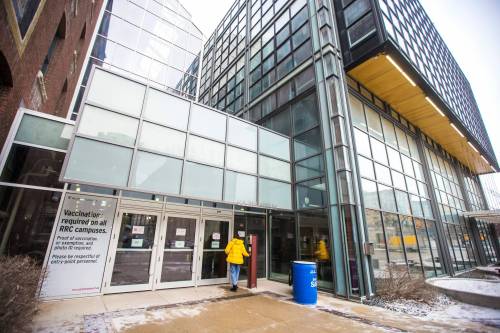
Citing budgetary challenges related to a shift in federal immigration policy, Red River College Polytechnic is scrapping 11 programs and scaling back three others in 2026-27. Its hospitality business management diploma is one of seven permanent casualties.

The announcement, while unsurprising, is but the latest blow to a sector trying to “build back the workforce” in the wake of the COVID-19 pandemic, said Michael Juce, president of the Manitoba Hotel Association.

“Are people going to go outside of Manitoba for training? And if they leave, are they going to come back?” Juce said, adding that rural hotels in particular are already grappling with staffing shortages.

Read
Saturday, May. 2, 2026

Province’s first female dentist took skill, insight wherever needed

David Sanderson    25 minute read Preview

Province’s first female dentist took skill, insight wherever needed

David Sanderson    25 minute read Saturday, Apr. 3, 2021

Some stories take longer to get around to than others.

In the fall of 2011 I hooked up with Fiona Odlum at an Academy Road Starbucks for a lighthearted feature about people who report on traffic for a living. Odlum, currently a contributor at CBC Saskatchewan, was working for 680 CJOB at the time, clueing rush-hour commuters in on stalls, lane closures and fender-benders they’d be wise to avoid.

Odlum turned the tables at one point by asking a few questions of her own including, “So, what’s your main beat?”

I don’t really have one, I told her, but if pressed, I would probably go with human-interest pieces.

Read
Saturday, Apr. 3, 2021

The new normal in Canadian politics

David McLaughlin 5 minute read Preview

The new normal in Canadian politics

David McLaughlin 5 minute read Yesterday at 2:01 AM CDT

“Nothing happening, all at once.”

Welcome to the new normal of Canadian politics, where normality is the new normal. Routine and stable are in; disruptive and excessive are out. Exhibits A and B are the Alberta referendum and the British Columbia election. Voters opted for stability over volatility.

The opposite of being normal is being different from the norm. In politics that means different from where we’ve been and what we’ve come to expect. Two competing trends have dominated our politics for the past decade and a half — progressivism and populism. Think Justin Trudeau and liberal, progressive identity politics in Canada, and Donald Trump and conservative, populist MAGA politics in America. We are now experiencing a swing away from both those trends.

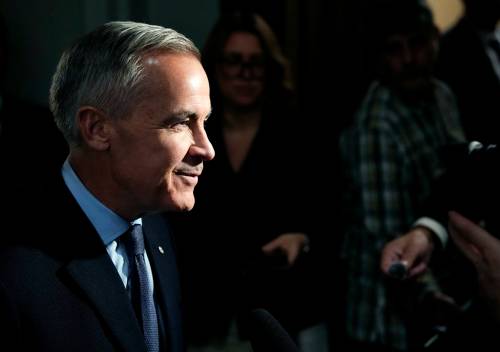
Representing this “new normal” are Prime Minister Mark Carney, for one, and newly elected British Columbia premier, Lorne Doerksen, for another. Both are considered normal because they talk and act like adults in a childish political world. Their political flair is to not have any political flair. They stand out for not standing out.

Read
Yesterday at 2:01 AM CDT

A little toponder, a lot to celebrate

Erna Buffie 5 minute read Yesterday at 2:01 AM CDT

Well, another civic election season has come and gone, and I have to say it was a doozy. The most surprising event was the steady climb in support for young mayoral candidate Noah Redden, who started out with just four per cent public support in September but had reached a solid 14 per cent support in October.

On election day, Redden nearly came in second, less than one percentage point behind Kevin Klein, an experienced politician.

Indeed, the 27-year-old’s accomplishment was nothing short of astonishing. Particularly given that his shoestring campaign was given very little coverage — largely, according to one pundit, because he didn’t send out any press releases.

This when Redden’s unwritten press releases were there for everyone to see on Instagram, as he popped up in locations across the city, posting videos about what he hoped to achieve as mayor.

B.C. declares state of emergency over wildfires

Amy Smart, The Canadian Press 5 minute read Preview

B.C. declares state of emergency over wildfires

Amy Smart, The Canadian Press 5 minute read Wednesday, Jul. 21, 2021

VANCOUVER - British Columbia's public safety minister has declared a provincial state of emergency over the growing wildfire threat to prepare for potential mass evacuations and help secure accommodation that might be needed by evacuees.

Mike Farnworth said he made the decision based on information from officials that weather conditions will lead to more severe fire behaviour and the potential for more evacuations.

"In a briefing last night, I received word that we'll be facing a few days of very difficult weather in the Interior," Farnworth said in a statement.

The state of emergency goes into effect on Wednesday and gives government agencies, the fire commissioner and the RCMP the authority to take whatever action they deem is necessary to fight the wildfires and protect people and communities.

Read
Wednesday, Jul. 21, 2021