New Canadian modelling shows COVID-19 waning but relaxing restrictions still risky

Advertisement

Advertise with us

OTTAWA - Canada's top doctor says the country has been successful at slowing the spread of COVID-19 but warns that relaxing public health restrictions too quickly or too soon could lead to a rampant resurgence of the disease.

Read this article for free:


By clicking the button above, an account will be created and you will begin to receive some of our recommended newsletters. You may opt out of any newsletter by visiting your Email and Communication Preferences page or by clicking "unsubscribe" at the bottom of any email.

or

Already have an account? Log in here »

To continue reading, please subscribe:

Digital Subscription

One year of digital access for only $1.44 a week*

  • Enjoy unlimited reading on winnipegfreepress.com
  • Read the E-Edition, our digital replica newspaper
  • Access News Break, our award-winning app
  • Play interactive puzzles

*Billed as $5.77 plus GST every four weeks. After 52 weeks, price increases to the regular rate of $19.95 plus GST every four weeks. Offer available to new and qualified returning subscribers only. Cancel any time.

To continue reading, please subscribe:

Add Free Press access to your Brandon Sun subscription for only an additional

$1 for the first 4 weeks*

  • Enjoy unlimited reading on winnipegfreepress.com
  • Read the E-Edition, our digital replica newspaper
  • Access News Break, our award-winning app
  • Play interactive puzzles
Start now

*Your next Brandon Sun subscription payment will increase by $1.00 and you will be charged $17.95 plus GST for four weeks. After four weeks, your payment will increase to $24.95 plus GST every four weeks.

Hey there, time traveller!
This article was published 04/06/2020 (2339 days ago), so information in it may no longer be current.

OTTAWA – Canada’s top doctor says the country has been successful at slowing the spread of COVID-19 but warns that relaxing public health restrictions too quickly or too soon could lead to a rampant resurgence of the disease.

Dr. Theresa Tam presented a new report on the novel coronavirus in Canada Thursday, including new short-term projections that say between 157 and 1,857 more Canadians could die of COVID-19 in the next 11 days.

The projections, based on recent trends, estimate in the best-case scenario at least another 4,459 people will be diagnosed with COVID-19 by June 15, and in the worst-case scenario there will be more than 14,000 new cases by then. What happens depends almost entirely on how well Canadians practise proper public health behaviours, and how good health systems are at testing, contact tracing and isolating positive cases.

Prime Minister Justin Trudeau speaks during a news conference outside Rideau cottage in Ottawa, Thursday June 4, 2020. THE CANADIAN PRESS/Adrian Wyld

“Without a vaccine or treatment, public health measures remain essential to control the epidemic,” said Tam.

Canada has been averaging just under 800 new cases a day for the last week, down from an average of 1,050 new cases the week before that.

Tam said most of the country has seen spread of the disease diminish substantially but there remain hot spots of community transmission in Toronto and Montreal that are concerning. In the last two weeks, Ontario and Quebec accounted for 90 per cent of new cases, and most of those were in those two cities.

Tam said the efforts Canada has made, including physical distancing and closures of businesses and public spaces, have allowed us to flatten the curve, but we can’t get cocky and think the worst is over so we can get back to normal now.

“Resurgence can actually occur at any time over the course of the outbreak depending on what we’re doing on the ground,” she said. “We mustn’t forget that.”

As of Thursday, Tam said, Canada has had 93,441 positive cases and 7,543 deaths. She said about 16 per cent of patients required hospitalization and three per cent needed to be admitted to intensive care.

The eight per cent death rate reflects the number of outbreaks in long-term-care homes — more than 80 per cent of patients who died are connected to long term care homes or seniors’ residences. But Tam said the rate must be viewed knowing the overall number of people who have had COVID-19 is not yet known, because lab-confirmed cases are “just the tip of the iceberg.”

Plans to test Canadians for antibodies to detect whether they have had the novel coronavirus will give a better sense of the true number of cases, Tam said.

The modelling also shows Canada has successfully reduced the reproductive rate — the number of additional people infected by a single person with COVID-19. This virus is highly infectious and in some parts of the world the rate was as high as five, meaning every person getting COVID-19 was passing it on to five more people.

In Canada, the rate peaked at just more than two, but the numbers show that began to decline sharply in the last week of March when the country went into strict lockdown in almost every province. Tam said the rate needs to be consistently below one for more than three weeks to be sure public health measures are working.

It has been below one most of the time since the beginning of May but the hotspots of community transmission in Toronto and Montreal are exceptions, said Tam.

Overall, the report says, with a high degree of physical distancing and case testing and tracing, Canadians can expect that the number of new cases will stay very low, including no real second wave in the fall.

With weaker controls, a surge of cases could see half of Canadians infected, with a rising number of cases throughout the summer and into next winter.

With no controls at all, as many as 80 per cent of Canadians will get infected by the end of the summer.

“It doesn’t take very long for an outbreak to really gain some steam,” said Health Minister Patty Hajdu.

Prime Minister Justin Trudeau said earlier Wednesday he is encouraged by the overall trends in Canada but warned the country is not out of the woods.

Clusters of cases of COVID-19 have disproportionately affected institutional settings including long-term care homes, hospitals, prisons and meat plants. Canada’s largest single outbreak is linked to the Cargill meat-processing plant in Alberta, with 1,560 cases including workers, their family members and others in their communities.

This report by The Canadian Press was first published June 4, 2020.

Report Error Submit a Tip

More Stories

Waiting for Cormier verdict the ‘calm before the storm’

Katie May 6 minute read Preview

Waiting for Cormier verdict the ‘calm before the storm’

Katie May 6 minute read Thursday, Feb. 22, 2018

As the jury room door closed behind the seven women and four men who are now deliberating on the evidence against Tina Fontaine’s accused killer, Thelma Favel rose from the chair she’s occupied for most of Raymond Cormier’s second-degree murder trial.

Almost every day over the past three weeks, Favel, the woman who raised 15-year-old Tina, has sat right up front, directly across from the jury box, listening, sobbing and soaking in disturbing details of the teen’s last days that have come to light over the course of Cormier’s second-degree murder trial.

On Wednesday afternoon, after Court of Queen’s Bench Chief Justice Glenn Joyal instructed the jury and sent them off to be sequestered until they decide whether 56-year-old Raymond Cormier is guilty of killing Tina, Favel got up and hugged Crown prosecutor Breta Passler. It was one of many moments, this one shielded from jurors, that have long since proven the emotional impact of the case and the lasting power of Tina’s legacy.

Tina’s death sparked a public outcry that renewed calls for a national inquiry into disproportionately high rates of missing and murdered Indigenous women and girls across Canada, and the criminal trial for the man accused of killing her hasn’t happened in a vacuum.

Read
Thursday, Feb. 22, 2018

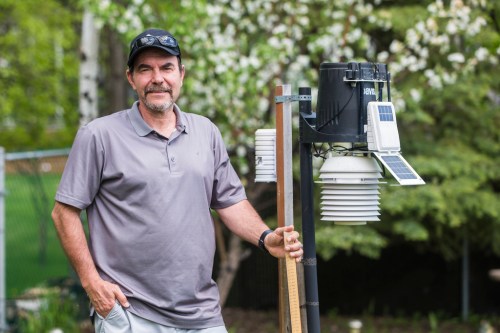
Meteorologist behind Rob’s Obs is moving weather station to Ontario

Ben Waldman 7 minute read Preview

Meteorologist behind Rob’s Obs is moving weather station to Ontario

Ben Waldman 7 minute read Monday, Jun. 13, 2022

In a Winnipeg winter, there are always at least two certainties: it will be cold, and it will snow. A third certainty: the people will talk endlessly about how frigid the temperature is, and argue about how much snow is cloaking their driveways. Is it colder than it ever has been? Is there more snow today than the same time last year?

Rob Paola likely knows the answers to those questions.

Paola possesses no super powers. He is but a man with a metre stick and 40 years of professional meteorological experience, in the midst of a lifelong love affair with Mother Nature, a most turbulent mistress who rarely, if ever, reciprocates.

Each year when snow begins to fall, Paola heads outside his Charleswood home to figure out how much. He sticks his ruler in the ground, grabs his clipboard, and clicks his pen. In neat script, he records the temperature, what time precipitation began, how deep the powder is stacked. Then, he shares his data and insights online with thousands of followers who want a clear answer to the eternal questions: Why is this happening? When will it stop? How much snow has fallen in the city of Winnipeg?

Read
Monday, Jun. 13, 2022

Building healthier Canadians

Jason M. Sutherland 4 minute read 2:00 AM CDT

Ottawa is betting that billions of taxpayer dollars spent on steel, asphalt and concrete will secure Canada’s economic future and prosperity. Through the $51 billion Build Communities Strong fund, the federal government is paying for roads, bridges, water systems and transit to boost productivity and attract capital from Europe and Asia.

As the shovels hit the ground from Halifax to Vancouver, Canadians should be asking themselves: What good does it do to build a stronger country if we are not building healthier Canadians?

The fund’s $5 billion allocation for health infrastructure is welcome news, as many of our hospitals and long-term care homes across the country are showing severe signs of aging, and modern care centres are much needed. But pouring concrete for new facilities is not the same as building a healthy population.

A ribbon-cutting at a modern hospital does not guarantee you see a family doctor when you need one, keep a rural emergency department open overnight, or shorten the wait for a knee replacement keeping someone off the job or robbing a retiree of independence.

Ottawa announces $500 million for North End sewage plant upgrade

Joyanne Pursaga 4 minute read Preview

Ottawa announces $500 million for North End sewage plant upgrade

Joyanne Pursaga 4 minute read 5:03 PM CDT

The federal government will provide $500 million to help complete the major upgrade to Winnipeg’s North End sewage treatment plant.

Winnipeg South MP Terry Duguid confirmed the total funding at a news conference at the plant Friday, calling the work critical to Winnipeg’s future.

“The stakes could not be higher. Without expanded wastewater treatment, Winnipeg would run out of capacity to build new homes and accommodate new industries within six years,” said Duguid.

The commitment offers the final funding needed to cover the $1.57-billion third and final phase of the upgrade. The city and province will also pay $500 million each for the work.

Read
5:03 PM CDT

Wife’s witchy wonderment won’t spell trouble

Maureen Scurfield 6 minute read 2:00 AM CDT

DEAR MISS LONELYHEARTS: My wife believes in magic potions, which used to make me laugh. But since Halloween season started this year, she’s been acting in a way that frightens me. She seems to think she’s a modern-day “witch.” Give me a break!

Now she has three friends who think they are really casting spells when they get together! And this year on Halloween night she’s being formally accepted into their little witchy group meeting at one of their homes, and is getting a new sorceress name. It’s creepy! How do I cope? I’ve had enough of this.

— Seriously Upset, South St. Vital

Dear Upset: Don’t buy into the hocus pocus by being afraid of it and expressing any trepidation to your wife. She needs you to be strong, so she knows she has a solid anchor and can drop out of this witchy group if it becomes too scary or silly for her.

Transit driver killed in knife attack on U of M campus

8 minute read Preview

Transit driver killed in knife attack on U of M campus

8 minute read Tuesday, Feb. 14, 2017

A Winnipeg Transit driver was killed early this morning after he was stabbed by the only passenger on his bus at the University of Manitoba campus.

Irvine Jubal Fraser, 58, was rushed to hospital in critical condition but later died, police said.

The attack occurred at about 2 a.m. in the area of Dafoe Road West and Gillson Street.

Witnesses pointed officers led by the canine unit in the direction of the Red River, where a 22-year-old suspect trying to cross to the St. Vital side was arrested and taken into custody.

Read
Tuesday, Feb. 14, 2017