UN protocol used by youths in climate complaint not available to Canadian kids

Advertisement

Advertise with us

CALGARY - A children's rights advocate is urging Canada to adopt a United Nations protocol that 16 youths, including Swedish activist Greta Thunberg, are using to push for climate action.

Read this article for free:


or

Already have an account? Log in here »

To continue reading, please subscribe:

Subscribe and receive a limited-edition Free Press branded hat or tote.

Digital Subscription

One year of digital access for only $205*

  • Enjoy unlimited reading on winnipegfreepress.com
  • Read the E-Edition, our digital replica newspaper
  • Access News Break, our award-winning app
  • Play interactive puzzles

*First annual payment billed as $205.00 + GST for one year. This annual subscription will automatically renew at $233.00 + GST every 52 weeks (10% off the regular annual price of $259.35). Offer available to new and qualified returning subscribers only. Cancel any time.

To continue reading, please subscribe:

Add Free Press access to your Brandon Sun subscription for only an additional

$1 for the first 4 weeks*

  • Enjoy unlimited reading on winnipegfreepress.com
  • Read the E-Edition, our digital replica newspaper
  • Access News Break, our award-winning app
  • Play interactive puzzles
Start now

*Your next Brandon Sun subscription payment will increase by $1.00 and you will be charged $17.95 plus GST for four weeks. After four weeks, your payment will increase to $24.95 plus GST every four weeks.

Hey there, time traveller!
This article was published 27/09/2019 (2566 days ago), so information in it may no longer be current.

CALGARY – A children’s rights advocate is urging Canada to adopt a United Nations protocol that 16 youths, including Swedish activist Greta Thunberg, are using to push for climate action.

Sara Austin, founder and CEO of Children First Canada, led the years-long global push for a UN code for children — and their adult representatives — to file complaints if their rights have been violated.

The UN General Assembly adopted the Optional Protocol to the Convention on the Rights of the Child for a Communications Procedure in 2011 and it came into force in 2014.

“It really is remarkable to me now to see young people like Greta and 15 of her peers now using this law to file a complaint against five governments and to seek justice for the failure of their government to protect their safe and healthy childhood,” Austin, who is based in Calgary, said in an interview.

The complaint this month from the child petitioners — who are between eight and 17-years old and represent 12 countries — is directed at five of the 45 countries that have ratified the protocol: Argentina, France, Germany, Brazil and Turkey. It alleges those countries violate children’s rights by failing to address the climate crisis.

“This law is not yet available for kids here in Canada to file a complaint because our government hasn’t ratified it, but we hope to see that change,” Austin said.

“As a Canadian who was leading these global efforts, I was dismayed and deeply frustrated that my own government was opposed to the law and to this day has not yet ratified it.”

Austin said her efforts were motivated by children’s rights violations she witnessed through her work in Asia, Africa and Latin America. She recalled spending three years in Thailand, where she encountered kids who were victims of child labour and trafficking. Many were not getting adequate health care for AIDS and other diseases.

“It was kids like that who motivated me to really find ways to give them a voice and seek timely justice when their rights were being denied.”

Greta, 16, has inspired climate strikes in more than 150 countries, including several planned Friday across Canada.

This report by The Canadian Press was first published Sept. 27, 2019.

Report Error Submit a Tip

More Stories

Essential workers ruling raises questions

Editorial 4 minute read Preview

Essential workers ruling raises questions

Editorial 4 minute read 2:00 AM CDT

Ever been to a Dynacare clinic? Most of us have been. It’s an amazing demographic and ethnic slice of the city we’ve become. Old patients. Young patients. New arrivals. Long-time Canadians. People who know the ropes — others who are startled by the crowds and the noise and the lockstep forward motion of professionals doing what they have been trained to do. It seems, all at the same time, both chaotic and diagnostic, as names of patients are steadily called out and thousands of tests are performed.

But Dynacare is at the centre of a new kind of test and this time, we’re all in the test tube together.

It’s the first real test for new labour law put in place by the government of Premier Wab Kinew in 2024 — a law that redefined what essential services are for provincially-regulated workplaces. Under this law, companies and their employee and unions must have an agreement of which employees are essential — which ones must stay on the job during a legal strike for the protection of the health and safety of the public.

Dynacare had that kind of essential employee agreement with its staff and union — the company and the union had agreed the employees were not essential.

Read
2:00 AM CDT

Odermatt wins super-G, keeps season title hopes alive

The Associated Press 3 minute read Preview

Odermatt wins super-G, keeps season title hopes alive

The Associated Press 3 minute read Sunday, Mar. 7, 2021

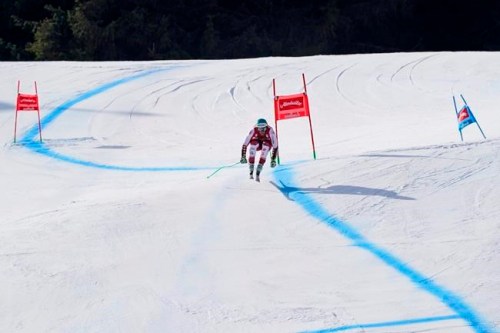
SAALBACH-HINTERGLEMM, Austria - Marco Odermatt dominated the penultimate men’s World Cup super-G of the season Sunday to keep himself in the race for the discipline title.

The Swiss skier finished his gutsy run on the Schneekristall course 0.62 seconds ahead of runner-up Matthieu Bailet.

The Frenchman was the 2016 junior world champion and earned his first podium result on the World Cup circuit.

Vincent Kriechmayr, the double world champion from Austria, trailed Odermatt by 0.81 in third, a day after he won the downhill on the same hill. Another Austrian, Raphael Haaser, finished two-hundredths behind Kriechmayr in fourth.

Read
Sunday, Mar. 7, 2021

Pimp sentenced to 11 years in prison

Erik Pindera 4 minute read Preview

Pimp sentenced to 11 years in prison

Erik Pindera 4 minute read 2:00 AM CDT

A man who picked up a vulnerable 17-year-old child-welfare ward on the streets of Winnipeg and coerced her into providing sexual services for several months has been sent to prison for more than a decade.

After a trial, Hassan Kargbo, who’s in his early 30s, was found guilty of sexual exploitation, making child sexual abuse and exploitation material, receiving a material benefit from sexual services provided by a person under 18, procuring a person under 18 and advertising sexual services.

Provincial court Judge Julie Frederickson sentenced him to 11 years behind bars late last month.

“Mr. Kargbo picked up a young Indigenous girl walking over the Osborne Street bridge and quickly got her involved in drug use and escorting,” Frederickson said in a written decision.

Read
2:00 AM CDT

Scare up some social reconnection this fall

Maureen Scurfield 4 minute read 2:00 AM CDT

DEAR MISS LONELYHEARTS: I’m an emotional mess. My lesbian girlfriend and I broke up in August, and now I hold the lease on the apartment we shared. It’s a great big old place with two spacious balconies.

I just got new roommates — two younger friends who really love it here — but secretly I’m still feeling lonely. Every minute of living here reminds me of my girlfriend because we decorated the place together and hung out on the balconies to sunbathe in the summer.

Would it help to move out of my beloved old block with its memory triggers? Maybe, but what if I died of loneliness in a new place? I need people around me, and no one but my ex-girlfriend has really been the right person. Please help. I feel sick about this.

— Love-Nest Sadness, Winnipeg

Real journalists matter in an AI world

Paul Deegan 4 minute read Preview

Real journalists matter in an AI world

Paul Deegan 4 minute read 2:00 AM CDT

An algorithm can decide what you see, but it doesn’t report the news. Nunatsiaq News, an award-winning newspaper in Nunavut, recently reported that a so-called “news” website was posting AI-generated articles about the north by stealing real news stories produced by real journalists.

The articles were supposedly written by Nunavut correspondent Leah Qammaniq — a fake journalist, with a fake photo and a fake bio.

Governor General Louise Arbour warned us of fake news in her installation speech in June. She said, “We must continue to protect the public space in which our national debates take place: from schools and universities to the media, political parties, unions and civil society organizations …With instant access to vast amounts of information, it is very tempting to pay little attention to the reliability of sources. The lines between knowledge and belief, between truth and falsehood, between facts and assumptions, are increasingly blurred. AI could be threatening not only the way we live and work, but also the control we exercise over our own destiny.”

The Government of Canada has recognized the problem as well. Its recent discussion paper, Enhancing trust in artificial intelligence through increased transparency, stated, “Canadians encounter news reporting, product reviews, and audio-visual content across the internet, often without any indication of whether it was written by a person, generated by an AI system, or produced through some combination of both … A particular concern within this broader landscape is that generative AI greatly enables the creation and dissemination of deceptive or misleading content.”

Read
2:00 AM CDT

Residents reeling after man shot, killed by police

Nicole Buffie 5 minute read Preview

Residents reeling after man shot, killed by police

Nicole Buffie 5 minute read Thursday, Oct. 3, 2024

Van Ho was inside his sixth-floor Main Street apartment when he heard a ruckus in the hall around noon Wednesday afternoon.

Ho looked out his window to see police and emergency vehicles surrounding the 10-storey North Point Douglas Manor. When he peeked into the hallway, he saw the body of his next-door neighbour being carried away.

“I thought somebody was fighting, then I open my door and that’s what I see,” Ho saidThursday afternoon.

The Vietnamese immigrant moved to the building four years ago. He said his neighbour, who has not been identified, moved into the Manitoba Housing complex about two months ago, but often caused excessive noise at night and kept him awake.

Read
Thursday, Oct. 3, 2024