Appeal court says doctors have to give referrals for services they oppose

Advertisement

Advertise with us

TORONTO - Ontario's highest court ruled Wednesday that doctors in the province must give referrals for medical services that clash with their religious beliefs, calling it a compromise that balances the rights of physicians and the interests of patients.

Read this article for free:


By clicking the button above, an account will be created and you will begin to receive some of our recommended newsletters. You may opt out of any newsletter by visiting your Email and Communication Preferences page or by clicking "unsubscribe" at the bottom of any email.

or

Already have an account? Log in here »

To continue reading, please subscribe:

Digital Subscription

One year of digital access for only $1.44 a week*

  • Enjoy unlimited reading on winnipegfreepress.com
  • Read the E-Edition, our digital replica newspaper
  • Access News Break, our award-winning app
  • Play interactive puzzles

*Billed as $5.77 plus GST every four weeks. After 52 weeks, price increases to the regular rate of $19.95 plus GST every four weeks. Offer available to new and qualified returning subscribers only. Cancel any time.

To continue reading, please subscribe:

Add Free Press access to your Brandon Sun subscription for only an additional

$1 for the first 4 weeks*

  • Enjoy unlimited reading on winnipegfreepress.com
  • Read the E-Edition, our digital replica newspaper
  • Access News Break, our award-winning app
  • Play interactive puzzles
Start now

*Your next Brandon Sun subscription payment will increase by $1.00 and you will be charged $17.95 plus GST for four weeks. After four weeks, your payment will increase to $24.95 plus GST every four weeks.

Hey there, time traveller!
This article was published 15/05/2019 (2725 days ago), so information in it may no longer be current.

TORONTO – Ontario’s highest court ruled Wednesday that doctors in the province must give referrals for medical services that clash with their religious beliefs, calling it a compromise that balances the rights of physicians and the interests of patients.

In a unanimous ruling, a three-judge panel dismissed an appeal seeking to overturn a divisional court decision that upheld the requirement for an “effective referral,” an effort to connect patients with another, willing health-care provider.

The requirement is part of a set of policies issued in 2016 by the College of Physicians and Surgeons of Ontario to address issues surrounding, among other things, assisted dying, contraception and abortion.
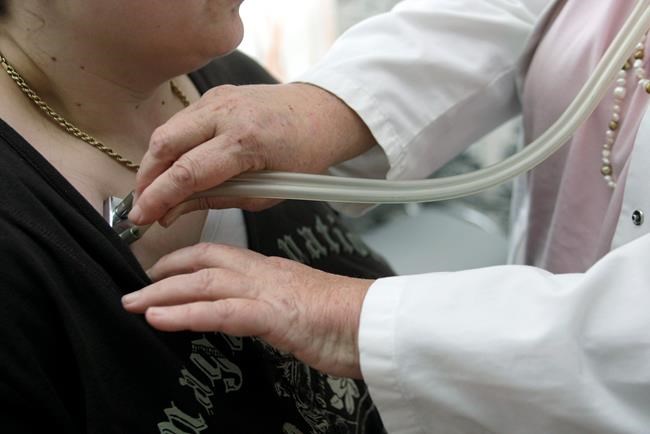
A doctor checks a patient with a stethoscope in Stuttgart, Germany, Monday, April 28, 2008. Ontario's highest court is expected to rule today on whether doctors in the province are obligated to give referrals for medical services that clash with their moral or religious beliefs.THE CANADIAN PRESS/AP/Thomas Kienzle

“The issues raised in this proceeding present difficult choices for religious physicians who object to the policies, but they do have choices,” the appeal court wrote.

“While the solution is not a perfect one for some physicians, such as the individual appellants, it is not a perfect one for their patients either. They will lose the personal support of their physicians at a time when they are most vulnerable.”

The policies “represent a compromise,” the court wrote.

“They strike a reasonable balance between patients’ interests and physicians’ Charter-protected religious freedom. They are reasonable limits prescribed by law that are demonstrably justified in a free and democratic society.”

The college, which regulates doctors in Ontario, called the ruling a victory for patients.

“The court has recognized the importance of ensuring patients get access to the care they need,” said Dr. Nancy Whitmore, its registrar and CEO. “Our effective referral policy ensures equitable access to health care, particularly on the part of the more vulnerable members of our society while respecting the rights of all of those involved.”

Those behind the appeal expressed their disappointment at the outcome of the case, saying the decision will put some physicians in an impossible position.

“Ultimately it is patient care that suffers, as our doctors will retire early, relocate, or change fields,” said Dr. Ryan Wilson, president of Canadian Physicians for Life, one of three professional organizations involved in the appeal, along with five individual doctors.

“For many, their religious and conscience rights are being violated and they won’t be able to practise medicine in Ontario.”

The appeal challenged a ruling last year by the divisional court, which found that while the referral requirement does infringe on doctors’ religious freedom, the benefits to the public outweigh the cost to physicians.

The lower court noted an effective referral is not as involved as a formal one, in which a doctor is required to provide a letter and arrange an appointment with another physician. It said doctors can ask staff to handle the effective referral, or choose to specialize in a type of medicine where these issues are less frequent.

In the appeal, the group of doctors argued the ruling was unreasonable because it gave more weight to an assumed problem with access to health care than to a real infringement of doctors’ rights.

The group — which includes the Christian Medical and Dental Society of Canada, the Canadian Federation of Catholic Physicians’ Societies and Canadian Physicians for Life — said there is no evidence that patients would be harmed by not receiving a referral.

It also alleged the court erred in saying doctors could pick specialties where fewer moral conflicts arise, arguing that presumes physicians can easily switch jobs.

The group also introduced new evidence in the appeal, arguing Ontario’s Care Co-ordination Service meant to help navigate the assisted dying process was now accessible to the public rather than only physicians and could thus replace an effective referral.

The appeal court agreed with the divisional court that “as a matter of logic and common sense” the requirement for an effective referral promotes equitable access to care, particularly for vulnerable patients.

It also found that the self-referral method proposed by the doctors’ group would not meet the needs of patients seeking “the most intimate and urgent medical advice and care.”

“It is impossible to conceive of more private, emotional or challenging issues for any patient,” the appeal court wrote. “Given the importance of family physicians as ‘gatekeepers’ and ‘patient navigators’ in the health-care system, there is compelling evidence that patients will suffer harm in the absence of an effective referral.”

While the doctors’ group argued the requirement will force physicians to leave the province or cease practising medicine, which would harm the public, the appeal court noted no evidence to that effect was presented.

Changing the scope of their practice may require sacrifices from physicians, the appeal court found. However, “the appellants have no common law, proprietary or constitutional right to practise medicine,” it said.

The college had brought new evidence on appeal suggesting doctors could change or narrow the scope of their practice without resorting to retraining. Its expert witness said some areas of medicine are unlikely to encounter requests for assisted death or reproductive health issues, including hair restoration, sport and exercise medicine, hernia repair and aviation examinations.

Report Error Submit a Tip

More Stories

Health officials ponder next steps as COVID cases surge in Southern Health region

Katie May 5 minute read Preview

Health officials ponder next steps as COVID cases surge in Southern Health region

Katie May 5 minute read Wednesday, Nov. 3, 2021

Public-health officials say they're trying to avoid ordering another lockdown in southern Manitoba, where COVID-19 infection rates are surging.

Deputy chief provincial public health officer Dr. Jazz Atwal told a news conference Wednesday he doesn't anticipate more lockdowns and suggested he will prioritize keeping schools open when considering future restrictions.

But he couldn't say what the next step will be in an area of the province where hospitalizations among unvaccinated residents are on the rise.

Average daily case counts in the southern part of the province are higher now than they were before lockdown measures went into effect last November, and officials are still figuring out what to do.

Read
Wednesday, Nov. 3, 2021

Science-art collaboration injects dose of emotion into cold, hard truths

Sarah Lawrynuik 5 minute read Preview

Science-art collaboration injects dose of emotion into cold, hard truths

Sarah Lawrynuik 5 minute read Wednesday, Apr. 28, 2021

Looking at spreadsheets and map plots of trees is far beyond Rhian Brynjolson’s typical day as a visual artist, but she became entranced and inspired by data collected by Canadian scientists for a new art project.

Her hope is to try and bring the numbers, map dots and statistics to life in a new way to help the public better connect to climate science.

Falcon Lake’s Brynjolson is one of 12 Canadian artists who participated in an art-science collaboration exhibit, co-ordinated by the Global Water Futures program out of the University of Saskatchewan. The project saw the artists paired with researchers and scientists across the country who then engaged in conversations to try to inspire a new angle to their art.

“The whole idea behind it is: water is life,” says Louise Arnal, the project lead, and a post-doctoral fellow at the Centre for Hydrology and Coldwater Laboratory.

Read
Wednesday, Apr. 28, 2021

City rec facilities crumbling

Ryan Thorpe 6 minute read Preview

City rec facilities crumbling

Ryan Thorpe 6 minute read Monday, Oct. 22, 2018

Throughout Winnipeg, decades-old community assets — pools, arenas and recreation and leisure centres — are deteriorating so quickly that service disruptions are inevitable.

Meanwhile, the city’s community services department, which is responsible for managing those assets, operates with an annual deficit of roughly $80 million, meaning there are scant resources to do little more than bail water on a sinking ship.

Soon, Winnipeggers will have a choice: fewer community services or higher costs.

“It poses a huge challenge because we have very limited dollars that we have to invest in our existing facilities. We also have growing demands for new amenities in new areas. We have to be very strategic,” said Ken McKim, manager of asset management for the department.

Read
Monday, Oct. 22, 2018

Building healthier Canadians

Jason M. Sutherland 4 minute read 2:00 AM CDT

Ottawa is betting that billions of taxpayer dollars spent on steel, asphalt and concrete will secure Canada’s economic future and prosperity. Through the $51 billion Build Communities Strong fund, the federal government is paying for roads, bridges, water systems and transit to boost productivity and attract capital from Europe and Asia.

As the shovels hit the ground from Halifax to Vancouver, Canadians should be asking themselves: What good does it do to build a stronger country if we are not building healthier Canadians?

The fund’s $5 billion allocation for health infrastructure is welcome news, as many of our hospitals and long-term care homes across the country are showing severe signs of aging, and modern care centres are much needed. But pouring concrete for new facilities is not the same as building a healthy population.

A ribbon-cutting at a modern hospital does not guarantee you see a family doctor when you need one, keep a rural emergency department open overnight, or shorten the wait for a knee replacement keeping someone off the job or robbing a retiree of independence.

A fond farewell to the Hercules

Editorial 4 minute read Preview

A fond farewell to the Hercules

Editorial 4 minute read 2:00 AM CDT

Fans at the NHL’s outdoor Heritage Classic game last weekend were no doubt thrilled by the sight and sound of two CF-18 Hornet fighter jets conducting a flyover at Princess Auto Stadium shortly before the puck was dropped for the much-anticipated Winnipeg Jets/Montreal Canadiens matchup.

Flyovers such as these always create a spectacular scene, as the speed and power of the jets are on full display for the brief moments they’re in view above the stadium bowl. But fans who maintained their skyward gaze for a few seconds after the Hornets’ blink-and-you’ll-miss-it appearance were treated to a much more poignant aeronautical exhibition, as a CC-130H Hercules aircraft passed over the stadium in the fighter jets’ wake.

Compared to the supersonic CF-18s, the massive, propeller-driven transport plane probably seemed to be doing more of a “crawl-over”; what most folks at the outdoor game probably didn’t realize, however, was that this was almost certainly the last time they’ll see one of these ubiquitous Canadian Forces aircraft in the sky.

The CC-130H is being retired after more than half a century as the RCAF’s combat, rescue and transport workhorse. The “Herc” will be replaced by more modern aircraft, including the smaller and more nimble CC-295 Kingfisher, which will be used for search-and-rescue missions out of 17 Wing Winnipeg, beginning next month.

Read
2:00 AM CDT

Today’s horoscope

Georgia Nicols 4 minute read Preview

Today’s horoscope

Georgia Nicols 4 minute read 2:00 AM CDT

MOON ALERT: There are no restrictions to shopping or important decisions today. The moon is in Cancer.

ARIES (March 21-April 19)

Avoid heated discussions regarding kids, social plans, shared expenses or dealing with authority figures. (This covers a wide swath.) People are touchy! Pull in your reins and tread carefully. You don’t have to be right. You don’t even have to be wrong.

TAURUS (April 20-May 20)

Read
2:00 AM CDT