Not waving, but drowning

In our increasingly curated lives, celebrities aren't the only ones putting on a happy face

Advertisement

Advertise with us

Last week, within the space of four days, the world lost two icons.

Read this article for free:

or

Already have an account? Log in here »

To continue reading, please subscribe:

Subscribe and receive a limited-edition Free Press branded hat or tote.

Digital Subscription

One year of digital access for only $205*

  • Enjoy unlimited reading on winnipegfreepress.com
  • Read the E-Edition, our digital replica newspaper
  • Access News Break, our award-winning app
  • Play interactive puzzles

*First annual payment billed as $205.00 + GST for one year. This annual subscription will automatically renew at $233.00 + GST every 52 weeks (10% off the regular annual price of $259.35). Offer available to new and qualified returning subscribers only. Cancel any time.

To continue reading, please subscribe:

Add Free Press access to your Brandon Sun subscription for only an additional

$1 for the first 4 weeks*

  • Enjoy unlimited reading on winnipegfreepress.com
  • Read the E-Edition, our digital replica newspaper
  • Access News Break, our award-winning app
  • Play interactive puzzles
Start now

*Your next Brandon Sun subscription payment will increase by $1.00 and you will be charged $17.95 plus GST for four weeks. After four weeks, your payment will increase to $24.95 plus GST every four weeks.

Opinion

Hey there, time traveller!
This article was published 11/06/2018 (2974 days ago), so information in it may no longer be current.

Last week, within the space of four days, the world lost two icons.

On Tuesday, the fashion world was left reeling with the news that Kate Spade, the influential designer and businesswoman, had died by suicide. And by Friday, hearts broke all over again: Anthony Bourdain, the chef, author and TV personality, had also died by suicide. Spade was 55. Bourdain was 61.

They were two different people who operated in different spheres of our culture, linked now by the proximity of their deaths. But there is a parallel to be drawn between them. Bourdain and Spade were both people who, in many ways, had come to represent what it meant to live well.
FRANK GUNN / THE CANADIAN PRESS FILES
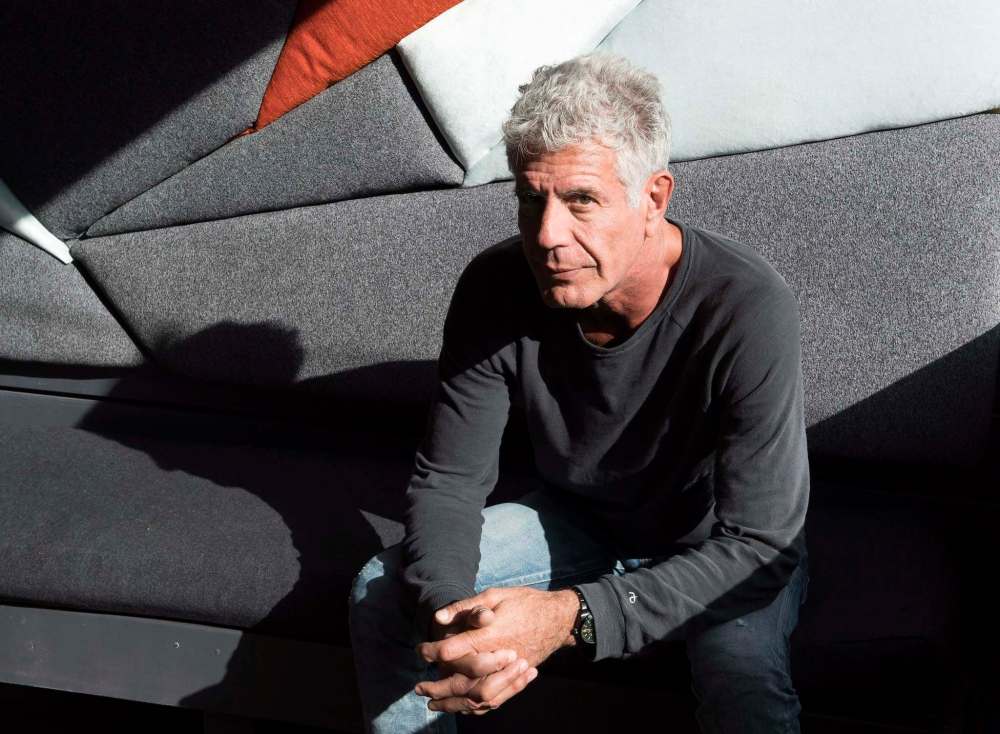
In his writing and on his TV shows, chef Anthony Bourdain seemed to have an appetite for life that made his death by suicide come as a shock to fans.
FRANK GUNN / THE CANADIAN PRESS FILES In his writing and on his TV shows, chef Anthony Bourdain seemed to have an appetite for life that made his death by suicide come as a shock to fans.

It was easy to assume that Kate Spade, the woman, was an avatar for happiness. Happiness, after all, was fundamental to the Kate Spade brand.

She introduced vivacious kelly greens, lemon yellows and shocking pinks into professional women’s workwear. She made polka dots seem sophisticated. She encouraged playfulness and self-expression with her designs, whether it was a pelican-shaped cocktail ring or a handbag shaped like a watering can. On office desks around the world, you’ll find Kate Spade coffee mugs emblazoned with chipper sayings, such as “always look for the silver lining” and “be happy, be bright, be you.” For a long time, the Kate Spade tagline was “live colourfully.”

Bourdain, too, lived colourfully. And as the face of the popular, award-winning TV show Parts Unknown (and No Reservations before that), he, too, had a compelling brand — even if it wasn’t the kind you could buy a piece of in a department store.

Bourdain didn’t project happiness in the polka-dots-and-sunshine sense, but his joie de vivre was irrepressible. That’s what made Bourdain such a magnetic figure: he was a person who was open and curious about the world, and who hungered to learn. He wasn’t afraid to try new things, and to get out and have life-altering experiences.

Perhaps most significantly, Bourdain taught us that food is what binds us. He showed us the value of breaking bread with someone who is different from us.

Here are people who, from the outside, looked as if they were living their best lives and who, in their own ways, encouraged us to live ours. They were both people who saw beauty in a world that can be unspeakably cruel.

But their deaths serve as a stark reminder that we never truly know what someone is going through, no matter how well we think we know them. (And while money, success, adoration, fame, love, respect are all wonderful things to have, they are not cures for depression.)

In the age of meticulously curated Instagram feeds, personal brands are being cultivated by regular people, not just celebrities. We are all content creators, sharing slices of our lives for an audience’s approval.

Many of our modern jobs require us to “market” and “sell” ourselves online, as though we’re a sneaker or a soft drink. We all have an image we want to project to the world and, in a society that places a high premium on happiness, disclosing the darker shades of our lives can be incredibly hard to do. The stigma is real and the stakes are high.

Trouble is, when our interactions increasingly move online, personal brands can create very real walls. Social media feeds are often held up as evidence of reality, when often they are fantasy. They are, more often than not, documents of our biggest and best lives, not necessarily our real lives.
KATE WARREN / THE WASHINGTON POST FILES
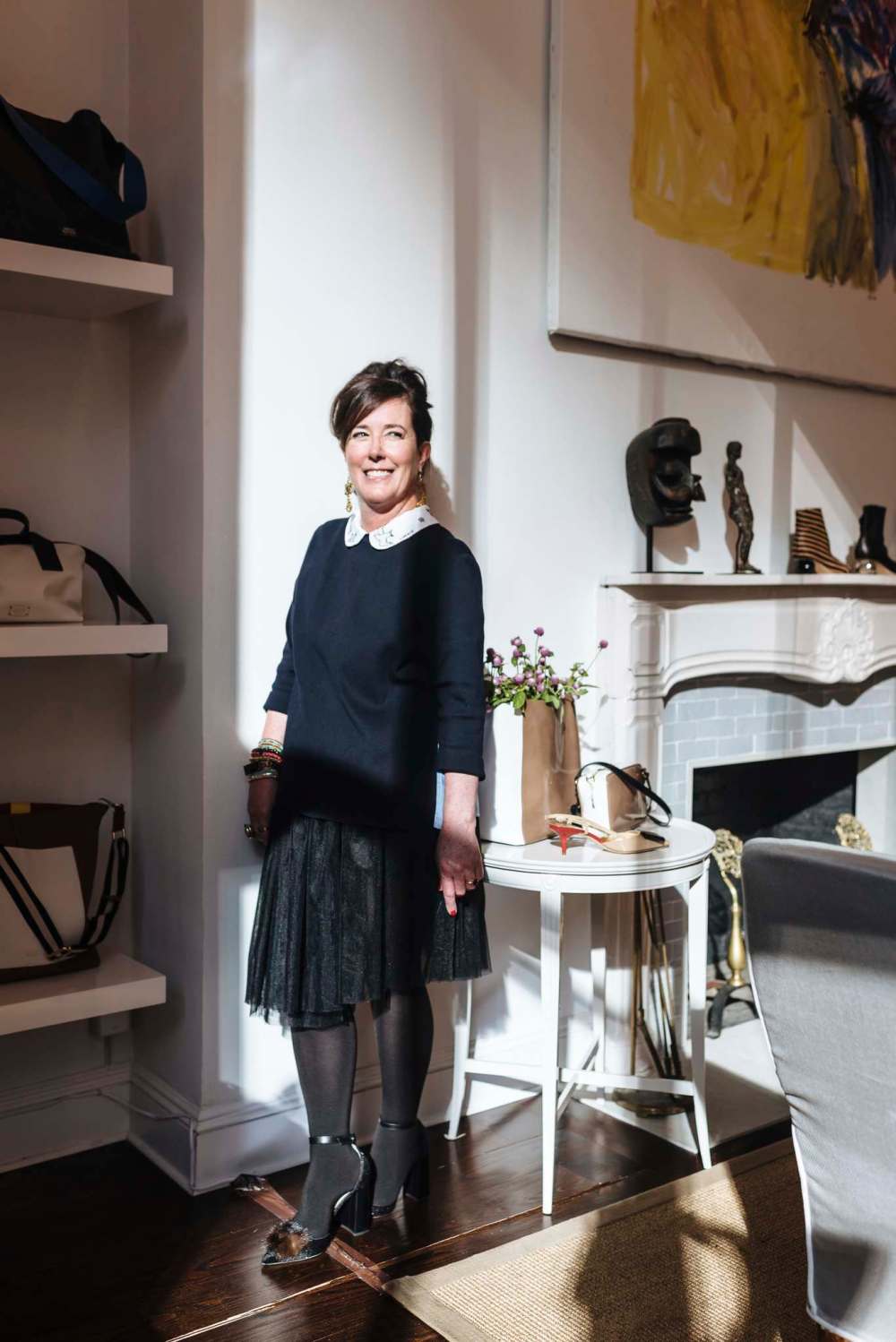
Kate Spade’s bright, colourful brand was founded on ideas of whimsy and joy; in private, the late designer suffered from depression and anxiety.
KATE WARREN / THE WASHINGTON POST FILES Kate Spade’s bright, colourful brand was founded on ideas of whimsy and joy; in private, the late designer suffered from depression and anxiety.

But we are not products. We are people, just as Bourdain and Spade were people. And people are messy and complicated. Our emotions and behaviour are not always going to be “on brand.”

It can be hard to admit you’re scared when you’re known for being fearless. It can be hard to admit you’re sad when you’re known for being cheerful. And it can be hard to admit you’re feeling weak if you’re known for being strong.

When people die by suicide, it is often without warning. Sometimes, there are no signs. You know the swimming-pool PSA about how drowning doesn’t look like drowning? Struggling doesn’t always look like struggling. That’s why it’s so important that we check in with our people, no matter how great their lives may look.

If you feel helpless or hopeless and are struggling to cope, call the Manitoba Suicide Prevention & Support Line (24/7) toll free at 1-877-435-7170.

jen.zoratti@freepress.mb.ca

Twitter: @JenZoratti

Jen Zoratti

Jen Zoratti
Columnist

Jen Zoratti is a Winnipeg Free Press columnist and author of the newsletter, NEXT, a weekly look towards a post-pandemic future.

Our newsroom depends on a growing audience of readers to power our journalism. If you are not a paid reader, please consider becoming a subscriber.

Our newsroom depends on its audience of readers to power our journalism. Thank you for your support.

Report Error Submit a Tip

More Stories

Helping families break bread

Julia-Simone Rutgers 5 minute read Preview

Helping families break bread

Julia-Simone Rutgers 5 minute read Tuesday, Oct. 12, 2021

One turkey, five pounds of potatoes, a box of stuffing mix, two packages gravy mix, one baked pie, one bag frozen mixed vegetables, and of course, cranberry sauce.

As Thanksgiving approached, volunteers at the new food bank in Thompson, which is run by Manitoba Keewatinowi Okimakanak, were busy packing food boxes for families in the north.

It marked their first major holiday since opening; after a long period of research, searching for space and digging up funding, MKO launched the food bank on Sept. 24. By that time, there was a long list of applicants.

“Our mandate above and beyond anything is that we’re going to try to feed people and help them out during these trying times, especially in recovery after the pandemic,” said Shyanna Lynxleg, urban initiatives manager at MKO.

Read
Tuesday, Oct. 12, 2021

BRANDON — A number of health-care services are expected to be restored in Dauphin next week as officials work around flood damage at the local hospital.

Point-of-care testing, electrocardiograms, X-rays, labs and phlebotomy will be reinstated at a temporary outpatient clinic in a provincial government building in Dauphin, Health Minister Uzoma Asagwara said on Thursday.

“You folks can expect that by the end of next week you are going to have lab services restored in Dauphin,” Asagwara said.

The information was released during a virtual town hall hosted by Prairie Mountain Health.

Beyond Bond, Connery characters funny, fierce

Randall King 5 minute read Preview

Beyond Bond, Connery characters funny, fierce

Randall King 5 minute read Tuesday, Nov. 3, 2020

When I was a kid, many of my peers collected sports cards. I collected movie cards, starting with the 1965 run of James Bond 007 cards put out by the good folks at Fleer.

At that point, only three Bond movies existed: Dr. No (1962), From Russia with Love (1963) and Goldfinger (1964). (Thunderball would be released later in 1965.) The cards were basically productions stills of Sean Connery’s Bond in action, with appropriate captions: “Hunted by a Helicopter” as seen in From Russia With Love, or “The Incredible Laser Ray” or “Oddjob’s Deadly Derby” from Goldfinger.

So the news of Sean Connery’s death over the weekend had a kind of visceral effect, as it would on those of us who valued movie heroes over champions of the gridiron or baseball diamond. Connery, who lived to the ripe age of 90, presented a different kind of hero than the TV do-gooders of the era, a fact announced in an early scene from Dr. No when Bond cold-bloodedly kills a would-be assassin after he’s emptied his own pistol. “That’s a Smith & Wesson, and you’ve had your six.”

Connery played Bond a total of seven times, and while he was undoubtedly the best of the Bonds, only a few of the movies hold up. Connery is certainly phoning it in in Diamonds Are Forever (1971), for example, letting his character devolve into self-parody. But his quest to escape the Bond brand resulted in a few interesting roles, including The Anderson Tapes (1971), in which he played a career criminal with a conscience (sans toupée), or Zardoz (1974), a delirious post-apocalyptic fantasy in which his primitive warrior goes up against a race of immortal intellectuals.

Read
Tuesday, Nov. 3, 2020

Need to make an apology? Ask the experts

Carl DeGurse 5 minute read Thursday, Feb. 15, 2018

Plenty of people are saying sorry these days, but their apologies often seem cheap.

Some people do it only after they are confronted with their misdeeds and have no chance of escape. Their apologies are like tapping out during a mixed martial arts bout.

Some don’t apologize directly to their victims, but issue a general statement on social media. It’s as if they’re more concerned with restoring their reputation than restoring relations with people they’ve hurt.

MLA Stan Struthers, a former NDP finance minister, apologized Feb. 8 in a public statement for “inappropriate” interactions with women, but there’s been no indication he offered respectful, in-person apologies to the eight or more women he reportedly tickled and groped in a sexual manner.

Crop storage headaches loom on horizon

Laura Rance-Unger 5 minute read Preview

Crop storage headaches loom on horizon

Laura Rance-Unger 5 minute read Yesterday at 2:01 AM CDT

A sense of calm descends over Prairie fields this time of year — at least on the surface.

Activities become more limited in the weeks leading up to harvest. There’s not much farmers can do now to support this year’s crop, other than monitor and protect it from diseases such as sclerotinia in canola and leaf stripe and fusarium head blight in wheat and barley.

July is when you might see farmers wading into a thick stand of canola, conducting a so-called “wet pants test” to get a low-tech read on how much disease-inducing moisture is lurking in the canopy.

Disease pressure is high in a humid, hot summer like this one and it’s kept aerial applicators busy applying fungicides. Sclerotinia spores live on plant residues in the soil and blossom into a mould that destroys the canola stem, starving the maturing pods.

Read
Yesterday at 2:01 AM CDT

Philippines reports world's 1st virus death outside China

The Associated Press 7 minute read Preview

Philippines reports world's 1st virus death outside China

The Associated Press 7 minute read Sunday, Feb. 2, 2020

BEIJING - The first death outside China from the new coronavirus was recorded Sunday in the Philippines, as countries around the world evacuated hundreds of their citizens from the infection zone and Chinese authorities completed a new, rapidly constructed 1,000-bed hospital for victims of the outbreak.

Chinese authorities also delayed the reopening of schools in the hardest-hit province and tightened the quarantine in one city by allowing only one family member to venture out to buy supplies.

The Philippine Health Department said a 44-year-old Chinese man from Wuhan, the city at the centre of the crisis, was hospitalized Jan. 25 with a fever, cough and sore throat and died after developing severe pneumonia. The man's 38-year-old female companion, also from Wuhan, tested positive for the virus as well and remained hospitalized in isolation in Manila.

Philippine President Rodrigo Duterte approved a ban on the entry of all non-citizens from China. The U.S., Japan, Singapore and Australia have imposed similar restrictions despite criticism from China and an assessment from the World Health Organization that such measures were unnecessarily hurting trade and travel.

Read
Sunday, Feb. 2, 2020