

Immigrants ‘critical’ to rural economies
Advertisement
Read this article for free:
or
Already have an account? Log in here »
To continue reading, please subscribe:
Digital Subscription
One year of digital access for only $1.44 a week*
- Enjoy unlimited reading on winnipegfreepress.com
- Read the E-Edition, our digital replica newspaper
- Access News Break, our award-winning app
- Play interactive puzzles
*Billed as $5.77 plus GST every four weeks. After 52 weeks, price increases to the regular rate of $19.95 plus GST every four weeks. Offer available to new and qualified returning subscribers only. Cancel any time.
To continue reading, please subscribe:
Add Free Press access to your Brandon Sun subscription for only an additional
$1 for the first 4 weeks*
- Enjoy unlimited reading on winnipegfreepress.com
- Read the E-Edition, our digital replica newspaper
- Access News Break, our award-winning app
- Play interactive puzzles
*Your next Brandon Sun subscription payment will increase by $1.00 and you will be charged $17.95 plus GST for four weeks. After four weeks, your payment will increase to $24.95 plus GST every four weeks.
Read unlimited articles for free today:
or
Already have an account? Log in here »
Rural Manitoba communities say a federal program that offers permanent residence to skilled workers is crucial for the growth and future of industry in their regions.
On Monday, immigration Minister Lena Metlege Diab announced the government is transitioning the Rural Community Immigration Pilot into a permanent program. Communities currently participating are expected to continue.
Fourteen communities, including several in Manitoba, will continue to work with the program. Expansion to additional communities is planned, Diab said in a news release.
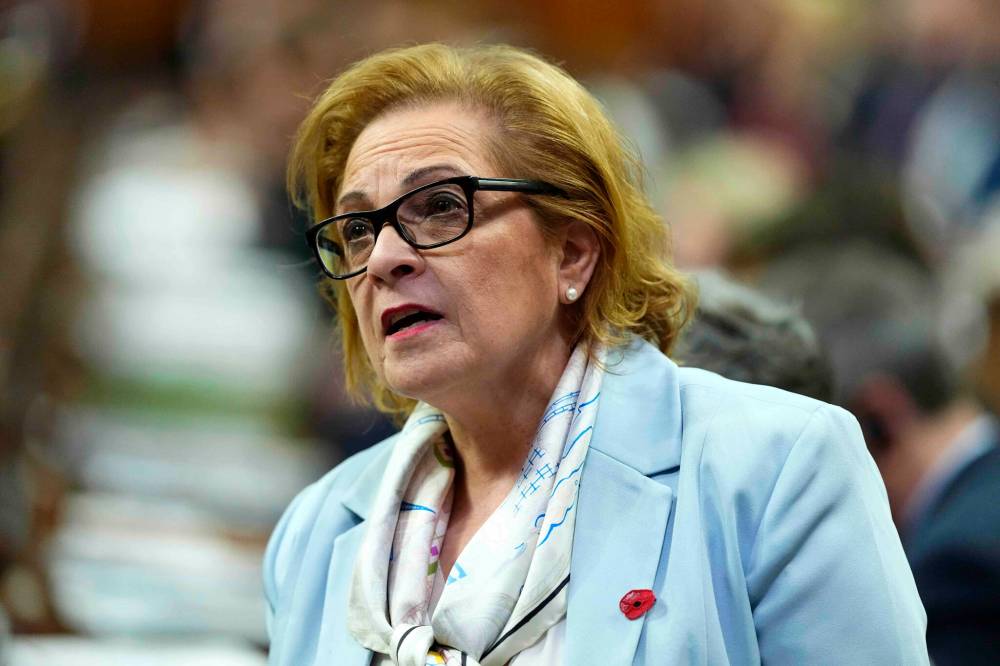
On Monday, immigration Minister Lena Metlege Diab announced the federal government is transitioning the Rural Community Immigration Pilot into a permanent program. (THE CANADIAN PRESS FILES/Justin Tang)
“We were pleased to hear it,” said Scott Rickey, the economic development officer with Southeast Manitoba Economic Development. “Our area had identified a labour shortage two or three years ago. It’s still something we need more of, but it has definitely been part of the solution.”
Since beginning the program in 2025, Southeast Manitoba Economic Development has recruited 55 applicants. The number does not include family members of the applicants.
The program serves several communities in southeast Manitoba, including Steinbach, the RMs of Hanover, Ste. Anne, La Broquerie and the town of Ste. Anne. The health-care and manufacturing sectors are seeing the biggest uptake in the program, while 49 businesses are currently working with Southeast Manitoba Economic Development through the program.
The move to make it permanent follows Ottawa’s assessment of two immigration initiatives: the Rural and Northern Immigration Pilot, which ran from 2019 to 2024, and the Rural Community Immigration Pilot, introduced in 2025.
Employers already participating in the pilot will be able to transition into the permanent program. Workers who have already received approval but are still waiting for their permanent residency applications to be processed will not lose their eligibility and will continue with their original applications.
According to Rickey, some of the applicants were already living in Manitoba, while others were recruited internationally. He said if industry in the region wants to continue growing, the rural community immigration program goes a long way.
“There’s a lot of enthusiasm with the employers. I’ve had a manufacturing employer that’s quite (rural) saying without this they don’t know how they would deal with the shortages. They can’t compete with the big city,” he said.
In western Manitoba, cities like Brandon have helped 829 applicants and their families obtain permanent residency since 2020. City of Brandon economic development official Samuel Solomon said the program has also helped nearly 200 local employers recruit workers with specialized skills and retain employees who have become valuable members of their workforce.
Of the people who received permanent residency, nearly half were already living in the city when they applied, Solomon said. They included international students who graduated from Brandon University or Assiniboine College, found employment and decided to remain in the community.
Others came from outside Canada or relocated from elsewhere in the country after learning about the program and choosing Brandon as their preferred place to settle.
Solomon said the decision means greater stability for employers struggling to fill specialized positions and newcomers seeking to make Brandon their permanent home.
“This year alone, the city supported eight family physicians in their pathway to permanent residency, alongside 12 medical specialists and 22 health-care aides. Another 25 personal support workers were also supported in their efforts to obtain permanent residency,” he said.
Stephanie Peters, the economic development officer with Altona Rhineland Economic Development, said making the program permanent is “critical” for the future of the region.

More than 400 applicants and their families have moved to the region since the pilot began last year.
“But this is about more than filling jobs, it’s about welcoming people who become part of our community, build their lives here and contribute in so many ways,” Peters said in an email.
The program has an allocation of 5,500 admission spaces under the federal immigration plan, a news release stated.
— with files from the Brandon Sun
nicole.buffie@winnipegfreepress.com