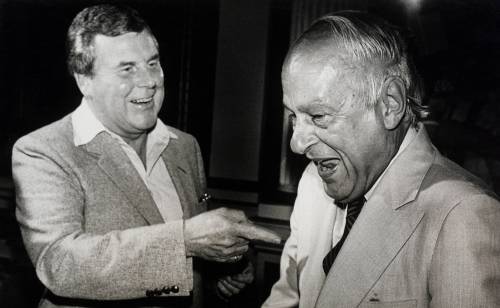
Energetic, lucid Black still praises Nixon

Advertisement

Advertise with us

Ever since his fall from the heights of the newspaper publishing world, Conrad Black has shown a voracious appetite for literary achievement. Long historical biographies of American political leaders have become his intellectual passion.

Read this article for free:


or

Already have an account? Log in here »

To continue reading, please subscribe:

Subscribe and receive a limited-edition Free Press branded hat or tote.

Digital Subscription

One year of digital access for only $205*

  • Enjoy unlimited reading on winnipegfreepress.com
  • Read the E-Edition, our digital replica newspaper
  • Access News Break, our award-winning app
  • Play interactive puzzles

*First annual payment billed as $205.00 + GST for one year. This annual subscription will automatically renew at $233.00 + GST every 52 weeks (10% off the regular annual price of $259.35). Offer available to new and qualified returning subscribers only. Cancel any time.

To continue reading, please subscribe:

Add Free Press access to your Brandon Sun subscription for only an additional

$1 for the first 4 weeks*

  • Enjoy unlimited reading on winnipegfreepress.com
  • Read the E-Edition, our digital replica newspaper
  • Access News Break, our award-winning app
  • Play interactive puzzles
Start now

*Your next Brandon Sun subscription payment will increase by $1.00 and you will be charged $17.95 plus GST for four weeks. After four weeks, your payment will increase to $24.95 plus GST every four weeks.

Opinion

Hey there, time traveller!
This article was published 25/05/2013 (4860 days ago), so information in it may no longer be current.

Ever since his fall from the heights of the newspaper publishing world, Conrad Black has shown a voracious appetite for literary achievement. Long historical biographies of American political leaders have become his intellectual passion.

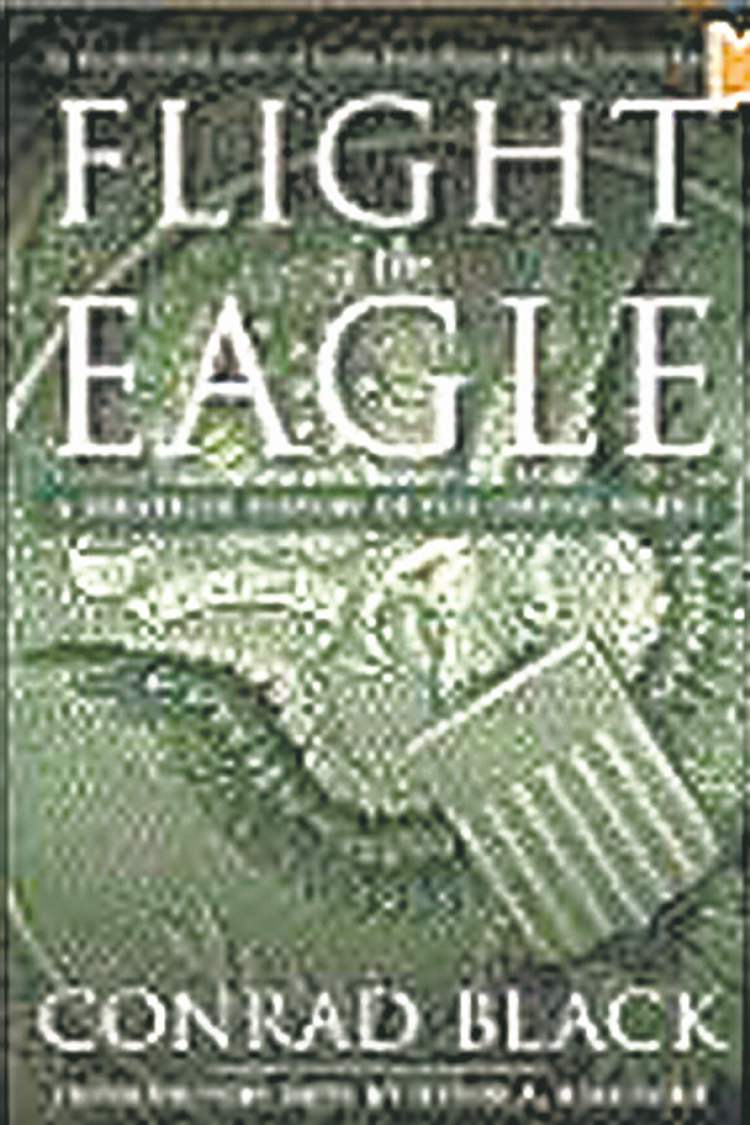
In this thick new volume, which covers an even larger U.S. canvas, he writes with boundless energy, graceful lucidity, considerable learning and unremitting hostility to the U.S. justice system (the “prosecutacacy”) that imprisoned him. An introduction by Henry Kissinger assures the reader that Black understands all the complexities of “balance-of-power” diplomacy.

In spite of its subtitle suggesting foreign policy as a main theme, Flight of the Eagle is, for the most part, conventional political narrative emphasizing the succession of presidential administrations and great debates in the national councils. The strength of his method is to show how politics at home shaped U.S. relations beyond its borders, especially in the 19th-century attempts to fix or expand those borders.
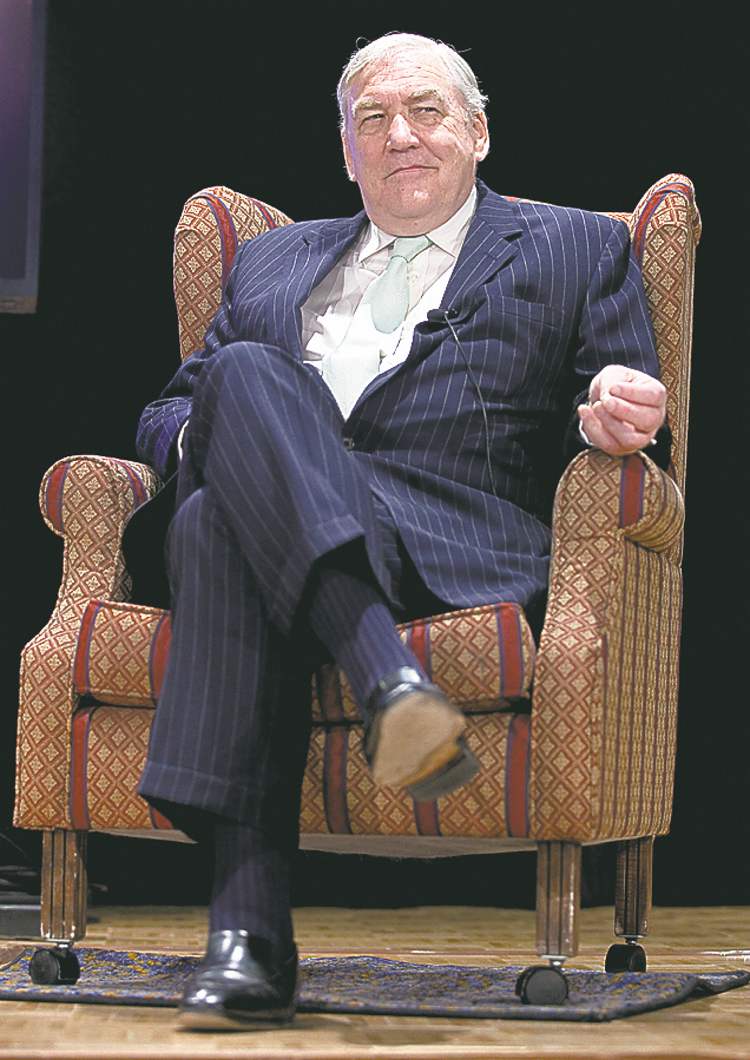
CP
Conrad Black has voracious appetite for literary achievement.
CP Conrad Black has voracious appetite for literary achievement.

Black is at his best in finding majesty in moments of national crisis: Lincoln embattled in the Civil War, strangling secession, moving to abolish slavery, and being embraced by adoring freed slaves in Richmond; Franklin Roosevelt staving off the worst of the depression by novel governmental intervention to provide social security, and then gradually bringing a reluctant people to face an overseas war against Hitler.

The years 1937-1945, Black says, witnessed Roosevelt’s great “strategic triumph,” comparable to Lincoln’s conduct of the Civil War.

There is a body of conspiracy belief, mostly centred in the right-wing of the Republican Party, that condemns Roosevelt as a traitor deliberately arranging to have American sailors murdered at Pearl Harbor in 1941 and giving away, in 1945, two-thirds of Europe to Josef Stalin at the Yalta conference. Black will have none of this.

Although the book is sometimes enlivened by Black’s irreverence for the soaring rhetoric and spread-eagle nationalism of American public speech (“humbug” and “hypocrisy”), many passages wobble unevenly between sprightly argument and dull textbook-ese. The “American rape of its southern neighbour” in a campaign of “swaddled imperialism” during the Mexican War is certainly not the usual American textbook fare.

Black’s lack of familiarity with primary sources produces gaffes. Thomas Jefferson, an early Democrat, was an “elitist,” even if he favoured a broader voting public.

Perhaps. But letters between the two old rivals in old age show Jefferson refuting John Adams’ claim that birth, wealth and high family reputation generally prevail in politics.

Jefferson envisaged a future public school system that would find the “natural aristocracy” of ability and talent among the plain people. That talent emerged, as Black himself recognizes, in the careers of Lincoln, Grant, Truman, Eisenhower, Nixon, Reagan and Clinton.

Among the poor boys who made good, Richard Nixon, in Black’s eyes, stands out as an imaginative and visionary leader. He reminds us of great achievements: the 1972 opening to China and the Shanghai Communique, a world-changing event that may have prodded the Soviet Union into a quicker acceptance of the first strategic arms limitation agreement.
His unstinting praise of Nixon and Kissinger seeking an end to the American war in Vietnam betrays no hint of current scholarly controversies on the key question: could they have had the same terms in 1969, or certainly in 1971, that they finally accepted in 1973?

Excellent historians have argued that these uneasy partners were guided by political cynicism, delaying peace and ensuring the deaths of many thousands more.

In the end, Nixon was, Black complains, forced to resign in disgrace by vindictive partisans paying back old scores for the anti-communist demagogy of the early career. It does not bother Black that the majority of the American people, the official Republican Party, and almost everyone outside the Nixon family and loyal entourage disagrees with him.

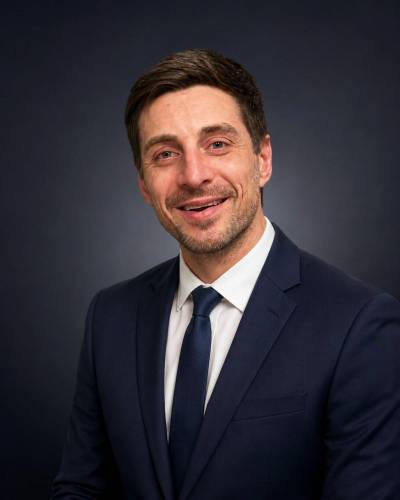
Garin Burbank is a retired American history professor at the University of Winnipeg.
Report Error Submit a Tip

More Stories

Mayoral candidate denounced for online comments

Morgan Modjeski 3 minute read Preview

Mayoral candidate denounced for online comments

Morgan Modjeski 3 minute read Updated: Yesterday at 2:34 PM CDT

A Winnipeg mayoral candidate is facing criticism after he posted derogatory comments about immigrants and used the word “gay” as an insult online.

Sydney Adams said the response she got from Zac Uminski, who is seeking the city’s top office alongside 12 other individuals, left her baffled. She recently criticized Uminski over his use of artificial intelligence to produce campaign material, to which he replied he can’t afford to hire people to make art or “do whatever gay s—- you think is better than AI.”

“What was going through my head was that this is just unacceptable,” she said.

Adams said Uminski also posted other disparaging remarks about newcomers.

Read
Updated: Yesterday at 2:34 PM CDT

50 years ago, we thought we could change the world

Robert Milan and Miriam Cooley 8 minute read Preview

50 years ago, we thought we could change the world

Robert Milan and Miriam Cooley 8 minute read 2:00 AM CDT

Winnipeg, 50 years ago.

We began as a small loose unorganized group of teaching friends and educators who shared the same political and social convictions.

We defined ourselves as socialists, feminists and political activists. We were a cross section of educational minds — language arts and social studies teachers, an art teacher, an early childhood educator, a Winnipeg school trustee, a school principal — making our group quite representative of school culture at the time.

Our questions and discussions about politics, education and society arose from a diversity of backgrounds, yet reflected a progressive cohesiveness. The political climate in Manitoba helped bring us together. Sterling Lyon was premier and his Conservative government was pursuing policies that we strongly opposed. To us, his government represented a determined assault on many of the social and political values we believed in, particularly related to education. Eventually we decided that perhaps we should do more than talk. And so the Socialist Teachers Education Movement — STEM — was born.

Read
2:00 AM CDT

A father and son arrested last month are accused of travelling across Canada — and using courier services and Canada Post — to supply their Winnipeg drug-trafficking operation, a recent court filing shows.

Devinder Singh, 57, and his 32-year-old son Tarundev Singh, charged by Winnipeg Police Service organized crime investigators last month, are each accused of several counts of conspiracy to commit an indictable offence and related drug-trafficking offences, court records show.

Tarundev is also charged with several firearms offences.

Details of the pair’s alleged trafficking operation and the ongoing police investigation — dubbed Project Pink Panther — are contained in a lawsuit filed in the Court of King’s Bench by the provincial civil forfeiture office this week.

Letters, Sept. 14

7 minute read 2:00 AM CDT

Transit troubles and passes

Re: Growing pains? Maybe, but it’s worth it, Think Tank, Sept. 10.

Worth it for who? Our transit system has been undergoing growing pains for the past year, ever since city staff completely messed up the system with their redesign.

The net result of those changes is reduced ridership, leading to a projected deficit of $18 million in revenues this year (not including the capital costs of those changes). Add that to the annual $126-million subsidy to operate Winnipeg Transit and that’s $144 million being paid annually by Winnipeg taxpayers.

Sinclair named Canada’s columnist of the year

5 minute read Preview

Sinclair named Canada’s columnist of the year

5 minute read Saturday, May. 4, 2019

Winnipeg Free Press Indigenous writer Niigaan Sinclair has been named Canada’s best columnist, winning a distinguished National Newspaper Award, which was presented at a gala in Toronto Friday evening.

Sinclair, who is Anishinaabe, joined the Free Press as a regular columnist in June 2018. Sinclair, who is on sabbatical from his job as an associate professor at the University of Manitoba, writes about Indigenous issues.

In accepting the award, Sinclair said it was his childhood dream to write for the Free Press. He said Winnipeg is the centre of reconciliation in Canada, calling it “the most imperfect city, but the most perfect.”

“I’m honoured to receive the National Newspaper Award for column writing, the same award Richard Wagamese received in 1990. It’s a testament to the incredible support and belief the Free Press has in me, and also how critically important the conversations and issues in Winnipeg are for the national stage.”

Read
Saturday, May. 4, 2019

Don’t deny kids a bedtime bond with Gran

Maureen Scurfield 5 minute read 2:00 AM CDT

DEAR MISS LONELYHEARTS: My mother is coming to visit and our little kids want her to sleep in their bedroom, where there’s a double bed and a single. My husband thinks this idea is ridiculous and says grandma needs her sleep, but I disagree.

I remember sleeping with my grandma — who’s now with the angels — and she told us grandkids (two girls) some wonderful bedtime stories she made up herself. She even put our names into them, making us the stars of the stories.

The best part was getting into our pyjamas with our grandmother, who showed us the magic cord from the little thing that ran from her near-deaf ear down to the secret battery pocket hidden in the bra of her slip. It made her hear us better in the daytime. We thought, “Wow!”

Not surprisingly my own mother has inherited her mom’s fantastic storytelling talent and who knows what else she has to teach the kids when she’s alone with them? I want them to be close.