

Tracking teens an overstep of oversight
Advertisement
Read this article for free:
or
Already have an account? Log in here »
To continue reading, please subscribe:
Digital Subscription
One year of digital access for only $1.44 a week*
- Enjoy unlimited reading on winnipegfreepress.com
- Read the E-Edition, our digital replica newspaper
- Access News Break, our award-winning app
- Play interactive puzzles
*Billed as $5.77 plus GST every four weeks. After 52 weeks, price increases to the regular rate of $19.95 plus GST every four weeks. Offer available to new and qualified returning subscribers only. Cancel any time.
To continue reading, please subscribe:
Add Free Press access to your Brandon Sun subscription for only an additional
$1 for the first 4 weeks*
- Enjoy unlimited reading on winnipegfreepress.com
- Read the E-Edition, our digital replica newspaper
- Access News Break, our award-winning app
- Play interactive puzzles
*Your next Brandon Sun subscription payment will increase by $1.00 and you will be charged $17.95 plus GST for four weeks. After four weeks, your payment will increase to $24.95 plus GST every four weeks.
Read unlimited articles for free today:
or
Already have an account? Log in here »
It’s not an unusual feature in Winnipeg daycares.
Not only can you ask daycare workers about your child’s day, you can log on with a password and see how your child is doing in real time.
“You’ll receive daily reports on what your child eats, their nap times, curriculum activities, milestones and more. Delivering midday smiles as well as important insight into your child’s day,” says the website for one Winnipeg daycare. “Passcode-protected webcams are installed in each classroom and provide a real-time video feed of your child’s day.”
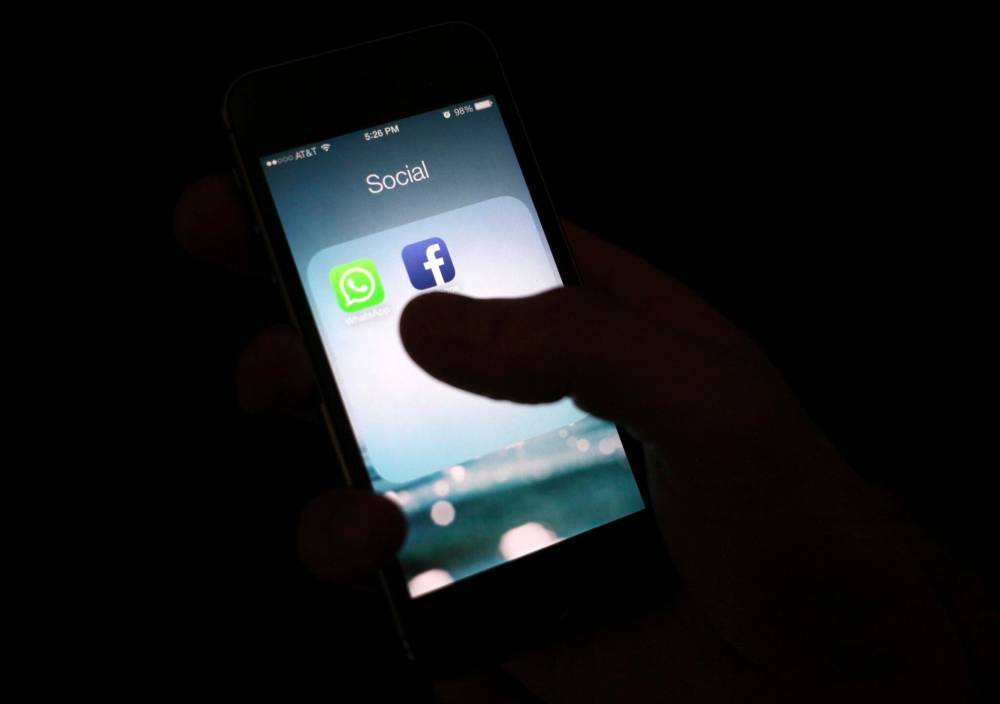
But more and more, the comfort of surveilling your child doesn’t have a best-before date.
This month’s The Atlantic has a revealing story about the extent of parental surveillance in The Geo-Located Generation. (And yes, it’s behind a paywall. Need we point out that paying for information actually pays the cost of researching and writing articles?)
The article points out that monitoring children from infancy is only an app away, and that there are a legion of apps to choose from, tracking everything from breathing rates to sleep patterns.
You can understand why young parents would find that reassuring — and even that, once your precious youngster heads off out of your immediate reach to the wilds of daycare, that need for real-time reassurance goes on.
But what if the computerized parental oversight never stops?
Three-quarters of U.S. parents track their 14- to 17-year-old children electronically — in 2021, one-third of U.S. college students were still the subject of parental tracking and, as the article points out, that number is even higher now, closing in on 50 per cent.
“If watching your kid’s real-time location isn’t enough, there is Life360, a tracking app that allows parents to review up to 30 days of time-stamped location history, monitor driving to make sure their kids stay within the speed limit, and get alerts when they arrive at or leave saved locations, such as home, school and, yes, a college dorm,” the article says.
Oh, and the Life360 app has 120 million active users per month.
There are still apocalyptic fears about the dangers of government digital identification programs swimming around the internet — suggesting that governments’ use of one-stop digital identifiers are a threat to civil liberties.
The fact is, we’re doing it to ourselves already — except we’re entrusting the information to a broad collection of private companies. And that can go wildly wrong — when genetic testing company 23andMe went bankrupt in the summer of 2025, concerns quickly grew that its trove of genetic information, including that of 700,000 Canadians, would be sold to the highest bidder.

Remember, too, the concerns about privately owned menstruation-tracking software: as one group at the University of Cambridge points out, “Cycle track app data is not only commercially valuable and shared with an inextricable net of third parties (thereby making intimate user information exploitable for targeted advertising), but it also poses severe security risks for users.” That became even more clear as U.S. governments tightened laws around abortion — with suggestions the app data could be used in eventual prosecutions.
It’s not whether you can watch your children remotely. You clearly can. But should you?
Eventually, to build resilience and confidence, young adults have to be trusted to make their own decisions — without the balm to parents of technological oversight.
Will they make mistakes? Yes. But young adults have a right to live their lives. And, frankly, they should have a right to a modicum of privacy while they do it.
The unexamined life may not be worth living — but the fully examined life, watched over endlessly by nervous parents, is its own kind of velvet prison.