

Alberta sees its way through the fog
Advertisement
Read this article for free:
or
Already have an account? Log in here »
To continue reading, please subscribe:
Digital Subscription
One year of digital access for only $1.44 a week*
- Enjoy unlimited reading on winnipegfreepress.com
- Read the E-Edition, our digital replica newspaper
- Access News Break, our award-winning app
- Play interactive puzzles
*Billed as $5.77 plus GST every four weeks. After 52 weeks, price increases to the regular rate of $19.95 plus GST every four weeks. Offer available to new and qualified returning subscribers only. Cancel any time.
To continue reading, please subscribe:
Add Free Press access to your Brandon Sun subscription for only an additional
$1 for the first 4 weeks*
- Enjoy unlimited reading on winnipegfreepress.com
- Read the E-Edition, our digital replica newspaper
- Access News Break, our award-winning app
- Play interactive puzzles
*Your next Brandon Sun subscription payment will increase by $1.00 and you will be charged $17.95 plus GST for four weeks. After four weeks, your payment will increase to $24.95 plus GST every four weeks.
Read unlimited articles for free today:
or
Already have an account? Log in here »
“The owls are not what they seem.”
It was a confusing line in a confusing television show, back when television watchers had to wait a week, or sometimes more, for a new episode of a show.
What the owls were — or weren’t — was one small element of the astounding panoply of events in Twin Peaks.
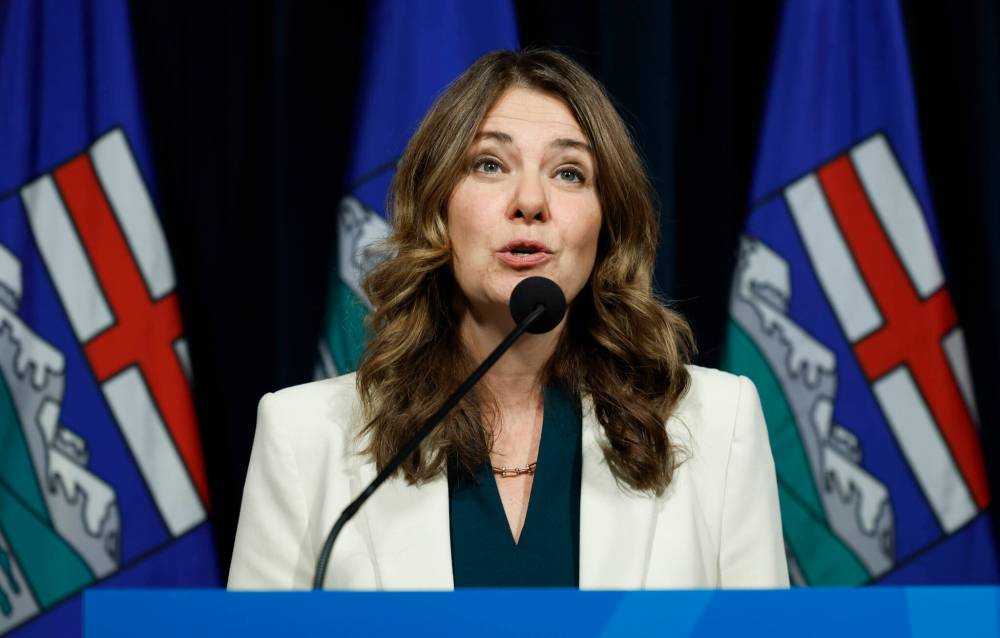
The Canadian Press
Alberta Premier Danielle Smith speaks to the media on Wednesday, two days after the province’s referendum.
In case this is all flying right over your head, Twin Peaks was a surrealist television show, a mystery/horror/something that premiered in 1990. It had an amazing ability to leave viewers both entertained and, well, hanging.
On things as simple as owls in a tree.
But if the owls weren’t owls, what exactly were they? They sure looked like owls.
Twin Peaks had an almost preternatural ability to leave things unexplained — as if, bereft of explanation, its strength depended on watchers coming to their own informed conclusions in the absence of clear direction — and not easy, simple, stock conclusions, either.
It depended on you to be able to think for yourself. To want to think for yourself. To enjoy thinking for yourself.
While we’re on the topic, the Alberta separatists were not what they seemed.
To be more exact, the doom prophesiers were not what they seemed. They pretended that Alberta separation was a real threat, and they rode that pony to personal aggrandizement and internet fame — and perhaps to some sort of personal gain as well.
They maintained that winning a referendum to decide if there should be a referendum on separation was a real possibility. Instead, the hard numbers were something else entirely.
The numbers are pretty stark. Just more than 75 per cent of Albertans want to stay in Canada.
Still, that also means something like 25 per cent either want to leave or wanted to give the Alberta government some bargaining chips with the federal government — even if that didn’t mean voting to leave in a future, actual referendum on leaving.
Are there real grievances? Of course there are. Canada’s is the kind of whacked-out asymmetrical federalism where anyone in any province can be deeply aggrieved at their lot at any given time — and Quebec and Alberta seem to feast on such grievances for political advantage.
The Alberta separatists will, of course, recast the separation vote results in a new way, suggesting that they knew all along that this would not be a successful vote, that they have somehow garnered new bargaining strengths for the province of Alberta, that they have built the groundwork for future referenda.
Anything to ensure that they are still front and centre, anything to prove that they still matter.
One of the lead organizers of the separation side, Jeff Rath, wasted no time shifting from getting ready to head to the U.S. for help with the next stage of Free Alberta to arguing that he had some role in demanding answers in the Wainwright military tragedy. “I want the name of the officer in command of this cluster f—, including his/her/its unit designation,” he puffed righteously on X.
Who, besides Rath himself, appointed him to take names, and apparently, check genders?
This is before he told CTV News, entirely expectedly, that the referendum failed because “we’re a grassroots movement and we were up against the entire globalist machine.” Of course.
When in doubt, blame the bogeyman.

Legends in their own minds. Carpetbaggers of the wild web frontier.
And they’ve cost Albertans — and probably other Canadians as well — millions of dollars.
Truth is, you don’t need to know anything about the owls. Just bring rigour to the argument,
The grift? The grift is real, folks.
Stay sharp, Canada. Stay sharp and alert and informed, and let’s build something together, instead of tearing it down.