

At last, some good news on homelessness
Advertisement
Read this article for free:
or
Already have an account? Log in here »
To continue reading, please subscribe:

Digital Subscription
One year of digital access for only $205*
- Enjoy unlimited reading on winnipegfreepress.com
- Read the E-Edition, our digital replica newspaper
- Access News Break, our award-winning app
- Play interactive puzzles
*First annual payment billed as $205.00 + GST for one year. This annual subscription will automatically renew at $233.00 + GST every 52 weeks (10% off the regular annual price of $259.35). Offer available to new and qualified returning subscribers only. Cancel any time.
To continue reading, please subscribe:
Add Free Press access to your Brandon Sun subscription for only an additional
$1 for the first 4 weeks*
- Enjoy unlimited reading on winnipegfreepress.com
- Read the E-Edition, our digital replica newspaper
- Access News Break, our award-winning app
- Play interactive puzzles
*Your next Brandon Sun subscription payment will increase by $1.00 and you will be charged $17.95 plus GST for four weeks. After four weeks, your payment will increase to $24.95 plus GST every four weeks.
Read unlimited articles for free today:
or
Already have an account? Log in here »
There is no shortage of reasons to be frustrated about homelessness in Winnipeg. But the latest numbers provide something that has been increasingly difficult to find — evidence that at least some things are getting better.
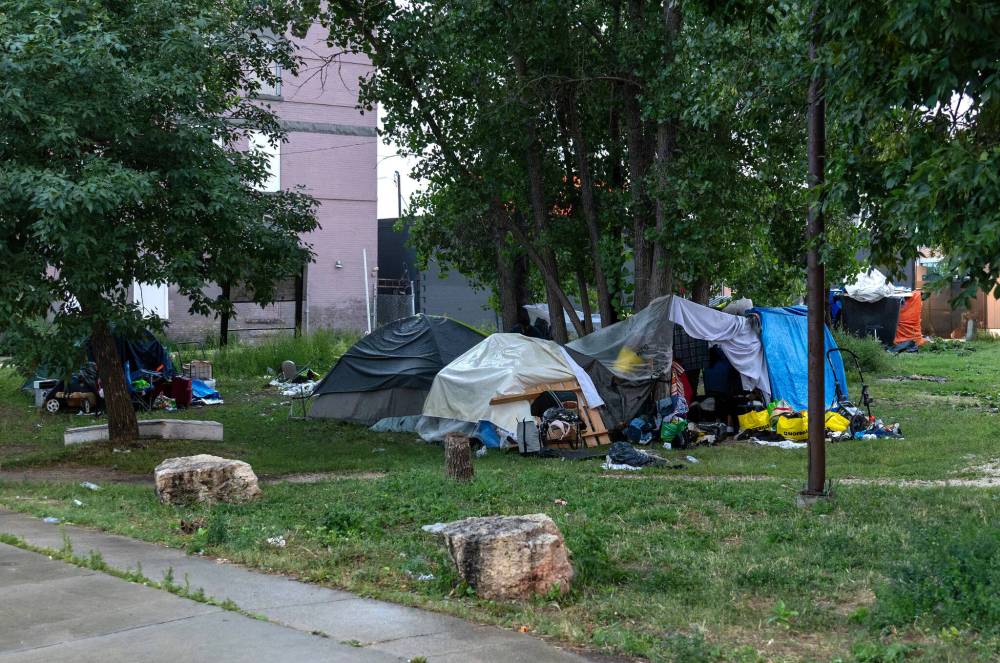
A city tally presented to councillors Friday shows 245 people were living in 72 encampments across Winnipeg in July. Last September, the city counted about 700 people living in 100 encampments.
That is a remarkable drop.
ROBERT LEE / FREE PRESS FILES
The number of people living in homeless encampments in the city has dropped over the past year.
It does not mean Winnipeg has solved homelessness. It does not mean every person displaced from an encampment has found a home. And it certainly does not mean there is no longer a problem in the city’s streets and public spaces.
It does mean, however, that progress is being made.
That matters because the debate over encampments has become so polarized that it is easy to lose sight of the basic objective — getting people out of tents and into safe, stable housing while ensuring public spaces remain available to everyone.
Winnipeg’s encampment protocol, introduced last November, prohibits encampments in a number of sensitive locations, including near schools, daycares and playgrounds.
The policy has been criticized, and some of those criticisms deserve serious consideration.
Clearing an encampment without offering a realistic alternative does little more than relocate homelessness. People who have nowhere else to go will find somewhere else to sleep.
That is why the housing component is so important.
The city says more than 260 people have been housed directly from encampments, although it is unclear whether that figure applies specifically to Winnipeg or includes people housed through the broader provincial effort. Manitoba’s Your Way Home strategy is intended to move people from encampments into housing.
Those are encouraging developments.
They are also a reminder that the number of tents is not the only measure of success. What matters is what happens to the people who were living in them.
There are still serious concerns.
Coun. Cindy Gilroy (Daniel McIntyre) has pointed out that some transitional housing comes with restrictions on drug use, meaning some people who have moved indoors may still be using drugs in public.
Coun. Sherri Rollins (Fort Rouge – East Fort Garry) has questioned whether the city has enough outreach capacity and basic services, such as garbage collection, to properly manage encampments.
Those are real problems. They should be addressed rather than waved away.
But it would be equally misguided to conclude that the entire approach is failing because it is not perfect.
Winnipeg is not going to eliminate homelessness. No major Canadian city has. There will always be people who, for one reason or another, struggle to remain housed.
The reasonable goal is to reduce the number of people living outdoors, increase the number of people moving into housing and provide the supports needed to keep them there.
By those measures, the latest numbers are encouraging.

The city needs to keep enforcing reasonable restrictions around encampments in sensitive public spaces. But enforcement must remain connected to outreach and housing, not become an end in itself. The province must continue building the housing and support system needed to make those moves out of encampments sustainable.
The work will be messy. Some people will fall through the cracks. Some will refuse available housing. Some will return to the streets.
That does not make the effort futile.
The latest numbers show fewer people living in encampments and hundreds moving into housing. It is not a perfect solution, and it is nowhere near the end of the problem.
But for a city that has spent years watching its homelessness crisis worsen, it is something worth recognizing — progress is possible.