

Emergency rooms and health-care bottlenecks
Advertisement
Read this article for free:
or
Already have an account? Log in here »
To continue reading, please subscribe:

Digital Subscription
One year of digital access for only $205*
- Enjoy unlimited reading on winnipegfreepress.com
- Read the E-Edition, our digital replica newspaper
- Access News Break, our award-winning app
- Play interactive puzzles
*First annual payment billed as $205.00 + GST for one year. This annual subscription will automatically renew at $233.00 + GST every 52 weeks (10% off the regular annual price of $259.35). Offer available to new and qualified returning subscribers only. Cancel any time.
To continue reading, please subscribe:
Add Free Press access to your Brandon Sun subscription for only an additional
$1 for the first 4 weeks*
- Enjoy unlimited reading on winnipegfreepress.com
- Read the E-Edition, our digital replica newspaper
- Access News Break, our award-winning app
- Play interactive puzzles
*Your next Brandon Sun subscription payment will increase by $1.00 and you will be charged $17.95 plus GST for four weeks. After four weeks, your payment will increase to $24.95 plus GST every four weeks.
Read unlimited articles for free today:
or
Already have an account? Log in here »
Manitoba’s emergency rooms are being crushed under the weight of a health-care problem that cannot be fixed inside emergency departments.
The latest picture from Winnipeg hospitals is grim. ER wait times hit an all-time high this year and there appears to be no relief in sight.
Despite a 2023 election pledge by the NDP to shorten wait times, they are getting longer and patient care is suffering. ER doctors and nurses interviewed recently by the Free Press said they have never seen the situation this bad.
Brandon Sun FILES
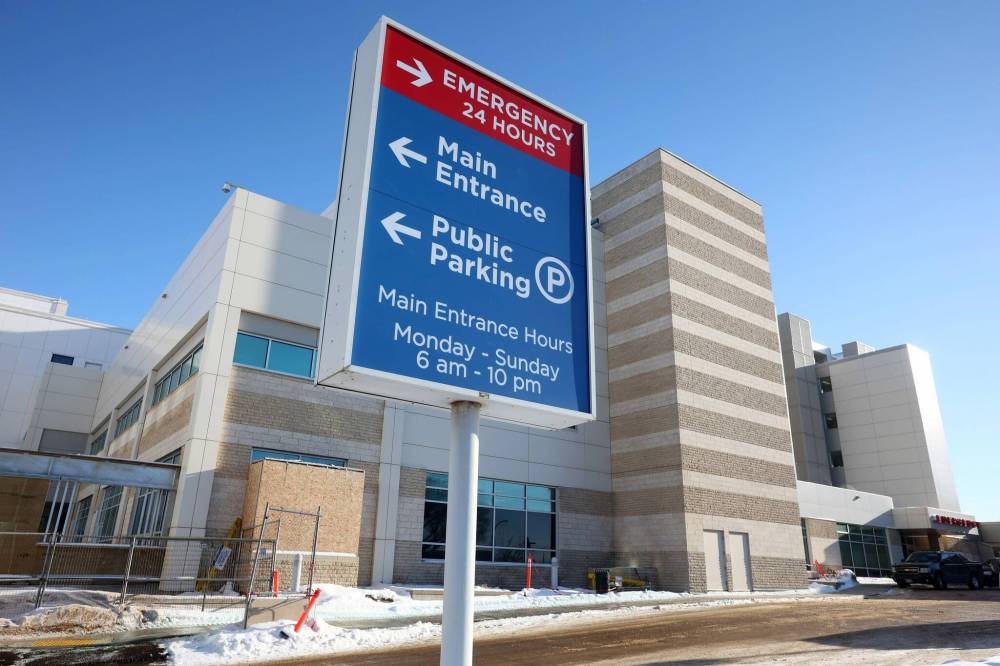
The emergency room entrance at the Brandon hospital
The temptation for government is to look for quick fixes: add capacity to emergency departments, redirect patients to clinics or move hospital beds around the system.
Those measures may help at the margins, but they will not solve the fundamental problem. The bottleneck is downstream.
Typically, half or more of patients in emergency department treatment areas are sick enough to require admission to a medical ward.
But those wards are full, in part because they contain patients who no longer require acute hospital care.
Many are elderly people waiting weeks or months for a personal-care-home bed, home care, supportive housing or another form of alternate-level care.
That is the choke point.
When an admitted patient cannot leave the hospital because there is nowhere appropriate for them to go, a hospital bed remains occupied. That means another patient cannot move from the ER into that bed. And when that bed is unavailable, the next patient waits in the emergency department.
The queue simply moves backward.
Emergency physicians have been saying this for years. St. Boniface ER physician Noam Katz put it plainly: “To address the backlog, you need to address the downstream issues.”
Former St. Boniface emergency director Dr. Alecs Chochinov has made the same argument, saying governments need to determine how many personal-care-home beds and home-care services are actually required and then make the investments necessary to provide them.
That means committing to a long-term expansion of community-based care, not treating it as a temporary pressure valve whenever hospitals become overwhelmed.
Manitoba needs more personal-care-home beds. It needs substantially more home care so people who can safely remain at home do not occupy hospital beds. It needs more supportive and alternative-care options for people who are medically stable but cannot live independently.
And it needs to fund those services reliably enough that health authorities can plan for what’s coming at them next.
This is particularly important as Manitoba’s population ages. HSC’s chief medical officer has described the growing number of older, medically complex patients as a “silver tsunami” and acknowledged that there was not enough planning for it.
There is no shortcut around that demographic reality.
The government can continue moving patients between hospitals, putting people in hallways and non-traditional spaces and urging health authorities to squeeze more capacity out of an already strained system. Or it can start building far more capacity outside hospitals that the system desperately needs.

That does not mean abandoning efforts to recruit health-care workers, improve primary care or make emergency departments more efficient. Those efforts matter.
But, even though the government’s recent announcement of 4,725-plus net new health-care staff is laudable, it cannot compensate for a shortage of places for patients to go once they no longer need acute care.
If Manitoba wants shorter ER waits, it needs to stop treating the ER as the centre of the problem.
The real solution lies across the health-care system — particularly in the community.
Until the province makes sustained, long-term investments in personal-care homes, home care and alternative forms of community care, hospital congestion will get worse and ER wait times will continue to climb.