

Making a clear code of conduct for Winnipeg councillors
Advertisement
Read this article for free:
or
Already have an account? Log in here »
To continue reading, please subscribe:

Digital Subscription
One year of digital access for only $205*
- Enjoy unlimited reading on winnipegfreepress.com
- Read the E-Edition, our digital replica newspaper
- Access News Break, our award-winning app
- Play interactive puzzles
*First annual payment billed as $205.00 + GST for one year. This annual subscription will automatically renew at $233.00 + GST every 52 weeks (10% off the regular annual price of $259.35). Offer available to new and qualified returning subscribers only. Cancel any time.
To continue reading, please subscribe:
Add Free Press access to your Brandon Sun subscription for only an additional
$1 for the first 4 weeks*
- Enjoy unlimited reading on winnipegfreepress.com
- Read the E-Edition, our digital replica newspaper
- Access News Break, our award-winning app
- Play interactive puzzles
*Your next Brandon Sun subscription payment will increase by $1.00 and you will be charged $17.95 plus GST for four weeks. After four weeks, your payment will increase to $24.95 plus GST every four weeks.
Read unlimited articles for free today:
or
Already have an account? Log in here »
Most of us are familiar with ‘codes of conduct’.
Generally, they are sets of rules for how people are supposed to behave and act. As modern life becomes more and more complex, they have been increasingly applied in a variety of settings. Workplaces are most common, of course (usually at the behest of human resources directors), but codes of conduct also apply to the members of professional associations and volunteer organizations — from orthopedic surgeons and math teachers to youth hockey coaches and the board of directors of a local community centre.
Entire governance courses are taught on the subject, but the basic tenets of all codes of conduct are similar — people are expected to be respectful and honest in their interactions and choices, to act in good faith with the mission statements of their businesses or organizations, to respect organizational rules and to follow local laws and regulations. Most codes also prescribe processes to follow and actions to be taken if people violate the code or break the law.
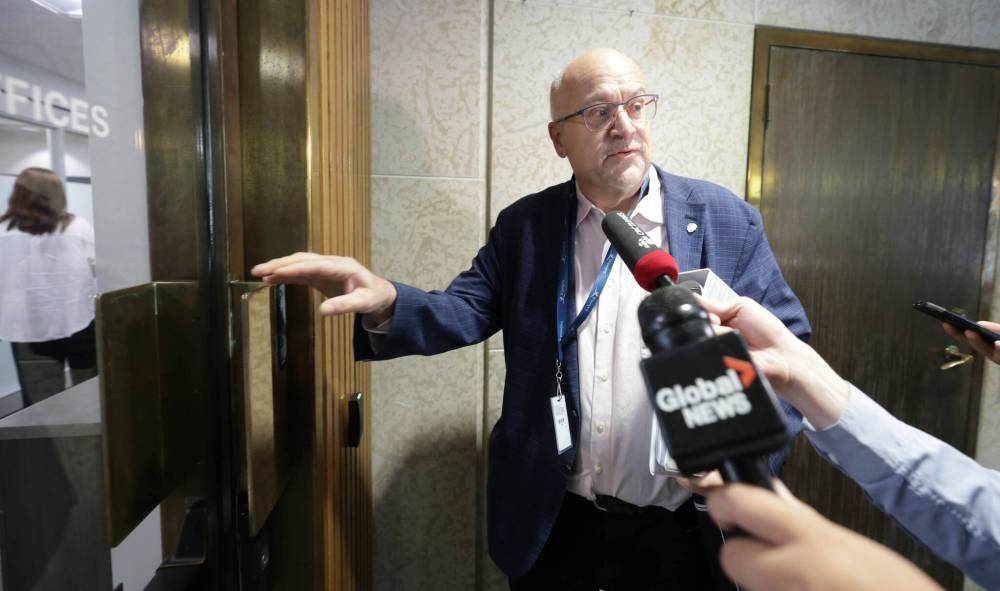
Ruth Bonneville/Winnipeg Free Press
Winnipeg Coun. Russ Wyatt walks into city hall on Thursday, Aug. 13.
It’s mostly straightforward, common-sense stuff. But, as Winnipeggers have recently been reminded in the case of Transcona city councillor Russ Wyatt, not all codes of conduct are created equal.
For example, the City of Winnipeg’s code of conduct for city council — the mayor and 15 elected councillors — is not a comprehensive document. Its 29 pages include guidelines on how our elected officials should act and behave with, among other things, confidential information, in conflicts of interest, when interacting with colleagues and staff and with financial matters such as election fundraising and gifts.
It also outlines how complaints may be made to the city’s integrity commissioner.
However, Winnipeg’s primary governance document is the City of Winnipeg Charter, which is an act of the Government of Manitoba.
Under the charter, councillors automatically forfeit their seats if they have been convicted of certain criminal offences. But there is no process for dealing with situations such as that of Wyatt, who faces two charges each of sexual assault and administering a noxious thing, stemming from separate alleged events involving two different men. He also faces one charge of drug possession after psilocybin was discovered when police searched his apartment in April.
Since the first charges were laid in March, Wyatt has maintained his innocence and continued as a city councillor. Mayor Scott Gillingham asked him to step away from his duties, but Wyatt refused and continues to attend council meetings and meetings of the East Kildonan-Transcona community committee (as Transcona councillor, he is automatically a member).
His council colleagues removed him from all other boards and committees on which he served.
When additional charges were laid earlier this month, Wyatt doubled down and told reporters he would “absolutely” continue doing his job.
He should obviously be presumed innocent until proven guilty. But Wyatt is also an elected representative of the ward of Transcona and it is probably fair to say he has lost the confidence of many constituents.

So, how can he continue to serve them? Simply put — because he can.
Which is why the mayor and Premier Wab Kinew have both said they will act to change the rules governing elected officials facing criminal charges. The best way, post Wyatt’s current issues, is a mechanism that temporarily relieves councillors of their duties until any Criminal Code charges are dealt with — benching them without publicly convicting them before they even see a courtroom.
Only the provincial government can change the city charter. Kinew has said he will consider changes to the act after civic elections on Oct. 28. Gillingham has said he will introduce a motion in September to be considered by the new council after October’s elections.
A change should be made.
Public faith must be restored and Kinew and Gillingham must take public trust to heart.