

A hint of relief for struggling municipalities
Advertisement
Read this article for free:
or
Already have an account? Log in here »
To continue reading, please subscribe:

Digital Subscription
One year of digital access for only $205*
- Enjoy unlimited reading on winnipegfreepress.com
- Read the E-Edition, our digital replica newspaper
- Access News Break, our award-winning app
- Play interactive puzzles
*First annual payment billed as $205.00 + GST for one year. This annual subscription will automatically renew at $233.00 + GST every 52 weeks (10% off the regular annual price of $259.35). Offer available to new and qualified returning subscribers only. Cancel any time.
To continue reading, please subscribe:
Add Free Press access to your Brandon Sun subscription for only an additional
$1 for the first 4 weeks*
- Enjoy unlimited reading on winnipegfreepress.com
- Read the E-Edition, our digital replica newspaper
- Access News Break, our award-winning app
- Play interactive puzzles
*Your next Brandon Sun subscription payment will increase by $1.00 and you will be charged $17.95 plus GST for four weeks. After four weeks, your payment will increase to $24.95 plus GST every four weeks.
Read unlimited articles for free today:
or
Already have an account? Log in here »
Hey there, time traveller!
This article was published 05/12/2022 (1395 days ago), so information in it may no longer be current.
For the moment, it’s merely the whiff of a hint that the Progressive Conservative government is prepared to end its seven-year freeze on grants to municipalities. But for cash-starved local governments, it is a glimmer of hope.
Late last month, a cluster of Tory cabinet ministers braved a forum at the Association of Manitoba Municipalities (AMM) annual convention, where they were peppered with questions about the freeze on operating grants and other forms of funding municipal governments rely on to make ends meet.
Even if the future of provincial grants to municipalities was not made entirely clear, the message from the local leaders was: faced with skyrocketing fuel costs and inflation, they can no longer survive if the province continues its austere ways.
Matt Goerzen / Brandon Sun FILES
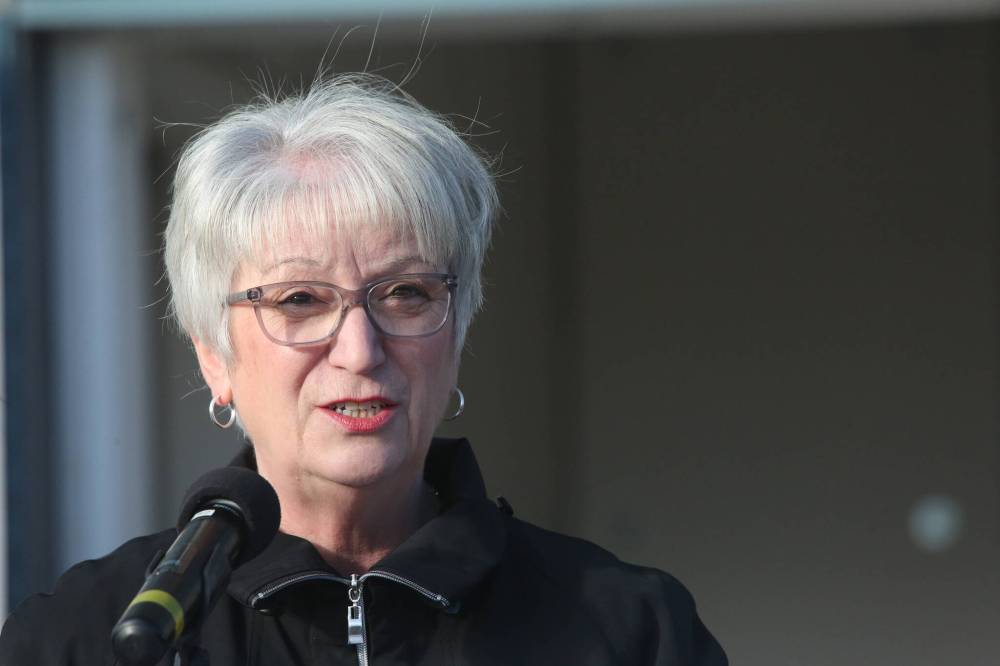
Municipal Relations Minister Eileen Clarke
The freeze on operating grants was put in place by former premier Brian Pallister almost immediately after the Tories assumed power in 2016. Remarkably, more than half a decade later, that freeze is still in place.
When asked whether the cap on grants was coming to an end, Municipal Relations Minister Eileen Clarke did offer a ray of hope. “We all know the costs on absolutely everything are going up, whether it’s your equipment, your maintenance, all costs have gone up, including wages,” Clarke said. “We are working on it and hopefully when the budget comes out in 2023, there will be news to follow.”
Does that mean there is going to be more money for local governments? Perhaps, but a broader examination of the PCs’ ongoing priorities suggests those hoping for a sudden windfall are likely to be disappointed.
Municipal leaders are keenly aware the Tories are spending a lot of money and political capital to provide property owners with rebates on the education portion of property taxes. While municipalities struggle to keep their part of property taxes in check, the PC government has been mailing cheques — 455,000 of them, worth more than $350 million in total — to property owners.
While the Tories seek to buy some love from property owners, municipalities find their pleas for more support go unanswered. For example, municipalities asked the province to consider rebating $25 million in provincial sales tax they pay on goods and services; to date, the plea has fallen on deaf ears.

What must be particularly galling for reeves and rural mayors is that while they are losing the battle to get more funding from the province, the provinces — including Manitoba — are engaged in a campaign to convince the federal government to provide more money for health care.
Premier Heather Stefanson has been resolute that Ottawa, as the senior level of government, has a solemn responsibility to support the provinces on health care. However, Stefanson seems disinclined to offer municipalities within her own province with the same level of support she demands from the federal government.
Starving local governments of operating funds, while rebating education taxes to property owners, is unsound fiscal policy. It leaves property owners vulnerable to large increases in the municipal portion of property taxes, while undermining infrastructure and other local amenities and services most Manitobans value.
Government must always seek to balance the demands on its treasury. However, maintaining that balance among such priorities as health care, education and, yes, support to municipalities is simply not possible when cutting taxes remains an overriding concern.
The Tories seem to be operating on the belief tax rebates will buy them support in next year’s provincial election. They might be shocked to learn many voters have already figured out those rebates are being provided at an enormous cost to the viability of local government.
History
Updated on Monday, December 5, 2022 7:22 AM CST: Adds photo