All-encompassing awe Whether from distant stars or on local stages, wonderment makes welcome return from darkness
Read this article for free:
or
Already have an account? Log in here »
To continue reading, please subscribe:
Digital Subscription
One year of digital access for only $1.44 a week*
- Enjoy unlimited reading on winnipegfreepress.com
- Read the E-Edition, our digital replica newspaper
- Access News Break, our award-winning app
- Play interactive puzzles
*Billed as $5.77 plus GST every four weeks. After 52 weeks, price increases to the regular rate of $19.95 plus GST every four weeks. Offer available to new and qualified returning subscribers only. Cancel any time.
To continue reading, please subscribe:
Add Free Press access to your Brandon Sun subscription for only an additional
$1 for the first 4 weeks*
- Enjoy unlimited reading on winnipegfreepress.com
- Read the E-Edition, our digital replica newspaper
- Access News Break, our award-winning app
- Play interactive puzzles
*Your next Brandon Sun subscription payment will increase by $1.00 and you will be charged $17.95 plus GST for four weeks. After four weeks, your payment will increase to $24.95 plus GST every four weeks.
Read unlimited articles for free today:
or
Already have an account? Log in here »
Hey there, time traveller!
This article was published 16/07/2022 (1564 days ago), so information in it may no longer be current.
Not every tale begins with “once upon a time,” but the sense of those words is almost always implied: our myths and legends live best outside the borders of temporal precision. Told that way, they can be handed down for generations, never changing their distance. Always close enough to be familiar, and just far enough to invite the wonder of imagination.
That wonder comes naturally to us, as children. When everything is new, then everything is still fluid, and the boundaries of what is real are porous and thin. A ghost story told around the fire. Legends of wizards and dragons and talking animals. All of these are very easy to inhabit when we’re young, and enchanted by the mysteries held in “once upon a time.”
At some point, that wonder ebbs out of our lives. Reality builds a steel frame that holds firmer limits on what we know to be possible. Our disbelief becomes heavier; it takes ever more effort to suspend it. Sometimes, we remember what that wonder felt like, just long enough to miss it; but the magic that was once all around us mostly stays hidden away.

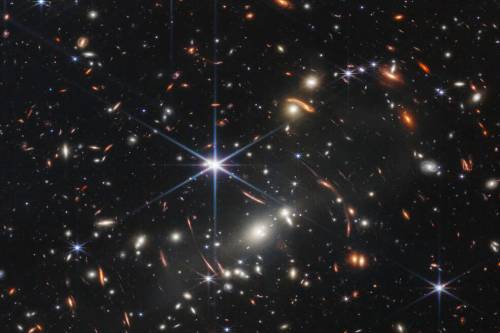
On that note, two completely unrelated things happened this week that caught my attention. The first is that NASA released the first set of images taken by the James Webb Space Telescope, just over six months into its planned 10-year mission; the second is that the Winnipeg Fringe Theatre Festival emerged from the two-year stillness of COVID-19.
At first blush, these events could not be more different. One hurls us deep into the heavens, the other roots us to Earth. Yet both call us back to wonder, and both do something interesting to transform how we grasp the stories we tell. So I’d like to consider them together, for a moment, even if it doesn’t on the surface make a whole lot of sense.
Let’s begin with the stars, because it’s hard to look away from this gift science has brought. When the space telescope’s first images were released, it ignited a flurry of awe: it is perfectly suited for a time in which we consume much of existence through our phones. A portable sort of amazement, made for sharing around the digital equivalent of a fire.
It’s hard to say which of these images is the most beautiful. There is the image of Planetary Nebula NGC 3132, appearing as a translucent jewel hanging in space, as a dying star cloaks itself in an orange veil of gas and dust. Or, there’s the unforgettable image of Stephan’s Quintet, a cluster of galaxies containing millions of young stars, flirting in an exquisite dance.
We will all have our own favourite amongst this bunch of images, and those yet to come. If I had to pick one, it would be the image of the Carina Nebula, a Milky Way neighbour to us at just 7,500 light years away. Through the telescope, we can see the edges of undulating mountains of cosmic gas, close to the heart where new stars are being born.
Are, or were? Of all the truths about the universe, none is as beautiful to me as this: when we look at the stars, we are seeing back in time. The twinkles in the night sky are both reality and memory of something that happened long ago. Depending on the distance of the star, the shine that reaches our eyes might have begun its journey to us thousands of years before.
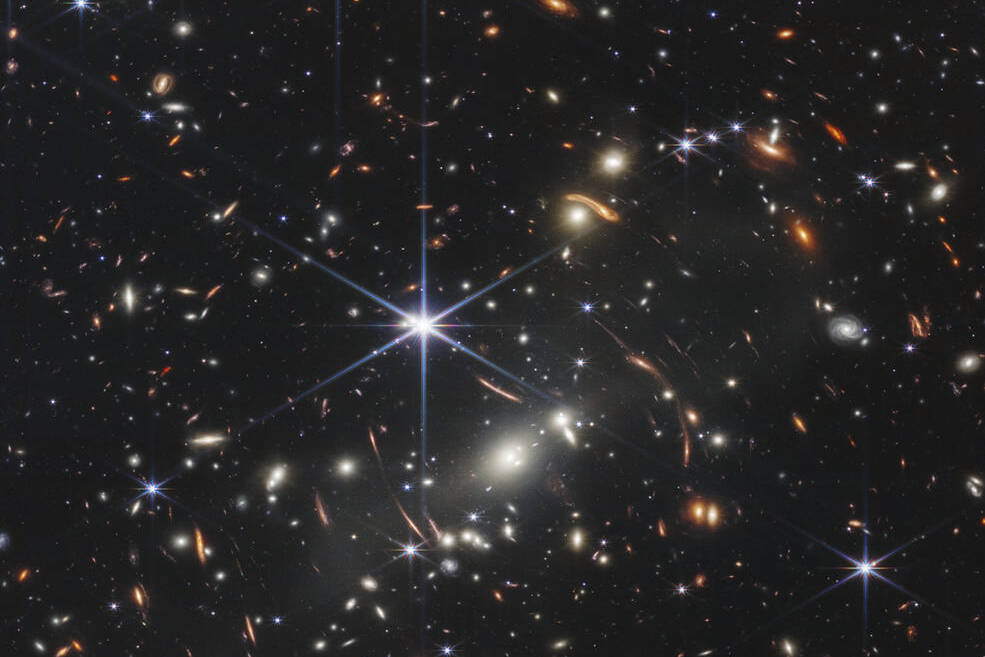
Through the space telescope, we can peer back even further. Its first image, a confetti of galaxies spackled on a patch of sky that looks, from our vantage, no bigger than a grain of sand, shows those galaxies as they looked 4.6 billion years ago. Long before humans, before animals, and even before Earth. Long before everything we can imagine and have ever known.
On this cosmic scale, everything that happened is still happening. Stars are born and destroyed, galaxies whirl out through the void, and though those events are long since past, they are also not gone. They are with us, we bear witness, we look up and see for ourselves eras of creation before our existence, at once unimaginably distant and urgently familiar.
Once upon a time, a whole universe exploded into being. Billions of years later, if you can look hard enough, it still is.
To know this is to realize we have only just begun to wonder; that science, even as it firmed the once-porous boundaries of our everyday world, was just building a scaffold on which to climb even further into an all-encompassing awe. Because it’s not the answers that carry us into wonder, after all. That journey, always, begins with the questions.
Which brings us to the fringe festival, and a wonder of a different kind. More terrestrial, more intimate. Less out there than inside.
Of all the events the pandemic stole from our lives, the fringe, to me, was one of the most painful losses. Over the years, it has become my favourite of Winnipeg’s festivals, the one which most reliably shifts something in my heart, or my mind. Partly, there’s no predicting what you will find. Each slate of offerings brings its own mysteries, and its own delights.
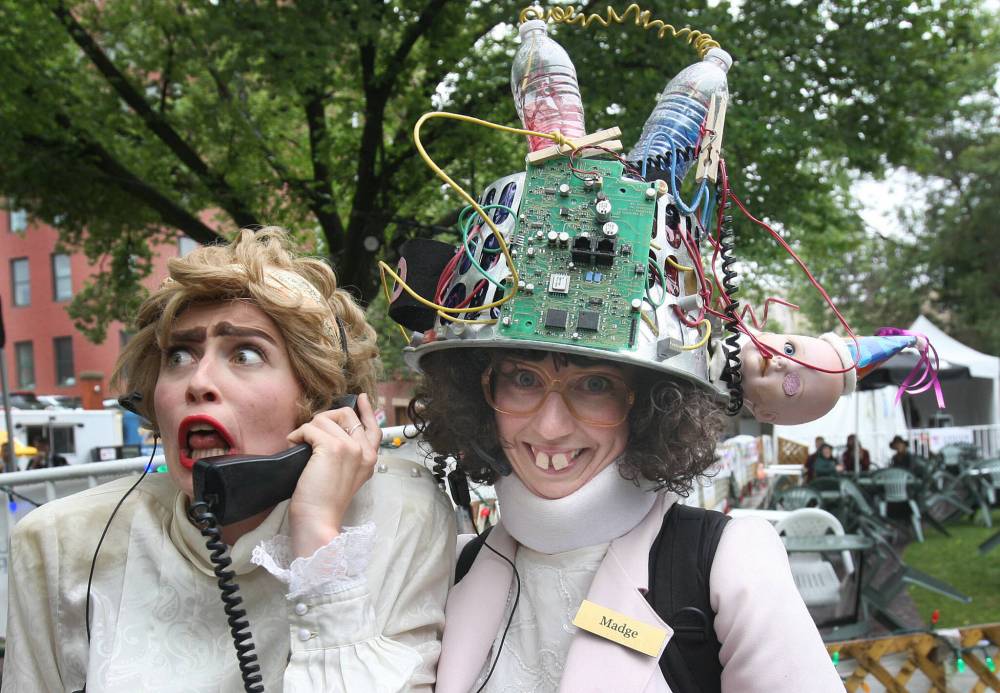
Since its inception in 1988, about 4,000 different shows have appeared at the fringe. They’ve stretched through all genres, and all possible ways of telling a story. I’ve seen works of infinite sadness performed by reflective clowns; I’ve seen improv comedy that healed a broken heart; I’ve seen dances that lifted me to places where words alone cannot go.
And I have wept a lot, in the darkness of fringe theatres. I’ve wept before the plastic backs of empty chairs, at shows which audiences had not yet discovered; I’ve wept shoulder-to-shoulder with strangers in sold-out crowds. I’ve thought about the ways we are different, and the things we have in common. I’ve thought a lot, in fringe theatres, about myself.
This year, my first two fringe shows were of the simplest kind. Monologues only. Just a person, on stage, telling their story without props, without backdrop, without costume. One was by a veteran performer; the other was by a man who, when he leaves the stage, returns to his life as a lawyer. Both had a story to tell, and at fringe, those stories are treated equal.
These types of shows are, to my mind, the purest iteration not just of fringe, but of storytelling itself; they’re certainly the most ancestral. Before books, before screens, before anything else, this is what we did: we sat down and invited ourselves into wonder. We all knew each other as storytellers, once, and created those stories anew with each telling.

Every year at the fringe, I think: someday, we will run out of stories. Surely, after all these years, there can’t be many more left to tell. Yet no matter how many shows I take in, something incredible always happens at the fringe: I witness something that I hadn’t before. An idea, a feeling, an event. A way of weaving a familiar tale that finds new texture in old threads.
And it’s then that the wonder children find in “once upon a time” shows us once again where to find it, vivid and living in the simplest of moments. The darkness at the back of a theatre, for instance, quietly weeping where no one can see. Or, lying flat on our backs in the soft damp of grass, minds falling upwards into the night sky that is happening now, and also forever.
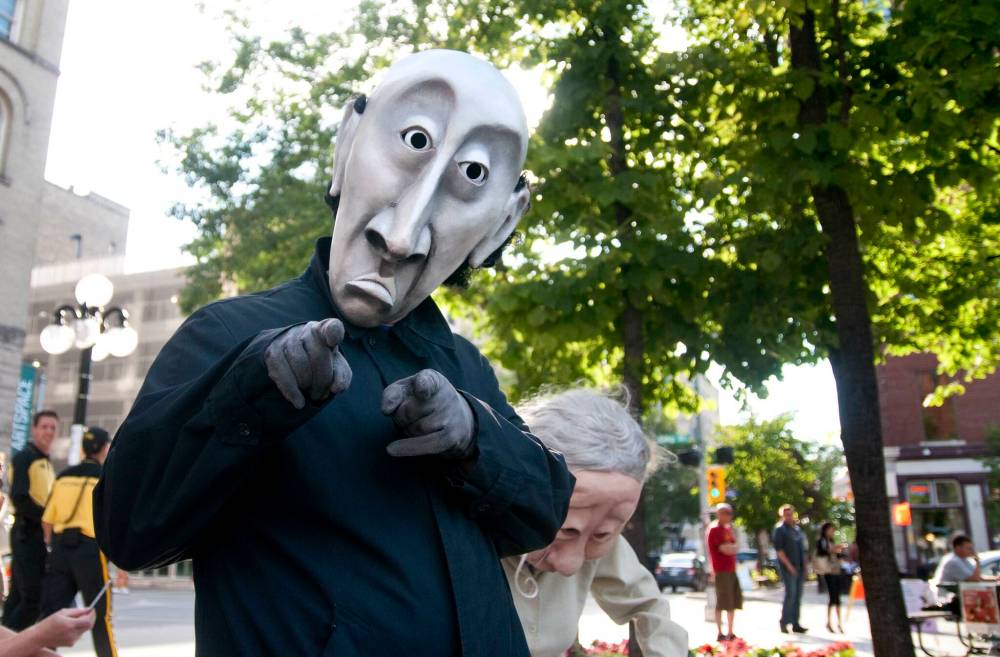
These are the moments where time and creation come rushing together, revealing both to be infinite and without limitation, forces larger and more powerful than what we can perceive. There is no end to wonder. It thrives everywhere we make space to invite it, which is to say everywhere we yearn to find answers about what is out there, or what is inside.
So long as we ask those questions, we will never run out of stories. Just as we will never run out of stars.
melissa.martin@freepress.mb.ca

Our newsroom depends on a growing audience of readers to power our journalism. If you are not a paid reader, please consider becoming a subscriber.
Our newsroom depends on its audience of readers to power our journalism. Thank you for your support.