

Let’s talk more about consent
Advertisement
Read this article for free:
or
Already have an account? Log in here »
To continue reading, please subscribe:
Digital Subscription
One year of digital access for only $1.44 a week*
- Enjoy unlimited reading on winnipegfreepress.com
- Read the E-Edition, our digital replica newspaper
- Access News Break, our award-winning app
- Play interactive puzzles
*Billed as $5.77 plus GST every four weeks. After 52 weeks, price increases to the regular rate of $19.95 plus GST every four weeks. Offer available to new and qualified returning subscribers only. Cancel any time.
To continue reading, please subscribe:
Add Free Press access to your Brandon Sun subscription for only an additional
$1 for the first 4 weeks*
- Enjoy unlimited reading on winnipegfreepress.com
- Read the E-Edition, our digital replica newspaper
- Access News Break, our award-winning app
- Play interactive puzzles
*Your next Brandon Sun subscription payment will increase by $1.00 and you will be charged $17.95 plus GST for four weeks. After four weeks, your payment will increase to $24.95 plus GST every four weeks.
Read unlimited articles for free today:
or
Already have an account? Log in here »
I don’t know many women who haven’t been sexually harassed or sexually assaulted.
It’s a terrible truth.
The crimes include being molested as a child by a relative or family friend, having a drink drugged as a precursor to sexual assault, being harassed or groped by an acquaintance, colleague, boss or teacher, and being raped, by someone familiar or a total stranger.
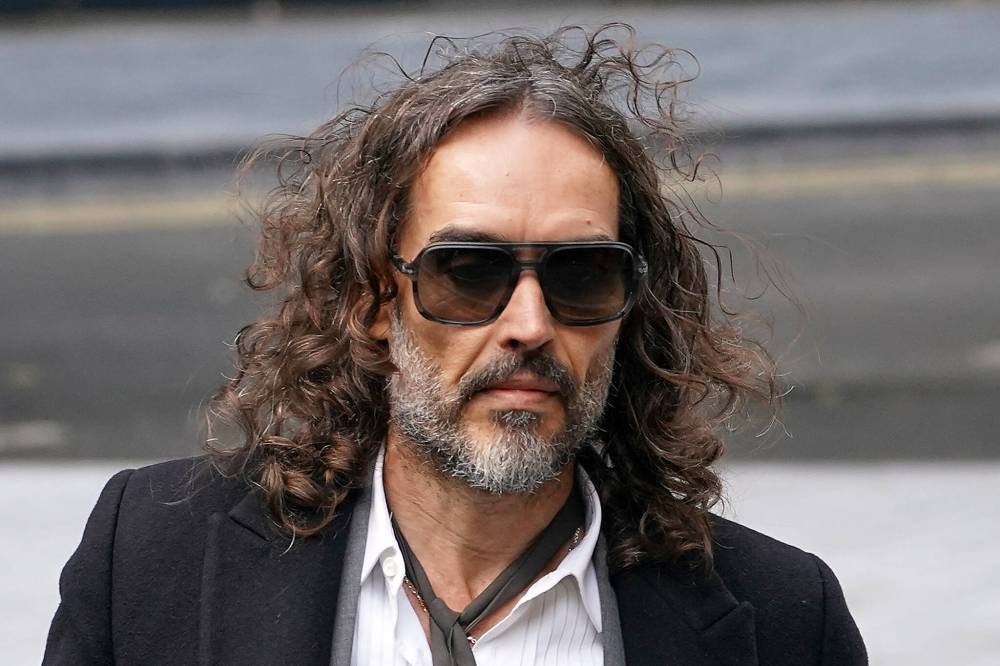
Alberto Pezzali / The Associated Press Files
Russell Brand arrives at Southwark Crown Court in London on Nov. 2. The comedian was found guilty of rape and sexual assault.
It’s why we walk to our cars at night with keys clutched in clenched fists. Why we brace for fight or flight when someone is too close behind us on a trail. It’s why we establish emergency code words with friends in case a social outing turns creepy or dangerous.
Too often, women who report sexual assaults are tried in court themselves.
What were you wearing? How much did you have to drink? Why were you walking home alone? Why did you go to his apartment? Isn’t it true that you’ve slept with a lot of people?
The accused is entitled to a vigorous defence, but that should not involve shifting the blame for the crime to the survivor.
It does help explain why sexual violence goes largely unreported in Canada.
“Only six per cent of sexual assaults are reported to police,” according to the Office of the Federal Ombudsman for Victims of Crime. “Survivors of sexual violence are responding to a system that fails to ensure safety, dignity and accountability. The fear of being disbelieved, retraumatized or harmed is based on lived experiences. Sexual violence investigations should focus on the suspect rather than the survivor.”
But that’s not what happens.
For a decade in St. John’s, N.L., a sexual-assault case that pivoted on the issue of consent captured public attention and galvanized debate.
The basic facts are these: in 2014, an inebriated woman approached an on-duty police officer for a lift home after a night out with friends. At her apartment, he helped her climb through a window when she couldn’t find her keys, and she let him in when he came around to her door. She remembers they kissed and then she blacked out. She came to as he was penetrating her anally.
She endured two trials and a mistrial before he was finally convicted when a jury concluded he had not received her consent — though not before defence counsel tried their best to discredit her with a barrage of pointed questions that suggested she had not been incapacitated at the time.
That the woman was sexually violated by someone in a position of trust was horrendous enough; the courtroom grilling about her motivation, character and judgment further exacerbated her trauma.
But the case certainly raised awareness of exactly what consent means. If you are incapacitated, you are unable to consent. We are all entitled to bodily autonomy, and if you do not wish to have sex with a person at any point — even if you have already had consensual sex with them — that is your right. Anyone who ignores your refusal is committing a crime.
Which brings us to Russell Brand.
The British comedian, actor, broadcaster, professed Christian, conspiracy theorist, self-proclaimed life coach and prolific sexual predator was sentenced to 10 1/2 years on Nov. 9 for rape and sexual assault.
His celebrity meant the complainants in the case were not only testifying to the court, but to a global audience. They had to describe traumatic experiences knowing they would be reported and dissected by media outlets from around the world.
The rape occurred after Brand had consensual sex with a woman and then anally penetrated her despite her objections.
The widespread coverage of Brand’s trial put the issue of consent back in the spotlight. But once again, the defence resorted to victim blaming.
As Ciara Bergman, head of the advocacy group Rape Crisis England & Wales, noted, “Throughout Russell Brand’s trial, we saw rape myths in action: why didn’t she scream? Why didn’t she fight back? Why did she wait so long to report it?

“These were all introduced as ways of discrediting the survivors and/or introducing doubt into the minds of jurors.”
Brand used his celebrity to gain access to and influence over women. His Achilles heel was thinking that his status and power made him untouchable; instead, his arrogance set the stage for his spectacular downfall.
Justice Joel Bennathan called out Brand’s “dreadful behaviour,” declaring that, “Whatever women wear, wherever they go, indeed whatever they drink, they retain the right to say ‘no’ and to demand justice from criminal courts when sexual predators like you, Russell Brand, act without their consent.”
It is a powerful message that should reverberate in all corridors of power — financial, political and cultural.
Pam Frampton lives in St. John’s, N.L. Email pamelajframpton@gmail.com.