

Our roads are designed to be dangerous
Advertisement
Read this article for free:
or
Already have an account? Log in here »
To continue reading, please subscribe:
Digital Subscription
One year of digital access for only $1.44 a week*
- Enjoy unlimited reading on winnipegfreepress.com
- Read the E-Edition, our digital replica newspaper
- Access News Break, our award-winning app
- Play interactive puzzles
*Billed as $5.77 plus GST every four weeks. After 52 weeks, price increases to the regular rate of $19.95 plus GST every four weeks. Offer available to new and qualified returning subscribers only. Cancel any time.
To continue reading, please subscribe:
Add Free Press access to your Brandon Sun subscription for only an additional
$1 for the first 4 weeks*
- Enjoy unlimited reading on winnipegfreepress.com
- Read the E-Edition, our digital replica newspaper
- Access News Break, our award-winning app
- Play interactive puzzles
*Your next Brandon Sun subscription payment will increase by $1.00 and you will be charged $17.95 plus GST for four weeks. After four weeks, your payment will increase to $24.95 plus GST every four weeks.
Read unlimited articles for free today:
or
Already have an account? Log in here »
By October of this year, 13 vulnerable road users had died in Winnipeg from traffic violence. Countless others had experienced injuries and scary near-misses.
We say countless because the City of Winnipeg depends on reports from MPI to track injuries from collisions. No MPI report? No data.
How bad is traffic violence in Winnipeg? Todd Litman of the Victoria Transportation Policy Institute used data from 2025 for a recent interview with CBC Manitoba. Winnipeg is the No. 1 city in Canada for traffic deaths per capita. In 2025, 286 vulnerable road users were injured. This is about one person hit every day-and-a-half.
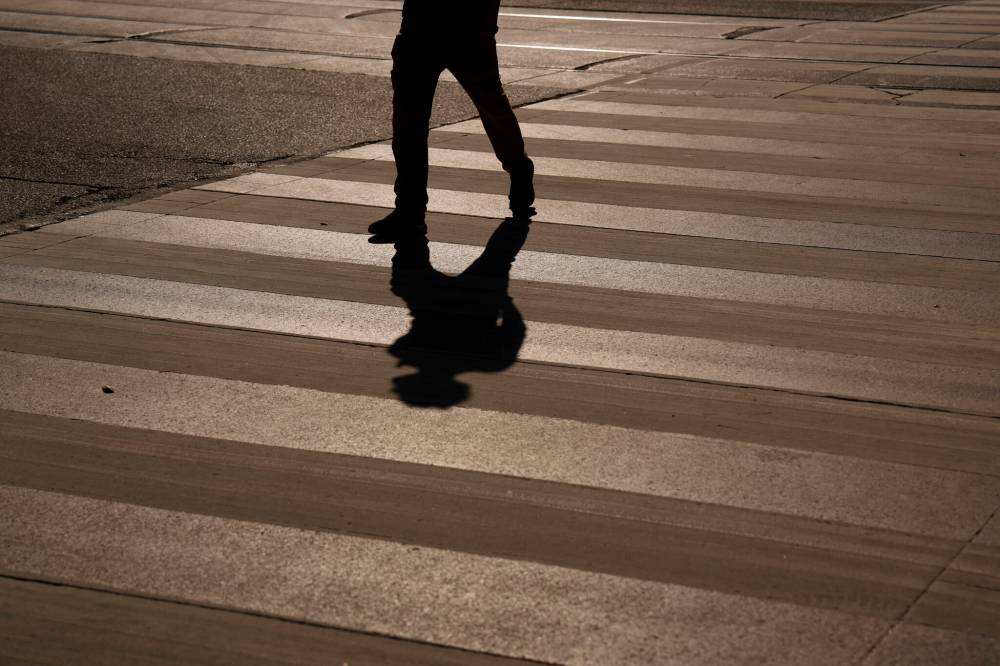
Chris Young / The Canadian Press
Winnipeg has seen a string of pedestrian fatalities this year. In 2025, 286 pedestrians were injured.
With all the recent news stories about drivers hitting people this fall, you might have felt as if someone was being hit every day. That’s accurate.
People inside vehicles aren’t immune from our dangerous roads. In 2025, Winnipeg had more than 7,000 collision victims.
The Winnipeg Police Service urged caution early in October after a string of pedestrian fatalities. Frustratingly, their advice to “keep each other safe” is likely to have the same outcome as similar “shared responsibility” messages: virtually none.
The police seem perplexed at the cause of these collisions. “What’s the reason for them?” asked Insp. Helen Peters of the traffic division.
It’s odd, given the amount of data and research out there, that our police service is bewildered. The reason for our high rates of collision are obvious: more vehicles, larger, heavier vehicles, faster speeds and, most importantly, dangerous infrastructure design.
Winnipeg is home to more than 800,000 people and we have one of the highest rates of driving mode share — the percentage of travellers using a particular type of transportation — in Canada, at over 80 per cent. A city of 800,000 with most driving everywhere for everything is a city of chaos. Congestion, collisions, we’ve got it all.
The vehicles driven today are much bigger and heavier than vehicles 15 years ago. Higher front ends mean people are no longer thrown upwards onto hoods in collisions; instead, they are dragged under. Enormous vehicles also make it a challenge to “make eye contact.” The authors of this piece are adult women standing roughly five-foot-five in height and many grilles reach our faces. Imagine walking as a 10-year-old kid or a senior.
Increased size also means more weight and more weight means stopping distances are longer. You cannot deny physics. Given that Winnipeg can’t much influence vehicle design, in this equation its only option is to control the variable within its power: the road design.
Winnipeg’s infrastructure is designed to be dangerous. For decades our traffic engineers have built roads with convenience and speed for drivers as priority No. 1. Lanes have been widened, objects have been removed from “clear zones,” turning radiuses have been increased. All of this creates an environment that tells drivers subconsciously that it’s perfectly safe to go fast.
Proper design engineers ensure the user has no opportunity to make an unsafe decision. Winnipeg has done the opposite: over many decades, our engineering has created dangers for road users, and we’ve asked drivers to “drive safely.”
Many do not.
The winds of change might be blowing in Winnipeg. This election, Winnipeg elected many new councillors who provide fresh perspectives and some who bring a more robust understanding of good street design and a desire to tackle road safety in their wards.

The previous council chose to delay the Road Safety Action Plan when the province attached strings to its 2025-26 funding. It’s important to note, however, that while cutting road safety, they kept millions of dollars in place to continue the expansion of Kenaston Boulevard.
This new council will face some tough choices in January when the mayor’s top priority — continued expansion of infrastructure for personal vehicles — comes into conflict with the goals many councillors have: a longer-term vision for a more sustainable, healthy city. We’ll see whether Winnipeggers will be putting up with the status quo in our next budget.
Winnipeg doesn’t have to continue on this dangerous road. These collisions are preventable. Cities in Canada and around the world that share our weather patterns are doing better: Edmonton, Montreal, Minneapolis, Oulu (Finland) and more. All are investing in transportation infrastructure that gives their residents a choice beyond driving alone. Less driving means safer streets.
Sunday is World Day of Remembrance for Road Traffic Victims. Winnipeggers are invited to the city hall courtyard at 1 p.m. to remember those who have died on our streets and the many who have faced life-changing injuries. Join us to mourn those we’ve lost, and join those working for safe streets for everyone.
Mel Marginet is part of the sustainable transportation team at Green Action Centre and the publisher at Great Plains Press, which publishes The City Project. Linda van de Laar works as a registered nurse and advocates for road safety for all who move in our city through Streets for People Winnipeg