

Appreciate steadfast wonders where you can
Advertisement
Read this article for free:
or
Already have an account? Log in here »
To continue reading, please subscribe:
Digital Subscription
One year of digital access for only $1.44 a week*
- Enjoy unlimited reading on winnipegfreepress.com
- Read the E-Edition, our digital replica newspaper
- Access News Break, our award-winning app
- Play interactive puzzles
*Billed as $5.77 plus GST every four weeks. After 52 weeks, price increases to the regular rate of $19.95 plus GST every four weeks. Offer available to new and qualified returning subscribers only. Cancel any time.
To continue reading, please subscribe:
Add Free Press access to your Brandon Sun subscription for only an additional
$1 for the first 4 weeks*
- Enjoy unlimited reading on winnipegfreepress.com
- Read the E-Edition, our digital replica newspaper
- Access News Break, our award-winning app
- Play interactive puzzles
*Your next Brandon Sun subscription payment will increase by $1.00 and you will be charged $17.95 plus GST for four weeks. After four weeks, your payment will increase to $24.95 plus GST every four weeks.
Read unlimited articles for free today:
or
Already have an account? Log in here »
It’s funny, what we are.
How we work. The absolutely incredible collection of bodily functions we have, and the way many of us fully operate our complex biological machines for six or seven decades or more.
And I don’t care if you believe evolution brought us over millions of years to what we are now, or whether you can’t help but believe there had to be divine design involved.
Submitted/Russell Wangersky
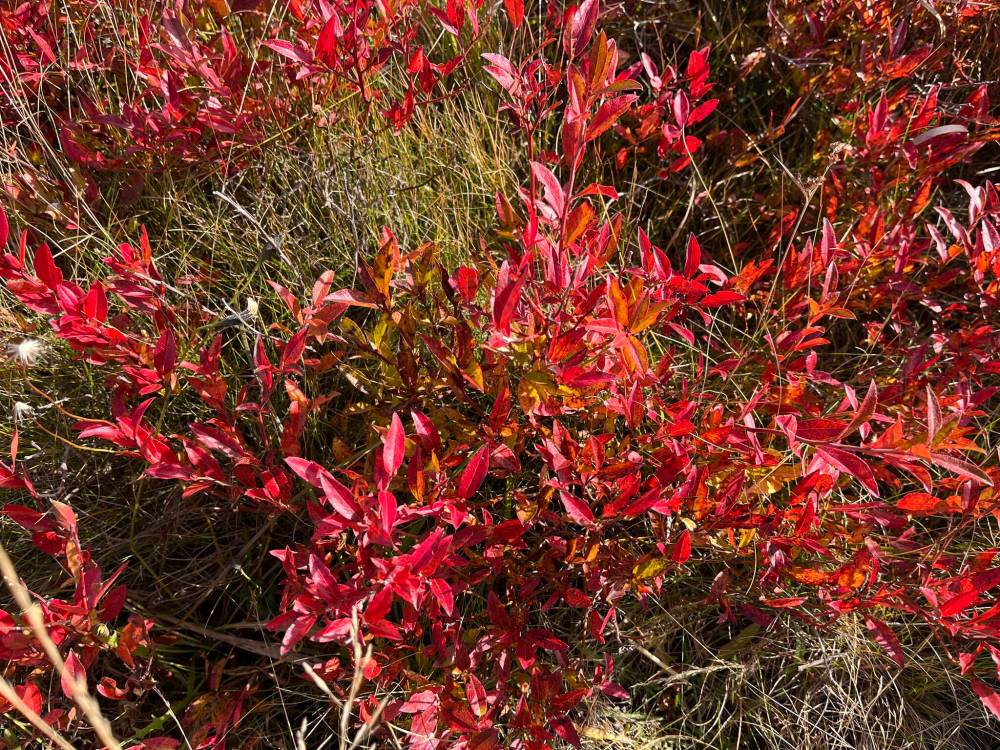
Blueberry bushes change in colour after a hard frost.
I mean, I take for granted my eyes can see rich colours, and will continue to see them, even if my ability to see long distances fades with every passing year. It doesn’t matter to me whether the colours I can see are the result of a sort of evolutionary best practice, honed over generations to allow me to recognize different levels of fruit and vegetable ripeness, or whether the skill of seeing near-endless gradients of colour is simply a gift and a constant wonder.
And it’s all around you.
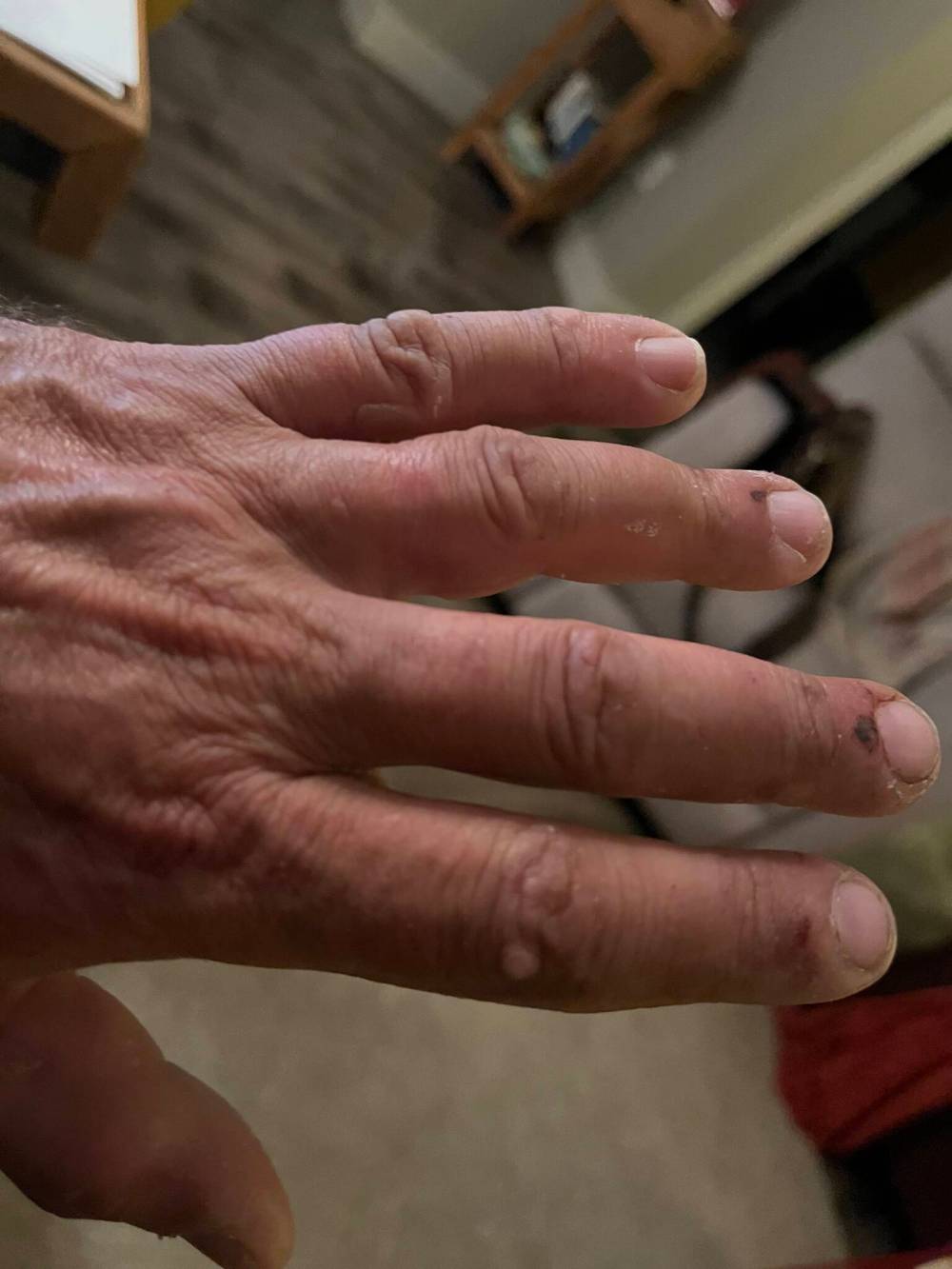
I look at my hands sometimes with amazement — seriously, look at your own hands at work, at the tremendously complex motions and turns they can make, the combination of finesse and strength involved with doing something as simple as lining up the head of a screwdriver with the top of a partially-concealed screw, winding it out of place and then catching it as it falls into your other hand. It would be near impossible to make a machine to do that — let alone everything else a hand can do. And most people have two of them.
Or your feet: there are 26 bones in each, and something like 34 muscles working together to help you hold your balance as you stand or walk or run. All of them working together in fine concert. Even the loss of a toe or two can require a fair amount of plantar re-education and recalculation to re-engineer your gait.
Lie in the bathtub sometime and look at your feet — I have — and then wiggle your toes and watch the banjo strings of tendons working in their ridged-fan array beneath your skin, an order arising, unbidden.
Don’t even get me started on talking about digestion, that wonder of breaking down food by chewing, treating it with your own home-brewed acid and then extracting the building blocks of elements and compounds you need during the long travel down your internal pipeline.
But there’s more even than the chemical and mechanical, though that is all wonder enough.
Submitted/Russell Wangersky
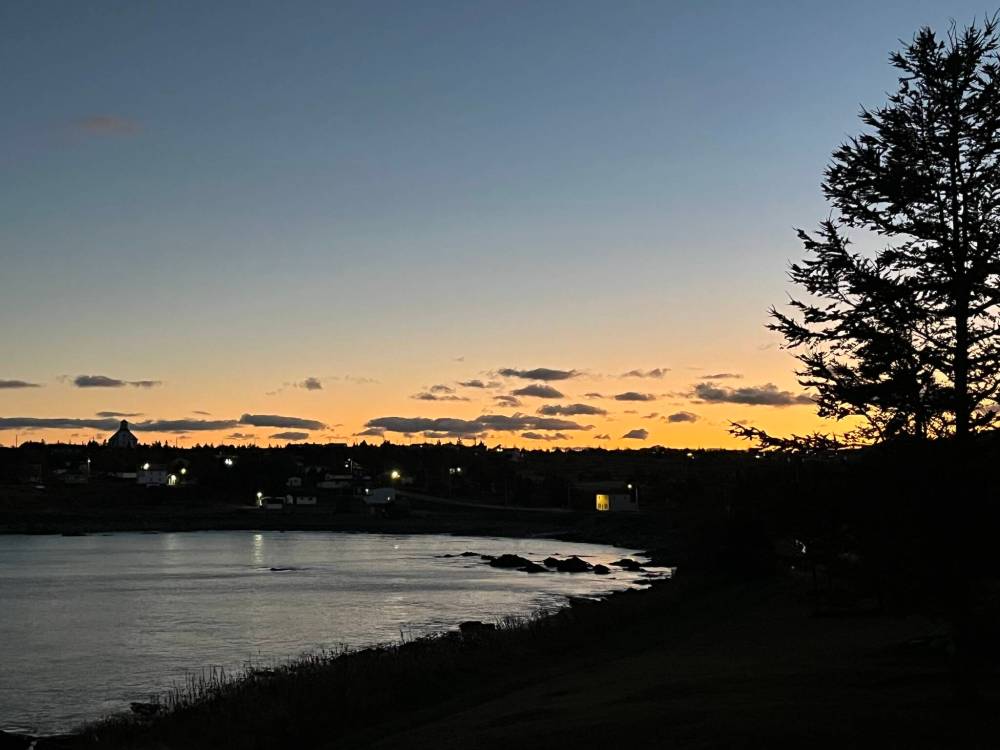
Broad Cove, N.L., at dusk
Then, there’s the sensory.
Sometimes, it is something as simple as a raft of blueberry bushes painted fall scarlet by a hard frost — something like that can stop me solid in my tracks, as if taking the time to appreciate its bright flame is as essential a part of living as eating food or drinking water.
Or smell. For years, I had a nubbled chunk of Alberta lodgepole pine sap I’d broken off of a weeping tree trunk, a dusty nugget as hard as violin rosin. I used to keep it in a prescription bottle in my office desk drawer just so I could line up the childproof triangles, pop the lid, and smell the familiar strong pine scent that is somehow so reminiscent of the fug of a classroom of unwashed teenagers. It was a smell that always brought me back to the Alberta woods.
The fug of spruce and fir needles in rich and wet decay. The bitterness of a hops flower, fresh and bright when you snatch one from a Saskatoon vine and taste it. The feeling in the backs of your legs after kilometres of walking through unexpectedly-risen hills. The hair-raising shiver of welcome but unexpected touch — the reaction in the roots of your hair, your hair actually standing on end, with some familiar combination of musical notes. I’ve put my hand on the back of my head just to check the feeling of my scalp rising is real, and not imagination.
I think it hits home more now as some of the things I’ve always taken for granted ease out of reach: I miss the steady deep sleep I used to have, the lost ability to work full physical days or run long distances. More, the ability to have constant blind resilience, rather than the resignation that comes with longer experience and the blunt backdrop of ingrained pragmatism.
If anything, it’s made me appreciate the still steadfast wonders even more.

There is no practical reason I can gather for why a certain pattern of pinks and oranges in an evening sky has a physical effect on me, but it does.
Submitted/Russell Wangersky
Look at the mechanical wonder of your own hand.
I’ve learned, I think, to appreciate things like that more, to move slowly, to take the time to fully watch the balance and geometry between the moon, a thin line of clouds and the scattered lights of a small town at dusk.
I don’t know who or what designed my biological machinery. I don’t know why some pieces are attuned the particular way they are, or whether they serve a particular purpose.
I am constantly, thoroughly grateful, regardless.
Russell Wangersky is a writer and columnist who splits his time between Winnipeg and Adam’s Cove, N.L.