

Is this the season of secession?
Advertisement
Read this article for free:
or
Already have an account? Log in here »
To continue reading, please subscribe:

Digital Subscription
One year of digital access for only $205*
- Enjoy unlimited reading on winnipegfreepress.com
- Read the E-Edition, our digital replica newspaper
- Access News Break, our award-winning app
- Play interactive puzzles
*First annual payment billed as $205.00 + GST for one year. This annual subscription will automatically renew at $233.00 + GST every 52 weeks (10% off the regular annual price of $259.35). Offer available to new and qualified returning subscribers only. Cancel any time.
To continue reading, please subscribe:
Add Free Press access to your Brandon Sun subscription for only an additional
$1 for the first 4 weeks*
- Enjoy unlimited reading on winnipegfreepress.com
- Read the E-Edition, our digital replica newspaper
- Access News Break, our award-winning app
- Play interactive puzzles
*Your next Brandon Sun subscription payment will increase by $1.00 and you will be charged $17.95 plus GST for four weeks. After four weeks, your payment will increase to $24.95 plus GST every four weeks.
Read unlimited articles for free today:
or
Already have an account? Log in here »
Canada has entered its season of secession. Like El Nino, the currents of grievance can blow hot and cold. Today, they are hot. But how hot for how long? The odds of Alberta and now Quebec separating from Canada are not high, but they are never zero.
After a year of waving the flag in a surge of national patriotism to confront Donald Trump’s attacks on Canada — economic and verbal — it is both jarring and frustrating for most Canadians to be reminded of the pervasive and persistent tensions that come with governing our federation.
When we need new national purpose to confront big economic sovereignty and security challenges from outside, that purpose is undermined and diminished by having to confront homegrown grievances.
The Canadian Press
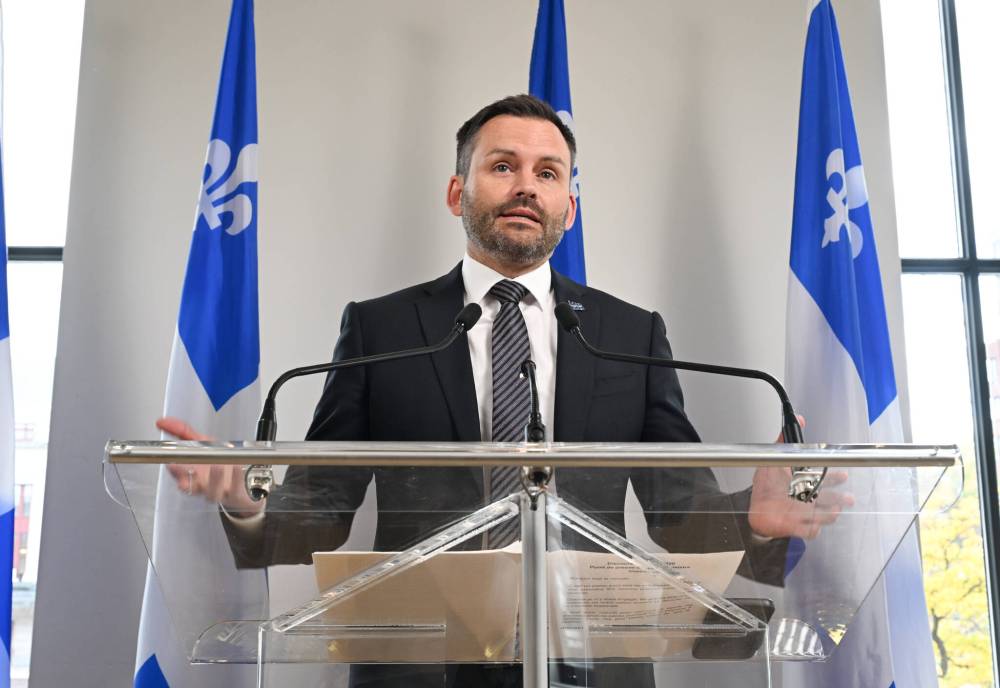
Quebec premier-elect Paul St-Pierre Plamondon led the Parti Québécois to a minority government with just 28 per cent of the popular vote.
We’ve seen and seen off two separation referendums in Quebec. Now we have a newly elected separatist party coming to power. In Alberta, voters will soon decide whether the independence road is one they want to travel.
To call all this debilitating and destructive to forging a strong, prosperous and resilient Canada is an understatement.
There are two schools of thought as to what to do about all this. Confront or compromise. The ‘confrontationists’ believe this is a periodic phase Canada is predestined to go through. The weak polling support for secession in Alberta and the loveless lurch to the separatist Parti Québécois, giving it a minority government with just 28 per cent of the vote, demonstrates that the risk of actual separation is low. So, wait it out, ride it through.
The ‘compromisers’ believe that the grievances animating both provinces, particularly Alberta at this time, need to be addressed. Constitutional compromise through Senate reform, judicial appointments, equalization and the division of powers between Ottawa and the provinces is necessary. Policy compromises, by repealing legislation restricting natural-resources development, are also necessary.
Prime Minister Mark Carney’s government lies somewhere in the middle. It has made significant policy changes on energy development, compromising established Liberal climate and environmental policy to speed up pipelines and major energy projects. But he has not said a peep about constitutional reform to give Alberta more formal powers and authority. Demands that the federal government offer an incentive to vote ‘Remain’ in the form of a promise of constitutional renewal have gone unheeded.
As they should. Carney has no mandate to launch any form of constitutional reform exercise. Indeed, there is no overt desire in the rest of Canada to do so. History shows this to be as divisive and unsatisfying as the referendum exercises that spawn them.
More to the point, there is zero consensus amongst premiers, and most Canadians for that matter, on what actually needs to be done. Would Senate reform to give Alberta the same number of Senators as every other province really, truly unite the country and make us more ready to take on the Americans politically and economically?
The question answers itself.
The PQ enters office in Quebec with a historically low level of voter support. About 60 per cent of Quebecers voted for federalist parties. That the PQ promised a referendum during its first term is clear and they have a mandate to proceed with that. But there is no mandate for separation itself.
In Alberta, Premier Danielle Smith embarked upon a ‘unite my party’ referendum on whether to remain in Canada or hold another referendum on actual separation. She had no mandate to do this but proceeded anyway. Why should Ottawa respond in advance when there is nothing yet to respond to?
This applies to both cases. Every grievance, personal or political, needs oxygen to breathe and live. Referendums act as oxygen concentrators when what is really required is an expertly applied dose of anesthesia to get through the procedure and begin the recovery.
Smith’s expertise turns out to be in straddling, not leading. She has not presented a single, viable proposal for actual constitutional reform and then done the heavy lifting with other premiers and Canadians to persuade them this would be good for both Alberta and Canada.
She has made better progress on convincing the federal government to change laws and regulations affecting the oil and gas sector in her province. Fair enough. But any form of serious constitutional change requires convincing more than just Ottawa.

Instead, she has sought refuge in a performative plebiscite around nine other questions over which no one outside Alberta is obligated to answer. Until she convinces other premiers to join her parade, it remains a charade.
Any incentive for the prime minister to acquiesce to Alberta just got harder with the PQ coming to power in Quebec. Students of federalism know that a concession for one province inevitably leads to demands for more by other provinces. Carney could inadvertently fuel separatist sentiment in Quebec by appeasing Alberta. And vice versa.
The best way for Canada to remain united is to keep making it work. Premiers have just as much an obligation, and role, as the prime minister.
The real threat to Canada’s future comes from outside not inside. That’s where most Canadians want the focus to remain.
David McLaughlin is a former clerk of the executive council and cabinet secretary in the Manitoba government.