

Finding my way through the ‘odd uneven time’
Advertisement
Read this article for free:
or
Already have an account? Log in here »
To continue reading, please subscribe:

Digital Subscription
One year of digital access for only $205*
- Enjoy unlimited reading on winnipegfreepress.com
- Read the E-Edition, our digital replica newspaper
- Access News Break, our award-winning app
- Play interactive puzzles
*First annual payment billed as $205.00 + GST for one year. This annual subscription will automatically renew at $233.00 + GST every 52 weeks (10% off the regular annual price of $259.35). Offer available to new and qualified returning subscribers only. Cancel any time.
To continue reading, please subscribe:
Add Free Press access to your Brandon Sun subscription for only an additional
$1 for the first 4 weeks*
- Enjoy unlimited reading on winnipegfreepress.com
- Read the E-Edition, our digital replica newspaper
- Access News Break, our award-winning app
- Play interactive puzzles
*Your next Brandon Sun subscription payment will increase by $1.00 and you will be charged $17.95 plus GST for four weeks. After four weeks, your payment will increase to $24.95 plus GST every four weeks.
Read unlimited articles for free today:
or
Already have an account? Log in here »
I am taking a turn in the garden with a cup of tea on a Friday morning.
It is 16 C in St. John’s but feels warmer in the stillness. We have been given the rare gift of a morning without wind. I gladly accept it.
High in the overcast sky, a seagull screeches a lament. Near my feet, chickadees and juncos are flittering and tittering in the shrubbery.
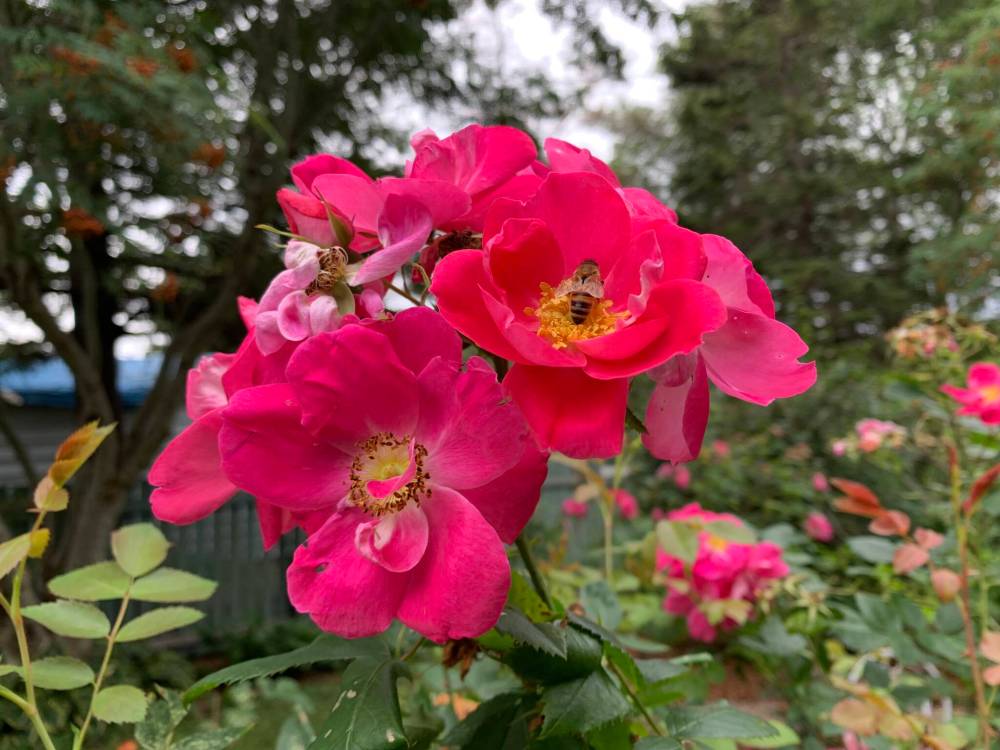
Pam Frampton photo
Busy as a bee in the heart of a flower.
Tomorrow and Sunday call for torrential rains, the kind that — when paired with lashing winds — will strip rose petals away and give the slender daylilies a sound thrashing. Violent imagery, yes, but accurate. I know what to expect. I’ve been around the block.
What we’re experiencing at this time of year is, as Sylvia Plath once noted, “the odd uneven time.”
“The best of the summer gone, and the new fall not yet born.”
But fall is certainly sending its feelers out.
The dogberries — fruits of the mountain-ash — are still mostly pumpkin-coloured on the big tree outside our bedroom window. But in the tree further back, which gets more sun, the berries are full-on vermilion, with some of the leaves already brown and papery and curled like cocoons.
The garden is in its blowsy phase. The oregano is bent double with the weight and height of its light purple flowers, the parsley gone leggy, its tall stems tipped with delicate blooms like waning bursts of fireworks.
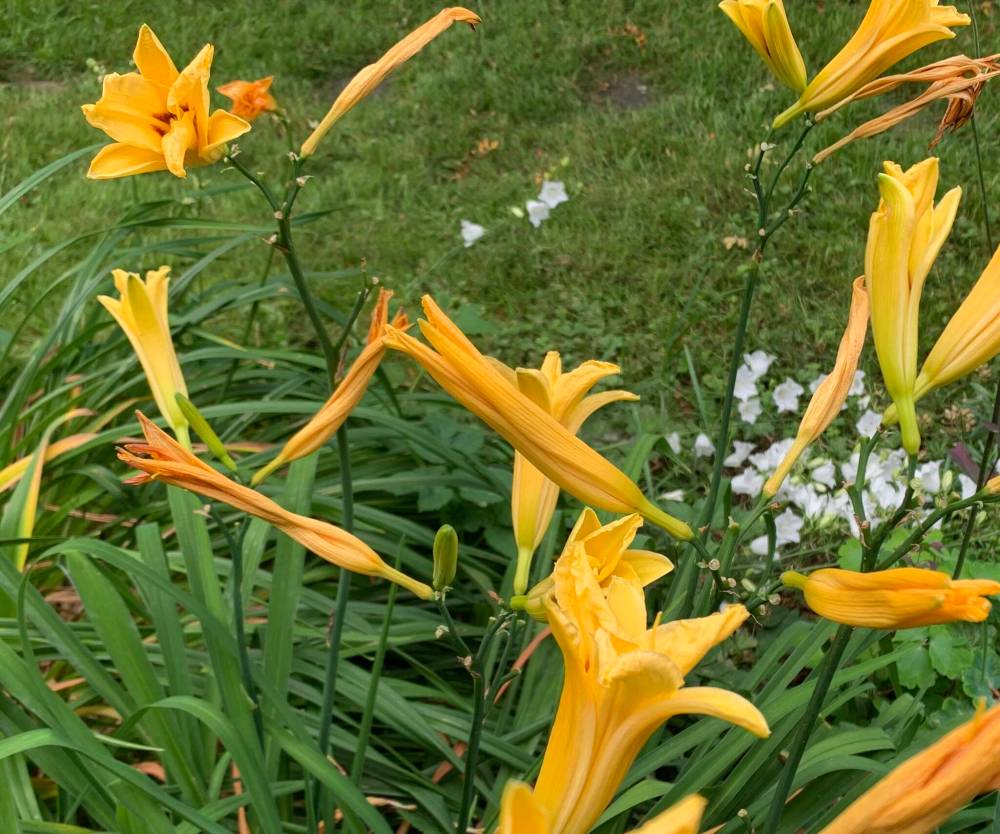
Pam Frampton photo
The daylilies are in their willy-nilly phase.
Roses are drooping and faded, their browning petals like soiled and rumpled clothes someone has hastily taken off and thrown onto the back of a chair.
The mango-coloured daylilies are unkempt. Some of them no longer have the energy to bloom and hang bedraggled on their stems, looking for all the world like a bunch of university students straggling home at dawn after a boisterous pub crawl.
I will love autumn when it comes, but its approach is always tinged with melancholy. Summer is fading, evening comes on sooner, leaves are browning, the frenzied chorus of spring and summer birdsong gives way to haunting solos — the echoing lonely cry of a loon, the raucous jeer of a bluejay, the harsh, high-pitched aria of a northern flicker.
According to the knowing people who post on social media about life and wisdom, inspiration and mindfulness, I am in the mid-autumn of my life. My husband has supposedly reached winter.
I found an authoritative sounding quote online but could not trace its origins: “Older age brings a deep perspective and understanding that you do not need to rush anymore.”
But I feel the opposite of this. I must rush. I must try to do everything I can and want to do while I am still here — while we are still here.
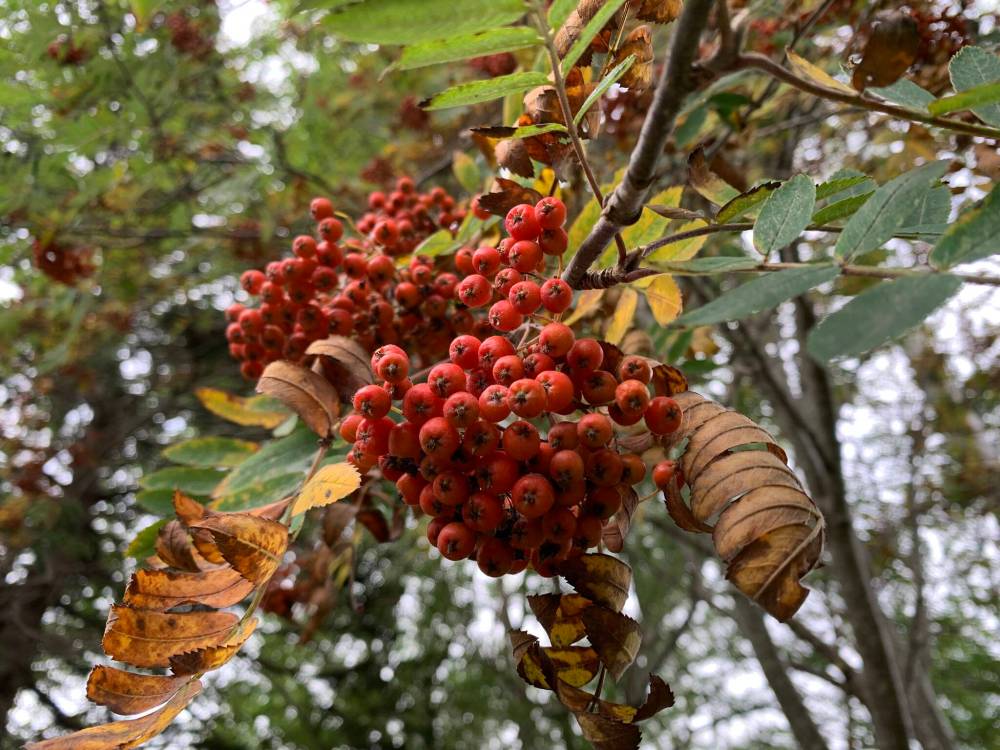
Pam Frampton photo
Ripening dogberries are a sure sign that fall is coming.
Author Helen Bevington once observed of German playwright and poet Friedrich Schiller that he “needed the smell of rotten apples about him to make a poem.”
I am neither playwright nor poet, but I get and feel the sense of urgency that fall brings. I’ve always thought, as someone who has only ever worked in the looming shadow of deadlines, that there’s no stronger motivation to be creative than desperation; the sense that time is running out.
I want to read all the books, hear all the music, see the art, taste the food, visit the places that I’ve dreamed of and revisit the ones I love, reconnect with old friends and make new ones.
My husband tells me that I have gotten more anxious as I’ve gotten older, and he’s right. With age comes a realization of the painful brevity of life, the precarity and fragility and arbitrariness of it all.
I’m feeling unsettled, disquieted, jittery with wanderlust.
To counterbalance those feelings, I am rereading beloved books, listening to favourite albums, poring over old photos and letters, spending quiet time in nature. Counting the days and weeks until we can travel again. Trying not to fixate on how few good travel years we might have left.
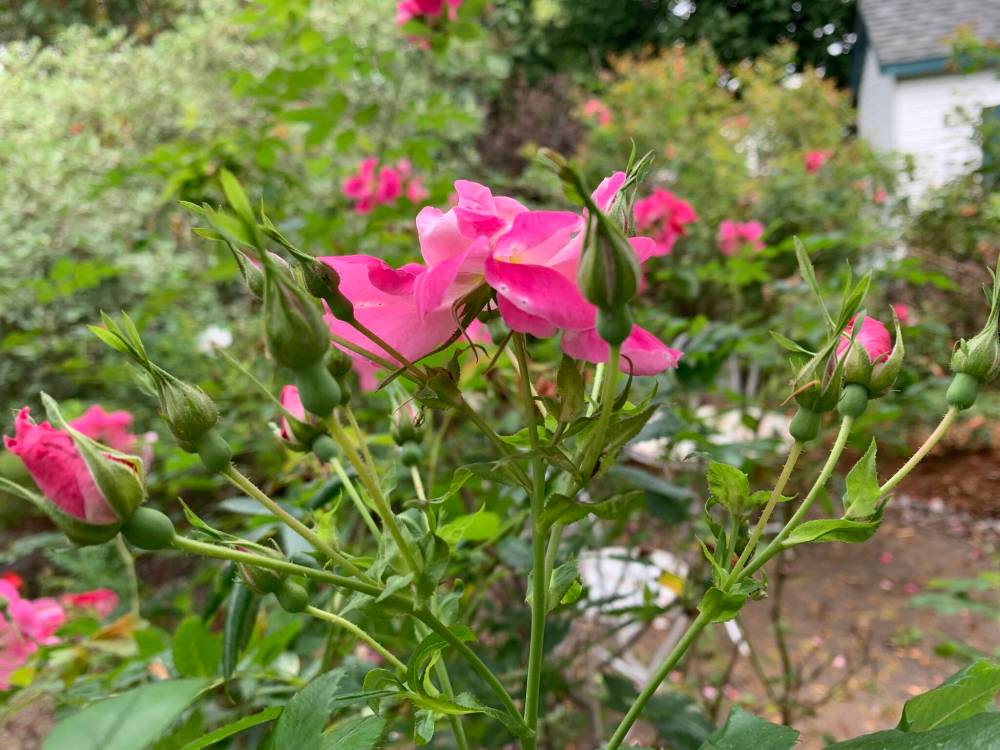
Pam Frampton photo
There is life in the rose bushes yet.
And as usual, nature is the best balm for my restless spirit.
In the garden, the bees are busy about their work, but they are working languidly, hovering above the golden halo at the heart of a rose before settling back in among the pistils and stamens.
The rose bushes themselves have new buds yet to open. Hints of pink petals between fuzzy green sepals.

Scattered spears of yellow loosestrife stars still reach for the sun.
It is indeed an odd, uneven time. But I will strive to embrace it — because what choice do I have? And I will remember the words and attitude of Albert Camus, who wrote: “Autumn is a second spring when every leaf is a flower.”
It is a lovely way to see the world.
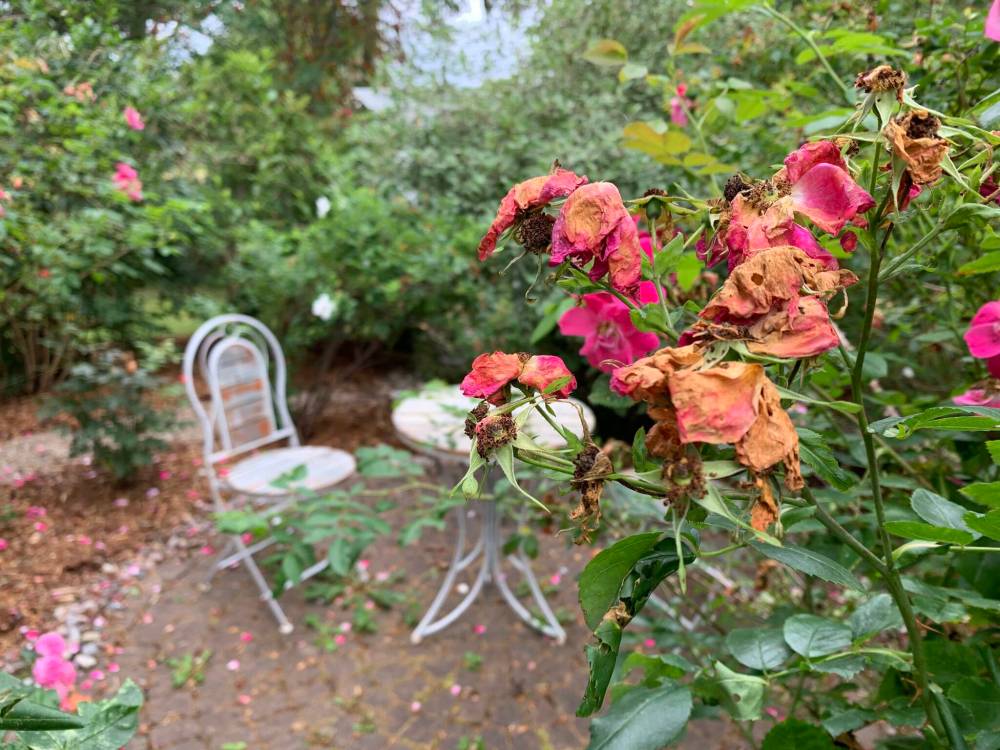
Pam Frampton photo
Spent roses have a melancholy air.
Pam Frampton lives in St. John’s.
Email: pamelajframpton@gmail.com