

Cryopreservation — now that’s playing the long game
Advertisement
Read this article for free:
or
Already have an account? Log in here »
To continue reading, please subscribe:

Digital Subscription
One year of digital access for only $205*
- Enjoy unlimited reading on winnipegfreepress.com
- Read the E-Edition, our digital replica newspaper
- Access News Break, our award-winning app
- Play interactive puzzles
*First annual payment billed as $205.00 + GST for one year. This annual subscription will automatically renew at $233.00 + GST every 52 weeks (10% off the regular annual price of $259.35). Offer available to new and qualified returning subscribers only. Cancel any time.
To continue reading, please subscribe:
Add Free Press access to your Brandon Sun subscription for only an additional
$1 for the first 4 weeks*
- Enjoy unlimited reading on winnipegfreepress.com
- Read the E-Edition, our digital replica newspaper
- Access News Break, our award-winning app
- Play interactive puzzles
*Your next Brandon Sun subscription payment will increase by $1.00 and you will be charged $17.95 plus GST for four weeks. After four weeks, your payment will increase to $24.95 plus GST every four weeks.
Read unlimited articles for free today:
or
Already have an account? Log in here »
They say you can’t cheat death, but what if you could?
What if the promise of some future scientific breakthrough offered the possibility that you could be revived many years after your demise? Would you be willing to pay your money and take your chances?
This is the premise behind Tomorrow.bio, the Berlin-based cryopreservation company that keeps sending me intriguing emails about lifespan extension, biostasis and dewars — the latter being the liquid nitrogen tanks where long-term “patients” are stored.
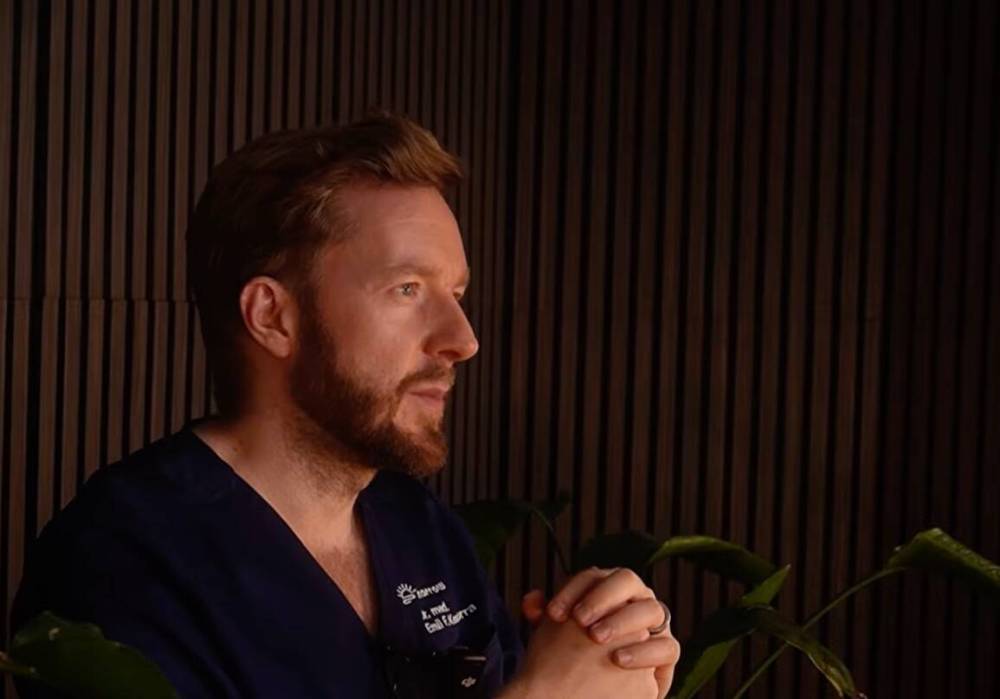
YouTube
Dr. Emil Kendziorra expounds on the finer points of cryopreservation.
Maybe Tomorrow.bio found out about the pair of columns I wrote about death for the Free Press in April 2025, in which I confessed my profound fear of the end that comes to us all.
Or perhaps I clicked on a link on a website at some point that made me a target for shrewd marketers.
In either case, on a recent Friday morning I found myself watching an A-to-Z video on cryonics/cryopreservation/applied human biostasis — sometimes flippantly called “the big freeze.”
The narrator was the amiable Dr. Emil Kendziorra, the medical doctor and co-founder of Tomorrow.bio, whose online biography says he pivoted from a career in cancer research to become an entrepreneur in “longevity moonshots” — that is, advancing biostasis knowledge and procedures.
Contrary to popular myth, American animator Walt Disney was not cryopreserved — he was cremated — but hundreds of people have been worldwide, including U.S. psychology professor James Bedford, whose body has been in cold storage since 1967, and Boston Red Sox left fielder Ted (the Kid) Williams, who was cryopreserved in 2002 in the hopes of someday being reunited with his family.
People who decide to take their chances with biostasis tend to share similar characteristics, Kendziorra explained: they love life, would like to be around for longer than current medical research allows, have an interest in seeing how the future turns out and have a genuine fear of death. (I felt seen.)
Does cryopreservation work? That, my friends, is the multi-thousand-euro question. The people who are willing to bet on it are gambling on the fact that advances in science, medicine and technology will allow them to be reanimated at some point in the future, cured of whatever it was that killed them in the first place.
What does it involve? Once you have signed the contract (agreeing to pay 200,000 euros to have your body cryopreserved or 75,000 for your brain only) and are legally declared dead, Tomorrow.bio (or another biostasis firm of your choosing) dispatches a team to take possession of your body. Chest compressions, oxygen and medicines are administered to keep the cells from dying and then your blood is removed and replaced with a cryopreservation agent that allows your body to be cooled down without the formation of ice crystals (which cause cellular damage). A followup CT scan or electron microscopy will confirm whether the concentration of cryopreservation chemicals is optimum. Tomorrow.bio will then transport your body to a secure storage facility in Switzerland, where you will remain at a temperature of between -140 C and -196 C until someone decides it’s showtime. I’m simplifying here, but I do have a word limit.
For the well-heeled animal lover, Tomorrow.bio also offers a “Pets of Tomorrow” option which allows you to have Fluffy or Fido cryopreserved at a cost of 30,000 to 150,000 euros, depending on species, weight and customized options.
I am being somewhat tongue-in-cheek, but to be fair, Tomorrow.bio is not promising people that they or their beloved pets can live forever.
In fact, the company emphasizes the importance of informed consent quite clearly on its website, stating: “Currently it is not possible to warm up and reanimate humans who have been cryopreserved. It is furthermore not known, if and when the required technology will exist, it might take many decades, centuries or even longer. It is entirely possible that reanimation will never be possible! No one, including us, can predict what will be possible in the (far) future and what will not be possible. Unfortunately, we can also not give any probabilities about the chances of reanimation, as they are unknown.”

So, biostasis is admittedly a pie-in-the-sky risk, but it’s alluring to some people, particularly ones who aren’t banking on some form of afterlife.
Who wants to live forever? As of this writing, somewhere between 500 and 750 people and a few hundred pets have been cryopreserved worldwide, with thousands more live members waiting in the wings.
Hope is a powerful motivator. Imagine how thrilling it would be to resurface 100 years from now to find out how the world changed in the years since my initial demise. I’d have so many questions.
Did they take down all that tacky gold trim in the Oval Office? Did Pierre Poilievre ever get to wield any real political power? Did The Who reunite for one more tour? Will I be able to start collecting CPP again? And, hey, where are my clothes?
Pam Frampton lives in St. John’s. Email pamelajframpton@gmail.com